
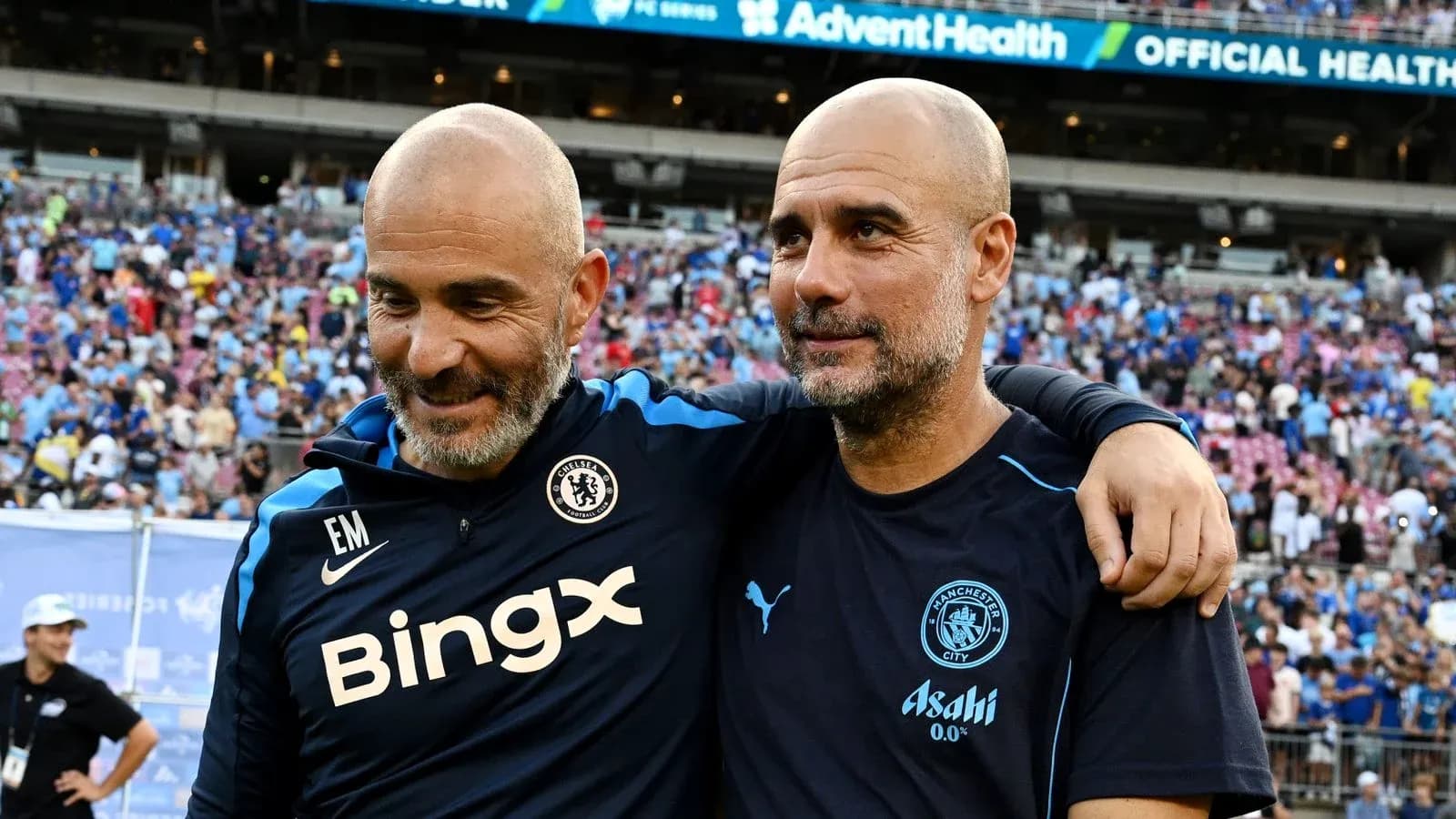
Manchester City: Maresca's Challenge After Guardiola
The Premier League’s powerhouses have reshuffled their dugouts, but nowhere does the change feel quite as seismic as at Manchester City. After a decade built around one man, Pep Guardiola has gone. In his place, City have turned to a familiar face with a very different weight on his shoulders: Enzo Maresca.
This is Maresca’s third spell at the club. He knows the corridors, the faces, the standards. He worked in the academy in 2020-21, then sat alongside Guardiola for the treble-winning campaign of 2022-23. He has lived inside the machine; he has never been the one driving it at this level.
Now he has to prove he can.
A Kind Fixture List – With a Sting in the Tail
If you were designing a soft landing for a new Manchester City manager, it might look a lot like this. Bournemouth, Crystal Palace and Coventry City in the first three league games: generous, manageable, and perfect for building early rhythm.
They are also a trap.
City’s squad is full of players who went deep into the World Cup, with Rodri the most obvious concern after carrying Spain’s midfield almost every minute of their triumphant run. Those opening fixtures allow Maresca to ease his key lieutenant back, to phase Rodri in rather than throw him straight into the fire.
On paper, City should win those games without him. On grass, any early slip will be magnified. Maresca cannot afford to drop points while still learning names on the training pitch whiteboard.
Because September bites back. Two of the next three fixtures bring Manchester United and Liverpool. Those matches are never just about points. They are statements, tests of authority, emotional weather-vanes for a fanbase still processing the departure of the most successful manager in the club’s history.
Maresca called it a “dream situation” when he walked back through the door: a well-balanced, deeply talented squad, sculpted by Guardiola and backed by chairman Khaldoon Al Mubarak. He is right. But that dream comes with a catch.
The expectations are exactly the same. The job security is not.
Guardiola worked on his own terms. He was the project. Maresca is the heir to that project, but not the architect. The margin for error will be far slimmer.
Same Philosophy, Sharper Edges
Stylistically, this is not a revolution. Maresca is no counter-attacking pragmatist parachuted into a possession empire. He comes from the same school as Guardiola: dominate the ball, control the tempo, press high, squeeze the life out of opponents.
The differences lie in the details.
Guardiola’s City became a shape-shifting organism. Centre-backs stepped into midfield. Full-backs became playmakers. Wingers drifted inside to overload central zones, with Rodri as the axis around which everything spun. Positions blurred; responsibilities overlapped.
Maresca’s blueprint is more defined. He favours a 4-2-3-1 with clearer lines and more traditional roles. Wingers play high and wide, stretching the pitch and pinning full-backs. The structure leans heavily on a functioning No 10 to knit it all together.
At Chelsea, that player was Cole Palmer, who thrived between the lines under Maresca. At City, he has Phil Foden or Rayan Cherki as natural candidates for that role if he chooses to replicate the same scheme.
The adjustment is not trivial. City’s wide players have been conditioned to come inside, to combine and rotate. They will now be asked to hug the touchline more often, to create space for that central creator rather than drift into it themselves.
The upside? Clarity. Roles are cleaner, angles more predictable. The risk? Slowing down a side that has been devastating precisely because it could morph and adapt mid-game without losing fluency.
How quickly this squad absorbs Maresca’s tweaks will shape the first half of his season. The principles are familiar. The patterns are not.
A Younger City, With a New Spine of Leaders
While Guardiola was still in charge, the club quietly started to move into its next phase. Under sporting director Hugo Viana, the brief was clear: lower the average age, keep the quality, and prepare for what comes after the Pep era.
The numbers tell the story. The average age has dropped from 29 to just over 25. The dressing room, though, has lost some serious voices. Bernardo Silva and John Stones have gone this summer. Kevin De Bruyne departed before them. That is a leadership void as much as a creative one.
The core remains strong. Rodri and Ruben Dias are now non-negotiable pillars. Erling Haaland has stepped further into a leadership role, not just as a goalscorer but as a reference point for the group. Marc Guehi and Josko Gvardiol add experience and stability at the back, while Mateo Kovacic brings know-how in midfield.
Around that spine, the recruitment has been expensive but calculated. Elliot Anderson has arrived from Nottingham Forest for big money to add robustness and long-term security in midfield. Jeremy Monga has been plucked from Leicester as another piece for the future.
City still want more. A right-back sits high on the list, as does another winger to suit Maresca’s wide, aggressive attacking lanes. They are tracking Lille teenager Ayyoub Bouaddi, who caught the eye with Morocco at the World Cup and is also admired by Arsenal.
On the flip side, the squad could yet be trimmed. Savinho, Omar Marmoush, Nico Gonzalez, Jack Grealish, Tijjani Reijnders and Rico Lewis are among those who could depart if bids hit the club’s valuation. With the World Cup now done, the market is expected to move quickly.
Maresca inherits a squad in transition, but not in decline. The pieces are there. His challenge is to arrange them without losing the ruthless edge that has defined City’s dominance.
The First Big Test: Winning Without Pep
Since the Abu Dhabi takeover, everything at Manchester City has been built with a singular long-term aim: attract Pep Guardiola, then give him everything he needs. That mission was completed. Titles followed, records fell, and the club’s identity fused with one man’s vision.
That era is over. For the first time, the destination is less obvious.
What has not changed is the culture. This is a club geared relentlessly towards silverware. Anything less than competing for the biggest trophies will not be tolerated for long. The Etihad crowd expects entertainment, but it demands winning. Maresca’s Chelsea never quite balanced those two demands. At City, failure to do so will be unforgiving.
One advantage for him: he is not alone in this new landscape. The Premier League’s hierarchy is in flux. Andoni Iraola has taken on Liverpool. Xabi Alonso is at Chelsea. Michael Carrick, to a slightly lesser extent, is trying to drag Manchester United back to relevance.
All of them are high-calibre coaches with ideas, but all of them carry question marks. The old order has loosened. This is a rare window where reputations will be made quickly, or broken just as fast.
For City, that volatility is seen as an opening. If Maresca hits the ground running, he can seize control of a league still working out its new power map.
If he stumbles, others will race past him.
The Shadow of 115 Charges
Looming over everything is the issue no coach can control. The 115 Premier League charges still hang over Manchester City, a permanent backdrop to every press conference and every big moment.
Guardiola handled that scrutiny with a confrontational, almost combative edge. Years in the spotlight at Barcelona, Bayern Munich and City had hardened him. He knew how to shut down a line of questioning, when to fight and when to deflect. He understood the local press pack and often used them as a shield for his players.
Maresca has dealt with pressure before, but mainly over football. Team selection. Tactics. Results. This is different. He will be asked to speak for a situation he did not create and cannot resolve.
How he navigates that glare will matter. It will shape how he is perceived in his first 12 months, particularly if a verdict arrives during that period. Any misstep will be replayed, dissected, and attached to his image as City manager.
On the pitch, he has a dream squad, a forgiving start, and a league there for the taking. Off it, he walks into a storm that has been building for years.
Maresca knows what a winning Manchester City looks like. The question now is whether he can build one of his own, with the weight of history behind him and the clock already ticking.
Related News
Ilia Topuria Accuses Justin Gaethje After UFC Defeat
Tyson Fury vs Anthony Joshua Fight Date and Venue Confirmed
Switzerland Calls Up In-Form Sion Striker Winsley Boteli for Nations League
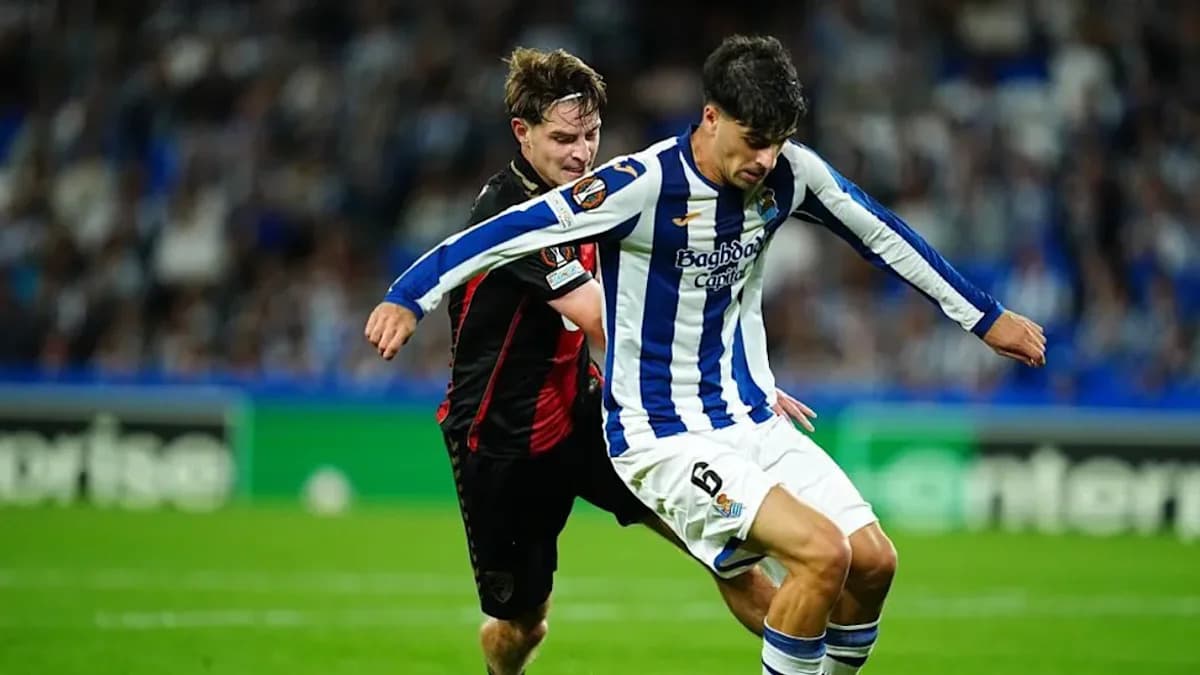
Bournemouth Secures Historic 2-1 Win Over Real Sociedad in Spain
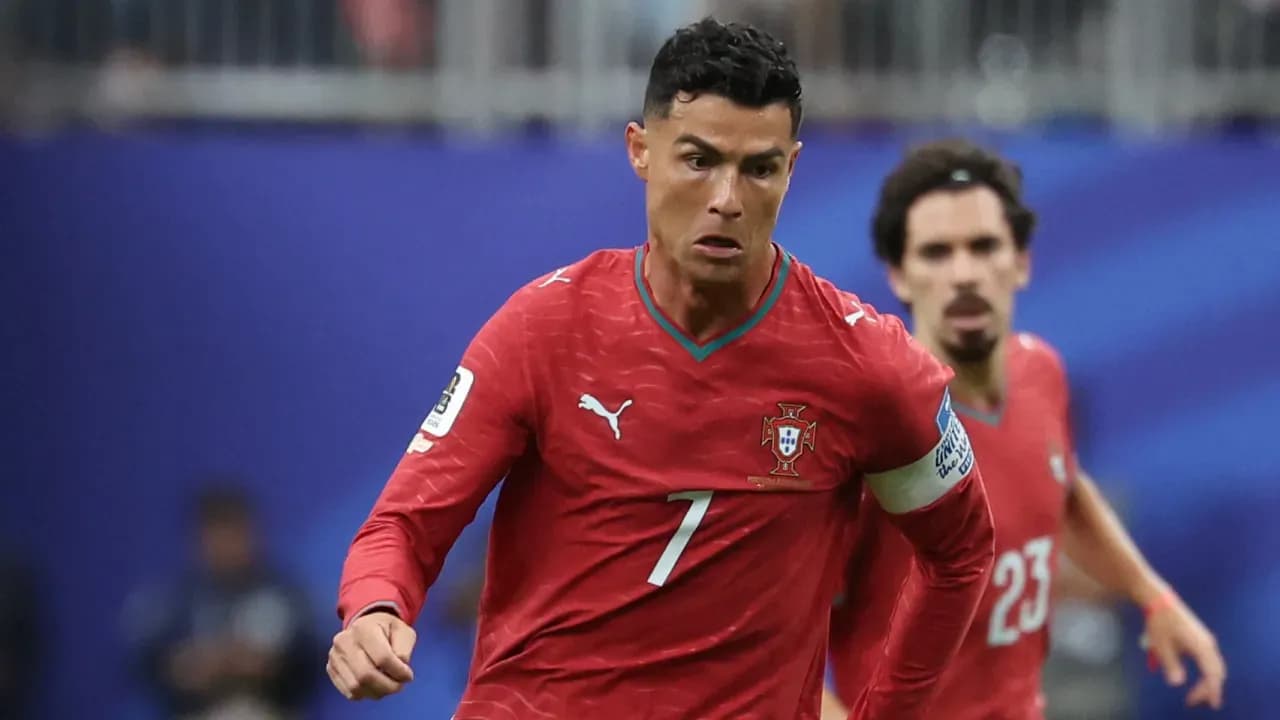
Portugal Announces Squad for 2026 UEFA Nations League; Cristiano Ronaldo Expected to Play

Raphinha Channels Ronaldo Nazario as Barcelona's Leading Striker After Position Change