
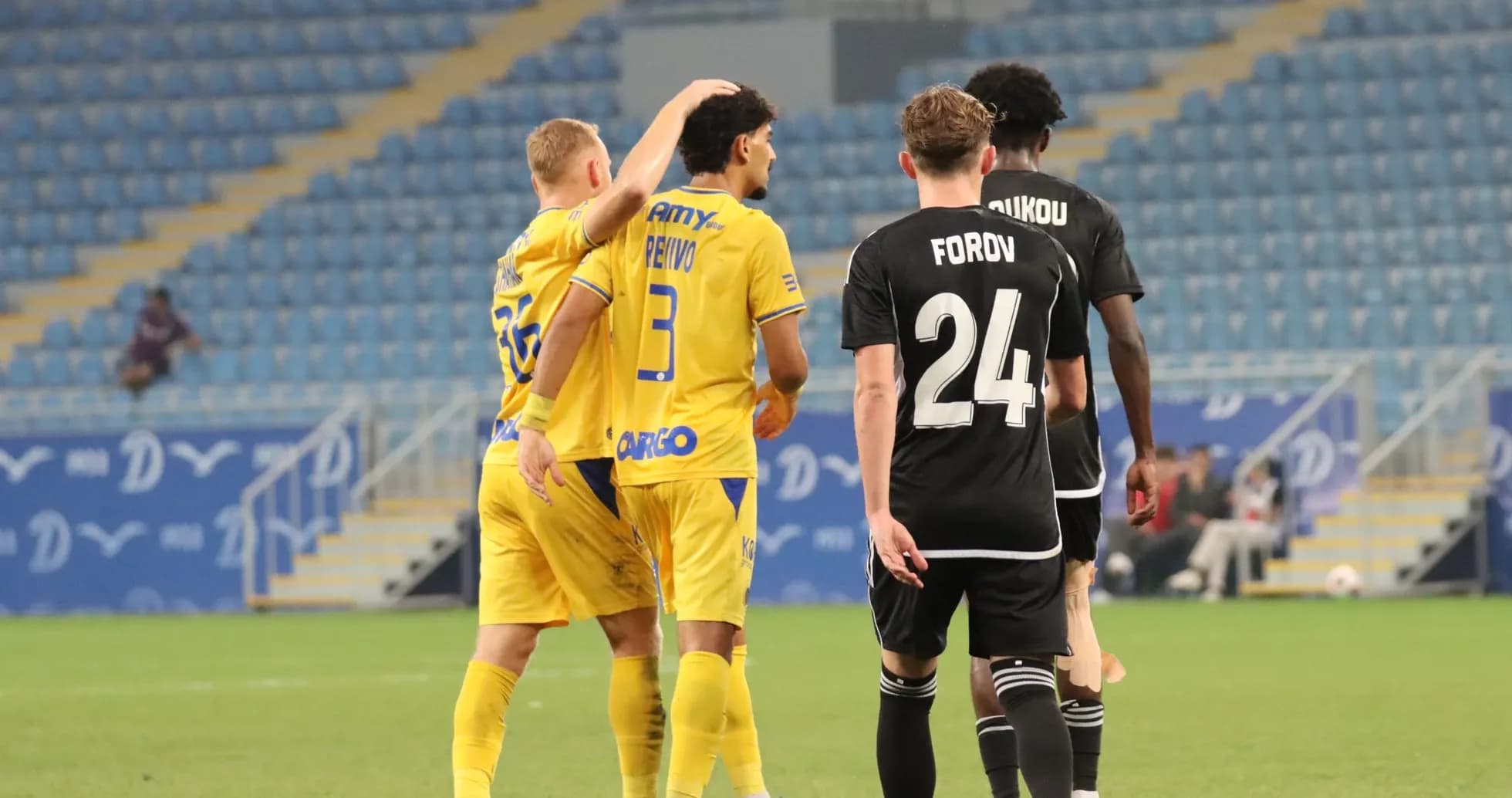
Maccabi Tel Aviv's Tactical Masterclass Against Sheriff Tiraspol
Maccabi Tel Aviv’s 1–0 win over Sheriff Tiraspol at Batumi Arena was a controlled, structurally sound European qualifying performance built on territorial pressure and set‑piece volume rather than high‑risk attacking football. Both sides finished with 50% possession, but Maccabi’s 12 corner kicks to Sheriff’s 7 and a 3–0 advantage in shots on goal underline how Kenny Miller’s 4‑3‑3 imposed the game in the final third, while Sheriff’s own 4‑3‑3 remained largely sterile.
The decisive moment came on 29 minutes, when pressure around the Sheriff box forced S. Kone into an own goal that gave Maccabi a 1–0 lead they never surrendered. From that point, the tactical story became one of Maccabi managing field position and transitions, and Sheriff trying – and failing – to convert a more direct, substitution‑driven approach into genuine chances.
Maccabi's Tactical Setup
Maccabi’s 4‑3‑3 was built on a stable back four of N. Ben Harush, M. Camara, R. Shlomo and R. Revivo, with D. Peretz anchoring midfield. With I. Sissokho and I. Shahar as the other central midfielders, Miller had a three‑man core capable of compressing space centrally and recycling possession. Ahead of them, S. Jehezkel and H. Varela flanked S. Abu Farkhi, giving width and depth for crosses – a key reason Maccabi generated 12 corners and three blocked shots. Even without a high total shot volume recorded, the pattern was clear: sustained occupation of the attacking third, forcing Sheriff to defend deep and repeatedly clear into pressure.
Sheriff's Response
Sheriff’s nominal 4‑3‑3 was more conservative in practice. The back line of Rai, B. Fomba, B. Ciss and M. Ouedraogo often flattened into a low block, with Mota sitting close to them from his listed defensive role in midfield. Ahead, D. Klas and A. Pergjoni tried to connect to a narrow front three built around L. Jaures‑Ulrich, S. Kone and D. Forov as midfielders pushed up, but the lack of shots on goal (0) shows that their positional play rarely broke Maccabi’s compactness. Sheriff finished with four shots off goal and two blocked, suggesting that when they did find shooting positions, Maccabi’s back four and midfield screen closed down quickly.
Substitution Patterns
The substitution pattern underlined the different tactical priorities. Sheriff, trailing from the 29th minute, went to the bench first and heavily. On 57 minutes, Mota (OUT) made way for Sapata (IN), a clear attempt by Victor Mihailov to add more forward thrust from midfield. Two minutes later, S. Kone (OUT) was replaced by V. Nihaev (IN), shifting Sheriff’s attacking reference and trying to freshen the press and vertical runs. Later, at 77 minutes, Mihailov executed a triple change: A. Pergjoni (OUT) for N. Swen (IN), L. Jaures‑Ulrich (OUT) for V. Cozma (IN), and D. Forov (OUT) for J. Modelo (IN). This sequence effectively reconfigured both flanks and the midfield line, pushing more legs and aggression into wide and half‑space zones in search of a late equaliser. However, the structural issue remained: Maccabi’s central block was rarely disorganised, and Sheriff’s final‑third play lacked the combination quality to turn these fresh legs into clear chances.
Maccabi’s changes, by contrast, were about game management rather than transformation. At 63 minutes, I. Shahar (OUT) was replaced by I. Ben Simon (IN) and S. Jehezkel (OUT) by O. Davida (IN), moves that refreshed the midfield and wide roles while preserving the 4‑3‑3 shape. Both incoming players fit the existing structure, helping maintain pressing intensity and ball retention rather than chasing additional goals. At 79 minutes, H. Varela (OUT) gave way to I. Noy (IN) and N. Ben Harush (OUT) to I. Ben Hamo (IN), small adjustments that shored up the left side defensively and added fresh legs in the final stretch, with the clear priority of protecting the 1–0.
Discipline Data
Discipline data adds another layer to the tactical picture. Maccabi finished with 9 fouls and no cards, indicating controlled aggression and good defensive timing in duels. Sheriff committed 11 fouls and collected two yellow cards – V. Nihaev on 71 minutes and B. Ciss at 90+3’, both for “Tripping”. These late and often recovery‑based fouls are consistent with a team chasing the game, stepping higher and risking mistimed challenges as they tried to disrupt Maccabi’s rhythm and launch quick counters.
Conclusion
From a territorial and set‑piece perspective, Maccabi’s approach was logical for a two‑legged UEFA Europa League 2nd Qualifying Round tie on neutral ground. With 50% possession, they did not dominate the ball outright, but they dictated where the game was played. Twelve corners versus seven show repeated penetration into the final third, while three blocked shots indicate that Sheriff were often defending inside or just around their own box. Sheriff’s inability to register a single shot on goal speaks to both Maccabi’s defensive organisation and the Moldovan side’s lack of coherent patterns to unbalance a settled back four.
The absence of recorded goalkeeper saves and passing data prevents a deeper audit of build‑up patterns or shot quality, but the core tactical verdict is clear: Maccabi Tel Aviv used a stable 4‑3‑3, a strong defensive block and sustained territorial pressure to force a decisive own goal and then manage the game professionally. Sheriff Tiraspol’s multiple attacking substitutions and slightly higher foul and card count reflected urgency, but without the structural tools to create clear chances, their 0 shots on target encapsulate a night where they were contained rather than merely unlucky.
Related News

Celje vs Red Bull Salzburg Predicted Lineups and Team News

Anderlecht vs Red Bull Salzburg Predicted Lineups and Team News
NEC Nijmegen vs Benfica Predicted Lineups: Team News for UEFA Europa League
Plzen vs Benfica Predicted Lineups: Team News Ahead of UEFA Europa League
Benfica vs Lech Poznan Predicted Lineups and Team News

Benfica vs OFI: Predicted Lineups and Team News for UEFA Europa League