
Awer Mabil Challenges Pauline Hanson’s Monocultural Vision
A dramatic late twist has seen Australia’s political and sporting arenas collide, with World Cup Socceroo Awer Mabil taking aim at Pauline Hanson’s latest culture war volley.
On a day dominated by national security alarms and diplomatic manoeuvring, it was a footballer’s calm rebuke that cut through the noise.
Mabil pushes back
Mabil, a key member of the Socceroos’ recent World Cup campaign, rejected Hanson’s call for Australia to become a monocultural society and dismissed her remarks about the national team as no distraction in Qatar.
The winger, who has long embodied the multicultural story of modern Australian football, made it clear the squad’s focus never wavered. The noise stayed outside the camp. The football stayed front and centre.
For a team built on players with roots spanning Africa, Europe, the Middle East and the Pacific, Hanson’s monocultural vision runs directly against the reality of the green-and-gold dressing room. Mabil’s response underlined that contrast without needing a slogan.
Hanson and Farage to “compare notes”
While Mabil looked back on a World Cup defined by unity, Hanson’s One Nation was looking abroad for reinforcement.
Barnaby Joyce, now a One Nation MP, said Hanson will “compare notes” with Reform UK leader Nigel Farage when the pair meet on the sidelines of a conservative political action conference. It is a telling alliance: Farage, the Brexit figurehead, and Hanson, long a lightning rod in Australian debates on race, immigration and identity.
The meeting sets up another chapter in the cross‑pollination between Australian and British right‑wing politics, with culture, borders and national character again at the heart of the conversation.
Security shadows over the Pacific
Away from the culture wars, the day began with a stark warning from the Pacific.
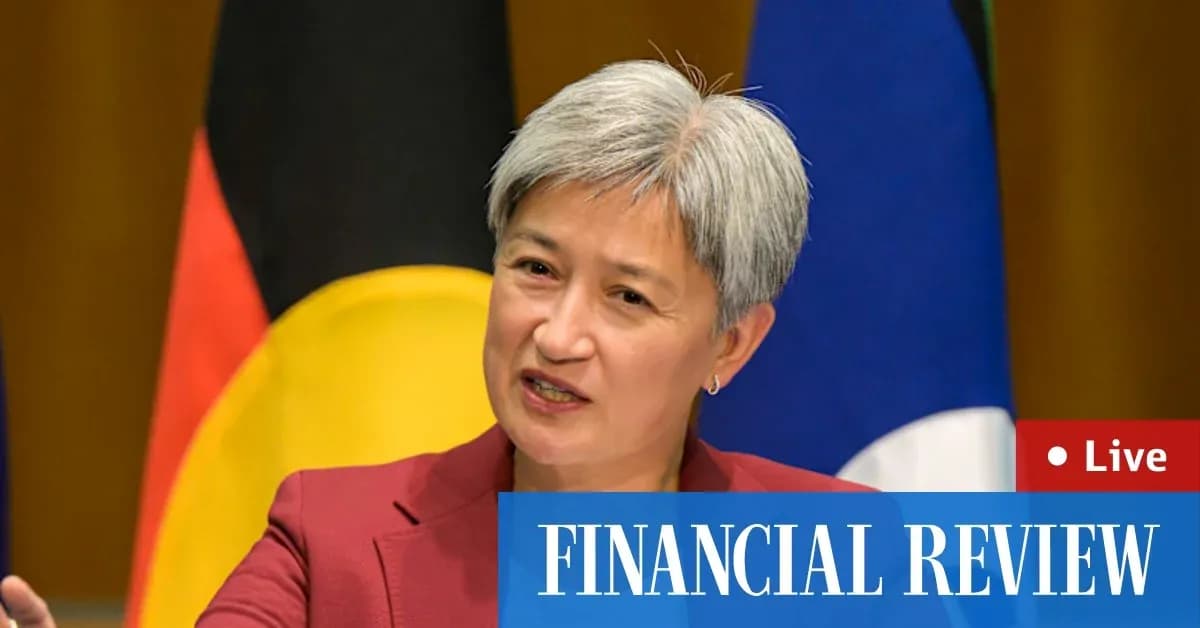
Foreign Minister Penny Wong confirmed China has notified Canberra it will conduct a sea‑based missile test into the Pacific. Wong rebuked Beijing for destabilising the region, a pointed response that reflects deepening concern about military build‑ups in Australia’s strategic backyard.
The announcement lands in an already tense environment, where every exercise, every test, every deployment is scrutinised for what it signals about the next decade in the Pacific.
Albanese moves on defence – and damage control
Anthony Albanese spent the day straddling two very different fronts: hard security and soft politics.
On the strategic side, the Prime Minister signed a new mutual defence treaty with Fiji. The pact lifts the relationship to a level approaching Australia’s longstanding mutual defence agreement with Papua New Guinea, tightening the web of regional security ties as China presses its own case across the islands.
It is a clear statement: Australia wants to be the partner of choice in the Pacific, not a bystander.
But at home, Albanese was forced into a more awkward performance. He apologised for comments made during a light‑hearted “shag, marry, or date” segment on a podcast, after remarks about Kylie Minogue drew criticism.
Joyce, never one to miss an opening, called the Prime Minister’s comments “a little bit below him”. It was a reminder that in an era where every appearance is clipped, shared and weaponised, even a throwaway game can turn into a political own goal.
AI, unions and the next big fight
As the government juggled defence pacts and diplomatic warnings, the Opposition zeroed in on a different battleground: technology and industrial power.
Deputy Liberal leader Jane Hume warned that Labor’s draft policy platform for 2026 would hand unions a veto over the regulation of artificial intelligence. For business and tech sectors watching AI reshape entire industries, that claim sets the stage for a fierce argument over who controls the rules of the next economy.
Unions see AI as a looming threat to jobs and conditions. Employers see it as an engine of productivity and growth. Hume’s attack suggests the Coalition will frame Labor as captive to organised labour just as the AI revolution gathers pace.
From missile tests in the Pacific to a winger’s quiet defiance, from Fiji’s new defence pact to a looming fight over the future of work, Australia’s contest over what kind of nation it wants to be is only intensifying.
Related News
Ilia Topuria Accuses Justin Gaethje After UFC Defeat
Tyson Fury vs Anthony Joshua Fight Date and Venue Confirmed
Switzerland Calls Up In-Form Sion Striker Winsley Boteli for Nations League
Bournemouth Secures Historic 2-1 Win Over Real Sociedad in Spain
Portugal Announces Squad for 2026 UEFA Nations League; Cristiano Ronaldo Expected to Play

Raphinha Channels Ronaldo Nazario as Barcelona's Leading Striker After Position Change