
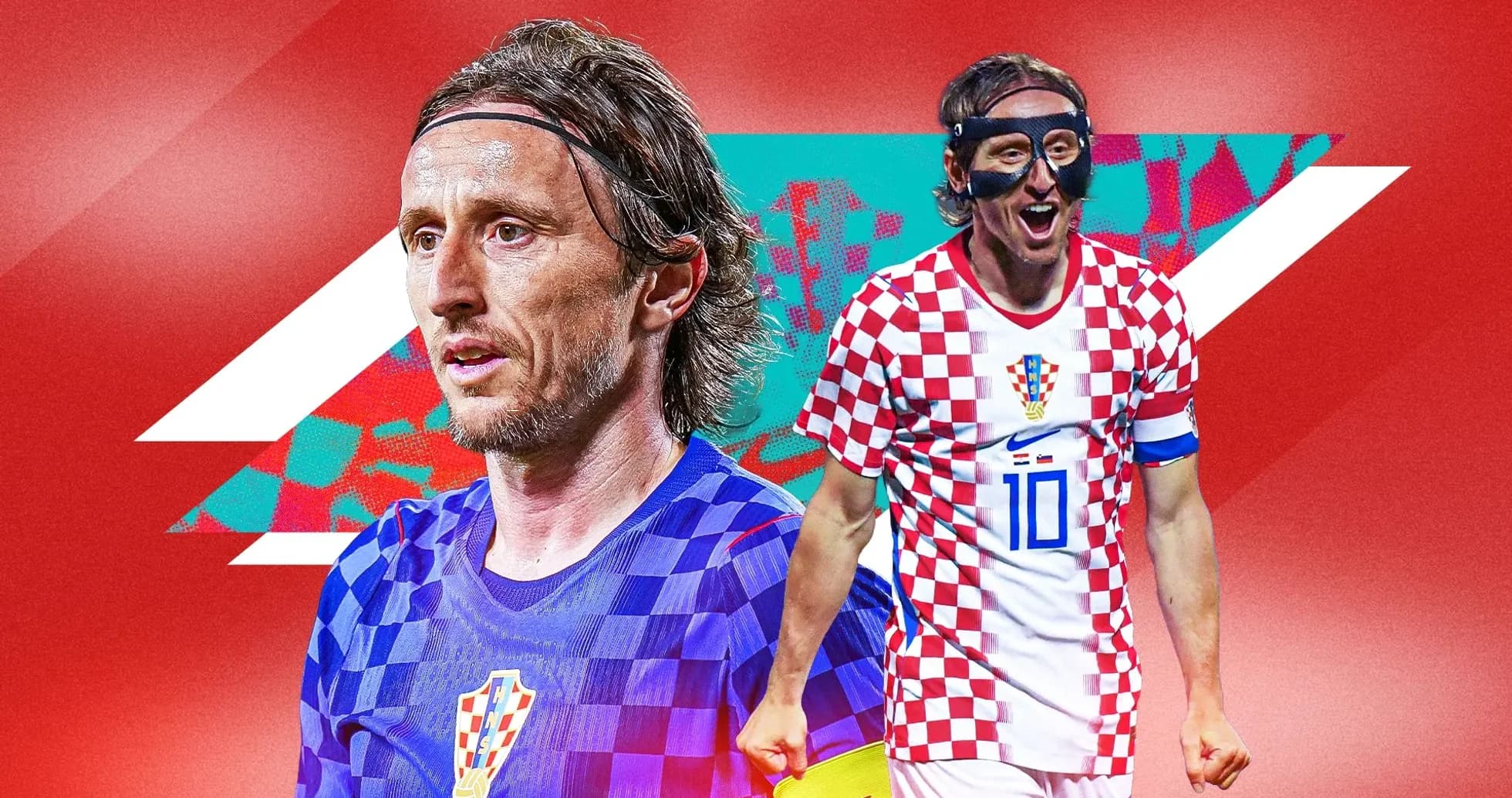
Luka Modric: Defying Age and Expectations in Football
Luka Modric looked finished that night in Leipzig.
He had dragged Croatia to the brink of the Euro 2024 last 16, scoring from the rebound after his own saved penalty against an Italy side that could barely string three passes together. It felt like one last act from a great playmaker, a farewell goal in a game that carried the weight of a knockout tie.
Then came the 98th minute. Mattia Zaccagni bent in a cruel, curling winner, and everything turned. Italy went through. Croatia went out. And Modric, clutching the Player of the Match award in the mixed zone, wore the expression of a man who knew football could be viciously unfair.
This was not the ending anyone had in mind for one of the game’s finest midfielders. Certainly not him. Certainly not the thousands in the stands, or the millions watching around the world who had grown used to Modric bending tournaments to his will.
In the press conference that followed, the room briefly stopped being neutral ground. Italian journalist Francesco Repice spoke not just for his country, but for the sport. He thanked Modric for “everything you have shown, not just tonight but in your career” and pleaded with him to “never retire”. It sounded less like a question, more like a demand from football itself.
Modric, then 38, smiled and answered with a dose of reality. He said he would love to play forever, but accepted there would come a time to hang up his boots. He would carry on for now, he added, though he didn’t know for how long.
The remarkable thing is that, even now, he still doesn’t know.
Because he’s still playing. Still dictating. Still operating at a level that mocks the calendar.
When Modric left Real Madrid last summer after 13 seasons and a mountain of trophies, his move to AC Milan looked, at first glance, like a romantic epilogue. The boyhood fan finally pulling on the Rossoneri shirt, inspired as a child by Zvonimir Boban. Nostalgia. A soft landing.
He insisted otherwise. He said he was coming to compete, to matter, to help revive Milan as a force. He was right.
The transfer made headlines across Italy. It also raised eyebrows. At his age, how much could he really give? Milan had already invested in Samuele Ricci, a 24-year-old Italian midfielder seen as part of the club’s future. Some argued Modric was a luxury, not a necessity.
Those doubts evaporated as soon as the ball rolled.
Massimiliano Allegri didn’t hesitate. He built his midfield around Modric, not Ricci. The younger man didn’t complain. Quite the opposite. Ricci called Modric “the strongest player I’ve ever played with” and spoke of his shock at the Croatian’s humility and relentless intensity in training.
The Italian media watched the same thing and shook their heads in disbelief. “If he really is 40,” wrote journalist Alberto Polverosi, “let’s clone him!” It felt less like a joke and more like a genuine wish.
Modric’s performances didn’t just defy age; they seemed to ignore it. He covered ground, snapped into tackles, demanded the ball, and still picked passes that split defensive lines. The legs might not be what they were at 27, but the brain, the timing, the competitive fire – all of it remained razor sharp.
Kaka, who knew him from their Real Madrid days, cut through the pseudo-science. Modric, he said, was simply a “force of nature”. The Brazilian pointed to his mentality: a player who had “already had it all” but still chased the next challenge, still called teammates, still led every session like it mattered. Energy. Personality. Standards.
Kaka argued that Modric wasn’t just lifting Milan. He was raising the bar for the entire league, his enthusiasm and leadership as valuable as his technique.
Allegri saw the same thing and leaned into it. Coach and playmaker grew close, so close that whispers emerged that Modric could even become his assistant on the bench in the near future. A seamless transition from pitch to dugout was suddenly on the table.
There was a catch. Milan leaned on him too much.
When Modric fractured his cheekbone in a bruising 0-0 draw with Juventus on April 26, the season’s balance shifted. He couldn’t start any of the final four league games. Milan promptly lost three of them. A team that had looked secure in third place slid to fifth, tumbling out of the Champions League spots.
One injury. One missing 40-year-old. A whole campaign derailed.
The consequences were brutal. Allegri paid with his job after failing to secure a top-four finish. Modric, the man his system revolved around, suddenly found his own future in Milan under a cloud. He has spoken warmly about the club and the city, but with the coach gone and the project wobbling, the next step is no longer obvious.
Back in Spain, Real Madrid are watching. Reports suggest the Bernabeu hierarchy would happily bring Modric home in some capacity if he chooses to stop playing this summer. An ambassador, a coach, a presence in the dressing room – they know the value of his aura.
Modric, as ever, keeps his cards close. He won’t commit publicly. What most accept, though, is that this World Cup will be his last major tournament with Croatia. That alone loads every appearance with meaning.
He will do it behind a mask, too, protecting that damaged cheekbone. At 40, in heavy conditions, with a piece of plastic strapped to his face. It sounds like a handicap. It might be. It also sounds like exactly the kind of challenge he has built a career on dismantling.
He said recently that he never really cared what people said about him, that doubt only pushed him harder. The evidence is scattered across Champions League nights, World Cup runs, and now Serie A.
So who, exactly, is going to write off a masked, 40-year-old Luka Modric on the biggest stage?
Not in England. They remember what happens when you do.
Related News
Raphinha’s Hat-Trick Powers Barcelona to 7-2 Victory Over Racing Santander
Carabao Cup Fourth Round Draw: Liverpool Set to Clash with Chelsea, Arsenal to Face Fleetwood Town
Key Football Matches to Watch in Azerbaijan This Autumn
Raphinha's Hat-Trick Drives Barcelona to 7-2 Triumph Over Racing Santander
Hansi Flick Leads Barcelona to Record-Breaking Seven Wins in a Row
Gavi Reflects on Injury Return as Barcelona Dominate Racing Santander 7-2