
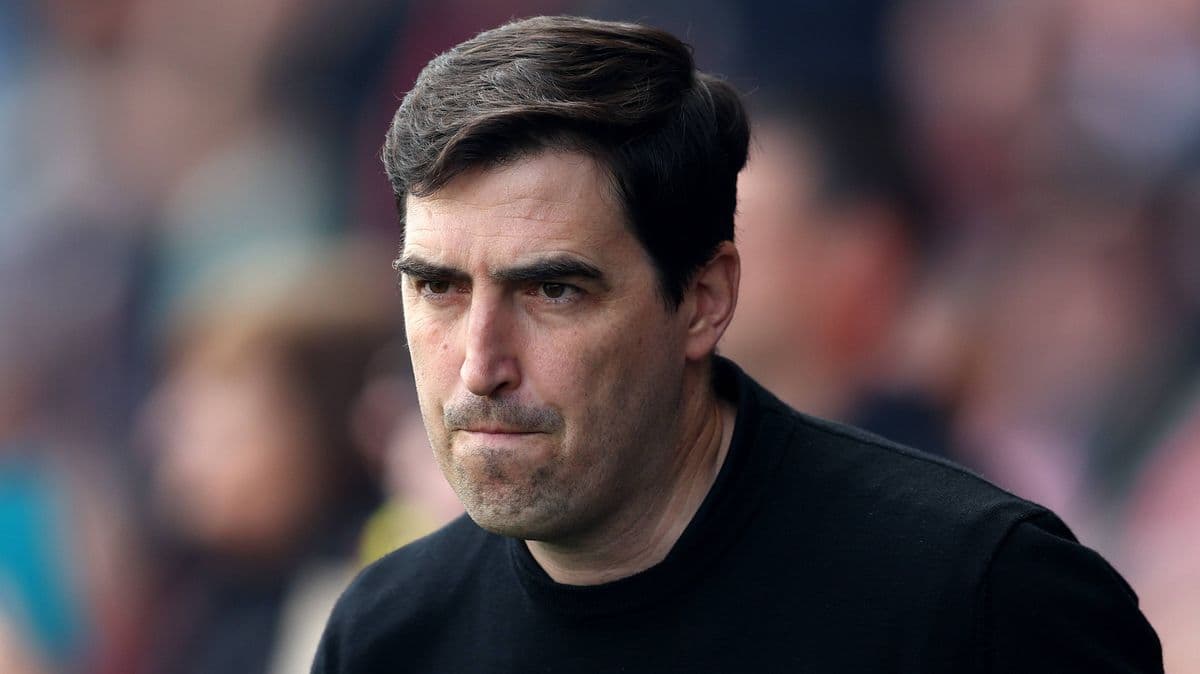
Liverpool's Contract Crisis: Iraola's Immediate Challenge
Andoni Iraola hasn’t even taken charge of a game at Anfield, yet one of Liverpool’s most damaging recent habits is already waiting for him at the door.
The Basque coach, appointed on a two-year deal after an impressive three-year spell at Bournemouth, walks into a dressing room laced with uncertainty. Contracts ticking down. Big names edging towards the exit. Value evaporating by the week.
And the first blow has already landed.
Ibrahima Konate, a mainstay under Arne Slot, has gone. The French centre-back will leave as a free agent this summer after talks over a new deal collapsed, a situation the club confirmed last week. Konate then took to social media to draw a line under his Anfield career. No fee, no leverage, no chance to reinvest. Just a void in defence for a new manager to fill.
For Iraola, that could be only the beginning.
Six more on the clock
Liverpool now face the prospect of a far bigger exodus in 12 months’ time. Six first‑team players, including the captain and the club’s No. 1, are entering the final year of their contracts.
- Virgil van Dijk.
- Alisson Becker.
- Joe Gomez.
- Curtis Jones.
- Wataru Endo.
- Stefan Bajcetic.
If none of them agree fresh terms, all six can walk away for nothing next summer.
On the pitch, that’s the spine of a team. Off it, that’s a financial black hole. Their combined estimated value of around £74 million, according to transfermarkt, is at risk of simply disappearing. For a club that prides itself on smart trading, it’s a brutal scenario: assets that could have been sold at peak or near-peak value instead drifting towards the free-agent market.
For Iraola, it cuts straight into his planning. How do you build a long-term structure around players who might be gone in a year? How do you hand the armband, the goalkeeping gloves, the central roles in midfield and defence to men who hold all the cards in negotiations?
A recurring mistake
This is not a one-off misstep. It’s a pattern.
Liverpool have repeatedly allowed key players to edge towards the end of their deals, only to see their market value sink or vanish. The club’s reluctance or inability to act early has turned contract management into a running sore.
Last season laid it bare. The futures of Van Dijk, Mohamed Salah and Trent Alexander-Arnold hovered over the campaign, a constant backdrop to every result and every press conference. It was more than a boardroom issue; it bled into the atmosphere around the team, an unwelcome distraction for a club that had only just reclaimed the Premier League title under Slot the year before.
The resolution was messy. Alexander-Arnold left in the summer of 2025, heading to Real Madrid before his contract expired. Liverpool at least clawed back a fee, but it was a fraction of what a player of his calibre might have commanded with a longer deal in place. Van Dijk and Salah eventually signed short-term contracts, but by then the balance of power had swung decisively their way. They dictated the terms, not the club.
Now, Iraola inherits a similar standoff with a new cast of names but the same underlying problem.
Power, planning and a narrow window
The dynamic is clear. When a player moves into the final year of his contract, leverage shifts. Agents know it. Clubs across Europe know it. The threat of a free transfer sharpens every negotiation.
Van Dijk, Alisson, Gomez, Jones, Endo and Bajcetic are in that exact position. Each can sit tight, wait, and watch the numbers change in their favour. Sign now, or sign later with more options on the table. Or don’t sign at all.
Liverpool, and Iraola in particular, can’t afford to drift through another season hoping it all sorts itself out.
The new head coach must quickly align with the Anfield hierarchy and make hard calls. Who is central to his project and worth pushing the wage structure for? Who should be cashed in on now, even at a reduced fee, to avoid a repeat of the Konate scenario? Which younger players, like Bajcetic, represent long-term pillars rather than short-term speculation?
Every decision carries risk. Keep them and you might lose them for nothing. Sell them and you might rip out the core of a squad still adjusting to a new manager and the fallout from Slot’s abrupt departure after a grim title defence.
Yet the cost of indecision is already written across Liverpool’s recent past.
Iraola was hired for his sharp ideas and his ability to mould competitive teams from imperfect resources. His first major test at Anfield, though, won’t be a tactical tweak or a bold substitution. It will be how ruthlessly he and the club move in the next few months to break a cycle that has already claimed Konate — and threatens to reshape Liverpool again, this time on a far larger scale.
Related News

Raphinha’s Hat-Trick Powers Barcelona to 7-2 Victory Over Racing Santander
Carabao Cup Fourth Round Draw: Liverpool Set to Clash with Chelsea, Arsenal to Face Fleetwood Town
Key Football Matches to Watch in Azerbaijan This Autumn
Raphinha's Hat-Trick Drives Barcelona to 7-2 Triumph Over Racing Santander
Hansi Flick Leads Barcelona to Record-Breaking Seven Wins in a Row

Gavi Reflects on Injury Return as Barcelona Dominate Racing Santander 7-2