
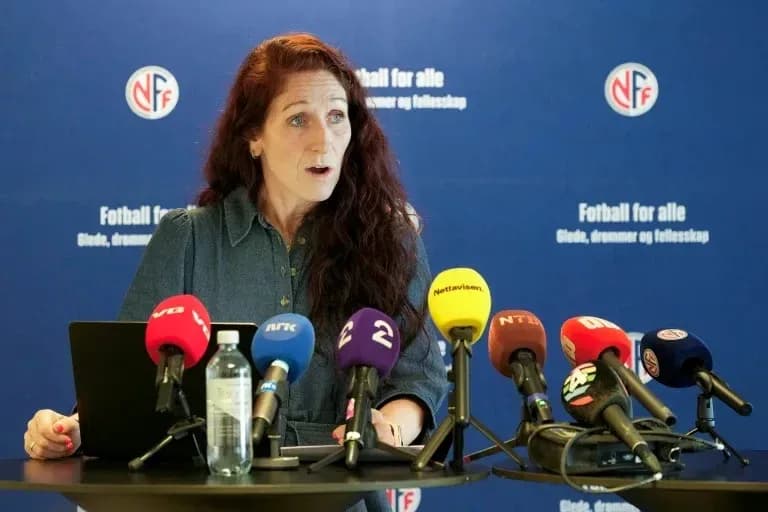
Lise Klaveness: Confronting FIFA's Leadership Crisis
In the polished corridors of global football politics, Lise Klaveness has never quite played by the script.
The president of the Norwegian Football Federation, a 45-year-old lawyer and former international with 73 caps, has spent the past few years doing what most in her position avoid: confronting FIFA, and its powerful president Gianni Infantino, in public and in plain language.
Now, as Infantino faces mounting criticism over his leadership and a series of bruising controversies, some in the game are daring to imagine something once unthinkable — Klaveness not just as his fiercest critic, but as his successor.
From reform hopes to open revolt
When Infantino swept into office in 2016, he did so on a wave of reformist promises. Governance. Transparency. Distance from political power.
Klaveness remembers that clearly. “He was a candidate who had been elected on a reform programme focused on good governance,” she told AFP. Then, in her view, the project unravelled.
“Then things quickly deteriorated: from keeping a distance, we moved to giving up, and even backtracking, all against a backdrop of a lack of independence from heads of state and other influential figures, particularly from World Cup host countries,” she said.
The breaking point came last week. Infantino’s plan to open FIFA competitions, including the World Cup, to private investors was slapped down in record time. The backlash was immediate and fierce. On Friday, Klaveness went a step further and openly called for him to resign.
For FIFA’s inner circle, that was a direct challenge to the throne.
The first shot: Qatar and a World Cup built on doubt
Klaveness did not wait for the current crisis to find her voice. She fired her first major shot in 2022, shortly after taking over the Norwegian federation.
In Doha, with the World Cup circus in full swing, she stood up and said what many whispered but few dared to frame so bluntly. She lamented that “human rights, equality, democracy, the core interests of football, were not in the starting 11” when Qatar was awarded the tournament.
The message cut through. It also marked her as a problem for FIFA’s hierarchy.
Norway then turned words into action. In 2023, its federation refused to back Infantino’s re-election, a rare open snub that signalled deep dissatisfaction with his rule.
Trump, Balogun and a battle over FIFA’s soul
If Qatar was the first flashpoint, the list of grievances has only grown.
In recent months, Klaveness has watched with increasing anger as FIFA’s leadership became entangled with political power at the very top. The decision to award a “Peace Prize” to US President Donald Trump — a man with whom Infantino has a conspicuously close relationship — stunned many in the game.
Then came the lifting of the suspension of US player Folarin Balogun at the 2026 World Cup after an intervention by Trump. For critics, it looked like another line crossed, another example of political influence seeping into sporting justice.
The final straw was the aborted move to open FIFA to private investors, a plan that rattled traditionalists and reformers alike.
Norway has had enough. Its federation has decided to bring all three issues — the Trump “Peace Prize”, the Balogun case, and the investor plan — before FIFA’s Ethics Committee. That is not a symbolic gesture. It is a direct attempt to challenge the way the organisation is being run.
A voice that carries further now Norway are back on the map
Klaveness speaks from a stronger platform than many of her predecessors in Oslo. Norway, long on the fringes of major tournaments, put together an impressive run at this year’s World Cup before falling in the quarter-finals to England.
With sporting credibility restored, her words land harder.
Internationally, commentators have highlighted what they call her “strong moral compass” and have begun to talk about her as a serious option to replace Infantino — if he were to step aside.
For now, that remains hypothetical. Infantino is standing for re-election for a fourth and final term next March and is, at this stage, the only declared candidate.
Yet the idea of a woman leading FIFA, once dismissed as fantasy, is now being floated by figures who know the institution from the inside.
Not a Game of Thrones, she insists
Klaveness herself refuses to frame this as a personal duel with Infantino.
“The crisis in world football should not be reduced to a simple ‘Game of Thrones’ power struggle,” she has argued, pushing instead for a renewed focus on governance, rules, and independence from political influence.
“For us, it has never been a personal issue against Gianni Infantino,” she told AFP. “The problems go beyond the person of the president.”
She knows her name is being thrown around as a possible successor. She has “registered” the speculation. But when asked directly if she is a candidate, she brushes it away. “We’re not there yet.”
The message is clear: this is about the system, not the throne. At least for now.
The ballot box reality
For all the praise, the path from Oslo to Zurich is littered with obstacles.
“In addition to being seen as extremely radical in many places, especially outside Europe, she is a woman. That is also likely to count against her in many regions of the world,” warned Mina Finsted Berg.
The numbers back up that caution. Even within UEFA, where one might expect her support to be strongest, Klaveness has struggled. In 2023, she failed to win election to the Executive Committee. She only made it onto the body in 2025, and then only because she was the sole candidate for the seat reserved for women.
That reality fuels doubts about her global prospects.
If she already has such a hard time getting elected in Europe, how could she convince Africans and South Americans?” asked Erik Thorstvedt, former Norway goalkeeper turned commentator.
It is a blunt question, and an uncomfortable one for those who see her as the standard-bearer for reform.
Yet the very fact it is being asked tells its own story. A woman who stood in Doha and said human rights were left out of the “starting 11” is now central to the conversation about who should lead world football next.
The battle lines are drawn. The ballot boxes will decide whether the sport is ready for the kind of change Klaveness represents — or whether FIFA’s old guard still holds the final word.
Related News
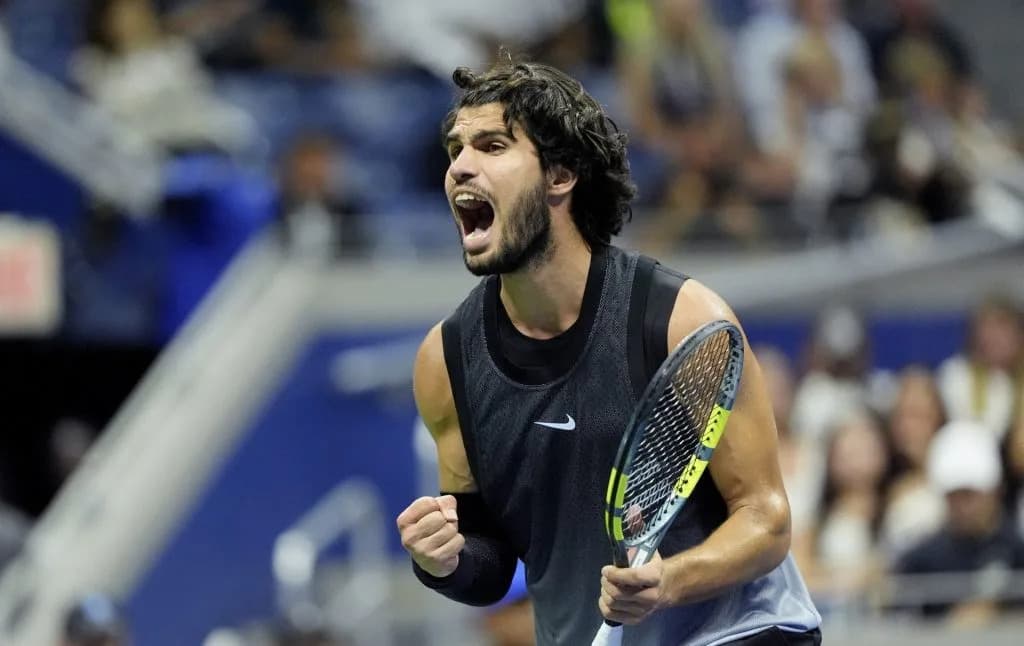
Carlos Alcaraz Urges Tennis Organizers to Stop Matches Finishing in the Early Morning
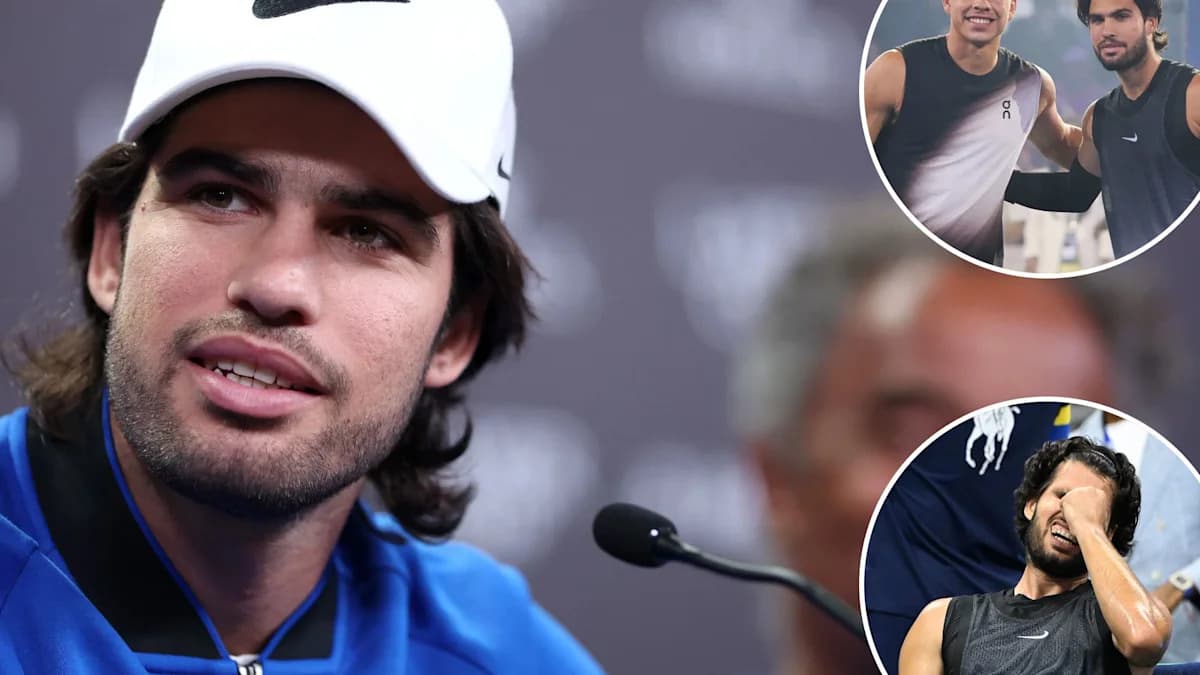
Carlos Alcaraz Frustrated by 3:30 a.m. US Open Finish: 'Too Much'
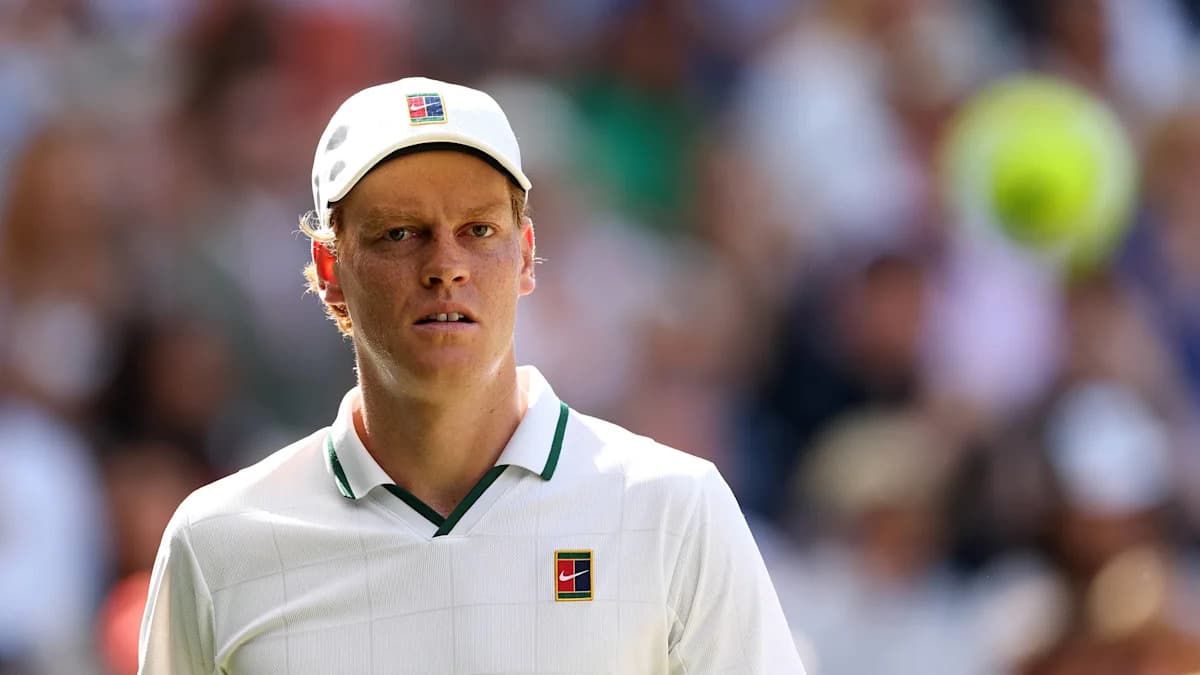
Jannik Sinner Set for ATP 500 Return in Beijing with Novak Djokovic Also Competing
Meet Iva Jovic: The Rising American Tennis Talent
Flavio Cobolli Shares Insights on Training with Jannik Sinner Ahead of His Tennis Return
Till vs Romero: Fight Details, Undercard, and Viewing Info for This Weekend