
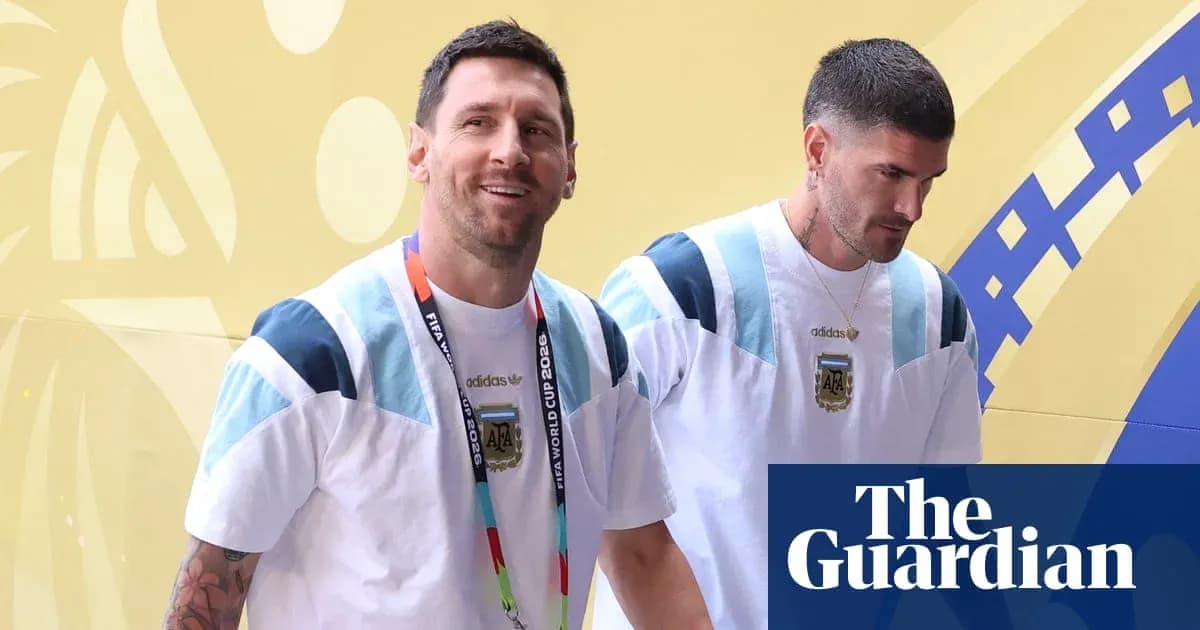
Lionel Messi's World Cup Journey: A Legacy Beyond the Final
Lionel Messi’s last stand, quiet finish and all, still belonged at the centre of this World Cup story.
For a month, the 39-year-old played the tournament on his own terms. No defensive shackles, no tactical handcuffs, just a roaming conductor in sky blue and white. Eight goals, four assists, more progressive passes than anyone else, according to Futi – the numbers only hint at the grip he had on Argentina’s campaign.
He dragged them back against Cape Verde in a 3-2 win. He assisted and then equalised against Egypt. He created both of Argentina’s late goals to stun England. Every time the tournament tried to spit Argentina out, Messi bent it back to his will.
Then came the final. And a void.
Across 139 minutes, including stoppage time, Messi completed just 28 of 39 passes, took a single shot and barely left a fingerprint on the game. No trophy, no Golden anything. Just the strange sight of the greatest World Cup footballer of his era fading out on the biggest night. Even so, his body of work at this tournament simply stretched an already towering World Cup legacy. Very few have ever lived at that altitude.
The lieutenants and the grinders
Behind Messi, Argentina’s engine room kept the machine running. Rodrigo De Paul, now of Inter Miami, started all but two matches and gave 70 rugged minutes in the final against Spain. He was never meant to be the headline act. He pressed, recycled, jabbed at opponents’ ankles and angles, and helped haul Argentina to a second straight World Cup final.
Elsewhere, the tournament belonged to less heralded figures who seized their moment.
Stephen Eustáquio was Canada’s metronome and main creative outlet. Cross after cross, 2.76 chances created and 0.36 expected assists per 90 minutes, 46 progressive passes – sixth-most in the competition. Then came his defining act: in the dying minutes of the last-32 tie with South Africa, he intercepted a clearance, cushioned the ball on his chest and lashed a half-volley into the bottom corner. One swing of his right foot delivered Canada’s first-ever World Cup knockout win. He has since gone back to Porto after a loan spell at Los Angeles FC, but his standing at home has changed forever.
For South Africa, 20-year-old Mbekezeli Mbokazi arrived as the squad’s youngest player and left as one of its revelations. The Chicago Fire defender, once Orlando Pirates’ captain, played with the poise of a veteran. His displays pushed his Transfermarkt valuation from $4m to over $9m. The World Cup can still catapult a career; Mbokazi is now evidence.
Paraguay, starved of the ball with an average possession of just 29%, asked their midfielders to live off scraps. Matías Galarza adapted. He started every match after the opener, scored the winner against Turkey and assisted Julio Enciso against Germany in the knockouts. Andrés Cubas, the Vancouver Whitecaps destroyer, did the dirty work behind him. Cubas played every minute of Paraguay’s five games, anchoring a defence that took Germany to penalties and restricted France to a single goal. Against the French, he won seven of 12 duels, made seven tackles, three interceptions and even found time to clash with Kylian Mbappé.
New Zealand’s Finn Surman used the stage to announce himself. The 22-year-old Portland Timbers centre-back threw himself into last-ditch tackles, hacked away danger and even scored the All Whites’ only goal in a 3-1 defeat to Egypt. At the other end of his country’s age spectrum, Michael Boxall looked every bit the veteran he is, a half-step late on nearly every goal New Zealand conceded.
For the United States, the picture was more complicated. Sebastian Berhalter became one of Mauricio Pochettino’s go-to substitutes, appearing in every match. When he finally started, as a No 6, the US creaked badly without a natural defensive midfielder in the squad. That structural flaw belonged to the roster, not the Vancouver Whitecaps man, who still finished with a goal and an assist and is reportedly on his way to Middlesbrough.
Matt Freese, NYC FC’s goalkeeper, walked away with a tournament defined by a single bad night. Across four games he made nine saves and passed the ball well, yet one poor performance stuck. Tim Ream suffered something harsher: a brutal unmasking. At 38, the Charlotte centre-back was torn apart in a 4-1 last-16 hammering by Belgium. Charles De Ketelaere ghosted behind him for the opener, then rose above him for Belgium’s second just two minutes after the US had equalised. A veteran’s renaissance, briefly promised, collapsed in real time.
Matt Turner fared no better in his lone start, conceding three goals against Turkey without making a save. Miles Robinson barely featured at all, his only minutes coming in a dead rubber as Pochettino’s distrust of his defensive depth became obvious. Max Arfsten’s World Cup amounted to a 90th-minute entrance in that same 4-1 loss to Belgium, without a single touch.
Familiar names, fading light
Some of the biggest reputations arrived with history behind them and left with questions trailing in their wake.
James Rodríguez, 12 years on from his breakout in Brazil and just two removed from a sparkling Copa América, looked like a player chasing echoes. On loan at Minnesota United, he still produced flashes of quality, but there was no end-product, no decisive moments. Colombia went out meekly to Switzerland in the last 16. A World Cup journey – and, in many ways, a club career – that once felt charmed now looked like a long, quiet fade.
Son Heung-min endured his own disappointment. The 34-year-old LAFC forward failed to score in either of his two starts and watched from the bench as South Korea played their must-win final group match without him. For a player so often his nation’s reference point, it was a jarring image.
Miguel Almirón’s tournament with Paraguay will be remembered for the wrong reason. Across four starts he managed just four shots and 0.11 expected goals, but his defining moment came in the group game against Turkey. Covering his mouth during an altercation, he received a red card – the first time the International Football Association Board’s new mouth-covering ban had been enforced. A modern quirk of the laws cut short his World Cup.
Croatia’s forwards also struggled to leave a mark. Petar Musa, given two starts and 110 minutes, mustered just one shot, though he did at least score from it. Marco Pasalic, the Orlando City winger, produced a lively display in Croatia’s third group game but squandered his one clear chance.
Quiet workers, brief cameos
Not everyone gets a sweeping arc. For many, this World Cup was a collection of small, sharp snapshots.
Steven Moreira anchored Cape Verde’s back line, a steady presence as his country pushed Spain, Uruguay and Argentina to the edge. Aiden O’Neill played the same understated, possession-heavy role for Australia that he does for New York City FC, winning Superior Player of the Match against Paraguay and following it with another assured display versus Egypt.
Lucas Herrington, just 18 and the youngest in Australia’s squad, forced his way into the starting XI for the final two matches, a notable achievement for a Colorado Rapids centre-back at the very start of his career. Kai Trewin stepped in at half-time of the knockout tie with Egypt after Jordan Bos’s injury and helped drag the game all the way to penalties.
Panama’s Carlos Harvey started all three group games, threatening mainly from set-piece headers. His compatriot Aníbal Godoy had only one minute plus stoppage time against Ghana, completing all eight of his passes but unable to stop a last-gasp winner. It was that kind of tournament for Panama: earnest, thin on reward.
Canada’s supporting cast flickered without ever catching fire. Richie Laryea drove play down the left and posted 0.26 xA per 90, yet his defensive lapses proved costly. He lost his man from a corner for Bosnia and Herzegovina’s opener and repeatedly drifted out of position against Switzerland. Jacob Shaffelburg came off the bench in all five matches but never managed to bend a game his way. Jonathan Osorio’s two late cameos, both from the 87th minute onward, left no real imprint. Jayden Nelson’s World Cup was reduced to an 87th-minute introduction in a 3-0 knockout defeat to Morocco. Mathieu Choinière’s entire tournament boiled down to one start in a 2-1 loss to Switzerland.
Maxime Crépeau, in goal, endured a stark set of numbers: six goals conceded, six saves, five games. For a keeper, that ratio tells its own tale.
Haiti’s players fought on the margins. Danley Jean Jacques, alongside Jean-Ricner Bellegarde, tried to hold a double pivot together for the tournament’s lowest-ranked team. Louicius Deedson played all three group defeats, logging 112 minutes and just 13 completed passes, a reflection of how little of the ball Haiti saw. Derrick Etienne Jr’s World Cup amounted to nine minutes and four passes against Brazil.
Iraq’s Ahmed Qasem played in every match and lasted the full 90 against France. In their final group game, he started again but was sacrificed early after Rebin Sulaka’s 13th-minute red card forced a tactical reshuffle. Sometimes the World Cup is ruthless in ways that have nothing to do with form.
For the United States-based contingent, roles varied from central to almost invisible. Braian Ojeda’s entire tournament with Paraguay was a 21-minute cameo against Germany and nine touches. For Orlando City’s contingent, there was a similar mix: Pasalic’s missed chance for Croatia, Crépeau’s unforgiving statistics for Canada, and Cubas’s standout work for Paraguay.
And then there was Juan Manuel Sanabria. Tasked with dealing with Lamine Yamal in Uruguay’s final group game against Spain, the Real Salt Lake man largely shut the teenager down. Yamal finished with just 0.03 xG, 0.10 xA and five completed dribbles from 12 attempts. In a tournament obsessed with the future, one of the most hyped young players ran into a quietly excellent, largely anonymous roadblock.
A tournament of legacies, rising and falling
Some left with transfer values doubled, others with reputations dented. Some will use these weeks as a springboard; others will see them as a closing chapter.
Messi’s final World Cup may have ended without silverware or a personal prize, but it still added another layer to a story that has stretched across generations. Around him, players from Chicago to Cape Town, Portland to Porto, New York to New Zealand, all took their own measure of the stage.
The question now is simple and unforgiving: when the next World Cup comes around, how many of these names will still be central to the story – and how many will be remembered only for this fleeting, fragile month?
Related News
Ilia Topuria Accuses Justin Gaethje After UFC Defeat

Tyson Fury vs Anthony Joshua Fight Date and Venue Confirmed
Switzerland Calls Up In-Form Sion Striker Winsley Boteli for Nations League
Bournemouth Secures Historic 2-1 Win Over Real Sociedad in Spain
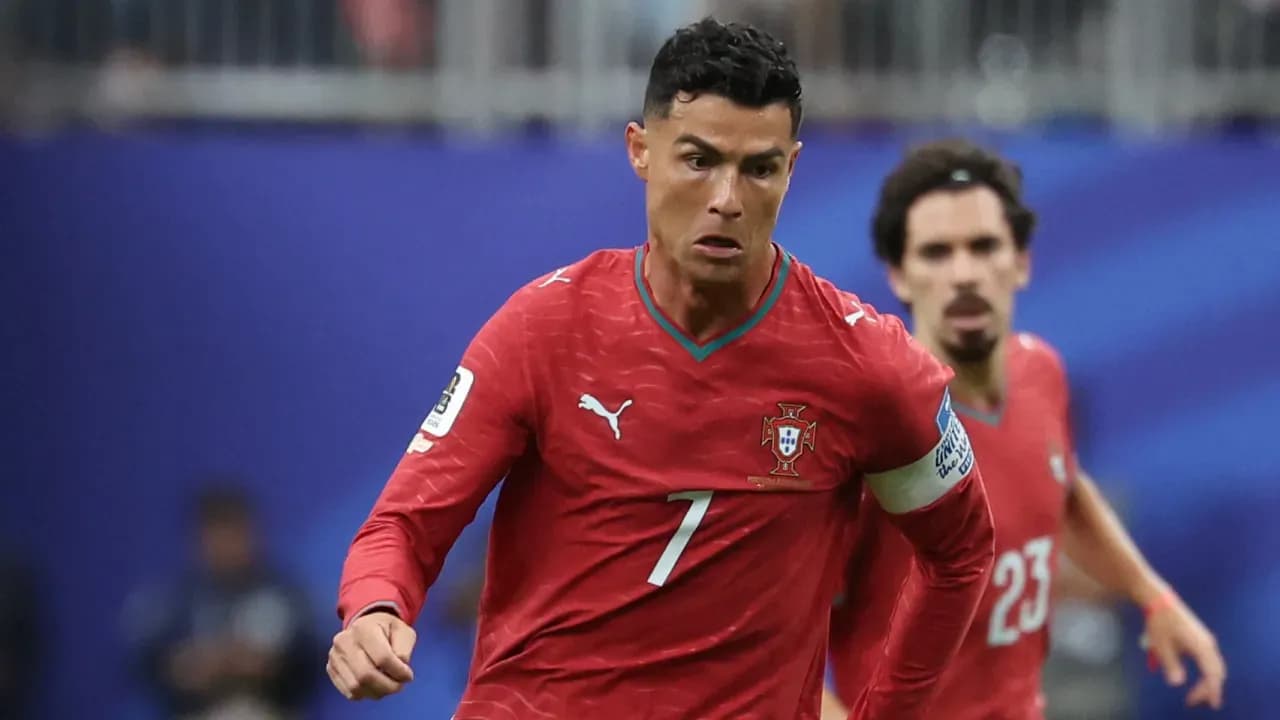
Portugal Announces Squad for 2026 UEFA Nations League; Cristiano Ronaldo Expected to Play

Raphinha Channels Ronaldo Nazario as Barcelona's Leading Striker After Position Change