
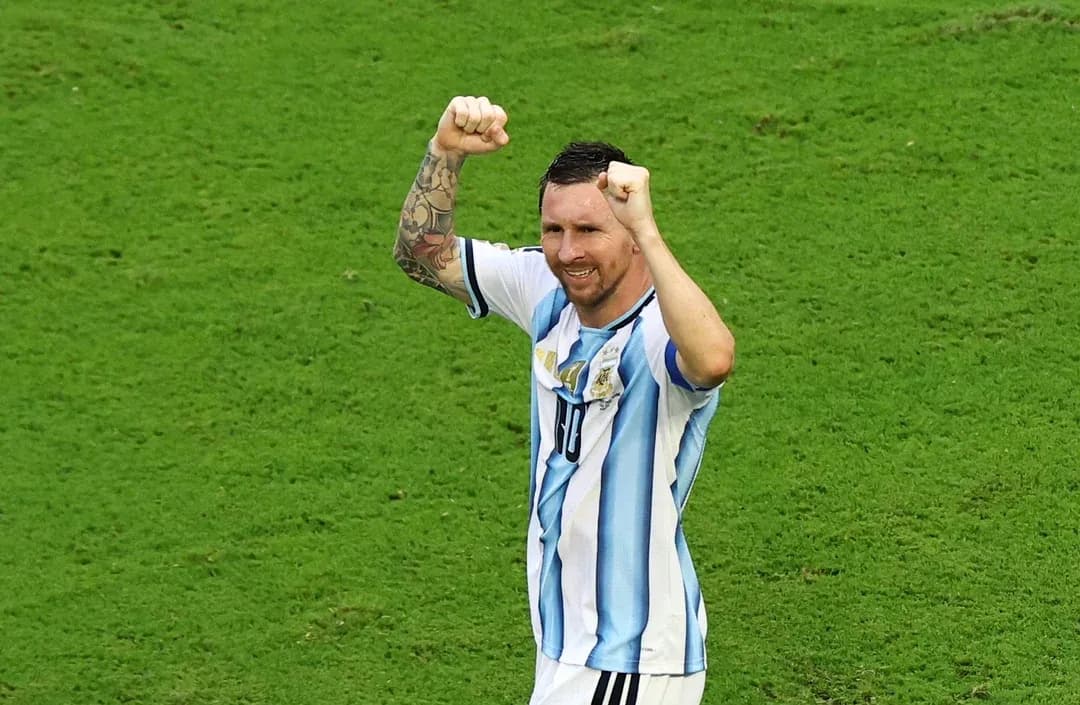
Lionel Messi Shines Again in World Cup Knockout Stage
Lionel Messi needed only one moment.
On a humid Friday night at Miami Stadium, with tension still crackling through a cautious Round of 32 tie between Argentina and Cape Verde, the ball dropped to the man this World Cup keeps orbiting around. One touch, one angle, one familiar left foot. Game broken open.
The move began with Lisandro Martínez, head up, surveying a crowded middle of the pitch and deciding he’d had enough of it. His sweeping diagonal pass ripped Cape Verde’s defensive shape apart, finding Messi as he drifted in from the right, ghosting into the box the way he has for nearly two decades.
Messi took control, slowed the chaos for a split second, then accelerated into it. Cape Verde goalkeeper Vozinha — one of the unlikely cult heroes of this tournament and known to many now as “El Abuelo” — rushed to close the angle. He has denied bigger names than most expected over the past weeks. He had no answer here.
Messi opened his body, shaped as if to curl across goal, then instead hammered his left-footed strike high at the near post, into the top corner on Vozinha’s left side. The net snapped, the stadium erupted, and Argentina finally had their breakthrough in the 29th minute.
It was not just a goal. It was another layer added to a career already drowning in milestones.
This strike was his seventh of the 2026 FIFA World Cup, a number that now carries historic weight. Messi becomes the first player ever to score seven or more goals in two different World Cups, having matched that same tally at Qatar 2022. The stage, the pressure, the years on his legs — none of it has dulled his edge when the tournament tightens.
His relationship with the knockout rounds has long separated him from his peers. While Portugal’s Cristiano Ronaldo has finally ended his own drought in World Cup knockout matches at this tournament, Messi continues to operate in a category of one. He remains the only player to have scored in five different World Cup knockout stages, and he has done it in five consecutive editions.
- Germany.
- Brazil.
- Russia.
- Qatar.
- Now the United States.
The World Cup keeps changing — formats, hosts, generations — and Messi keeps bending it to his will. The Round of 32 itself is new, a product of the expanded format introduced for 2026, but even that fresh chapter now carries his fingerprints. This was his first goal in this added stage, another box ticked on a list that barely has room for new lines.
In Qatar 2022, he struck in every step of the old ladder: Australia in the Round of 16, the Netherlands in the quarterfinals, Croatia in the semifinals, France in the final. Each time, the stakes rose and he followed. The pattern is repeating, just on a bigger canvas.
At Miami Stadium, the symbolism was hard to ignore. An Inter Miami forward, in his adopted city, lighting up a World Cup match with the same left foot that has filled this arena since his arrival in club football. Cape Verde, spirited and stubborn, had held firm until that moment. Then Messi appeared in the space between their lines, and all their good work evaporated in a flash of movement and a blur of pink boots.
Vozinha, for all his popularity and defiant performances this summer, could only watch the ball scream past his near post. “El Abuelo” has turned into a fan favorite, a veteran fighting off younger forwards and bigger reputations. On this night, he ran into the one opponent he could not outlast.
As Argentina’s players swarmed their captain, there was no wild celebration from Messi, just that familiar mix of relief and quiet satisfaction. Another knockout game. Another goal. Another record nudged into place.
The World Cup keeps asking new questions. Messi, even now, keeps finding new ways to answer them.
Related News
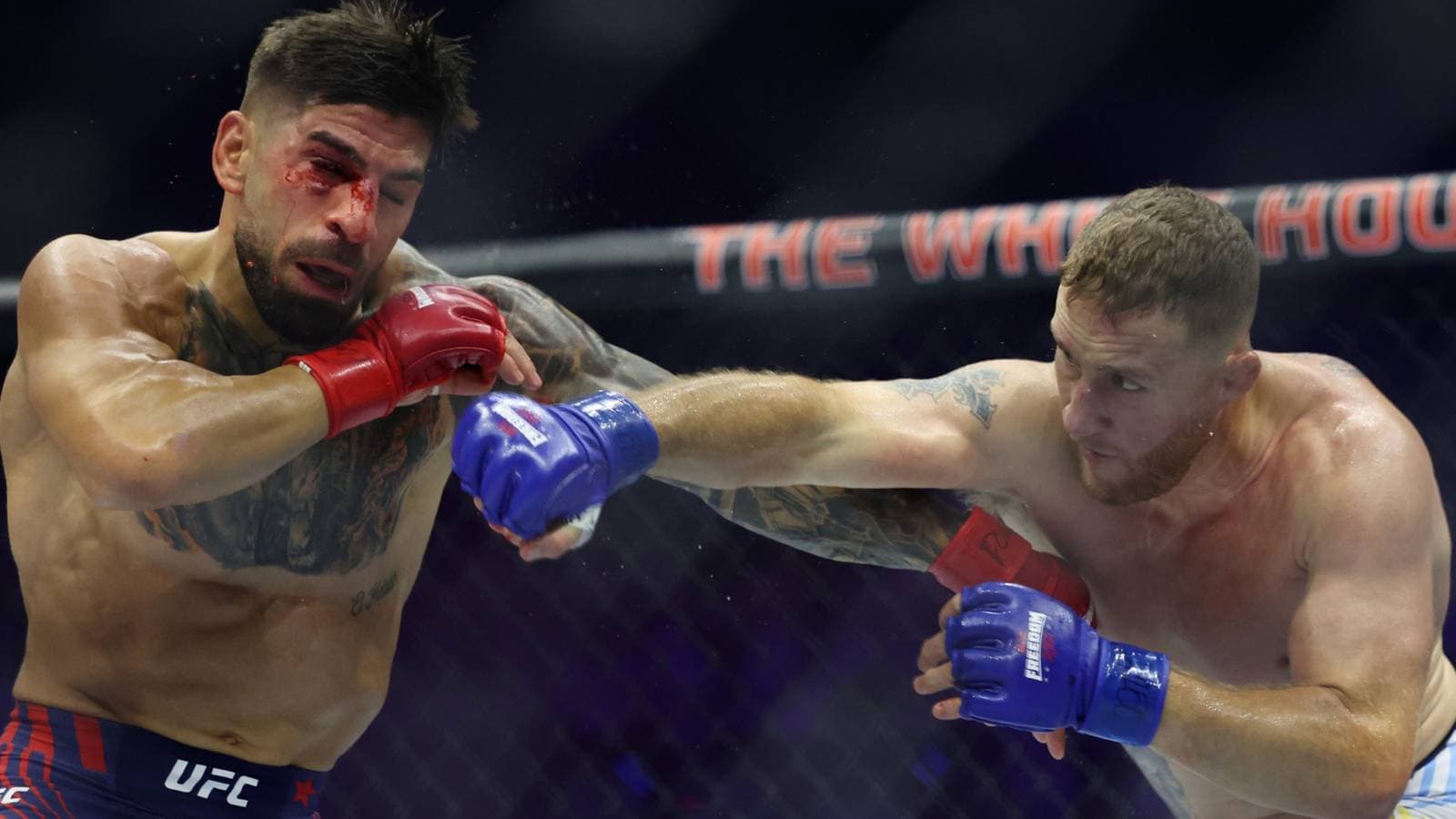
Ilia Topuria Accuses Justin Gaethje After UFC Defeat

Tyson Fury vs Anthony Joshua Fight Date and Venue Confirmed
Switzerland Calls Up In-Form Sion Striker Winsley Boteli for Nations League
Bournemouth Secures Historic 2-1 Win Over Real Sociedad in Spain
Portugal Announces Squad for 2026 UEFA Nations League; Cristiano Ronaldo Expected to Play
Raphinha Channels Ronaldo Nazario as Barcelona's Leading Striker After Position Change