
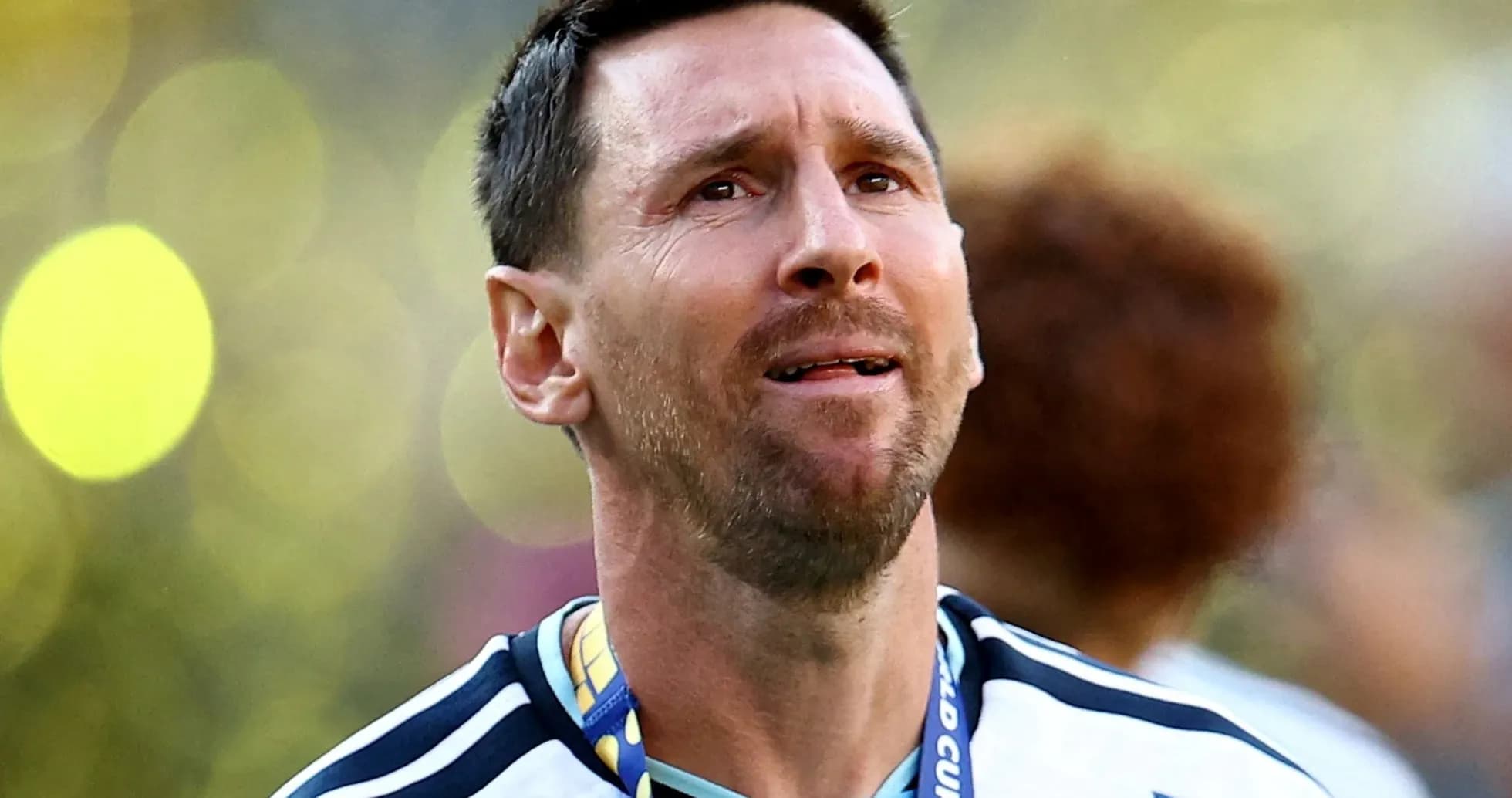
Lionel Messi's Emotional Farewell After World Cup Final Loss
Lionel Messi stood alone in the rain of camera flashes, silver medal around his neck, eyes red. East Rutherford, New Jersey, felt a long way from Lusail, from the night he touched footballing immortality. This time, there was no golden trophy, no lap of honour. Just the sting of a final lost and the quiet possibility that this was the last World Cup image of the greatest of them all.
Spain had just beaten Argentina 1-0 in the 2026 World Cup final, strangling the defending champions with a ruthless, disciplined defence that did not allow a single shot on target. For a team that had spent four years playing with the swagger of world champions, it was a brutal, suffocating end.
Messi, 39 during this tournament, did not say the words everyone is waiting to hear. He did not confirm that his World Cup story is over. But his Instagram post on Monday night carried the weight of a goodbye.
“The pain is immense, and this wound will take time to heal,” he wrote, the message set against a photo of him staring at that silver medal. No trophy in his hands this time, only the reflection of what slipped away.
He did not stay in the darkness for long. The captain who has carried a nation for two decades shifted the lens back to the journey.
“I also hold onto all the good things… The matches we turned around by giving it our all – moments that will remain in our memories forever – and the support of an entire country which, combined with this group’s hard work and effort, brought us back among the world’s elite once again.
“It is hard to fully appreciate our achievement right now, but this group reached two consecutive World Cup finals.”
Significance of the Achievement
That line matters. Two consecutive World Cup finals. Argentina’s modern era, long haunted by near-misses, has become one of sustained excellence. In Qatar in 2022, they survived a 3-3 epic against France and then held their nerve in a penalty shootout to give Messi the one title that had always eluded him. In North America in 2026, they marched deep again, rallying past England in a dramatic semifinal, only to be stopped by a Spanish side that refused to open the door even an inch.
The contrast was stark. Against England, Argentina had looked like a champion that refused to die, dragging themselves back through sheer will and familiarity with pressure. Against Spain, they looked trapped in a tactical cage. No space, no rhythm, no shot on goal. Messi searched, dropped deeper, tried to knit passes, but the gaps never appeared.
Spain celebrated a new era. Argentina walked off with the hollow consolation of being runners-up. Messi walked off with something heavier.
He did not lash out. He did not make excuses. He congratulated the champions.
“I also want to congratulate Spain on winning the championship,” he wrote, a simple line that underlined the respect between eras and ideas. One generation of dominance tipping its hat to another.
If this was the end of Messi’s World Cup road, it was a farewell framed by numbers that will live for decades. Early in the tournament he broke Miroslav Klose’s record of 16 World Cup goals, stretching his tally to 21. For a moment, that seemed untouchable. Then Kylian Mbappé, his old rival from that wild 2022 final, chased him down and then went past him, finishing on 22.
Mbappé also edged him to the Golden Boot in this tournament, scoring 10 goals to Messi’s eight. Even at 39, Messi still sat in the thick of the race, still dictating games, still dragging defenders into zones they did not want to visit. The sport has moved into a new era, but he has refused to leave quietly.
The clock, though, is merciless. Messi will be 43 by the time the 2030 World Cup kicks off in Spain, Portugal and Morocco. He did not rule anything out. He did not promise one last dance. He simply left the door half-open and the conversation burning.
For Argentina, the emotions are tangled. They lost a final, yes, but they did it as reigning champions, as a team that has re-established itself at the top of the game. Messi’s words reflected that duality.
“Thank you from the bottom of my heart for every greeting and message,” he wrote. “Once again, we managed to unite as a country and stand together, sharing the immense pride of being Argentine.”
That, more than any statistic, has defined his international career since the heartbreaks of 2014 and the Copa América finals that followed. The boos turned to songs. The doubts turned to devotion. The player who once briefly walked away from the national team came back to find a country ready to walk with him.
Now comes the comedown. According to ESPN, Messi and his Argentina and Inter Miami teammate Rodrigo De Paul will sit out Inter Miami’s next two regular-season matches and the MLS All-Star Game to rest and recover from the World Cup. The body needs a pause. The mind probably does too.
He leaves this tournament without the trophy, but not without a mark. A record World Cup goals tally, even if it lasted only days. A second straight final. A reminder that even near 40, he still bends games to his will.
The image that lingers, though, is not a number. It is the sight of Messi on that pitch in New Jersey, silver medal against sky-blue and white, eyes glistening, applauding the fans who stayed to sing his name.
If this was the last chapter of his World Cup story, it ended not with fireworks, but with something quieter, more human: a legend confronting time, defeat, and the possibility that the next World Cup, for the first time in a generation, might belong entirely to someone else.
Related News
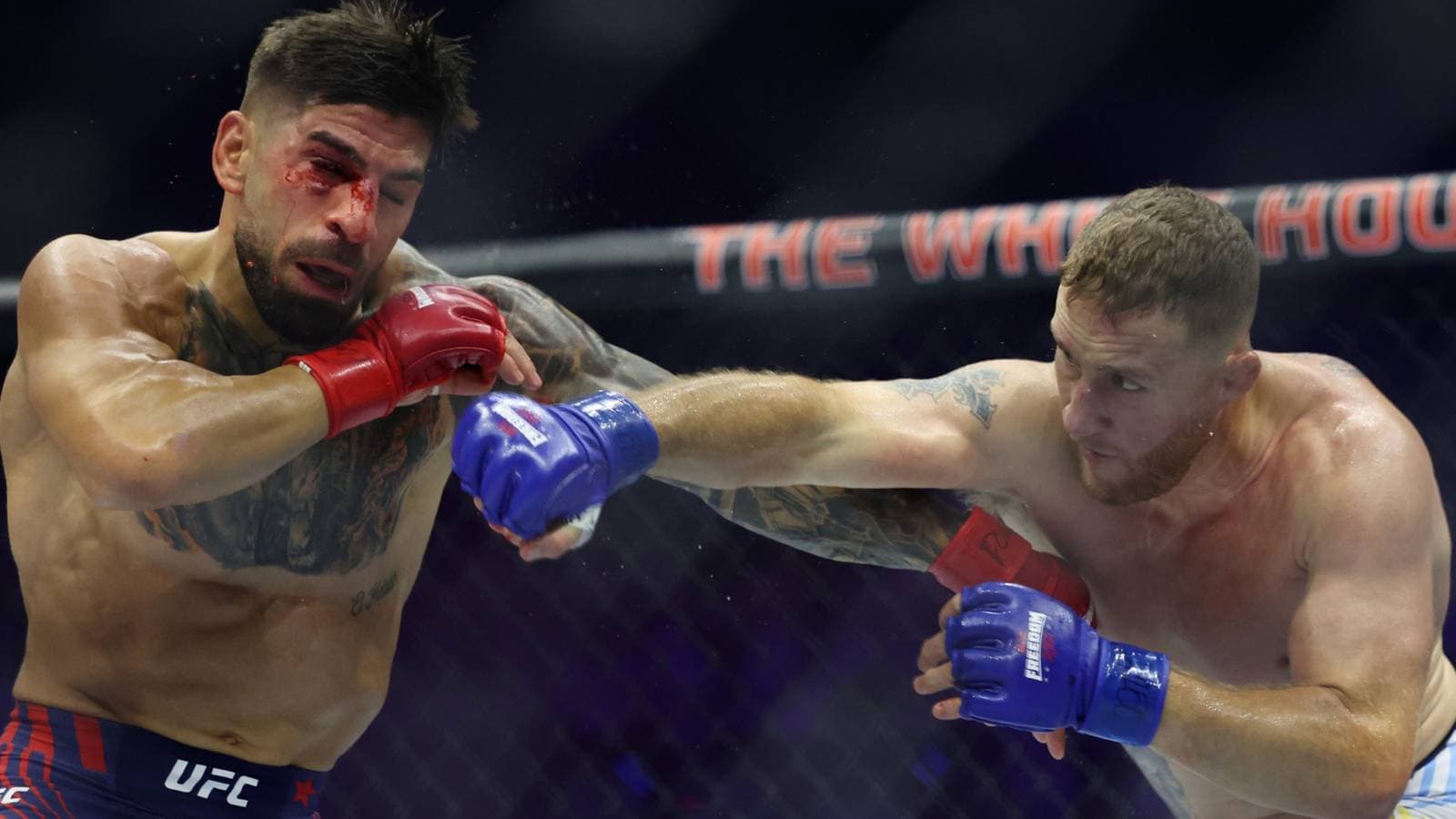
Ilia Topuria Accuses Justin Gaethje After UFC Defeat

Tyson Fury vs Anthony Joshua Fight Date and Venue Confirmed
Switzerland Calls Up In-Form Sion Striker Winsley Boteli for Nations League
Bournemouth Secures Historic 2-1 Win Over Real Sociedad in Spain
Portugal Announces Squad for 2026 UEFA Nations League; Cristiano Ronaldo Expected to Play
Raphinha Channels Ronaldo Nazario as Barcelona's Leading Striker After Position Change