
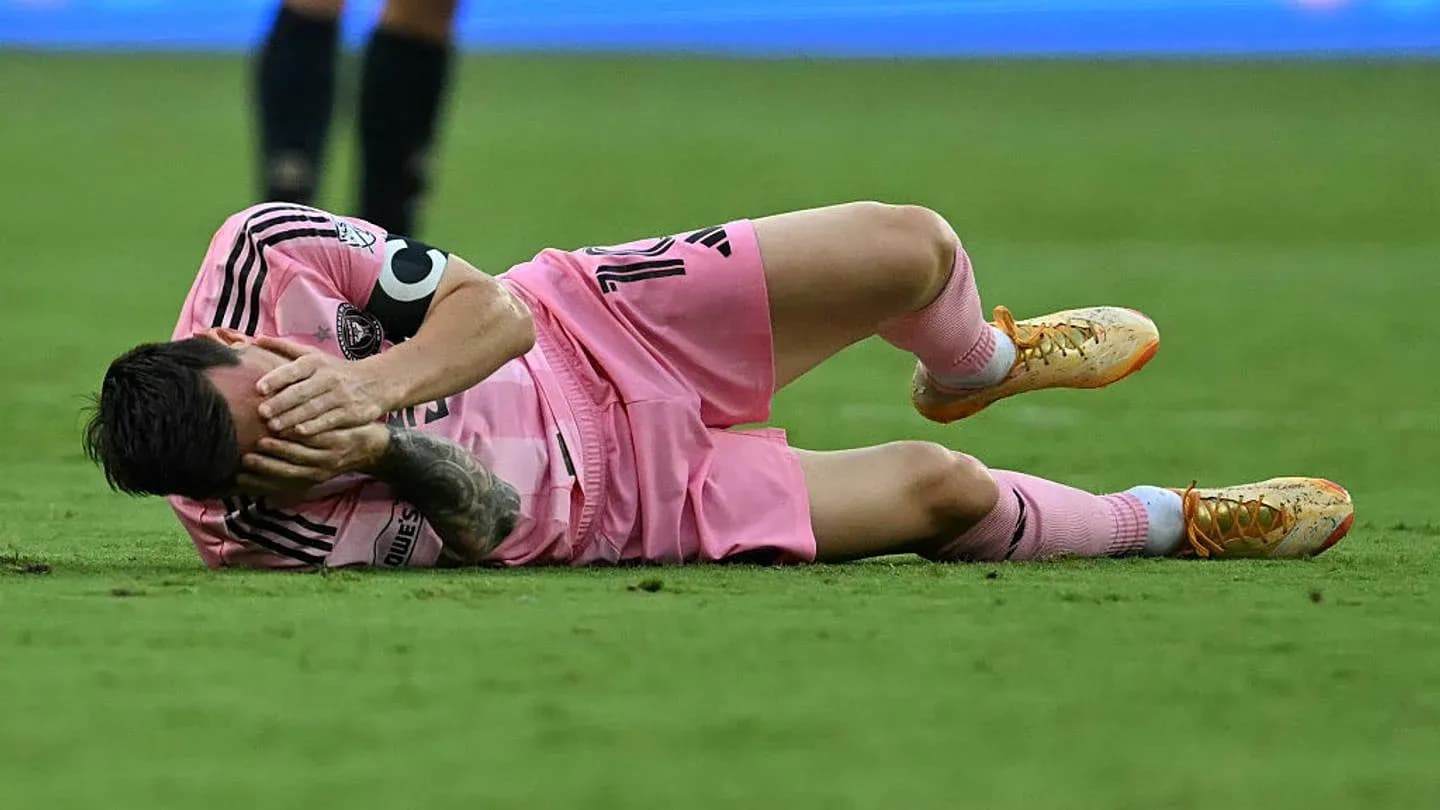
Lionel Messi's Injury Scare: Implications for Argentina's World Cup Hopes
Lionel Messi felt for his hamstring, glanced to the bench and shook his head. In the 79th minute of Inter Miami’s wild 4–4 draw with Philadelphia Union, the greatest player of his generation walked off, not in anger, but with the unmistakable body language of a man who knew something wasn’t right.
In Argentina, thousands of miles away, the alarm went off instantly.
Scaloni Watches, and Waits
Lionel Scaloni and his staff were at the national team’s training base, following Miami’s MLS chaos on television. The moment Messi gestured for a substitution, the room shifted.
“We were watching the match at the training ground. We realized he asked to be substituted, that he wasn’t well,” the Argentina manager told DSports.
Miami’s initial medical update spoke of “muscle fatigue in the left hamstring.” On paper, that sounds mild. In reality, with the 2026 World Cup looming and Messi turning 38 next year, every twinge carries weight.
Scaloni tried to keep the temperature down.
“The first reports are not that bad. Logically, we would prefer that nothing had happened to him. Now, we have to wait and see how he progresses. Above all, they’re going to run tests on him, I imagine, and see if it’s as they say.”
It was a measured voice in a nervous moment. Argentina know exactly what Messi means to their chances of defending the title they won in Qatar. The rest of the world knows what he means to the tournament itself.
A Nation’s Dependence on a 38-Year-Old
Even approaching 38, Messi remains the compass of this Argentina side. Scaloni has built a collective, a hard-edged, emotionally tight group, but the No. 10 still tilts the field, still dictates the mood of a stadium, still bends knockout games to his will.
Losing him, or even having him at less than full power, would reshape the World Cup narrative. Not just for Argentina, but for a global audience that has followed his every step for more than two decades.
Scaloni didn’t hide the broader concern.
“We would have liked him to arrive [in camp] without any kind of problems, but that is not the case with him and with most of the players who have had problems. They are not fully recovered. Our goal is to try to recover them and have them arrive in the best possible condition.”
That line tells its own story. This is not a pristine, untouched squad rolling into a World Cup. It is a group carrying knocks, fatigue, and the scars of long club seasons, with Messi’s condition now the headline issue.
Selection Is Not the Question
One thing is not up for debate: if Messi can walk, he will be on the plane and in the squad.
Even if the hamstring issue lingers. Even if he needs to be managed through the early stages. After 21 years of service to the national team, after dragging Argentina to the Copa América and then the World Cup, his place is beyond argument.
Scaloni has yet to publicly name his World Cup roster, but the announcement is close. There is no suspense around one name. Messi’s inclusion is as certain as the pressure that will greet Argentina when they arrive.
The real question is how much he can give, and when.
History on the Horizon
Behind the injury scare sits a remarkable subplot: Messi stands on the brink of World Cup history.
This will be his sixth men’s World Cup, a mark no man has ever reached alone. He will share that record with Cristiano Ronaldo, already confirmed in Portugal’s squad for a sixth tournament. Their World Cup journeys began together in 2006—Ronaldo at 21, Messi still 18, a teenager just breaking into a stage he would later define.
But another record lies in front of him, and this one could be his alone.
Messi has already played more World Cup matches than any man in history. His 26th appearance came in the 2022 final against France, the night he finally lifted the trophy that had chased him for so long. The overall World Cup record, though, belongs to USWNT icon Kristine Lilly, who played 30 times at the women’s tournament between 1991 and 2007.
Four more games in 2026 would allow Messi to equal Lilly’s total. Five would push him past her. If Argentina go deep—reaching the final or even the third-place playoff—La Albiceleste could play up to eight matches.
The path is there. The body has to follow.
Between Caution and Destiny
For now, everything hangs on those tests in Miami and the updates that follow. A phrase like “muscle fatigue” can mean a brief scare or the start of a longer, more complicated story. Argentina will hope it’s the former, that this is nothing more than a warning light, not a breakdown.
Scaloni’s job is to keep his squad calm, to build a plan that doesn’t lean on Messi for every minute, while knowing that when the tournament tightens and the margins shrink, his No. 10 is still the man everyone will turn to.
The World Cup is approaching. History is waiting. The question, once again, is whether Lionel Messi’s body will let his legend write one more chapter.
Related News
Raphinha’s Hat-Trick Powers Barcelona to 7-2 Victory Over Racing Santander
Carabao Cup Fourth Round Draw: Liverpool Set to Clash with Chelsea, Arsenal to Face Fleetwood Town
Key Football Matches to Watch in Azerbaijan This Autumn
Raphinha's Hat-Trick Drives Barcelona to 7-2 Triumph Over Racing Santander
Hansi Flick Leads Barcelona to Record-Breaking Seven Wins in a Row
Gavi Reflects on Injury Return as Barcelona Dominate Racing Santander 7-2