
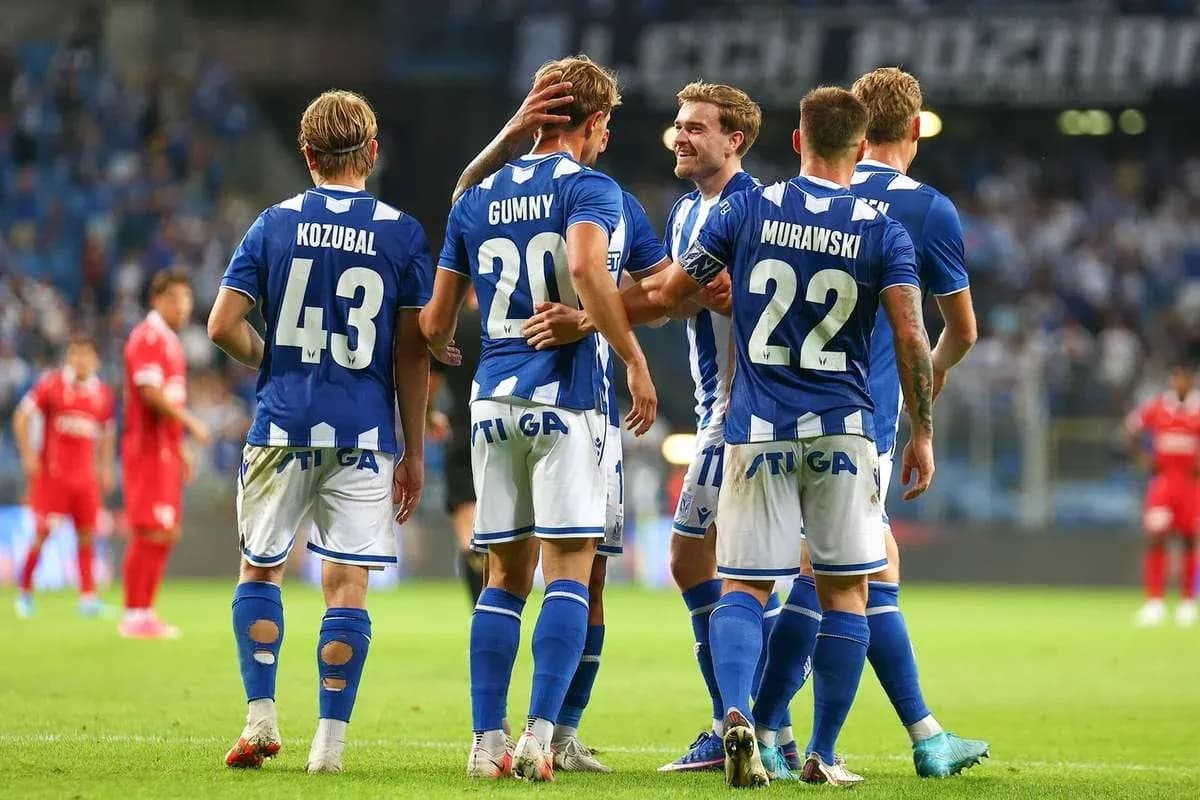
Lech Poznan's Tactical Dominance in 7-0 Win Against FC Thun
Lech Poznan’s 7-0 demolition of FC Thun at Enea Poznań was the product of a clear structural superiority and ruthless execution within Niels Frederiksen’s 4-2-3-1. With 56% possession and an 11–4 advantage in shots on goal, Lech controlled both territory and tempo, turning early pressure into a 5-0 half-time lead that effectively decided this UEFA Europa League Play-offs tie inside 45 minutes.
Structural Superiority
Structurally, Lech’s 4-2-3-1 functioned as an aggressive, ball-dominant system. The back four of J. Pereira, W. Monka, M. Skrzypczak and M. Gurgul held a relatively high line, compressing the pitch and allowing the double pivot of A. Kozubal and R. Murawski to dictate circulation. With FC Thun in a 4-4-2, Lech consistently created a 3v2 or 4v2 advantage in central build-up: one of the pivots dropped alongside the centre-backs, while the full-backs positioned themselves high and wide to pin the visitors’ wide midfielders.
Decisive Trio
Between the lines, the trio of P. Walemark, P. Rodriguez and L. Palma (before his substitution) were decisive. Walemark, starting as a nominal right-sided midfielder, repeatedly drifted into the right half-space, exploiting the channel between M. Heule and J. Bamert. His two early goals at 10' and 25' were the clearest tactical manifestation of this pattern: Lech created overloads on the right, drew FC Thun’s midfield line narrow, and then attacked the vacated lanes with late runs from Walemark and underlaps from Pereira.
P. Rodriguez, operating centrally as the primary playmaker, was central to Lech’s verticality. His assists for A. Sayyadmanesh at 20' and R. Murawski at 45' underlined how easily he could receive between FC Thun’s lines. The away side’s flat 4-4-2 struggled to apply coordinated pressure on Kozubal and Murawski; once either pivot turned, Rodriguez was consistently free between the forwards and midfield, forcing FC Thun’s centre-backs to step out and breaking their compactness.
Pressing Shape
Out of possession, Lech’s 4-4-2 pressing shape (with Sayyadmanesh stepping up alongside Rodriguez or the nearest winger) disrupted FC Thun’s attempts to build. The hosts committed only 8 fouls compared to FC Thun’s 16, an indicator that their pressing was more about anticipation and interception than last-ditch challenges. The visitors’ higher foul count reflected late defensive reactions as Lech played through and around them at speed.
FC Thun’s Struggles
FC Thun’s 4-4-2 never achieved the vertical connections it needed. The front pair of M. Gutbub and B. Labeau were often isolated, with the midfield line of N. Reichmuth, J. Roth, N. Zoukit and V. Matoshi pinned back by Lech’s advanced full-backs and attacking midfielders. When Thun did break, their attacks tended to be direct and rushed, resulting in just 4 shots on goal and 3 off target. The lack of sustained possession (44%) meant their forwards were mostly chasing long balls into well-protected zones.
Second-Half Substitutions
The second-half substitutions underlined the contrasting tactical realities. FC Thun’s triple change around the break — M. Gutbub (OUT) for F. Dursun (IN) at 45+1', then M. Heule (OUT) for T. Strannegård (IN) and N. Zoukit (OUT) for F. Saiz (IN) at 46' — was a clear attempt by Luca Privitelli Gian to add technical quality and fresh legs in midfield and attack. However, the structural issues remained: Lech continued to dominate central spaces, and Thun’s midfield never gained control of second balls.
Lech, already 5-0 up, used their substitutions to manage energy without losing tactical cohesion. At 37', D. Hakans (IN) came on for P. Walemark (OUT), but the role profile stayed similar: an aggressive wide player cutting inside. Later, at 64', R. Gumny (IN) replaced P. Rodriguez (OUT), and G. Berggren (IN) replaced L. Palma (OUT), with Lech effectively rotating personnel while maintaining the same 4-2-3-1 structure and pressing triggers. The late introduction of K. Delikat (IN) for A. Kozubal (OUT) and W. Szymczak (IN) for A. Sayyadmanesh (OUT) at 80' simply refreshed the front and midfield lines to continue pinning FC Thun back.
Defensive Control
Defensively, Lech’s control was as much about structure as it was about individual duels. The back four rarely had to defend large spaces because of the compactness ahead of them. FC Thun’s best moment — a potential goal by Furkan Dursun checked and then cancelled by VAR at 66' — highlighted their reliance on isolated moments rather than sustained pressure. Even that action came in transition rather than from a carefully constructed attack.
Tactical Balance
Set-pieces and wide play further tilted the tactical balance. Lech’s 5 corner kicks to FC Thun’s 3 reflected their territorial advantage. The hosts’ wide overloads, particularly on the right, consistently forced FC Thun’s full-backs into 2v1 situations, opening crossing lanes and cut-back zones that directly contributed to the volume of shots: 11 on goal and 6 off target, plus 3 blocked. FC Thun, by contrast, lacked the numbers and quality in advanced zones to turn their limited wide entries into high-quality chances.
Discipline and Frustration
Discipline also told a story of pressure and frustration. FC Thun collected 2 yellow cards, while Lech received 1. The visitors’ higher foul and card count aligned with a side defending deeper, later, and more reactively, often forced into cynical or mistimed challenges as Lech’s midfield and attacking lines broke through their shape.
Overall, this was a tactical rout built on Lech Poznan’s superior structure, pressing, and occupation of central and half-space zones. FC Thun’s 4-4-2 never solved the overloads around their double pivot, nor did it protect the channels between full-backs and centre-backs. The 7-0 scoreline was a direct, logical extension of those tactical imbalances rather than an outlier performance in front of goal.
Related News
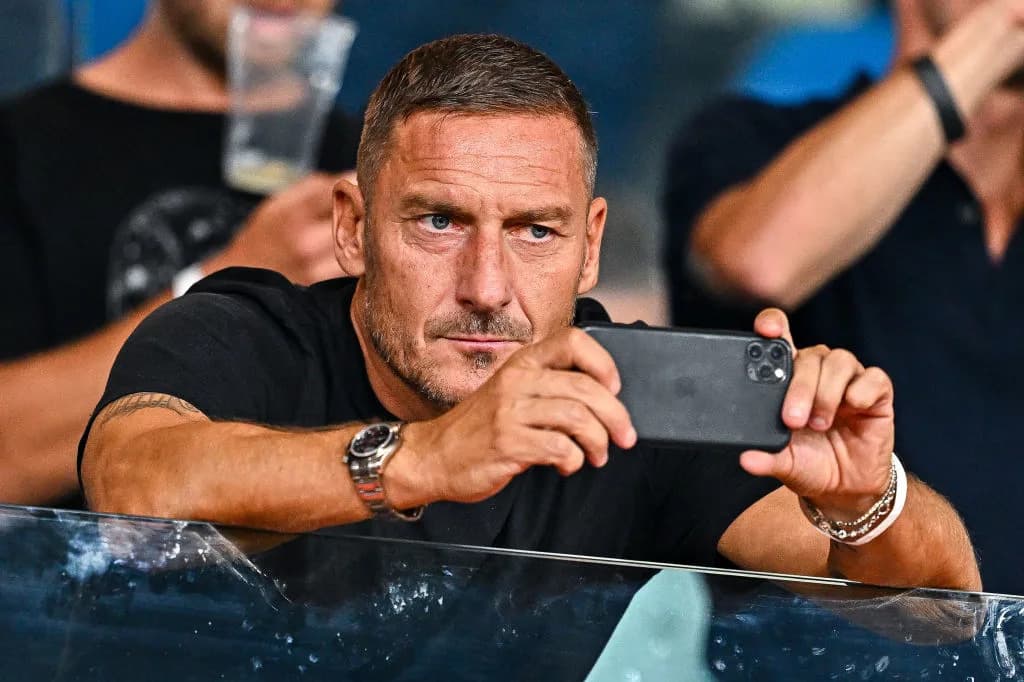
Francesco Totti Reveals Offers from Top European Leagues at Age 48
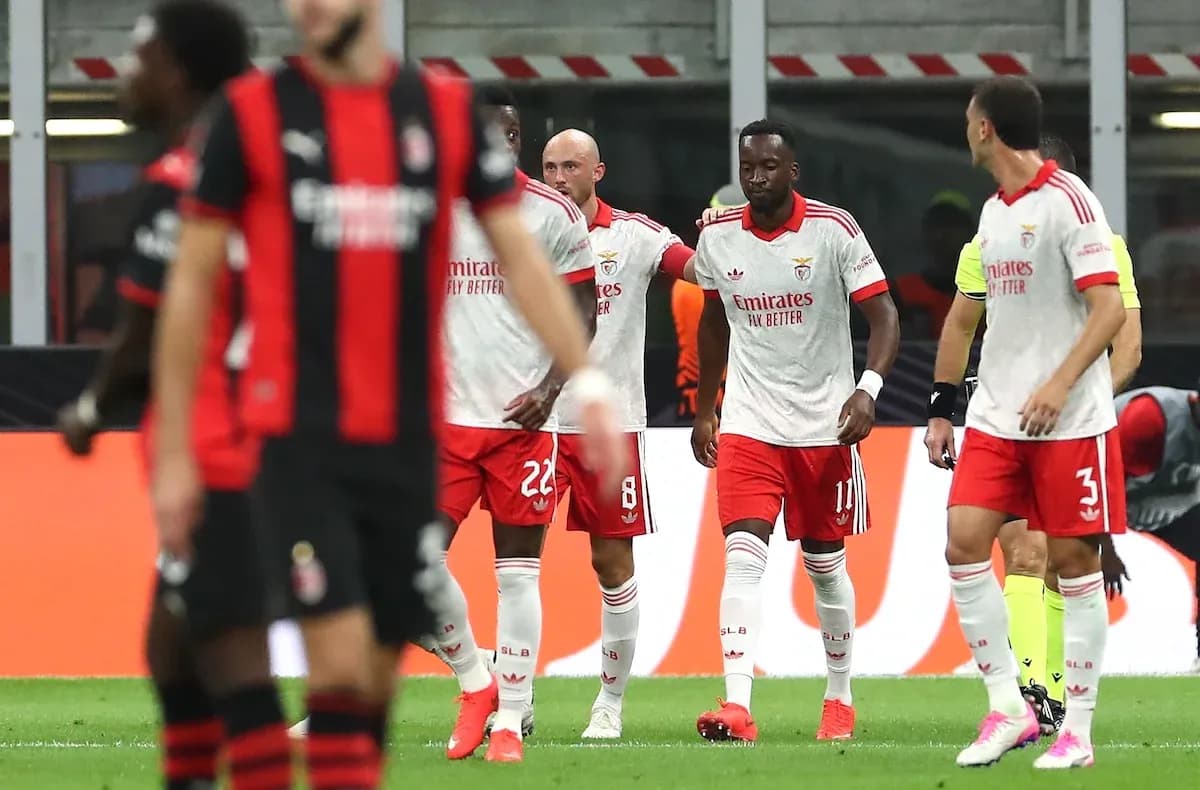
Benfica Dominates AC Milan in UEFA Europa League Opener
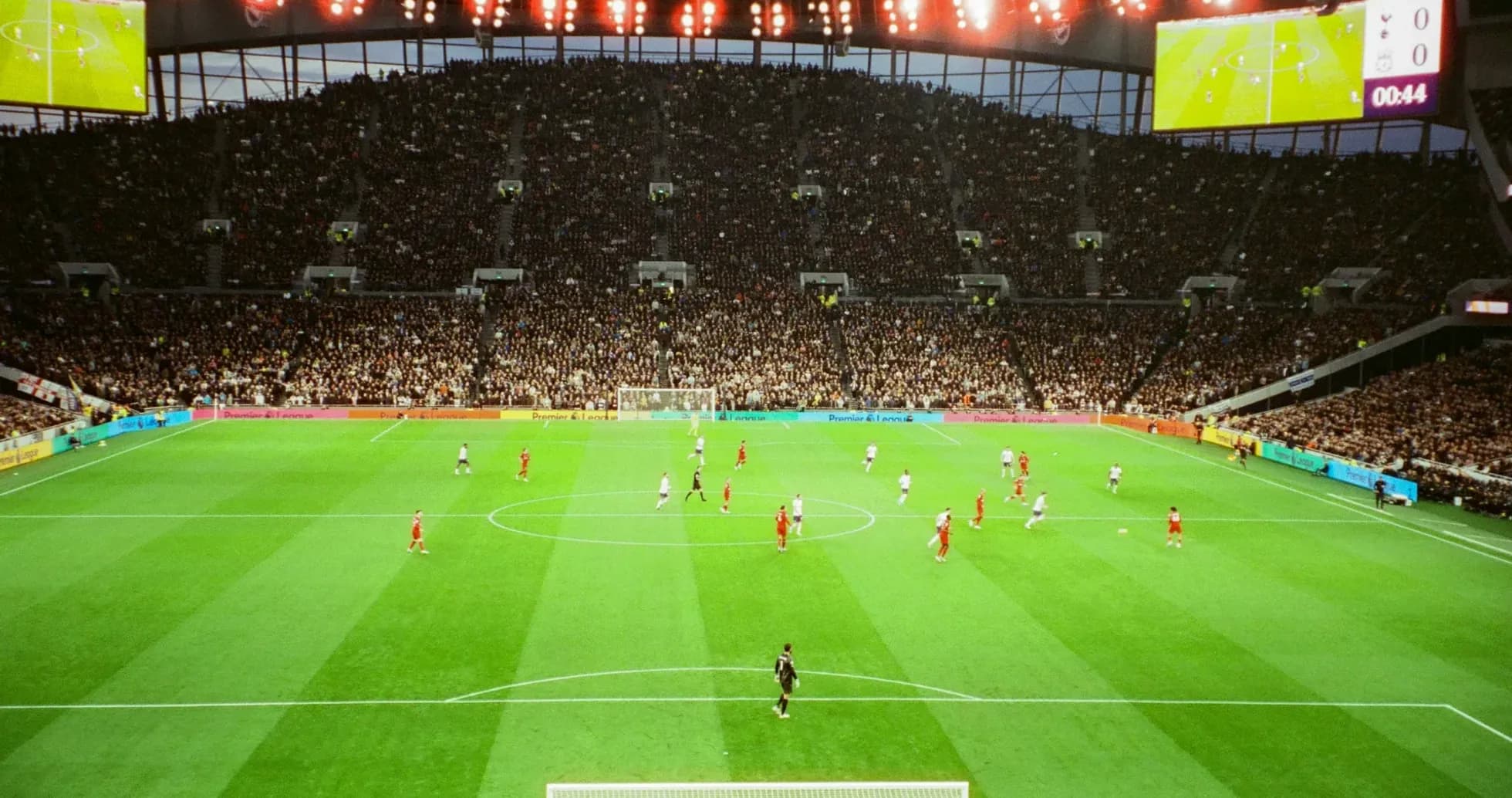
Levski Sofia vs Red Bull Salzburg: Europa League Defeat Analysis
Five Europa League Players to Watch in the 2026/27 Season

Celje vs Red Bull Salzburg Predicted Lineups and Team News
NEC Nijmegen vs Benfica Predicted Lineups: Team News for UEFA Europa League