
Lazio and AC Milan Battle to a 2–2 Draw: Early Serie A Insights
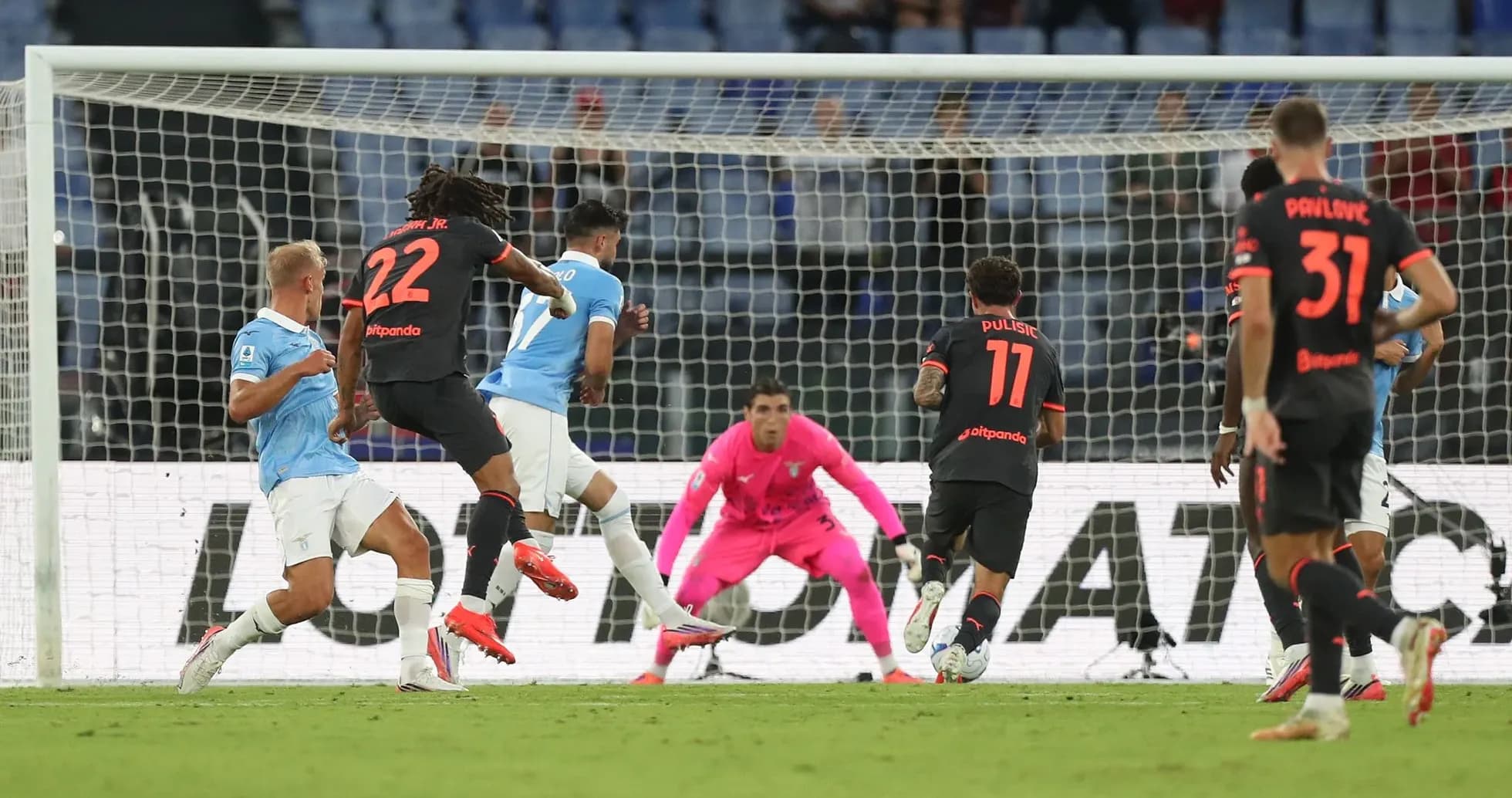
Under the late-summer light of the Stadio Olimpico, Lazio and AC Milan delivered a 2–2 draw that felt less like a stalemate and more like an early-season manifesto from two sides intent on shaping the Serie A title race. The league table underlines the stakes: following this result, Lazio sit on 10 points from 4 matches with a goal difference of +3 (6 scored, 3 conceded), while Milan trail only slightly with 8 points from 4 games and the same +3 differential (7 scored, 4 conceded). Both remain unbeaten, both left Rome with reasons to believe—and to worry.
I. The Big Picture: Systems, Momentum, and Identity
Gennaro Gattuso sent Lazio out in a 4-3-3 that has become their structural backbone this season. Heading into this game, Lazio’s season numbers told a clear story: 3 wins and 1 draw in total, with 1.5 goals scored per game both at home and on their travels, and only 0.8 goals conceded on average overall. They had not lost yet, and they had not failed to score in any of their 4 league fixtures. The 4-3-3 has been used in all 4 matches, underlining tactical continuity.
Ruben Amorim’s Milan arrived with a contrasting 3-4-2-1, equally stable—also used in all 4 of their league games. Their overall profile was that of a team still calibrating but hard to beat: 2 wins and 2 draws, 1.8 goals scored per game in total and 1.0 conceded. On their travels, Milan had been solid rather than spectacular: 3 away matches, 1 win and 2 draws, with 1.7 goals scored and 1.3 conceded away from home.
The match itself mirrored those identities. Lazio’s first-half surge, reflected in a 2–0 lead at the interval, showcased their aggressive, front-foot home personality. Milan’s second-half response, clawing it back to 2–2, underlined their resilience and the structural flexibility of Amorim’s back three.
II. Tactical Voids: Absences and Discipline
Lazio’s squad sheet was scarred by absences. F. Dele-Bashiru (muscle injury), D. Doekhi (hand), A. Furlanetto (knee), A. Marusic (muscle), Patric (ankle), L. Pellegrini and N. Rovella (both listed with injuries) all missed the fixture. For a side that leans heavily on their defensive line stepping high and their full-backs providing width, being without Marusic, Patric and Pellegrini in particular forced Gattuso to trust a reconfigured back four.
That trust fell on R. Floriani, J. Sutalo, O. Provstgaard and N. Tavares ahead of C. Mandas in goal. The absence of experienced defensive depth meant the line had to be brave but precise; when fatigue set in, the cracks that allowed Milan back into the game were almost inevitable.
Disciplinary trends added another layer. Lazio’s yellow cards this season have been spread, but with a notable late-game edge: 25.00% of their yellows have come between 16–30 minutes, another 25.00% between 31–45, then 12.50% in each of the 61–75 and 76–90 windows, and a further 25.00% deep into 91–105. Milan, by contrast, concentrate their bookings after the break: 25.00% of their yellows in each of 46–60, 61–75, 76–90 and 91–105. This match fit the pattern: as intensity and chasing phases increased, Milan’s defensive aggression grew.
Individually, Mattia Zaccagni embodies Lazio’s edge-of-the-knife approach. In 4 appearances he has already collected 2 yellow cards, while still contributing 2 assists and a 7.28 average rating. For Milan, Strahinja Pavlović is the enforcer: 2 yellows in 4 full matches, 12 tackles, 1 block and 1 interception, and a towering 92% passing accuracy. Neither side has seen a red card in the league so far; the data may list Zaccagni and Pavlović among top red-card profiles, but their actual season tallies remain at zero reds.
III. Key Matchups: Hunter vs Shield, Engine Room vs Engine Room
The game’s central duel was written in the numbers before a ball was kicked.
For Lazio, Davide Frattesi has been the revelation of the campaign. Heading into this game he had 3 goals in 4 appearances from midfield, on just 5 shots, with 3 on target and a 7.55 rating. He is not just a late-arriving runner; he is also defensively active—6 tackles, 3 successful blocks, 4 interceptions. Against Milan’s back three, his surges from the right half-space were always going to test the communication between Pavlović, K. De Winter and M. Gila.
Milan’s shield had been statistically robust: in total, they had conceded 4 goals in 4 matches, with a single clean sheet at home but none away. On their travels, 4 goals conceded in 3 games at 1.3 per away match hinted that sustained pressure would eventually tell. Lazio’s first-half double at the Olimpico was the logical collision of Frattesi’s verticality and Milan’s slight away fragility.
Higher up, the duel between A. Cissé and the Lazio back line was equally intriguing. Cissé arrived with 2 goals in 4 appearances, 6 shots (2 on target) and a willingness to duel (31 contests, 12 won). His movement between the lines, combined with G. Ramos as the spearhead, dragged Sutalo and Provstgaard into uncomfortable zones, particularly as Milan chased the game in the second half.
In the creative lanes, the “engine room” battle pitted A. Rabiot and Luka Modrić against Lazio’s trio of Frattesi, R. Belahyane and K. Taylor. Rabiot’s season numbers—1 goal, 2 assists, 133 passes at 84% accuracy, plus 2 tackles and 1 block—frame him as Milan’s all-purpose connector. Modrić, positioned centrally in the 3-4-2-1, gave Milan the tempo control they needed to mount a comeback once they were two down.
On the flanks, S. Chukwueze versus Nuno Tavares was a structural hinge. Chukwueze had already registered 2 assists in 4 games, with 10 key passes, 9 dribbles attempted and 6 successful. His ability to isolate full-backs and either beat them 1v1 or feed cut-backs was Milan’s main route to destabilising Lazio’s reshaped defence. Tavares, more naturally attack-minded, had to walk the line between offering width and not leaving Floriani and the centre-backs exposed to the Nigerian’s surges.
For Lazio, Zaccagni on the opposite flank offered the mirror threat: 10 shots (6 on target), 8 key passes and 4 successful dribbles in 4 games. His duel with Pervis Estupiñán, operating as Milan’s left-sided midfielder, was a constant push-and-pull between Lazio’s desire to pin Milan’s wing-backs deep and Milan’s need to spring transitions down the channels.
IV. Statistical Prognosis: What This Draw Tells Us
Strip away the drama of a 2–0 lead slipping to 2–2, and the numbers still paint two sides on strong, if different, trajectories.
Lazio’s overall attacking output—6 goals in 4 games at 1.5 per match, with identical averages at home and away—suggests a system that travels well. Defensively, 3 conceded in total at 0.8 per game, with 1.0 at home and 0.5 on their travels, shows a unit that is generally secure but can be rattled when forced to defend deeper for long stretches, as Milan did to them after the break.
Milan’s broader pattern is of a side that bends but does not break. They have yet to lose in total, scoring 7 and conceding 4. Away from home, 5 scored and 4 conceded in 3 games underline both their offensive ambition and their susceptibility when the back three is stretched horizontally by wide front threes like Lazio’s.
Neither side has taken nor missed a penalty this season; their penalty records are clean but untested, with 0 total attempts, 0 scored and 0 missed for both teams.
From a tactical forecasting standpoint, this 2–2 feels like a fair equilibrium point between Lazio’s structured aggression and Milan’s layered resilience. Lazio’s Champions League-chasing profile remains intact: 4th place, unbeaten, with a positive goal difference built on balance rather than chaos. Milan, 6th but just two points behind, look every bit like a side built for the long race, with the creative spine of Rabiot, Modrić and Chukwueze feeding a rotating cast of forwards.
If there is a warning embedded in the numbers, it is this: for all their control, both sides are vulnerable in the very phases where they seek to impose themselves. Lazio’s yellow-card spikes around the half-time and late-game periods hint at emotional, high-intensity football that can tilt either way. Milan’s away defensive average of 1.3 goals conceded suggests that their back three, for all its quality, will continue to be tested against the league’s better wide units.
In Rome, neither project blinked. Instead, Lazio and Milan left the Olimpico with their identities sharpened, their flaws exposed, and the sense that this 2–2 may be a prelude rather than a conclusion in the story of their 2026 Serie A campaigns.
Related News

Fiorentina vs Napoli Prediction: Key Stats and Betting Tips

AS Roma vs Inter: Serie A Showdown on 19 September 2026

Inter’s Dominance in 5–3 Win Over Udinese

AS Roma vs Inter Prediction: Key Stats and Betting Tips
Lazio and AC Milan Battle to a 2–2 Draw: Early Serie A Insights

AC Milan vs Lecce Stats: Head-to-Head Record and Historical Context