
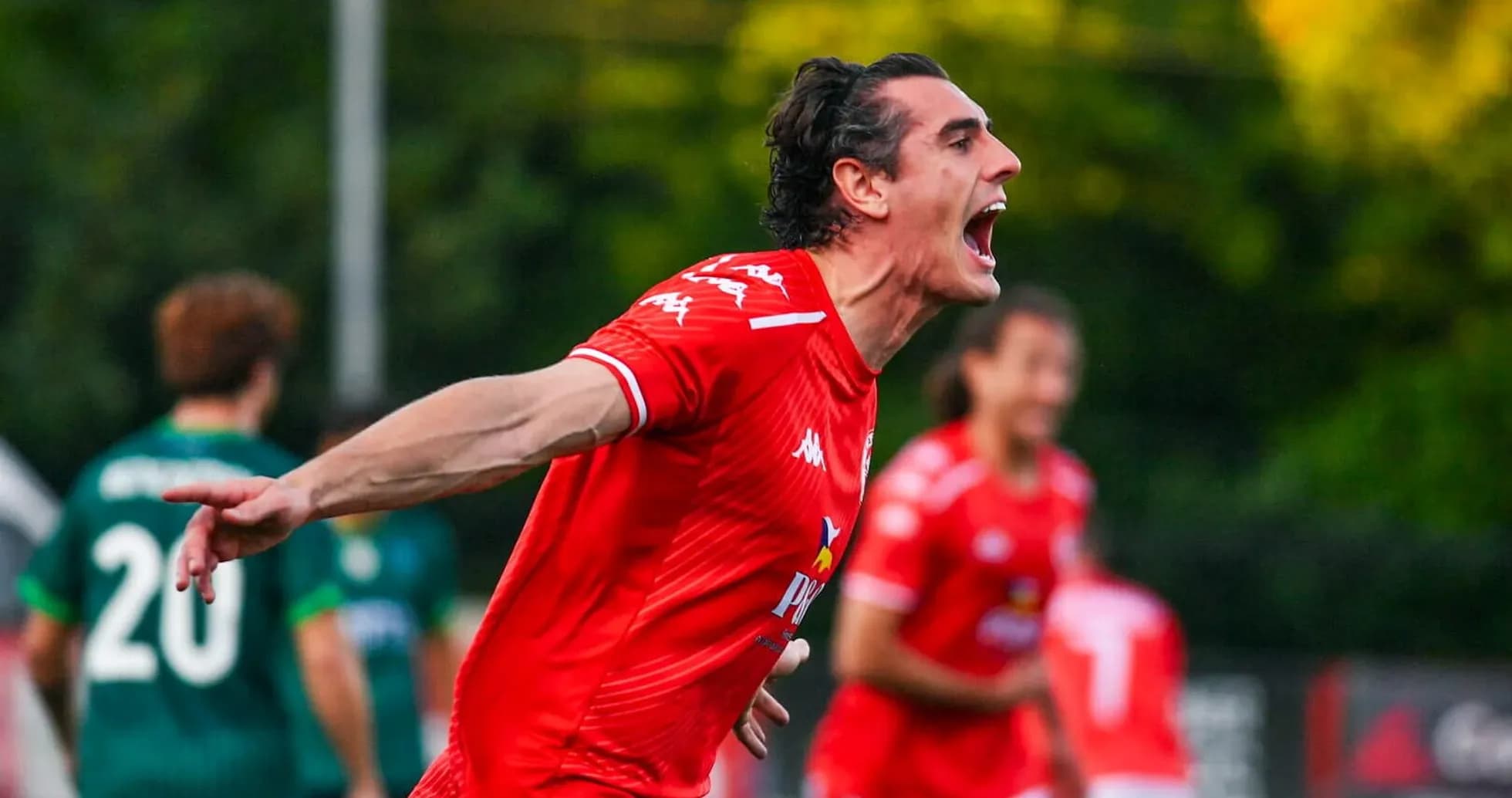
Larne vs Saburtalo: Tactical Analysis of a Goalless UEFA Europa League Clash
Larne and Saburtalo produced a goalless but tactically disciplined contest at Inver Park in the UEFA Europa League 3rd Qualifying Round, defined more by structure and game management than by clear attacking metrics. With the match finishing 0-0 and virtually all quantitative data fields absent beyond card counts, the tactical picture is drawn from shapes, personnel and the timing of interventions rather than shot or possession figures.
Both sides lined up in a 4-3-3, but the way they used that framework diverged over the 90 minutes. Larne, under Gary Haveron, built their XI around a back four of Tomas Cosgrove, M. Ridley, A. Donnelly and S. Graham in front of goalkeeper R. Ferguson, with a midfield triangle of D. Bent, R. Doherty and Chris Gallagher supporting a front line of D. Sloan, M. Gibson and M. Lusty. The selection suggests an intention to control central areas with a blend of ball-winning and distribution, while keeping width high and aggressive through the front three.
Saburtalo, coached by Andriy Demchenko, mirrored the 4-3-3 on paper but leaned into a more flexible midfield band. In front of goalkeeper G. Makaridze, the defence of G. Kobuladze, V. Selimovic, A. Amisulashvili and Jemali Giorgi Jinjolava was shielded by a midfield trio of B. Kardava, N. Dadiani and G. Kutsia. Ahead of them, Z. Natchkebia, N. Sikharulashvili and A. Bartishvili offered interchanging roles between wide and half-spaces, hinting at a plan to pull Larne’s full-backs into awkward positions rather than simply playing with classic touchline wingers.
The early phases underlined Larne’s willingness to compete physically in order to establish territorial control. The first yellow card at 11' for Tomas Cosgrove (Larne) — “Foul” — points to an aggressive approach from the right-back in dealing with Saburtalo’s left-sided rotations. Gallagher’s booking at 45' for “Foul” reinforces the idea that Larne’s central midfielders were prepared to break play up even at the cost of disciplinary risk, particularly as Saburtalo’s midfield three sought to combine through the centre.
Saburtalo, by contrast, collected only a single yellow card: 66' Jemali Giorgi Jinjolava (Saburtalo) — “Foul”. That distribution (Larne: 2 yellows, Saburtalo: 1 yellow, total 3) suggests Saburtalo were slightly more conservative in defensive duels, preferring positional containment over high-risk challenges. It also hints that Larne may have been the side pushing more aggressively into contested spaces, especially in the wide channels where full-backs and wingers clash.
Without concrete numbers on shots, possession, or passes, the substitutions become crucial clues to tactical adjustment. At 59', Saburtalo made the first move: A. Dzagania (IN) came on for A. Bartishvili (OUT). Replacing a midfielder with a forward at this stage suggests Demchenko was either seeking more direct penetration or a clearer reference point up front, perhaps indicating that the original front three’s interchanging movement was not sufficiently troubling Larne’s back line.
Haveron’s response was a double change at 65', clearly aimed at refreshing the attacking and midfield energy. P. O'Neill (IN) came on for M. Gibson (OUT), while J. McEneff (IN) came on for D. Sloan (OUT). Swapping a forward and a midfielder simultaneously in a 4-3-3 often indicates a desire to sharpen transitions: fresher legs to press Saburtalo’s build-up and to attack space when possession is regained. It also may reflect that Larne, despite their physical edge, were struggling to convert territorial play into genuine chances.
The booking for Jinjolava at 66' slots into this context. As Larne injected new energy in the wide and advanced central areas, Saburtalo’s left-back was forced into a “Foul”, likely under pressure from a more assertive Larne right side. It reinforces the pattern of Larne trying to turn the screw down the flanks, with Cosgrove’s earlier card and Jinjolava’s later one bookending that duel.
A further Larne double substitution at 75' — K. O'Hara (IN) came on for M. Lusty (OUT) and J. Simpson (IN) came on for R. Doherty (OUT) — deepened the tactical narrative. Haveron effectively refreshed both a forward and a midfielder again, suggesting he was determined to maintain intensity in the final third and in central pressing zones right into the closing stages. Rotating both lines at once can also hint at a desire to alter the profile of attacks, perhaps shifting from more patient combinations to more direct runs or from aerial presence to mobility.
Saburtalo’s final change at 78' — I. Alhassan (IN) came on for G. Kutsia (OUT) — pointed to a recalibration in midfield. Introducing a fresh midfielder late on can be read as a bid to reassert control in central areas that had begun to tilt towards Larne after their wave of substitutions. It may also have been a move to stabilize against potential counters if Saburtalo were pushing extra numbers forward in search of an away goal.
Structurally, both 4-3-3s appeared to hold, but the personnel shifts suggest Larne increasingly tilted their shape toward a more front-foot 4-3-3 with high work rate and repeated attacking runs, while Saburtalo oscillated between a balanced 4-3-3 and something closer to a 4-2-3-1 when Dzagania entered, depending on how deep Natchkebia and Sikharulashvili dropped.
With no recorded data for shots, possession, passing or saves, it is impossible to quantify which side created more or which goalkeeper — R. Ferguson (Larne) or G. Makaridze (Saburtalo) — was busier. However, the disciplinary pattern and substitution timing support a reading of Larne as the side more willing to take defensive and physical risks to tilt the game, while Saburtalo focused on maintaining structure and selectively adding attacking threat.
The 0-0 outcome, combined with the minimal card count and lack of red cards, underlines a match that was controlled rather than chaotic. In the absence of numerical attacking metrics, the tactical story is one of mirrored formations, Larne’s progressive use of their bench to chase marginal gains in intensity, and Saburtalo’s measured adjustments to preserve balance and leave the tie finely poised for the return leg.
Related News

Celje vs Red Bull Salzburg Predicted Lineups and Team News

Anderlecht vs Red Bull Salzburg Predicted Lineups and Team News
NEC Nijmegen vs Benfica Predicted Lineups: Team News for UEFA Europa League
Plzen vs Benfica Predicted Lineups: Team News Ahead of UEFA Europa League
Benfica vs Lech Poznan Predicted Lineups and Team News

Benfica vs OFI: Predicted Lineups and Team News for UEFA Europa League