
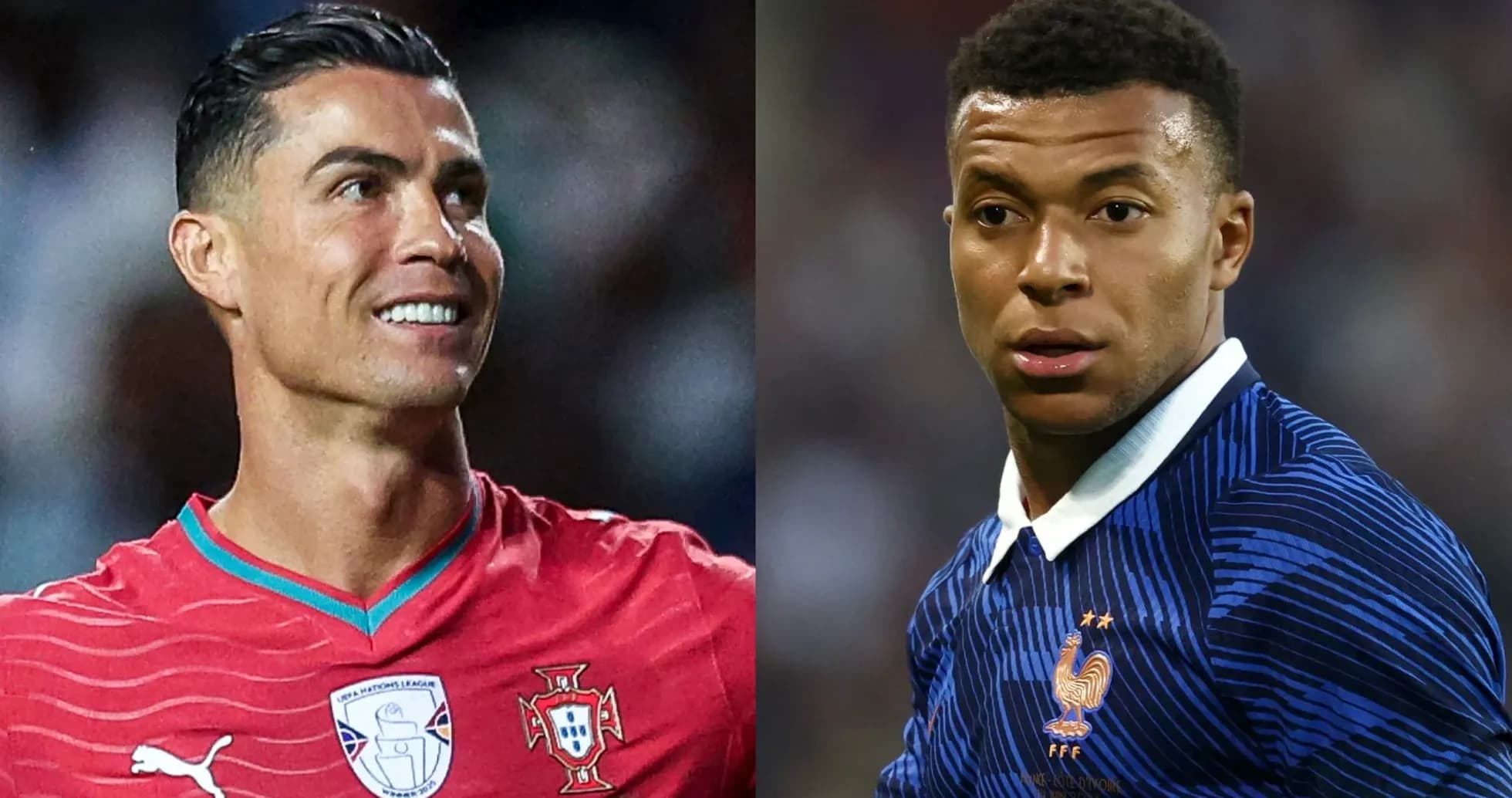
Kylian Mbappé: The Main Man in a Collective Game
Kylian Mbappé has spent his entire life being told he was built for the spotlight. The numbers say he has embraced it: 86 goals in 103 games for Real Madrid, 56 for France, a career played under floodlights and on billboards.
But for Frank Leboeuf, that is only half the story.
The former France defender sees a player sculpted to be “the main man” from the age of eight, yet still wrestling with the most basic truth of elite football: the team, not the superstar, wins the biggest prizes.
“Created to be the main man”
Leboeuf, speaking to GOAL, painted the picture of a prodigy conditioned from childhood to dominate.
“He's been created to be the main man,” he said. “Since he's eight years old the world has promised him to be one of the best because he was incredible when he was very young and he kept on doing the right thing to become one of the best.”
That prophecy has largely come true. Mbappé scores, he dazzles, he defines games. Yet Leboeuf believes the game itself has shifted under his feet. The era of the pure individual, in his eyes, has been overtaken by the era of the collective.
“We have discovered lately, or he has discovered lately, that football is the collective game and in fact the team is a star,” Leboeuf said, pointing to the great modern sides. “With all the big teams that we saw winning titles like the Champions League – Liverpool for example and now Paris Saint-Germain, it's all about playing together.”
Then came the example that still stings many neutrals: Real Madrid’s improbable run through Europe.
“When Real Madrid played awfully and they shouldn't have gone to the final against Liverpool. When they played Chelsea, Paris Saint-Germain, Manchester City – no way they should have won those games but they managed to because of the collective spirit.”
Madrid survived, he argued, not because one genius dragged them there, but because the group refused to break.
And that, he says, is where Mbappé’s footballing “computer” runs into trouble.
A superstar in an individual age
Leboeuf is blunt. He does not think that instinctive collective mindset comes naturally to Mbappé.
“Kylian doesn't have that in his computer and when you don't have it it's hard to put it in,” he said. Especially, he argued, in a world obsessed with instant stardom.
“We live in a dictator of emergency, as I call it, and also because we became very individual. The Ballon d'Or became very important, whereas in my time you got it and five minutes after it was forgotten.”
This is not, in his view, solely Mbappé’s fault. It is the ecosystem around him.
“It's a different world and it's not only Kylian Mbappe guilty for that. We create importance on some spots where it shouldn't be and we are absolutely wrong because football showed us every game that if you don't play together it doesn't work.”
He points to the failed galáctico experiments as proof. The Neymar–Messi–Mbappé trio at PSG. The current Vinícius Jr–Mbappé axis in Madrid. On paper, unstoppable. On the pitch, something doesn’t quite click for Leboeuf.
“We saw Neymar, Messi, Mbappe playing together. Now we see Vinicius Jr and Mbappe playing together. It doesn't work because they don't fit into a collective spirit and that's what it is.”
Why dribbles don’t impress him
Leboeuf’s own taste in footballers explains his stance. He lights up when he talks about Liverpool’s title-winning side, not because of one talisman, but because every line had its own leading man.
“When we saw Liverpool, who was a star at Liverpool? Mohamed Salah? Yeah, okay, but Virgil van Dijk was also a star and Alisson was a star and all those players who fought together, [Andy] Robertson, Trent Alexander-Arnold, the two wing backs, they were the stars. They were crossing to each other to score goals. That was insane.”
That, for him, is the beauty of the sport.
“That's why I love football. I love football to see that. I don't care about Mbappe dribbling four players. It doesn't impress me because he doesn't see the game.”
The contrast with the likes of Rodri and Kevin De Bruyne is stark in his mind.
“Why do we love Rodri? Why did we love Kevin De Bruyne? Because they saw where they were going to give the ball before receiving it. That's the spirit that I love,” he said, even admitting he was never a huge admirer of Diego Maradona’s style despite his genius.
“I didn't like people dribbling. I love people giving a pass one touch because he saw everything. Anticipation is the special skill for me.”
In other words: the player who kills you with the pass you never saw coming, not the run you did.
Restless in Madrid, questions about England
Mbappé’s numbers at Real Madrid remain extraordinary, but his body language has told a different story at times. A frustrated figure, a star occasionally at odds with the script around him. Inevitably, that has fuelled talk of a new adventure and a familiar question: could he end up in the Premier League?
Leboeuf thinks the modern English game would suit Mbappé’s raw weapons far more than the league he once knew.
“The Premier League has changed. If it was the Premier League from when I played, I would have said no he's not ready for that,” he admitted. “But with the pace that he has and the possibility that you can find in England when you play in the Premier League, yes I think Kylian Mbappe can play in any league in the world and that would be nice to see him in the Premier League fighting with Erling Haaland as a top scorer.”
The idea of Mbappé and Haaland trading goals and headlines across a season is pure box office. Leboeuf calls it what it would be: “insane.”
Reality bites quickly, though.
“But I think with the price that it would cost, nobody can buy him right now. I don't think so. I don't think, and nobody who we think can be a contender for next season.”
The financial barrier is one thing. Tactical fit is another.
Why Arsenal and Guardiola pose a problem
Arsenal’s need for a centre-forward is obvious. On paper, Mbappé would be the dream solution. Leboeuf is unconvinced.
“Arsenal will need a striker but they don't use strikers. They go around the strikers so Mbappe would be very upset to have Gyokeres’ role where you wait for crosses, wait for passes and it never comes.”
He then turns to Manchester City and Erling Haaland, a striker who has sacrificed involvement for goals and glory under Pep Guardiola.
“And what Haaland has been capable of accepting with Pep Guardiola's system, touching one or two balls per period, I'm not sure Kylian Mbappe will accept that.”
That, for Leboeuf, is the crux. Would Mbappé tolerate being a finisher on the fringes of the build-up, or would he instinctively drop deeper, demanding the ball, reshaping the team around him?
“So he will go back down as number 10, will try to touch the ball and maybe create a mess on the coach’s tactic.”
The numbers say Mbappé is already living in the company of Messi and Ronaldo. The goals, the medals, the moments all back that up. Leboeuf’s challenge cuts deeper: in an age where the collective wins, can a player built to be “the main man” truly surrender himself to the team, or will the game keep bending around him until something finally gives?
Related News
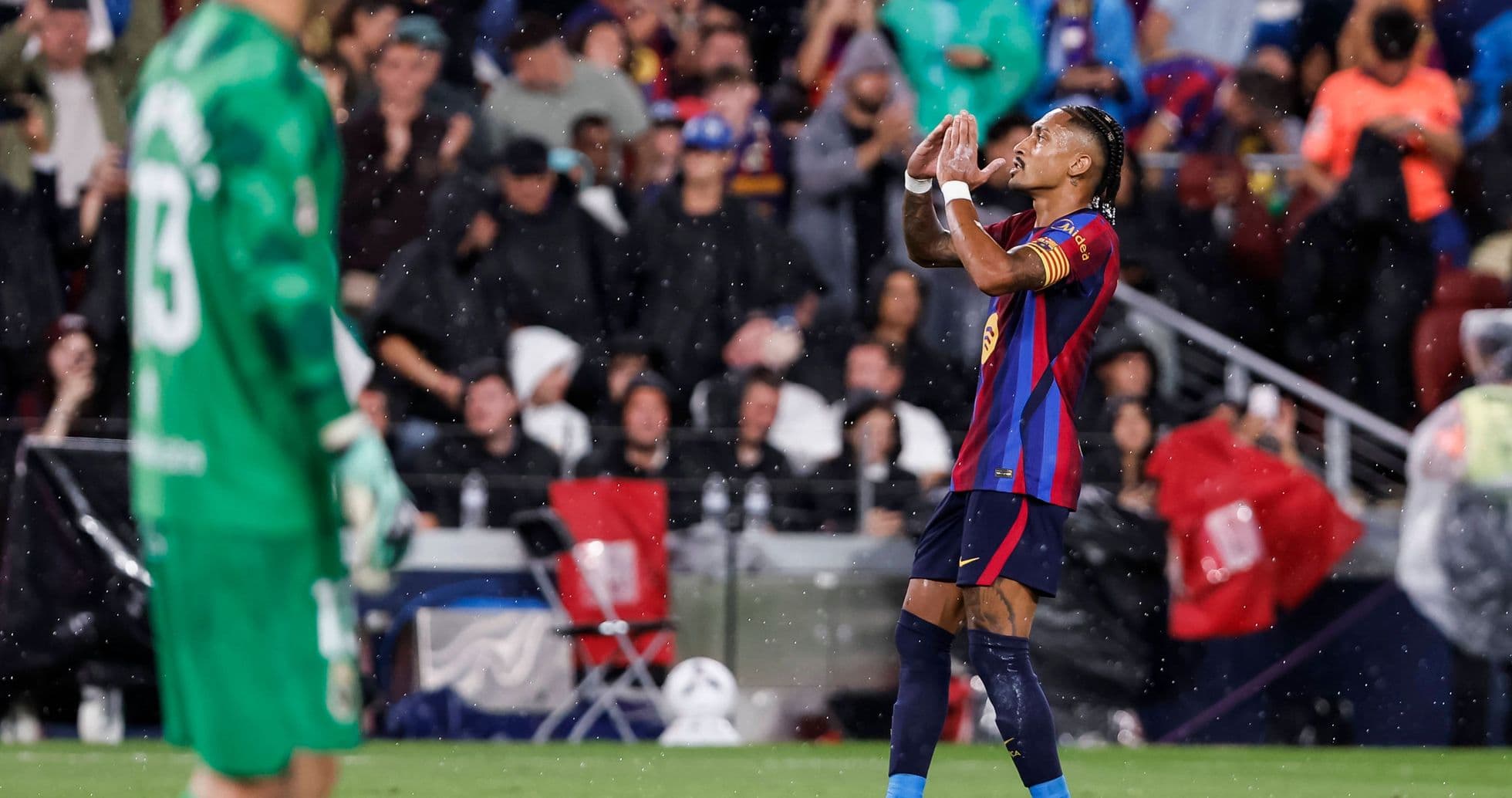
Raphinha’s Hat-Trick Powers Barcelona to 7-2 Victory Over Racing Santander
Carabao Cup Fourth Round Draw: Liverpool Set to Clash with Chelsea, Arsenal to Face Fleetwood Town
Key Football Matches to Watch in Azerbaijan This Autumn
Raphinha's Hat-Trick Drives Barcelona to 7-2 Triumph Over Racing Santander
Hansi Flick Leads Barcelona to Record-Breaking Seven Wins in a Row
Gavi Reflects on Injury Return as Barcelona Dominate Racing Santander 7-2