
Korean FA Under Investigation Following World Cup Fallout
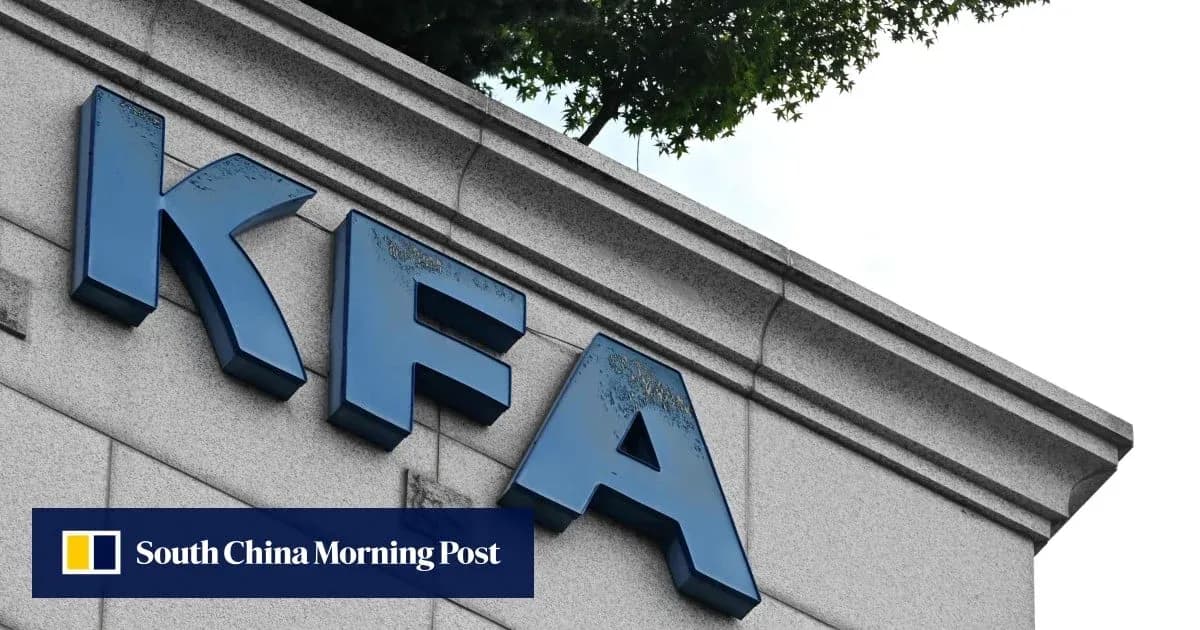
South Korean football’s summer of regret has taken a sharp and uncomfortable turn. On Thursday, police officers walked through the front doors of the Korea Football Association headquarters and began seizing documents, devices and records tied to the most contentious decision of the national team’s recent history: the appointment of Hong Myung-bo.
What began as a footballing disappointment at the World Cup has spilled into a criminal investigation.
From group-stage exit to criminal probe
Hong, 57, resigned in June after South Korea crashed out at the group stage of the expanded 48-team tournament in the United States, Mexico and Canada. The defining moment of that campaign was a bruising one: a shock 1-0 defeat to South Africa that ended any lingering hope of progress to the last-32 knockout rounds.
The exit triggered the usual inquests – tactics questioned, selections dissected, mentality doubted. Yet the loudest noise quickly settled not on a missed chance or a tactical switch, but on the man on the touchline and how he got there.
Hong’s 2024 appointment had already raised eyebrows inside Korean football circles. Critics pointed to the selection process, asking who really drove the decision and whether the federation had followed its own rules. Once the team failed to escape the group, those murmurs hardened into formal scrutiny.
Now the issue has moved from the court of public opinion to the attention of financial crimes investigators.
“Obstruction of business” at the heart of the case
Seoul police confirmed that officers carried out “search and seizure operations” at the KFA’s headquarters, targeting material linked to Hong’s recruitment. The investigation centres on alleged “obstruction of business” during the appointment process, a charge that typically covers improper interference in how an organisation conducts its affairs.
Local reports say authorities are examining whether senior KFA officials intervened in a way that breached the federation’s internal regulations, effectively bending or bypassing the rules to ensure Hong took the job.
For now, there are no public accusations of financial kickbacks or match-fixing. The focus is narrower but still explosive: did decision-makers inside the KFA manipulate their own system to push through a preferred candidate?
If investigators find that key figures ignored or overruled established procedures, it would strike at the credibility of an institution already under pressure from fans and media.
A legend under an unwanted spotlight
Hong is no stranger to scrutiny or expectation. As a player, he was a central figure in South Korea’s rise on the global stage. As a coach, he has long been part of the national conversation about identity and style.
This time, though, he stands at the centre of a very different debate. His resignation after the World Cup group-stage exit was framed as the natural consequence of a failed campaign. Now the question is whether his tenure was compromised from the very beginning by how he came to be appointed.
Police have made it clear that the investigation is not about results on the pitch. Yet the timing is no coincidence. Without the early World Cup exit and the shock defeat to South Africa, it is hard to imagine this level of forensic interest in the paperwork behind a coaching hire.
The poor performances did not just cost a coach his job. They opened the door to a deeper look at how the KFA operates when the lights are off and the cameras are gone.
Pressure on the KFA’s hierarchy
For the KFA, the raid is a public humiliation. Headquarters, the symbolic centre of power in Korean football, turned into an active crime scene as officers combed offices and servers for evidence.
The federation now faces a twin battle: restoring faith among supporters who watched their team stumble on the biggest stage, and convincing investigators that the coach’s appointment followed the book.
Senior officials know what is at stake. If police uncover serious irregularities, this will not be written off as a procedural misstep. It will be seen as a culture problem at the top of Korean football, where transparency and governance are supposed to underpin every major decision.
The World Cup exit asked whether the national team was good enough. This investigation asks something far more uncomfortable: can fans trust the people running the game?
The answer may shape not just who stands on the touchline next, but how South Korean football chooses its leaders in the years to come.
Related News
Carlos Alcaraz Urges Tennis Organizers to Stop Matches Finishing in the Early Morning
Carlos Alcaraz Frustrated by 3:30 a.m. US Open Finish: 'Too Much'
Jannik Sinner Set for ATP 500 Return in Beijing with Novak Djokovic Also Competing
Meet Iva Jovic: The Rising American Tennis Talent
Flavio Cobolli Shares Insights on Training with Jannik Sinner Ahead of His Tennis Return
Till vs Romero: Fight Details, Undercard, and Viewing Info for This Weekend