
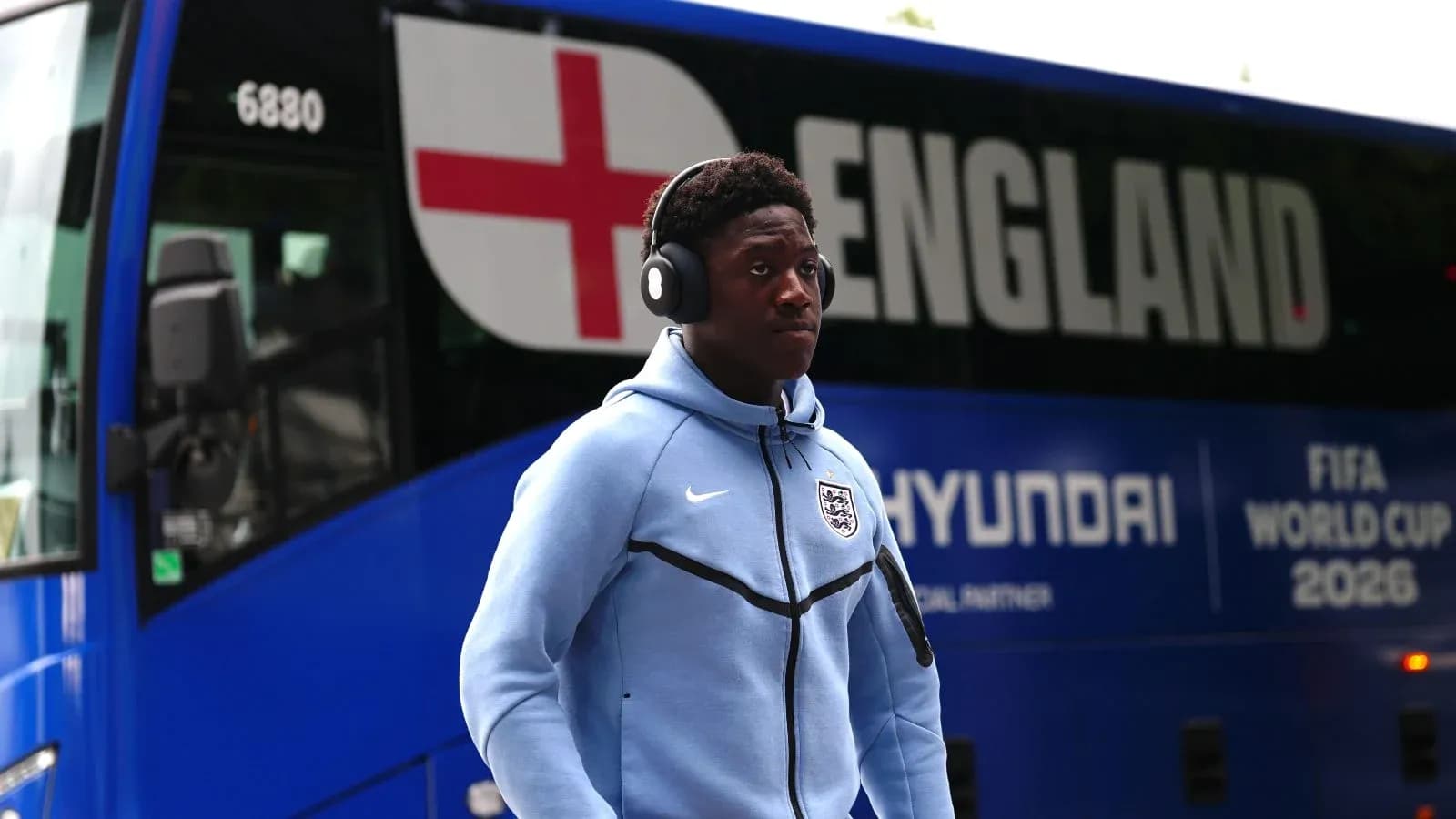
Kobbie Mainoo's World Cup Snub: A Mystery Unfolds
Kobbie Mainoo arrived at this World Cup as one of England’s most intriguing storylines. He leaves it as one of its biggest mysteries.
On the back of a superb 2025/26 run-in with Manchester United, the teenager had forced his way into Thomas Tuchel’s squad, driving United to Champions League qualification and looking every inch a modern England midfielder in waiting. He wasn’t expected to dislodge Declan Rice or Elliot Anderson, but he was expected to matter.
He never kicked a ball.
Not a late cameo. Not a dead-rubber run-out. Nothing.
For a player of his form and profile, that silence became deafening as England laboured through games where an extra line-breaking midfielder might have made all the difference.
A Plan That Never Materialised
The turning point, according to reports, came in the build-up to England’s second group match against Ghana.
With Rice struggling for fitness and Jordan Henderson injured, the door seemed to swing open for Mainoo. Training sessions in that week painted a picture of opportunity: Mainoo was used in central midfield alongside Anderson, and within the camp there was a growing sense he was edging into Tuchel’s thoughts.
“There was a feeling he was in line to feature,” one account put it.
Then the mood changed.
The Daily Mail reports that Tuchel “had not liked what he saw” from Mainoo in those sessions. Whatever the manager had been searching for – tactical discipline, intensity, chemistry with Anderson – he clearly didn’t find it to a convincing level. The experiment ended not with a debut, but with a decision: Mainoo would remain on the fringes.
From there, the pattern hardened. England’s midfield stuttered at times, Rice’s fitness issues were plain, yet the teenager stayed rooted to the bench.
Tuchel turned elsewhere.
Reece James, a defender by trade, was pushed into midfield ahead of Mainoo towards the end of the tournament. It was a move that underlined just how far down the pecking order the United youngster had slipped. Even as Rice visibly toiled, Mainoo’s role never changed.
He watched. He waited. He never played.
Body Language and Broken Expectations
The story isn’t just tactical. It’s human.
Those close to the squad noticed Mainoo’s demeanour as the tournament wore on. After matches, he was often the first player to leave the stadium, alone, headphones on. The Athletic echoed that picture: Mainoo, “unhappy” and “often the first player back on the team bus”.
This was not the wide-eyed youngster soaking up his first World Cup. This was a player expecting to compete, suddenly frozen out.
Within the camp, there were conflicting interpretations of Tuchel’s stance. One source wondered if the England boss had misread Mainoo as a kid simply happy to be along for the ride, content with the experience rather than demanding a role. Others felt the opposite – that Mainoo simply hadn’t done enough, in Tuchel’s eyes, to earn the trust required to throw him into a World Cup midfield.
Either way, the end result was the same: no minutes, no clear plan, no defined place in England’s campaign.
A Manager Under Fire, A Player in Limbo
Tuchel has already become an easy lightning rod for England’s World Cup frustrations, and his handling of Mainoo sits near the top of the charge sheet. The decision to repurpose James in midfield while a natural, in-form central midfielder sat idle will be replayed and re-argued long after this tournament fades.
For Mainoo, the fallout is more personal.
He arrived off the back of a breakout season, trusted by Manchester United in high-stakes games, instrumental in dragging them back into the Champions League. He leaves with his international prospects clouded by a World Cup in which his name was on the squad list but never on the teamsheet.
The question now is simple and sharp: when England next gather, is Kobbie Mainoo part of the solution, or just a symbol of a campaign that never quite knew what to do with its own talent?
Related News
Ilia Topuria Accuses Justin Gaethje After UFC Defeat
Tyson Fury vs Anthony Joshua Fight Date and Venue Confirmed
Switzerland Calls Up In-Form Sion Striker Winsley Boteli for Nations League
Bournemouth Secures Historic 2-1 Win Over Real Sociedad in Spain
Portugal Announces Squad for 2026 UEFA Nations League; Cristiano Ronaldo Expected to Play
Raphinha Channels Ronaldo Nazario as Barcelona's Leading Striker After Position Change