
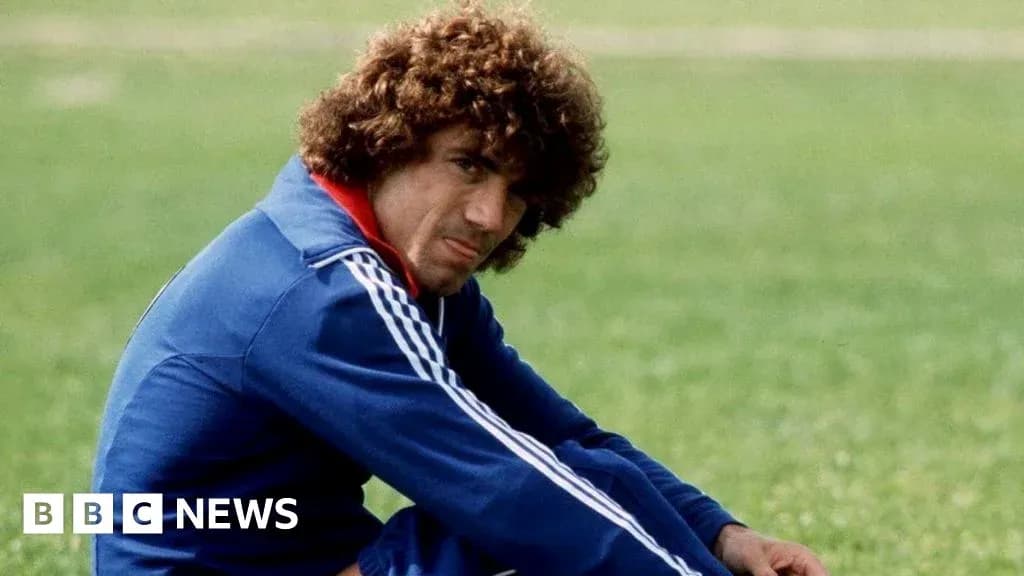
Kevin Keegan: A Bridge Between Liverpool and Hamburg
Kevin Keegan’s death at 75 has drawn tributes from every corner of football, but in one corner of Europe, the loss cuts especially deep. Between the Mersey and the Elbe, a small, relentless forward once stitched together two places that see the game not as entertainment, but as identity.
Liverpool City Region Mayor Steve Rotheram captured that bond in a letter to Hamburg’s mayor, Dr Peter Tschentscher, describing Keegan as “a bridge between two great cities” – a phrase that feels less like political flourish and more like simple fact.
From Anfield idol to Hamburg hero
Keegan left Liverpool FC in 1977, stepping away at the peak of his powers. He had just lifted the club’s first European Cup in his final appearance, capping a spell that brought seven major honours and turned him into one of the most decorated English players of his generation. Two Ballon d’Or awards underlined his standing in the game. The medals told one story. The move to Hamburg told another.
At a time when English stars rarely left home, Keegan did. He swapped the Kop for the Volksparkstadion, the Mersey for the Elbe, and in doing so, he changed more than just his club colours. Rotheram, writing in the wake of Keegan’s death from cancer, framed that transfer not as a transaction, but as a statement.
“When Kevin left our shores for Germany in 1977, he did more than make a then-record transfer between two football clubs,” he wrote. “He built a bridge between two great cities.”
Hamburg embraced him. Liverpool never really let him go.
A hero, an irritant, and a people’s champion
Rotheram’s letter, seen by the Local Democracy Reporting Service, carried the voice of a city that still talks about Keegan in the present tense. For one half of Liverpool, he said, Keegan was a “footballing hero”; for the other, a “well-respected irritant on derby day”. That line captures him perfectly. Loved by the red half, grudgingly admired by the blue.
“He was not just a Liverpool FC legend and one of the most beloved figures our city has ever known,” Rotheram wrote, before widening the lens. Keegan’s success, he argued, belongs as much to Hamburg as it does to Liverpool, a shared legacy in two ports that live and breathe football.
In both cities, he was “admired and loved”. To Rotheram, Keegan embodied “better than anyone else” the old truth that football is the people’s game. Not a slogan. A way of explaining why a 5ft 8in forward could walk into two working-class cities and feel instantly at home.
A bond that outlived the final whistle
The relationship did not end when Keegan hung up his boots or left either club. Rotheram praised his efforts to deepen the ties between Liverpool and Hamburg, a connection now strong enough to warrant a dedicated exhibition celebrating the links between the two cities – with Keegan’s career at its heart.
Earlier this year, at the Liverpool City Region pavilion, Keegan had written words for Rotheram to read to a large audience. The mayor joked about his “pidgin German” and broad Scouse accent, yet the message still landed. The response, he said, was warm. Keegan might have left both cities decades ago, but he had not left their hearts.
That was meant to be a prelude, not a farewell. Keegan had been due to travel with Rotheram to Hamburg’s famous Harbour festival, the Hafengeburtstag, a celebration perfectly suited to a man who had spent his life uniting two ports. Then came the cancer diagnosis. The trip was off.
“He was devastated not to be attending,” Rotheram wrote. Still, Keegan sent a personal note for the Liverpool stage on the banks of the Elbe. Even when illness kept him away, he found a way to be present.
“Forgive my Plattdeutsch, but I love Hamburg”
Rotheram chose to share that message again in his letter to Dr Tschentscher. It was simple, direct, and utterly Keegan.
“In Kevin’s words, once again: Forgive my Plattdeutsch, but I love Hamburg.”
A line that carries a smile. A line that tells you he understood the city and its people, and that they understood him.
The letter closed with a joint tribute from one football city to another. “On behalf of the people of Liverpool, we send our deepest condolences to Kevin’s friends, the HSV family and the people of Hamburg. Thank you for loving him as we did. You’ll Never Walk Alone.”
Two cities, one player, one song. The little forward who ran himself into the ground for club and country ended up building something that outlasts goals and trophies: a living link between Liverpool and Hamburg that now has to move on without him, but will never forget who laid the first stone.
Related News
Ilia Topuria Accuses Justin Gaethje After UFC Defeat

Tyson Fury vs Anthony Joshua Fight Date and Venue Confirmed
Switzerland Calls Up In-Form Sion Striker Winsley Boteli for Nations League
Bournemouth Secures Historic 2-1 Win Over Real Sociedad in Spain
Portugal Announces Squad for 2026 UEFA Nations League; Cristiano Ronaldo Expected to Play

Raphinha Channels Ronaldo Nazario as Barcelona's Leading Striker After Position Change