
Jordy Bos: Australia's Rising Star at Right-Back
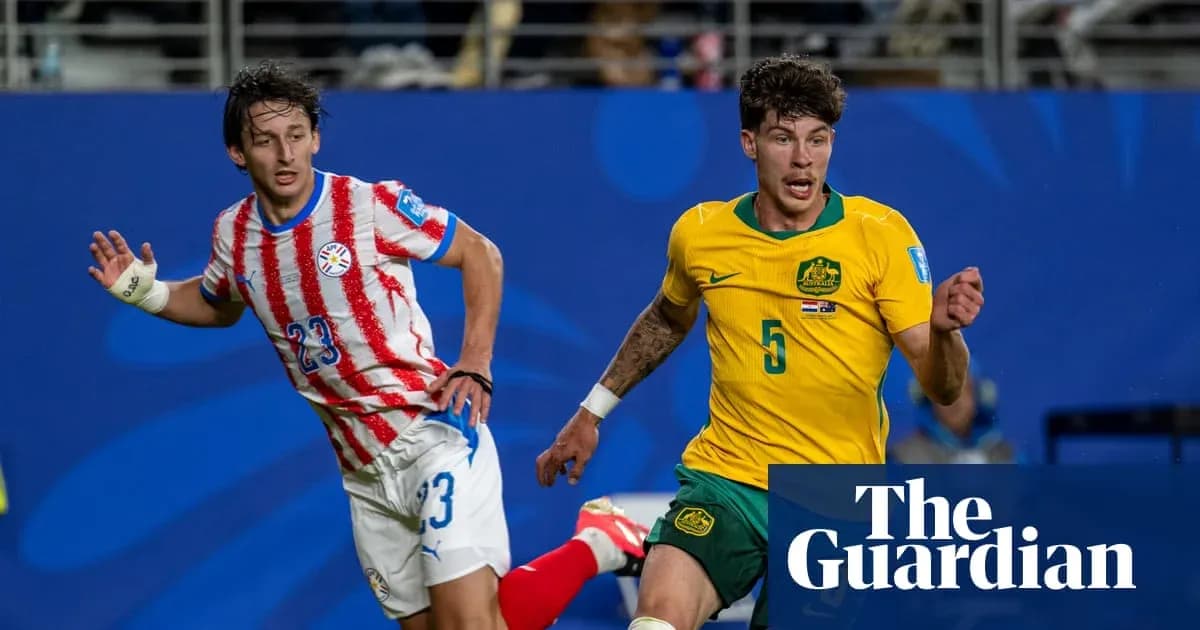
Jordan Bos did not so much play right-back as rip the position up and redraw it along the San Francisco Bay.
Time and again, the natural left-back tore down that opposite flank, gliding past one challenge, then riding another, before crashing into the box with a force that lifted the Socceroos and the 12,000 Australians who had painted the stadium yellow. At 0-0 against Paraguay, with the last 32 of the World Cup edging closer on the clock yet never feeling safe on the pitch, Bos became Australia’s rising tide.
Every time Julio Enciso found a pocket of space, every time Patrick Beach had to fling himself into another save, the tension ratcheted up. Tony Popovic kept glancing at his watch. The equation was simple: a point would be enough for second place in Group D. The feeling was anything but. One mistake, one lapse, and the World Cup could still vanish.
So the Socceroos clung to territory. And Bos gave them yards.
On a cool evening a short drive from Google’s Mountain View headquarters, Australia’s search for a spark returned one emphatic result. Bos bounced off would-be tacklers, surged past defenders who knew what was coming but still could not stop it. Every metre he gained shoved the ball further from danger, and dragged his team further from the shadow of that bruising defeat to the United States.
The cast around him changed. Cristian Volpato, bright in the first half, made way. Nestory Irankunda, the match-winner against Turkey and Popovic’s spearhead, was also called to the bench. The threat up front reshaped. The pattern on the right did not. Bos just kept coming, colliding with bodies, forcing Paraguay backwards, turning a full-back’s lane into a runway.
From his new vantage point on the right wing, Ajdin Hrustic watched it unfold at close range. He did not need to dress it up. “He’s a great player, he’s got power, you’ve seen it,” he said afterwards, sounding more like an awed spectator than a teammate. Aiden O’Neill, clutching the player of the match trophy, looked almost embarrassed. He admitted the award probably belonged to Bos.
Inside the dressing room, the admiration went beyond the numbers. Harry Souttar called him “a special player, a special guy, and just takes everything in his stride.” Then the captain added the kind of line that tends to follow a star on the rise. “The guy’s body’s just unbelievable to look at,” he said. “I don’t want to obviously put too much pressure on him, but if he keeps performing like that and there’s no ceiling.”
The praise only grew louder. Milos Degenek went straight for the bold claim: Bos, he said, is already a top-five left-back in the world and the best at his age. “That’s my opinion, I’m very biased, and I love him.” When a journalist pushed him on where Bos ranks as a right-back, Degenek grinned and shot back: “Top 10.”
Then came Irankunda, who has never been shy with his words or his football. “He’s the best player in the world, Jordy Bos, best winger in the world,” he said. “He might have to switch to a winger, in my opinion. He’s done so well at right-back today, but he got so high up the pitch today and he showed glimpses of what he can do with the ball.”
Popovic had sprung a surprise by starting Bos on the right, especially with natural right-backs Kai Trewin and Jason Geria available. It was not a gamble taken in the dark. The coach had watched Bos operate there in Belgium with Westerlo, and had already tested the idea by using him at right-back for half an hour against New Zealand nine months earlier.
“We’ve seen that he can adapt and play on that side,” Popovic said. “It’s the best game he’s played of the three [World Cup matches] by far.”
Bos did not arrive at this tournament as an unknown. After proving himself in the Dutch Eredivisie last season, the 23-year-old came in as one of the Socceroos’ most credentialed players and a symbol of a young, ambitious squad. Until this night, his World Cup had been tidy rather than explosive. Then came this performance: out of position, on a booking tightrope with the knowledge that another yellow card would rule him out of the last 32, and yet utterly unflustered.
The right-side experiment had already earned him a nickname at training. Hrustic had been calling him “Dani Alves” in recent days, a nod to the Brazilian who turned the right flank into his own stage. Others have reached for Arjen Robben as a comparison, the classic left-footed right winger cutting in from the flank. Bos tried to cool that talk. “Unfortunately I didn’t score like him, but I tried,” he said.
The raw output still told its own story. No Australian took more shots than Bos’s three. He also created the joint-most chances. He completed four successful dribbles and won more duels than any teammate, including seven of nine aerial contests. “I was enjoying it too, honestly, tonight,” he said, which felt like an understatement after 90 minutes of relentless running.
The name that keeps circling around Bos, though, is Gareth Bale. The comparison is not about medals or goals, not yet, but about the arc. Bale began as a marauding left-back and morphed into a right-sided force of nature at Tottenham and Real Madrid. His game was built on that same blend of athleticism and power that Bos now hints at.
Asked which of the greats he sees most of himself in, Bos did not duck the question. “Yeah, Robben … I don’t mind Bale, to be honest,” he said. The labels will keep coming. Alves. Robben. Bale. For the Socceroos, the detail hardly matters.
On a night when Australia needed composure and a jolt of belief more than they needed a goal, Jordy Bos supplied both from the “wrong” side of the pitch. Whatever comparison sticks in the years ahead, this was the evening he stopped being a promise and started being a problem for the rest of the world.
Related News

Raphinha’s Hat-Trick Powers Barcelona to 7-2 Victory Over Racing Santander
Carabao Cup Fourth Round Draw: Liverpool Set to Clash with Chelsea, Arsenal to Face Fleetwood Town
Key Football Matches to Watch in Azerbaijan This Autumn
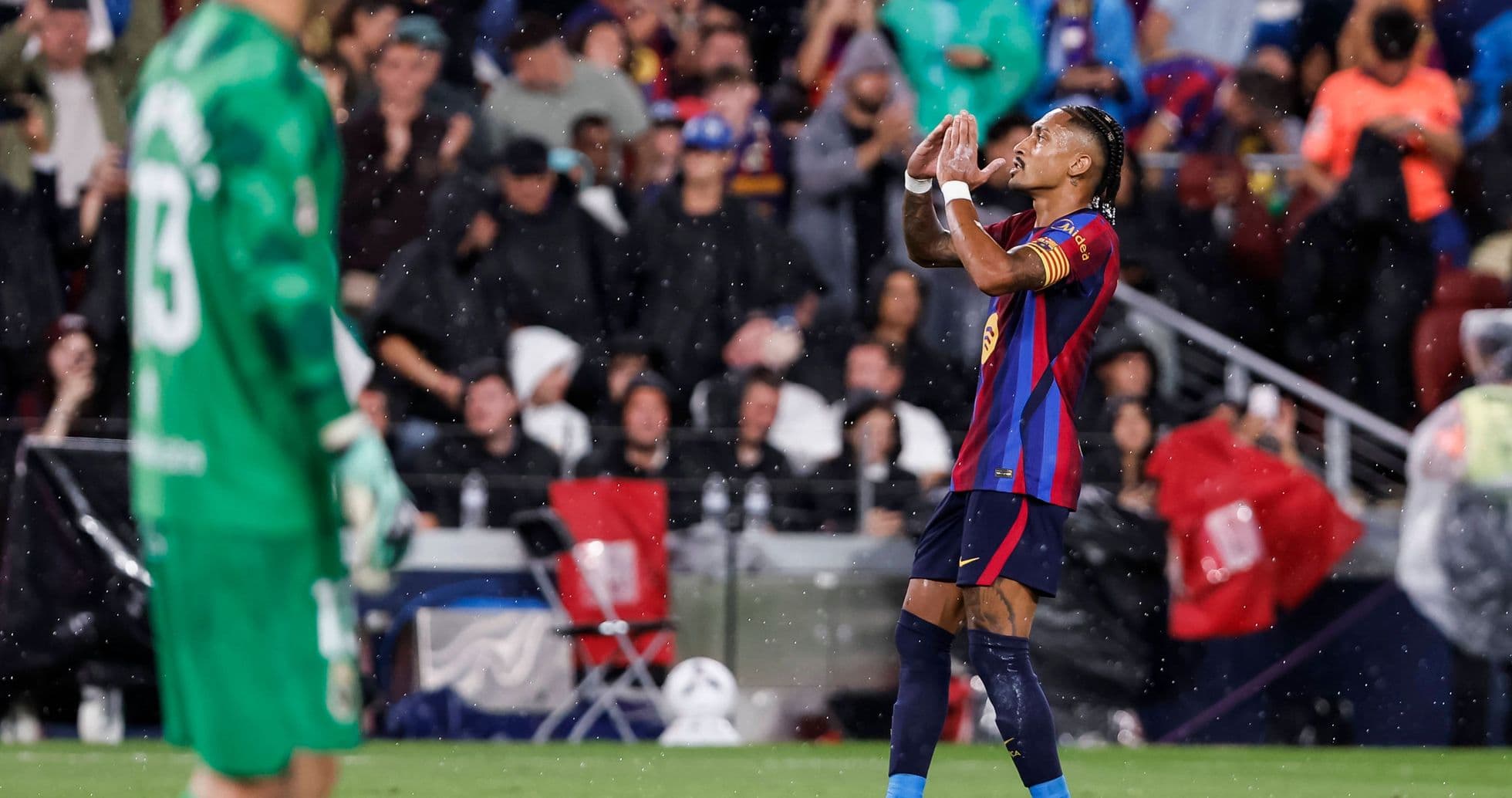
Raphinha's Hat-Trick Drives Barcelona to 7-2 Triumph Over Racing Santander
Hansi Flick Leads Barcelona to Record-Breaking Seven Wins in a Row
Gavi Reflects on Injury Return as Barcelona Dominate Racing Santander 7-2