
Jordi Alba Reflects on Barcelona Career: Triumphs and Heartbreaks
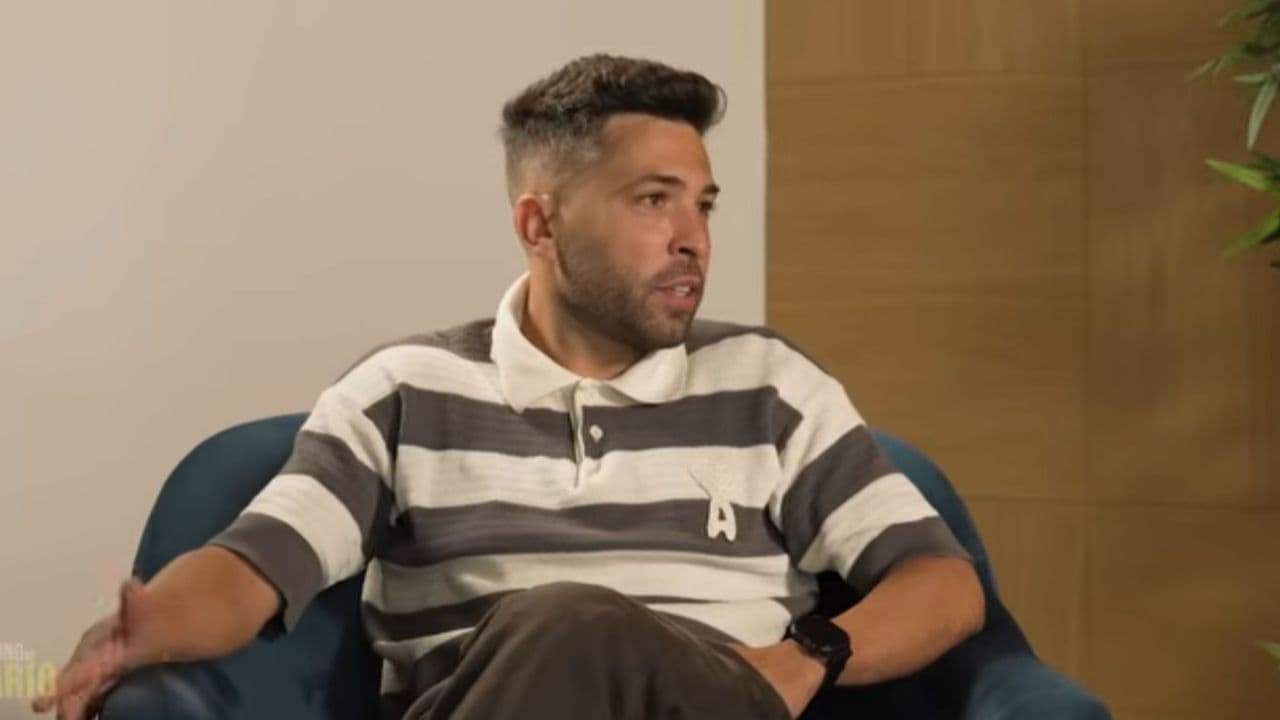
Jordi Alba has lived the full Barcelona experience – from the heights of Berlin to the sickness of Anfield, from feeling invincible to being pushed towards the exit with a day left in the window. On Mario Suarez’s podcast, El Camino de Mario, the former Barça left-back opened up with a bluntness that cuts through the usual post-career varnish.
From winger to world-class full-back
Alba’s story, as he tells it, doesn’t start at Camp Nou. It starts with Unai Emery and a positional reinvention that changed everything.
“I owe my career to Unai Emery. I was playing as a winger until Unai converted me,” he admitted. “Initially, I didn't take to the full-back role particularly well, but Emery is world-class. He has a knack for extracting the absolute best from his players at every club he leads.”
It’s a striking confession from a player who would go on to define the modern attacking full-back at Barcelona and with Spain. The speed, the overlaps, the trademark cut-backs – all of it, he says, stems from a coach who saw something different in him and refused to back down.
“It was stolen”: the 2014 title that never arrived
When the conversation turned to the 2013–14 La Liga season, Alba didn’t bother with diplomatic phrasing. Atlético Madrid lifted the trophy at Camp Nou on the final day, a seismic moment in Spanish football. For Alba, the memory still stings.
“It was stolen!” he snapped. “Mateu Lahoz was the official that day, wasn't he? My word…”
No elaboration, no softening of the blow. Just the lingering anger of a player who watched a league title slip away on his own pitch and still blames the officiating for it.
Luis Enrique, the “genius” who made Barça untouchable
If that season left scars, the next era under Luis Enrique brought something close to perfection. Alba’s tone changed completely when the coach’s name came up.
“For me, Luis Enrique is the standout,” he said. “He ensures every player is pulling in the same direction, even those on the fringes. You feel a genuine sense of joy for your teammates and the collective. Not many managers can foster that environment; in that sense, he's a genius.”
The pinnacle came in 2015. The treble. The Champions League in Berlin. For Alba, that wasn’t just a great team; it was something beyond.
“2015, when we secured the Champions League under Luis Enrique, was the only year I felt we were truly untouchable,” he recalled. “Before the final, I told my agents: ‘Relax, we're going to win.’ It wasn't arrogance; it was pure conviction. We were invincible.”
Few players speak that boldly about their own sides years later. Alba does, because he believes it. That Barça, in his mind, walked into every stadium knowing the outcome.
Xavi’s storm and a title in chaos
Luis Enrique left. The team changed. So did the club. When Xavi Hernández arrived in the dugout, he walked into a storm of financial crisis, sporting instability, and a restless fanbase. Alba insists his former teammate handled it.
“Xavi Hernandez inherited the reins during a very turbulent period,” he said. “He stepped up to the plate and did a fantastic job. We secured La Liga and the Supercopa against Real Madrid, and he managed the dressing room expertly during my time there.”
Titles in chaos. A league and a Supercopa won against their greatest rival, while the institution burned around them. Alba doesn’t gloss over the turbulence; he simply credits Xavi for steering through it.
Anfield: the night that still hurts
Then comes the darkest chapter: Anfield, 2019. Barcelona arrived with a 3–0 lead from the first leg of the Champions League semi-final. They left shattered.
Alba doesn’t hide from his part in it.
“I made a mistake with a header back for the opening goal,” he admitted. “It was a golden opportunity to reach the final, and I'm certain we would have won it.”
The sense of regret is obvious. Not just for the defeat, but for what he believes that defeat cost them – another Champions League, another era-defining moment.
Stories spread at the time that he had broken down at half-time. He wanted that detail corrected.
“People claimed I was in tears at half-time, but that wasn't the case. I just felt physically sick,” he clarified.
Not crying. Just ill with the weight of it all. The kind of nausea that only comes when a season, and perhaps a legacy, is slipping away in front of you.
A brutal goodbye to Barcelona
For all the trophies and all the nights under the lights, Alba’s exit from Barcelona was anything but romantic.
“With only 24 hours left in the transfer window, they informed me I had to go on loan to Inter Miami,” he revealed. “Without any prior warning, and with my children already settled in school... it was a deeply difficult moment.”
No farewell tour. No carefully staged goodbye. Just a late call, a demand to move, and a family already rooted in the city.
“I eventually terminated my Barcelona contract without having another move lined up,” he said.
He walked away before knowing where he would land. That’s not how legends are supposed to leave. Yet that’s how it happened.
Ibiza, Busquets and an unexpected project
The next chapter began in a place far removed from boardrooms and negotiation tables: on holiday.
“I went on holiday with Busquets, who had already committed to Inter Miami,” Alba explained. In Ibiza, fate intervened. “In Ibiza, I met with Jorge Mas, the club's owner, and he quickly sold me on the project. At that stage, we still had no idea Messi was joining too.”
No grand plan, no pre-arranged reunion with Lionel Messi. Just a conversation, a vision laid out by an owner, and a player looking for a new challenge after a painful departure. The rest, as the football world knows now, turned into one of MLS’s most watched experiments.
The COVID pay cuts and a battle for reputation
Alba also wanted to correct the record on one of the most contentious episodes of Barcelona’s recent history: the wage cuts during the COVID-19 pandemic and the way the captains were portrayed.
“The captains deferred our salaries and waived earnings of our own volition,” he said. “A campaign of misinformation was leaked to tarnish our reputations. It felt as though the captains were being scapegoated for the club's financial troubles.”
It’s a rare, direct accusation. Not against a coach or a referee, but against the narrative that formed around the dressing room. Alba insists the senior players stepped up, only to watch their names dragged through the mud while the club’s financial crisis deepened.
From Emery’s decision to move him back, to Luis Enrique’s “invincible” machine, to the sickness of Anfield and the coldness of his departure, Jordi Alba’s career at Barcelona reads like a compressed history of the club’s modern era: glory, collapse, reinvention, and fallout.
He has his medals. He has his regrets. And he clearly still has plenty to say about how it all unfolded – on the pitch, in the dressing room, and behind the closed doors where careers at giants like Barça are so often decided in a single, brutal conversation.
Related News
Raphinha’s Hat-Trick Powers Barcelona to 7-2 Victory Over Racing Santander
Carabao Cup Fourth Round Draw: Liverpool Set to Clash with Chelsea, Arsenal to Face Fleetwood Town
Key Football Matches to Watch in Azerbaijan This Autumn
Raphinha's Hat-Trick Drives Barcelona to 7-2 Triumph Over Racing Santander
Hansi Flick Leads Barcelona to Record-Breaking Seven Wins in a Row
Gavi Reflects on Injury Return as Barcelona Dominate Racing Santander 7-2