
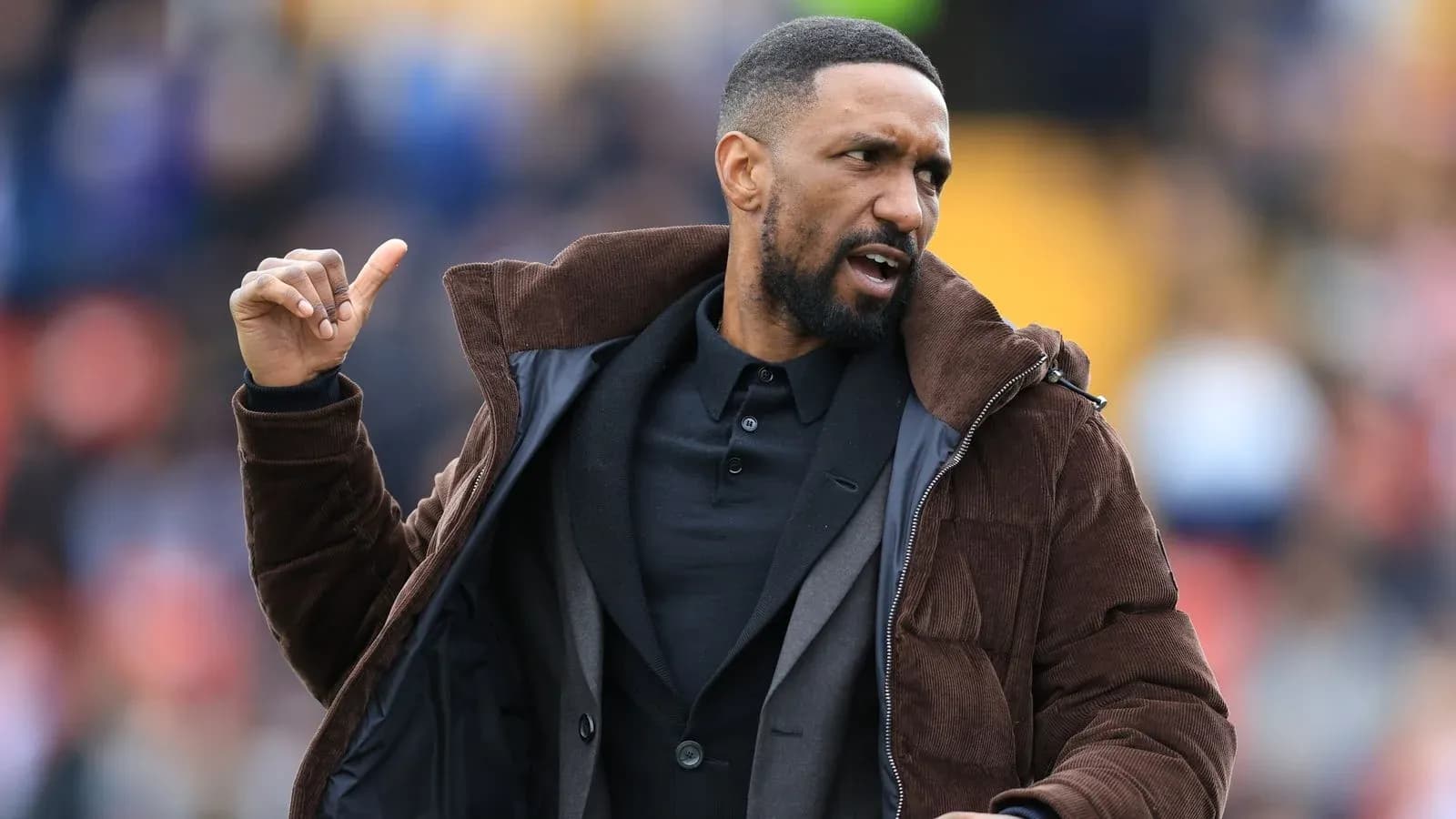
Jermain Defoe's Management Debut Ends Abruptly at Woking
Jermain Defoe’s first job in management has unravelled in brutal fashion, and Woking’s director of football Jody Brown has now laid bare the club’s side of the story.
Four months after arriving with the aura of a Premier League and England great, Defoe is gone from the National League side, his contract mutually terminated on Thursday after just six games in charge – two wins, one defeat, and a brief flicker of something that looked like a project.
On Instagram, Defoe called his spell at Woking “eye-opening” and said “circumstances have ultimately made it impossible for me to continue”. He spoke of pride, of a “fantastic” group of players, of a journey cut short.
Brown: “People do not just fail to turn up”
In a striking statement on Saturday morning, Brown defended the club’s conduct and questioned Defoe’s management, making it clear he believes Woking backed their rookie head coach – and that he, personally, pushed for the appointment.
“The recommendation to appoint Jermain as manager was mine, and I take full responsibility for it,” Brown said. He described meeting Defoe “on several occasions” and being convinced the 43-year-old was the man to lead Woking into “an exciting new era”.
That era has ended before the season has even properly begun.
Brown said the club were “fully committed” to supporting Defoe and that recruitment, staffing decisions and football matters were “heavily influenced” by the former striker. Yet behind the scenes, he claimed, concerns were mounting.
“In recent weeks there had been feedback from across the club, including players, staff and other departments, regarding growing concerns,” Brown explained.
To get a clearer picture, Brown requested a short report from Defoe and assistant Paul Bracewell: squad depth, recruitment targets, operational challenges – the basics needed to sharpen preparations for the season. He says that report was asked for more than once.
It never arrived.
So a meeting was arranged. Directors, the manager, the assistant manager, head of operations – a chance to align, address issues, and move forward.
According to Brown, Defoe and Bracewell did not show up. They also missed that day’s training session.
“Throughout his tenure, Jermain had never communicated any serious concerns directly to me, so I am not going to speculate on his reasons,” Brown said. Then came the line that cut through the usual boardroom diplomacy.
“Every football club faces challenges. Players want more game time, improved contracts or transfers. The media team might want better equipment, the medical department more interns, the strength and conditioning staff larger gym space, and the car park attendants may want more coffee. But people do not just fail to turn up.”
Sky Sports News has contacted Defoe for comment.
From “something special” to sudden exit
The speed of the collapse jars with the optimism Defoe projected only weeks ago.
Sky Sports cameras followed his first steps in the dugout, including a wild six-goal opener against Eastleigh and a goalless draw with Braintree Town. After that stalemate, Defoe spoke with conviction about what he believed he could build at Woking, even daring to talk about promotion to the EFL.
“People talk about it being impossible. That means nothing. I truly believe that we can do something special,” he said at the time. “When you become a manager and a coach, you want that sort of challenge. You want to get up in the morning and have a goal to strive to.”
Those ambitions now hang in the air, detached from reality. His record – six games, two wins, one defeat – barely had time to form a pattern. The real story, as Brown tells it, lies not in results but in relationships, communication and the day-to-day grind that separates coaching from playing.
“As we have seen many times before, success as a player does not always translate into management and leadership,” Brown reflected. He stressed that he hopes Defoe succeeds “in whichever direction he follows” next, but the message was unmistakable: the club believes it gave him control and support, and expected more in return.
Defoe: Pride, frustration and an “eye-opening” lesson
Defoe’s own statement painted a different emotional picture, if not a different set of facts.
“Following recent discussions, I can confirm that I have mutually agreed to leave my position as manager of Woking FC,” he wrote. “Unfortunately, circumstances have ultimately made it impossible for me to continue in the position.”
He spoke of being “extremely proud” of the work done, of “building something special”, and reserved particular praise for the players.
“I am incredibly grateful to the supporters and, most importantly, the players, who I am genuinely gutted for. The group is a fantastic one, and I wish the squad every success for the season ahead.”
Defoe also highlighted the contribution of his staff. “I’m really disappointed the journey has ended so soon, but I leave with great pride in what Paul Bracewell, Karl Halabi and I were building at the club.”
Then came the line that may linger longest: “My time at Woking FC has been an eye-opening managerial experience and one that will undoubtedly make me stronger for the next challenge in my career.”
An eye-opener for both sides, it seems.
A brutal reminder of management’s reality
Strip away the names and the headlines, and this is a familiar football story: a big reputation on the pitch colliding with the unforgiving, often mundane reality of management.
At Woking, the fallout has arrived before Defoe even had the chance to shape a full season. For Brown and the board, the task now is to steady a club that had been sold on a bold new direction under a marquee appointment. For Defoe, the question is harsher, and more personal.
He wanted the challenge. He spoke of the “goal to strive to”. Now he has his first scar from the dugout.
What he does with it will define whether this was a brief misstep, or the first warning sign in a managerial career that may never quite match the glow of his playing days.
Related News
Ilia Topuria Accuses Justin Gaethje After UFC Defeat

Tyson Fury vs Anthony Joshua Fight Date and Venue Confirmed
Switzerland Calls Up In-Form Sion Striker Winsley Boteli for Nations League
Bournemouth Secures Historic 2-1 Win Over Real Sociedad in Spain
Portugal Announces Squad for 2026 UEFA Nations League; Cristiano Ronaldo Expected to Play

Raphinha Channels Ronaldo Nazario as Barcelona's Leading Striker After Position Change