
Jay-Z's Roc Nation Sports: Redefining Football Transfers
Jay-Z has spent a career bending culture to his will. This week, he did it again – not with a verse, but with a contract.
Barely a day after his first rap feature in four years surfaced on Beyoncé’s extended remix pack of Morning Dew (Donk), another of his ventures, Roc Nation Sports, was at the heart of the transfer window’s biggest moves and fiercest arguments. The man who once obsessed over chart positions now shapes balance sheets, dressing rooms and dressing tables – from Tidal and streetwear to champagne, cognac and, increasingly, the global football market.
From Brooklyn to the Bernabéu
Roc Nation Sports launched in 2013 in partnership with Creative Artists Agency, originally rooted in the NBA, NFL and MLB. Kevin Durant became one of the early headline names. Football arrived later. Jérôme Boateng signed on in 2015, a landmark moment that signalled the agency’s intent to cross the Atlantic and park itself at the top table of the European game.
Four years on, Roc Nation Sports International (RNSI) was created with a clear brief: target stars at the biggest clubs in Europe. Based in London, it has grown into a heavyweight. More than 100 players now sit on its books, including one of the most coveted forwards on the planet – Vinícius Júnior.
The Brazil international signed a lucrative new contract with Real Madrid this week, believed to be worth around €25m a year. Arsenal had circled, armed with the kind of ambition and budget that turns heads in Madrid and Rio alike. The London club were prepared to pay a substantial fee, but those close to the situation felt the more realistic play was to wait and pounce on a free transfer next summer.
RNSI had a different target in mind. For two years, it pushed to drag Vinícius’s salary up to €30m to mirror Kylian Mbappé’s earnings. The strategy was clear: let his deal run into its final 12 months, invite the world’s elite to the table, and see who blinked first.
Real Madrid did. They improved their offer and kept their star. Arsenal, now turning to other attacking options such as Everton’s Iliman Ndiaye, were left to reassess. The decision, though, carried a cost for Madrid. With so much money committed to Vinícius, their chances of prising Rodri away from Manchester City have dimmed, especially with Barcelona stealing a march in that particular pursuit.
Roc Nation, meanwhile, moved on to its next play.
Diomande, record fees and a private jet
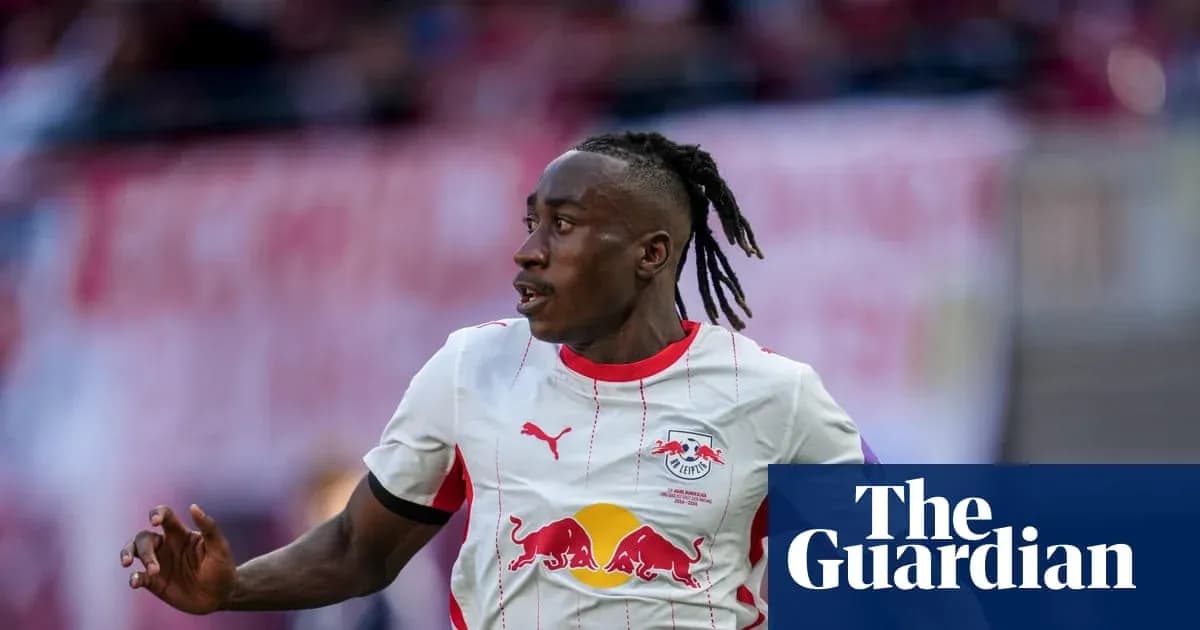
On the same day Vinícius’s new six-year deal dropped, Yan Diomande touched down in Madrid. The 19-year-old arrived from RB Leipzig for £115m, a fee that instantly made him the most expensive African player in history despite just 46 senior appearances for Leipzig and Leganés.
The images told their own story. Diomande on a private jet, flanked by his agents Nathan Campbell and Kareem Gbaja, heading to the Bernabéu to sign a seven-year contract. Behind the scenes, reports suggest RNSI stands to collect up to £17m in commission and fees from the move.
The transfer had been brewing for months. Liverpool opened the bidding in June with a £70m offer, swiftly rejected by Leipzig. The German club made it clear: anyone wanting Diomande would have to cross the £100m threshold.
Paris Saint-Germain briefly entered the race, then walked away at the end of July with a pointed statement. The French champions said they “will not engage in the inflationary and manipulative games of certain player agents”, a line that landed like a direct shot at the modern super-agency model. The message was unmistakable: the numbers, and the power of intermediaries, had gone too far for their liking.
Real Madrid did not share that view. They paid the price, literally, and in doing so offered a sharp snapshot of how transfers now work at the very top – long-running, multi-layered, and dominated by the leverage of agencies that can move markets as easily as players.
Legal battles in the shadows
Such influence rarely goes unchallenged. Diomande’s rise has already dragged Roc Nation into two legal disputes.
Max Gradel, the former Bournemouth winger, claims his agency, Maxidel Management, had an existing agreement with the player. He has filed a complaint with Fifa, arguing that RNSI muscled in on territory that was already contractually spoken for. World football’s governing body did not block the transfer, so Diomande’s move to Madrid went ahead. The case rumbles on in the background.
Dez Bamba, president of Diomande’s first club, AFI Sud Comoé in Côte d’Ivoire, has said the winger joined RNSI after receiving a call from Vinícius himself – a superstar-to-starlet connection that underlines how far Roc Nation’s network now stretches. RNSI has declined to comment on any of it.
Another dispute comes from the Rainbow World Group, which launched proceedings in the high court in London and in the British Virgin Islands in mid-June. The company claims it holds binding image rights and intellectual property agreements from Diomande’s early development and says it invested heavily in his career, taking him on trials at Chelsea, Bournemouth, Crystal Palace and Newcastle before Leganés finally signed him. RNSI has also stayed silent on that front.
These are not the neat, clean transfers of a bygone era. They are messy, contested, and drenched in competing claims over who discovered whom, who owns what, and who gets paid.
Africa: the new battleground
Strip away the legal noise and one truth remains: Diomande’s story has sharpened the focus on Africa as football’s next great battleground.
Clubs and agencies are racing to plant flags. Jeff Luhnow, the former general manager of the Astros and St Louis Cardinals and now owner of Leganés through his Blue Crow network, saw this coming. He said last year that Diomande would be the first of many after his group set up recruitment and development programmes in several African countries, including Ghana and Zambia.
“We’ve got more players like that in our pipeline,” Luhnow said then. It sounded ambitious. It now looks like a business plan everyone else is scrambling to copy.
RNSI has already moved. In July 2023, it acquired Brazilian agency TFM – which already represented Vinícius, Gabriel Martinelli and Endrick – and rebranded it as Roc Nation Sports Brazil. That gave Jay-Z’s operation a powerful bridge between South America and Europe. Africa is the next step.
In November, RNSI announced it had signed eight young African players, among them Ghana Under-17 midfielder Joseph Narbi and Francis Gomez, a Gambian winger at AC Horsens in Denmark. Campbell called the continent “a hotbed of untapped footballing potential” and described the expansion as a natural extension of the company’s global vision.
The message was clear: this is not a side project. It is a land grab.
The new kids in a ruthless game
Football agency work has always been ruthless. The money is too big, the stakes too high, for it to be anything else. What has changed is the scale and sophistication of the operators involved.
Roc Nation Sports arrived in this world later than many of its rivals. It did not crawl in quietly. It walked straight to the centre of the room, backed by a cultural empire, and started signing Champions League stars and record-breaking teenagers.
From Brooklyn studios to Madrid boardrooms, Jay-Z’s latest venture has shifted the landscape. In a dog-eat-dog industry, his “new kids on the block” are no longer knocking on the door. They are helping decide who gets through it.
Related News

Raphinha’s Hat-Trick Powers Barcelona to 7-2 Victory Over Racing Santander

Carabao Cup Fourth Round Draw: Liverpool Set to Clash with Chelsea, Arsenal to Face Fleetwood Town
Key Football Matches to Watch in Azerbaijan This Autumn
Raphinha's Hat-Trick Drives Barcelona to 7-2 Triumph Over Racing Santander
Hansi Flick Leads Barcelona to Record-Breaking Seven Wins in a Row

Gavi Reflects on Injury Return as Barcelona Dominate Racing Santander 7-2