
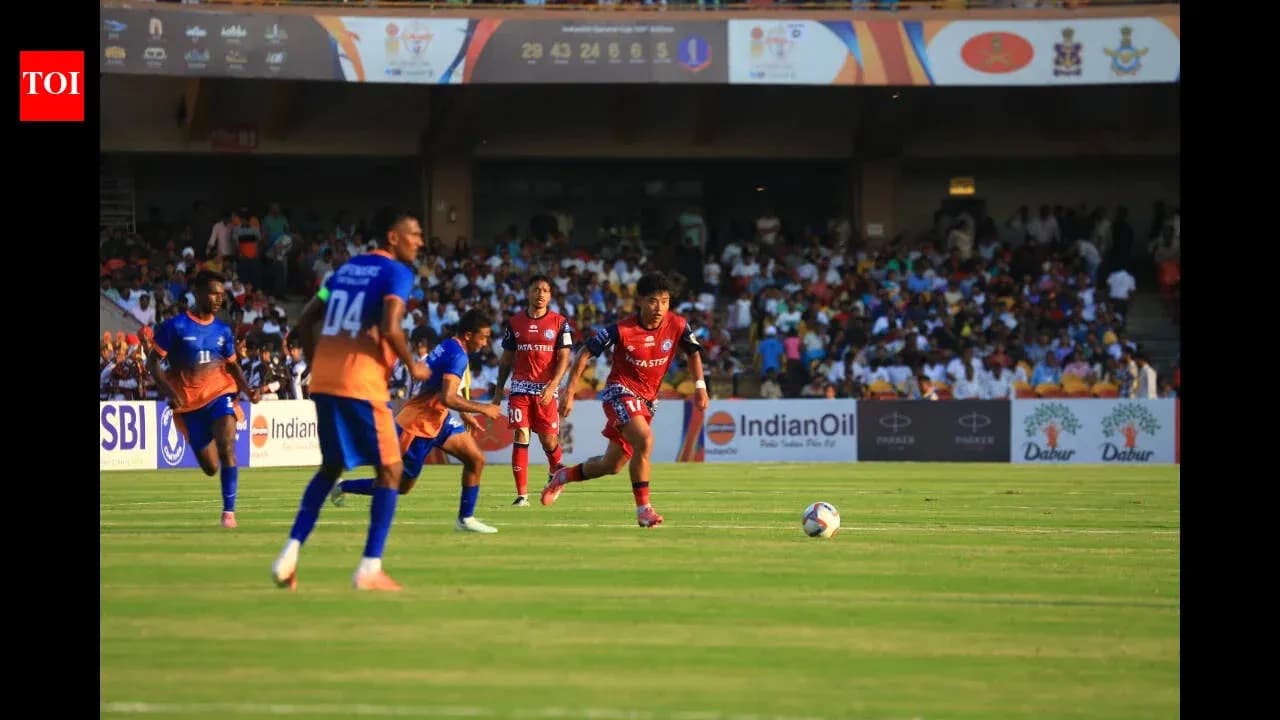
Jamshedpur FC Exits ISL as Tata Steel Withdraws Support
The Furnace will go cold.
Nine years after Tata Steel won the rights to put Jamshedpur on the Indian Super League map, the company has pulled its team out of the country’s top tier. A club that once packed the JRD Tata Sports Complex and lifted the ISL League Winners’ Shield will not be on the starting line when the league rolls into a new era.
The announcement came on Friday, blunt and final.
“Jamshedpur FC would like to confirm that it will not be participating in ISL from 2026-27 season onwards,” the club said in a statement, drawing a line under a project that began with such ambition in 2017 and peaked with the title under Owen Coyle in 2021-22.
No reason was offered publicly.
Behind the scenes, though, concerns over mounting losses and questions about the league’s long-term sustainability have been doing the rounds, according to sources. Those murmurs have now turned into a decisive break. The club has already informed the All India Football Federation of its decision.
Shockwaves through a new ISL model
The timing could hardly be more awkward for the ISL. For the first time, the competition is shifting to a club-led model, with teams collectively operating the league through a dedicated entity, while the federation holds a 10% stake.
On paper, that structure hands clubs more control and responsibility. In practice, one of the league’s most recognisable names has chosen this moment to walk away.
This is not a small market side slipping out quietly. Jamshedpur FC brought crowds, colour and a distinct identity. “The Furnace” was not just a nickname; it became one of the league’s more intimidating away venues, a rare footballing cauldron in India’s industrial heartland.
Unanswered questions, unsettled futures
Inside the club, the human cost of the decision landed quickly. CEO Mukul Choudhari called a staff meeting and delivered the news: the senior team will not continue.
Almost 50 staff members – administrative, technical, first team, youth and grassroots – now face an uncertain future. Contracts, careers, plans built around a professional ISL club suddenly look fragile.
The same cloud hangs over the dressing room.
Jamshedpur have at least 12 senior players tied to long-term deals. Coyle, the coach who led them to the league title in 2021-22 and returned to the club, also remains under contract. There is no clarity yet on how those agreements will be resolved, or what comes next for the players who signed expecting to compete at the highest domestic level.
Six more players, including former India midfielder Raynier Fernandes, Abhishek Ambekar, Aman CK, Devendra Murgaokar, Leewan Castanha and Provat Lakra, were brought in on short-term contracts specifically for the Durand Cup. Their situation is more straightforward on paper, but they too have walked into a club whose senior project is being wound down even as they play.
Because, for now, Jamshedpur’s senior team is still on the pitch. They are currently participating in the Durand Cup, a tournament steeped in history that suddenly feels like a coda for this chapter of the club’s story.
Tata’s long football story takes a turn
For Indian football, Jamshedpur’s exit is more than just a line in a press release. It interrupts one of the sport’s longest and most consistent corporate relationships.
Tata’s link with the game predates the ISL era by decades. Their Mumbai-based side once lifted some of Indian football’s most prestigious trophies – the Durand Cup, the IFA Shield, the Rovers Cup. The company then doubled down on development, building a residential football academy that has, over almost 30 years, supplied close to 150 players to various Indian teams.
That investment helped shape generations. It also brought heavyweight international clubs such as PSV Eindhoven and Sao Paulo to India for friendlies, raising standards and expectations.
Even now, Tata Steel insists it is not walking away from the sport entirely.
“JFSPL remains committed, in other capacities, to the continued growth and development of football in India,” the club’s statement read. The focus, they stressed, will remain on promoting the game, especially at grassroots level, and on identifying and developing young talent to build pathways to national and international football.
So the badge may disappear from ISL broadcasts, but the pipeline, they say, will not be shut off.
An empty space in October
When the ISL kicks off in October, one slot on the fixtures list will feel conspicuously empty. No away trip to Jamshedpur. No sea of red in the stands at the JRD Tata Sports Complex. No talk of the heat and noise of The Furnace.
A league that fought hard to present itself as stable, expanding and modern now has to explain why one of its title-winning clubs has chosen to step aside just as the teams are being handed more control.
The next move belongs to the league, the federation and the remaining clubs. Do they treat Jamshedpur’s withdrawal as an isolated case, or as a warning sign about the economics of Indian club football at the top level?
For now, the only certainty is this: when the new ISL season arrives, the champions of 2021-22 will not be there to defend anything, rebuild anything, or chase anything.
The Furnace, for the first time since 2017, will stand silent and wait to see what Indian football becomes without it.
Related News

Raphinha’s Hat-Trick Powers Barcelona to 7-2 Victory Over Racing Santander

Carabao Cup Fourth Round Draw: Liverpool Set to Clash with Chelsea, Arsenal to Face Fleetwood Town
Key Football Matches to Watch in Azerbaijan This Autumn
Hansi Flick Leads Barcelona to Record-Breaking Seven Wins in a Row

Gavi Reflects on Injury Return as Barcelona Dominate Racing Santander 7-2
Buffon Stands Firm in Support of Gattuso and Reflects on Italy Exit