

Iraq's Historic Journey to the World Cup
The convoy rolled into Baghdad in the dead of night. Not a team bus with tinted windows and police outriders, but a patchwork of cars and coaches, players and staff rattling in from different corners of a country at war.
This is how Iraq began the final leg of a 40–year journey back to the World Cup.
From there, the route to Mexico was as punishing as any qualifier. Eight hours by road for some, just to reach the capital. Then roughly 15 more on bumpy highways to Amman, one of the few remaining escape routes out of a region whose airspace had largely shut down.
“They had to travel from different cities to Baghdad by car or bus,” recalls René Meulensteen, assistant to head coach Graham Arnold. “Some of those journeys took up to eight hours. Then, from Baghdad they travelled roughly 15 hours on bumpy roads to Amman, in Jordan, where occasional flights were still operating.”
The rest of the Asian‑based squad scrambled their own way to Amman. Only then could Iraq finally move as one team.
Fifa had lined up a private charter. It sat on the tarmac for nine long hours before it moved.
An eight‑hour haul to Lisbon. A two‑hour stopover. A 12‑hour flight to Mexico. By the time the plane touched down in Monterrey, the players had spent the better part of two days in transit, their preparation shredded by geopolitics and logistics.
Yet this was the stage for what Meulensteen, the former Manchester United coach under Sir Alex Ferguson, calls “the most important game in their lives”. Somehow, they arrived with just enough time to let the swelling in their legs subside, to clear their heads, to remember why they had come.
They did not waste it.
In front of a crowd that quickly adopted them as its own, Iraq beat Bolivia 2-1 to claim the final place at the World Cup. A nation that has known more grief than glory in recent decades suddenly had a reason to pour into the streets.
“All the remaining tickets were given to local Mexicans, so they were there in a big number, together with a large group of Iraqis based in the US,” Meulensteen says. Monterrey felt like borrowed home soil.
The symbolism of the setting was impossible to ignore. Iraq’s only previous World Cup appearance, in 1986, was also in Mexico. “We told the players: ‘Let’s realise what kind of journey we’ve had to get here and perhaps the match is meant to be here, as Iraq’s previous World Cup participation was staged in Mexico.’”
Back in Baghdad, dawn broke to chaos of the joyous kind.
“It was absolute madness in Baghdad, where it was early in the morning,” Meulensteen says, having watched videos sent from the capital. “The whole nation has been craving something to celebrate and this gives people a huge boost of energy and hope. You can really feel the sense of pride; there’s a genuine feelgood factor.”
This is not a one‑off miracle dropped from a clear sky. Iraqi football has a habit of forcing its way into the world’s consciousness when the country itself is at its most fragile.
There was fourth place at the 2004 Olympics, where they beat Cristiano Ronaldo’s Portugal. There was the 2007 Asian Cup triumph, a title that briefly cut through the civil war and sectarian violence to offer a shared identity. Even the 1986 World Cup campaign unfolded against the backdrop of conflict.
“Iraq is still a country that is really feeling the aftereffects of the second Gulf war,” Meulensteen says. “You can see that in the cities. They are recovering, but logistically and organisationally you can’t compare it to Dubai or places in Saudi Arabia.”
Amid those constraints, the squad has become its own kind of sanctuary. Meulensteen, now 62, delights in the daily soundtrack.
“You should hear them on the bus to training and matches, singing and listening to music. It’s absolutely brilliant.”
The dressing room is a blend: players born in Iraq and others with Iraqi heritage, some of whom do not speak Arabic. Meulensteen meets them halfway with an intermediate command of the language, picked up during his early coaching years in Qatar. To make that move in 1993, he had to marry his girlfriend because living together unmarried was not allowed. It was the first of many cultural adjustments that would shape his coaching life.
Now he finds himself preparing Iraq for what might be the toughest assignment of all. The draw has dropped them into a group with France, Senegal and Norway.
“It’s like Manchester United against Grimsby,” he says, nodding to last August’s cup upset in England. The minnows won that tie. Meulensteen knows what it is to lean into that role and twist it to his advantage.
He and Arnold did it with Australia at the last World Cup. “We had France, Denmark and Tunisia in our group and weren’t given much chance of going through either,” he says. “But that’s where our biggest strength lies: the element of surprise.”
Australia beat Denmark and Tunisia and pushed Argentina hard in the last 16. The template is clear: organisation, belief, and a refusal to accept the script handed down from the draw.
That mindset was forged over decades, not months.
Meulensteen’s path to this point runs through Carrington and the peak years of Ferguson’s Manchester United. He arrived at the club in 2001 via academy director Lee Kershaw and a recommendation from Dave Mackay, who had worked with him when managing Qatar’s under‑17s. Meulensteen started in the academy, then moved into specialist individual work with first‑team players.
After a brief spell as Brøndby head coach, he returned to Old Trafford in 2007 with a sharper focus. His sessions with Ronaldo became part of club folklore.
“I had several sessions with him on and off the pitch, using videos to show certain things. We focused on the key aspects of finishing, dividing the penalty area into zones to make him aware of his positioning, the type of crosses coming in and the best finish for each situation.”
The message was ruthless: less decoration, more damage.
Meulensteen pushed Ronaldo to trade some of the show for sheer efficiency. “I told him it’s all about being as unpredictable as possible, varying your game … Over the years, he mastered that perfectly.
“What really stood out with Cristiano was his drive for perfection. And that’s still the case.”
At Carrington there was a fenced cage with rebound boards. After training, Ronaldo often disappeared inside for another 10 or 15 minutes of work. Meulensteen designed exercises using those boards so Ronaldo could handle the ball in different, more creative ways. “He absolutely loved that.”
All of it – the drills, the clips, the conversations about mindset – ended up on a DVD Meulensteen compiled for Ronaldo. “It was basically a PowerPoint presentation with video clips, in which I also explained the importance of setting goals, how people with clear targets are far more successful than those without them.”
The results arrived on the scoreboard. At the start of the 2007‑08 season, Meulensteen asked Ronaldo for his target after a 23‑goal campaign. Ronaldo said 30. “What about 40?” came the reply. Ronaldo agreed. He finished with 42 as United won the Premier League and Champions League.
In the summer of 2008, Ferguson promoted Meulensteen to first‑team coach and handed him the keys to training. The manager laid out his vision on three flipchart sheets: how United should defend, how they should use the ball, and then the part that mattered most.
“It covered principles both defensively and in possession. But the final sheet, he said, was the most important, as it defined Manchester United the most. He said: ‘When we attack, I want to do so with pace, power, penetration and unpredictability. And I want you to apply those four things in every training session in some way.’”
Look back at United at their peak and those four words run through almost every attack.
When Meulensteen left Old Trafford in 2013, he carried those ideas into a nomadic decade: Fulham, the US, Israel, India, then Australia and now Iraq. The settings changed, the principles did not.
His work now stretches beyond tactics. It reaches into the doubts that creep into players’ minds when the stakes rise and the noise grows.
“If they experience fear, I ask them to give it a shape. What exactly is that fear? It could be the fear of the consequences of not winning a match. You don’t always have control over everything that comes into your head, like what you see and what you hear. But I encourage them to focus on what they want, their desires – like playing well, scoring a goal or reaching the World Cup.”
He prefers to “add” to players rather than strip them down and rebuild them. The language matters. Ferguson taught him that.
“He always said the two most important coaching words are: well done,” Meulensteen recalls. Late in training, Ferguson would often stroll past, tap him on the shoulder and say exactly that. Small words, heavy impact.
Their relationship stretched far beyond the touchline. Ferguson is, in Meulensteen’s telling, a man of encyclopedic curiosity – politics, history, films, the American civil war in particular. On long away trips, they would sit on the bus or train playing Who Wants to Be a Millionaire? on Meulensteen’s iPad, regularly going all the way to the final question. “He knew things I would have never known.”
They still meet occasionally for a cup of tea. An hour and a half passes like 15 minutes. Stories, ideas, the shared understanding of what it takes to build and rebuild teams.
“United,” Meulensteen says, was a “beautiful period” of his life. The next chapter is being written thousands of miles away, with a squad that sings on the bus and travels by road through the night just to catch a plane.
Iraq now walk into a World Cup group that looks unforgiving on paper. France, Senegal, Norway. Heavyweights, pedigree, stars. The gap in resources is obvious; the gap in desire is not.
For a country still piecing itself back together, for players who have driven across war‑scarred landscapes just to make training, the question is no longer whether they belong on this stage.
It is how far this journey, already stretched to the limits, can push the giants standing in their way.
Related News
Raphinha’s Hat-Trick Powers Barcelona to 7-2 Victory Over Racing Santander
Carabao Cup Fourth Round Draw: Liverpool Set to Clash with Chelsea, Arsenal to Face Fleetwood Town
Key Football Matches to Watch in Azerbaijan This Autumn
Raphinha's Hat-Trick Drives Barcelona to 7-2 Triumph Over Racing Santander
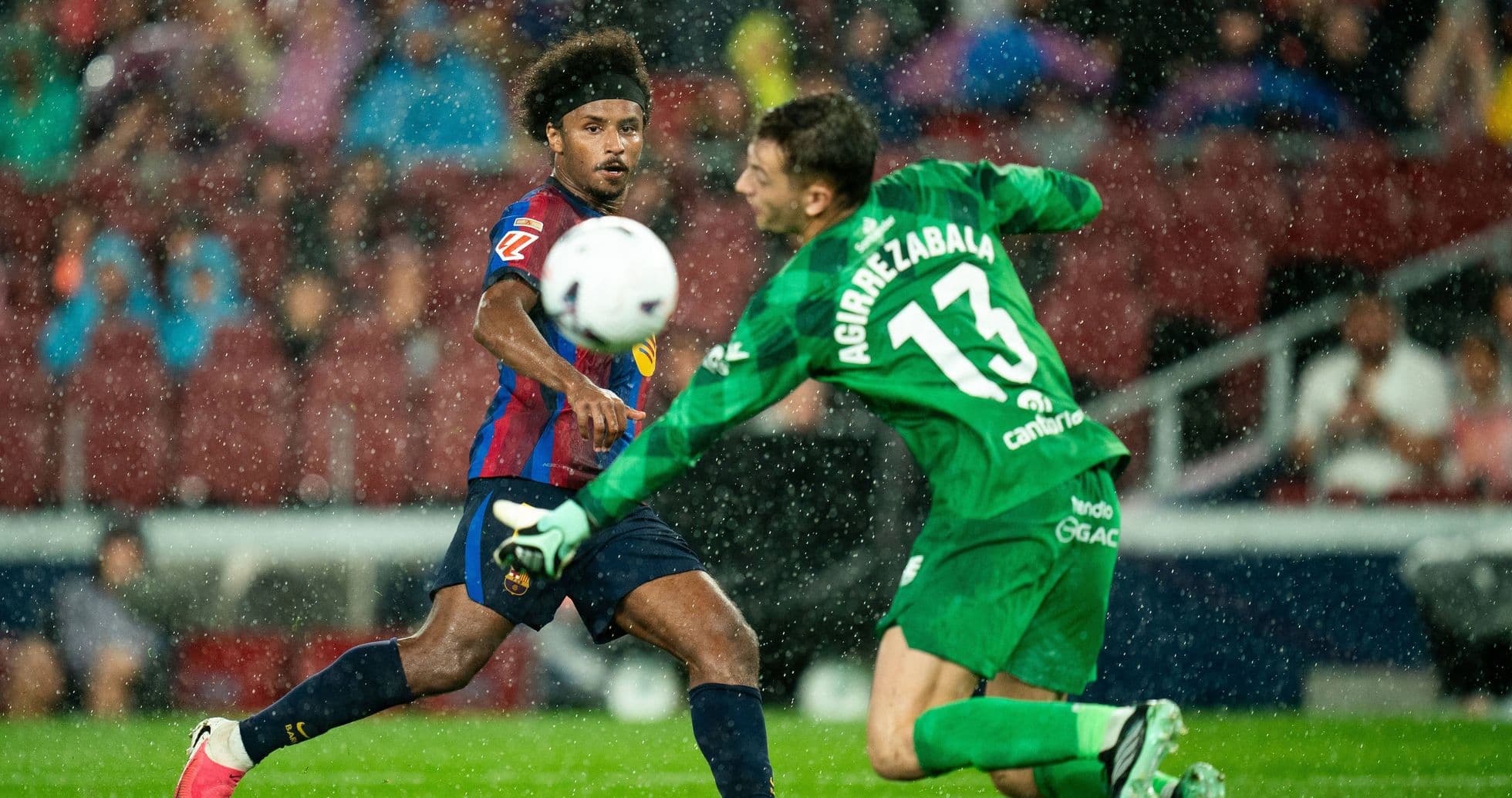
Hansi Flick Leads Barcelona to Record-Breaking Seven Wins in a Row
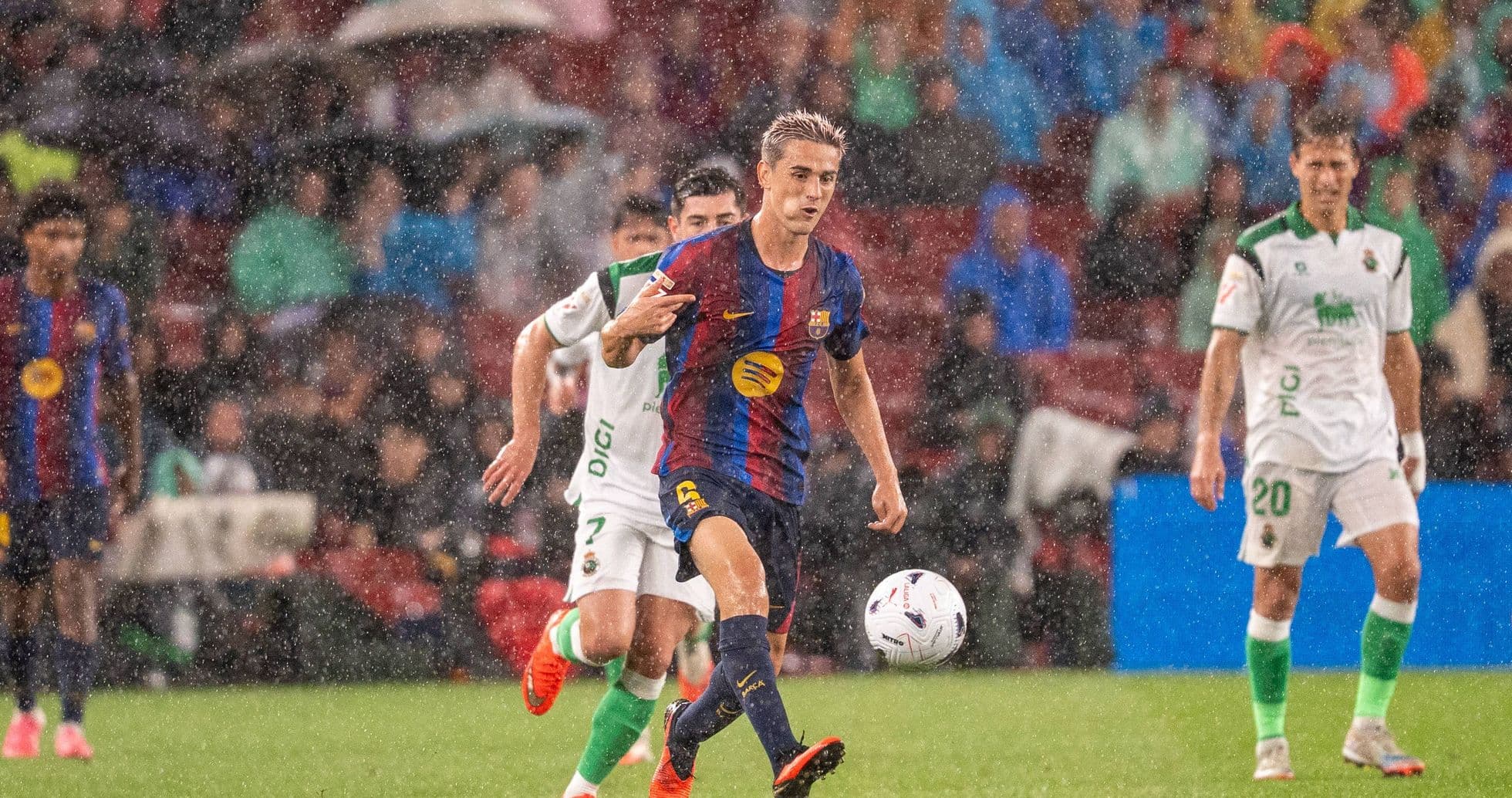
Gavi Reflects on Injury Return as Barcelona Dominate Racing Santander 7-2