
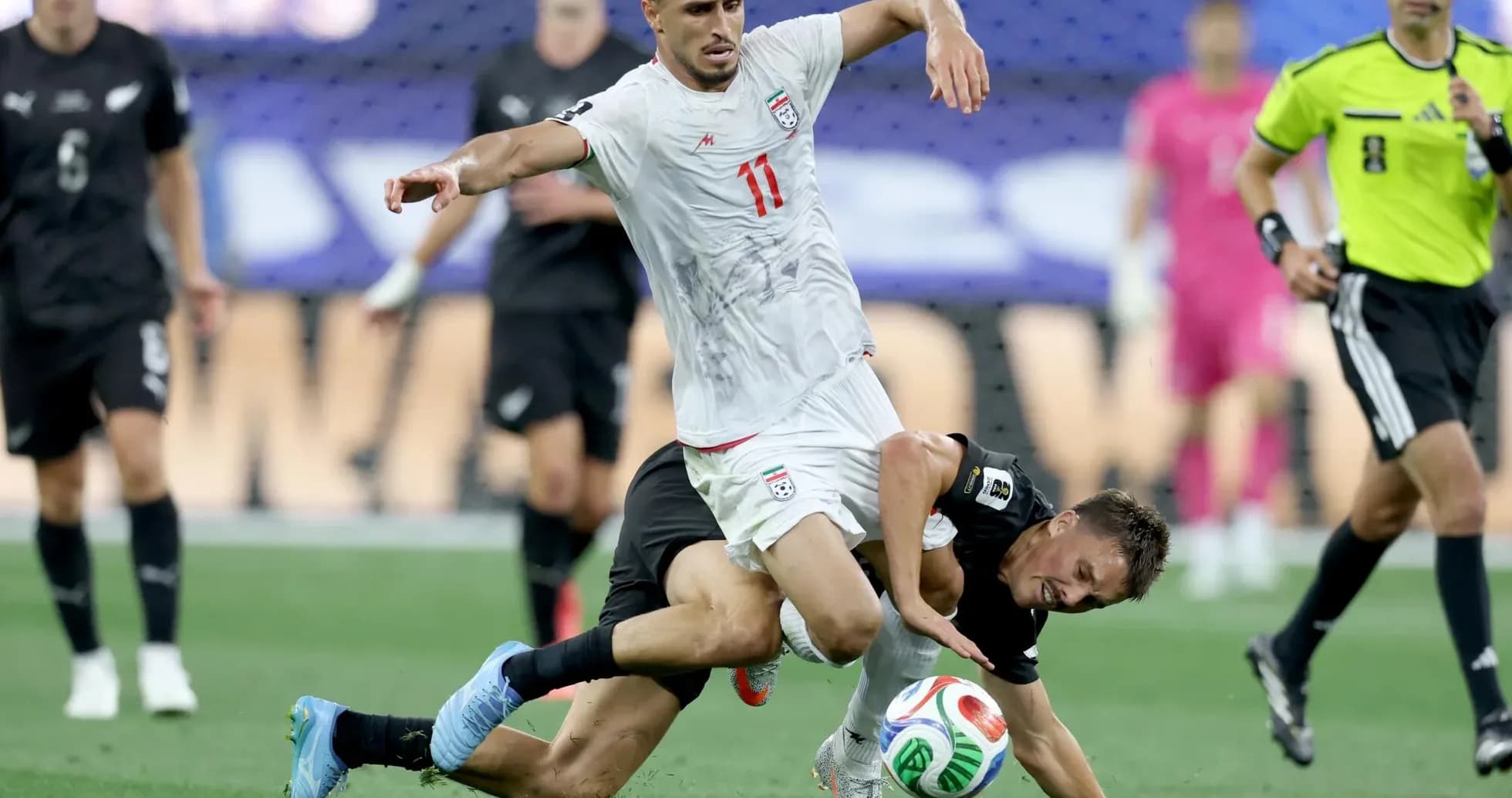
Iran vs New Zealand: High-Tempo 2-2 Draw in Group G
Iran 2-2 New Zealand at SoFi Stadium opened Group G with a high-tempo draw that leaves both sides on 2 points from 2 games, New Zealand top on goal difference and Iran just behind in second. Iran twice had to come from behind, preserving their Round of 32–zone position, while New Zealand’s attacking edge was offset by defensive lapses that prevent them from taking early control of the group.
Match Report
The game ignited early. In the 7th minute, New Zealand struck first: New Zealand goal — E. Just (assisted by C. Wood). A direct move into the final third found Chris Wood dropping in to link play before sliding the ball to Elijah Just, who finished clinically from inside the box to make it 0-1.
Iran responded by pushing their full-backs higher and were rewarded on 32 minutes. Iran goal — R. Rezaeian (unassisted). The right-back, Ramin Rezaeian, cut inside from the flank and drove a low shot beyond Max Crocombe, levelling at 1-1 after sustained Iranian pressure down the right.
At half-time, Iran adjusted personnel to add more attacking thrust. In the 46th minute, M. Ghaedi replaced A. Yousefi (Iran), introducing fresh legs on the flank. Seven minutes later, in the 53rd minute, A. Alipour replaced S. Moghanlou (Iran), giving Iran a more mobile presence up front.
New Zealand, however, regained the lead almost immediately after that second Iranian change. In the 54th minute, New Zealand goal — E. Just (assisted by C. Wood). Again the combination between Wood and Just undid Iran: Wood held off his marker and slipped Just through on the angle, the midfielder finishing low across the goalkeeper to restore a 1-2 advantage.
The match became increasingly stretched, and Iran’s wide rotations paid off on 64 minutes. Iran goal — M. Mohebi (assisted by R. Rezaeian). A deep cross from Rezaeian found Mohammad Mohebi arriving at the back post to guide a composed finish past Crocombe, bringing the score to 2-2 and underlining Iran’s threat from the right side.
Iran then moved to consolidate the midfield. In the 65th minute, E. Hajsafi replaced S. Ghoddos (Iran), adding experience and balance in central areas as Iran sought control rather than chaos.
New Zealand answered with a triple reshuffle of their own. In the 68th minute, B. Old replaced L. Cacace (New Zealand), injecting fresh energy at left-back; simultaneously, R. Thomas replaced C. McCowatt (New Zealand), offering a more composed presence between the lines. Later, in the 78th minute, C. Elliot replaced T. Payne (New Zealand), refreshing the right side of the defence as Iran continued to probe down the flanks.
Iran’s last major attacking adjustment came in the 80th minute, when A. Hosseinzadeh replaced M. Taremi (Iran), a surprising switch that sacrificed their star forward for extra dynamism in the final third as they looked for a late winner rather than settling for the draw.
Discipline remained largely controlled, with the only booking arriving late. In the 89th minute, E. Hajsafi (Iran) — yellow card (Tripping), punished for halting a New Zealand transition with a cynical foul.
Deep into stoppage time, New Zealand made two final changes to manage the closing moments. In the 90+2' minute, J. Randall replaced S. Singh (New Zealand), adding fresh legs in the attacking midfield band, and at the same 90+2' mark, T. Bindon replaced M. Stamenic (New Zealand), a defensive-minded substitution aimed at protecting the point as Iran pushed forward. Neither side could find a decisive chance in the final seconds, and the match closed at 2-2.
Fixture Statistics & Tactical Audit
- xG: Iran 1.5 vs 1.24 New Zealand
- Possession: Iran 48% vs 52% New Zealand
- Shots on Target: Iran 4 vs 8 New Zealand
- Goalkeeper Saves: Iran 6 vs 2 New Zealand
- Blocked Shots: Iran 5 vs 2 New Zealand
The underlying numbers suggest a finely balanced contest with contrasting strengths. Iran’s marginal xG edge (1.5 vs 1.24) reflects the quality of their best chances, particularly from wide deliveries and late box arrivals, even though they produced fewer shots on target (4 vs 8). New Zealand’s higher volume of efforts on goal forced Alireza Beiranvand into six saves, indicating that Iran’s back line was periodically exposed by direct play into Chris Wood and second runs from midfield. However, Iran’s five blocked shots underline a reactive, last-ditch defensive effort that compensated for earlier structural gaps. Given the xG and shot profiles, a draw is broadly fair: New Zealand were more assertive in testing the goalkeeper, while Iran created slightly higher-quality openings when they did break through, especially via Rezaeian’s deliveries.
Standings Update & Seasonal Impact
Both teams entered this Group G fixture having drawn their opening match 2-2, each on 1 point with a goal difference of 0. The second successive draw keeps that symmetry intact. Iran move to 2 points, with 4 goals scored and 4 conceded, maintaining a goal difference of 0 and staying in 2nd place in the group’s Round of 32 qualification zone. New Zealand also rise to 2 points, with identical figures of 4 goals for and 4 against, and remain 1st on goal difference and tiebreakers. With the top two already sitting in qualification positions, the final round of group games will determine whether either can convert these solid attacking returns into a decisive win to secure progression without relying on other results.
Lineups & Personnel
Iran Starting XI
- GK: Alireza Beiranvand
- DF: Ramin Rezaeian, Shoja Khalilzadeh, Ali Nemati, Milad Mohammadi
- MF: Mohammad Mohebi, Saman Ghoddos, Saeid Ezatolahi, Aria Yousefi
- FW: Shahriar Moghanlou, Mehdi Taremi
New Zealand Starting XI
- GK: Max Crocombe
- DF: Tim Payne, Finn Surman, Michael Boxall, Liberato Cacace
- MF: Joe Bell, Marko Stamenic, Callum McCowatt, Sarpreet Singh, Elijah Just
- FW: Chris Wood
Post-Match Verdict
This was an attacking showcase from both sides, shaped by how each exploited their primary strengths. New Zealand were consistently dangerous in transition and through direct service into Chris Wood, reflected in their superior shots on target count (8 vs 4) and the Just–Wood axis delivering both goals. Their approach was effective but left them occasionally open to counters, with only two saves required from Max Crocombe indicating that, when Iran did break through, the chances tended to be clear rather than speculative.
Iran’s performance was defined by their wide play and resilience. They were clinical in key moments (2 goals from 1.5 xG) and repeatedly used Ramin Rezaeian as an outlet, his one goal and one assist directly rescuing a point. Defensively, Iran were vulnerable in open play (conceding 8 shots on target and relying on 6 saves plus 5 blocks), but their capacity to adjust through substitutions and to sustain pressure in the final third justified the draw. New Zealand will rue not converting territorial and shooting superiority into three points, while Iran will see this as a testament to their character and efficiency, even as both teams know that greater defensive control will be required to turn these high-scoring draws into knockout-stage qualification.
Related News

Thomas Tuchel Reflects on England's 10-Man World Cup Triumph and a Surprising Regret

Robert Moreno Takes Over as Interim South Korea Coach After World Cup Setback

Jude Bellingham Returns to Form with Real Madrid After World Cup Success

Chloe Kelly, Beth Mead & 13 Lionesses Who Must Shine in the Upcoming WSL Season for England’s 2027 World Cup Bid

Barcelona Cancels World Cup Tribute Amid Political Tensions
Messi Breaks Record for Most Penalties Taken and Missed in FIFA World Cup History