
Ipswich Town's Bold Transformation: From Championship Heroes to Premier League Contenders
Ipswich Town are back in the Premier League and spending like they mean to stay there. Quietly, almost stealthily, the newly promoted club have become the division’s fourth-biggest net spenders so far this summer, behind only Chelsea, Tottenham and Arsenal.
Ten signings. A combined outlay of £106.6m. But the money is only half the story.
What really stands out is the change in mindset.
From local comfort zone to global search
Under Kieran McKenna, Ipswich built a fairytale on familiar faces. Three promotions in four full seasons, a tight-knit dressing room, and a squad largely drawn from the UK and Republic of Ireland. Of the 39 permanent first‑team signings made during his four-and-a-half-year reign, 32 were either born or raised in Britain or Ireland. Only two arrived directly from European clubs.
It was deliberate. After hauling the club out of League One in 2023, McKenna admitted Ipswich had made a “conscious decision” to avoid overseas players in the third tier, wary of the division’s chaos and intensity. The formula worked again in the Championship. A largely unchanged group stormed to second place in 2023‑24, delivering back‑to‑back promotions and a first taste of the Premier League in 12 years.
At that point, Ipswich could have pivoted. They didn’t. The hierarchy chose continuity over revolution and doubled down on the domestic-first model. The summer of 2024 brought a £100m spree on Omari Hutchinson, Jack Clarke, Liam Delap, Dara O’Shea and Jacob Greaves – players who had shone in the Championship and were viewed as long‑term Premier League projects rather than instant saviours.
The logic was clear: accept that survival was unlikely, invest in assets who would stay the course even in relegation, and build a core that could bounce back.
They were right about the odds. McKenna’s “Championship all‑stars” finished second bottom with just 22 points, 16 adrift of 17th-placed Tottenham Hotspur. But they were also right about the longer game.
Relegation pain, financial control
For all the transfer fees, Ipswich kept their wage bill under tight control. At £77m, it was comfortably the lowest in the Premier League in 2024‑25. That prudence, combined with the surge in TV money and a swift profit on Delap’s move to Chelsea, allowed the club to post a £4m pre‑tax profit for the financial year ending June 2025.
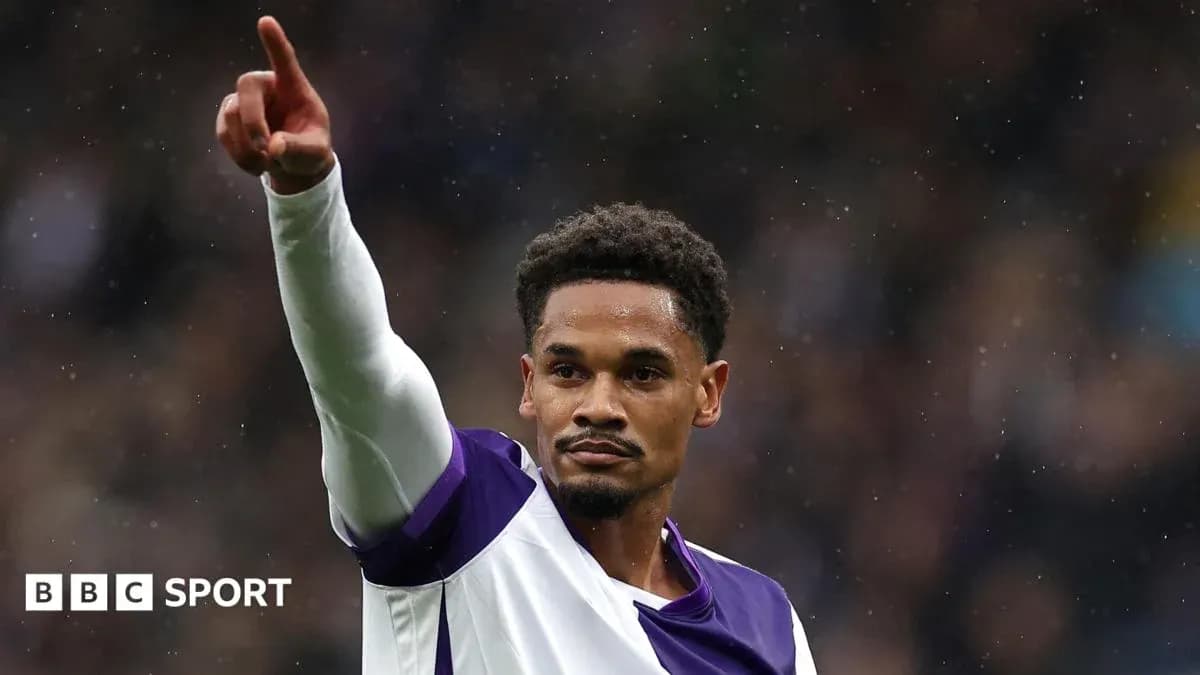
Hutchinson’s sale to Nottingham Forest brought another injection of cash. Crucially, others stayed. O’Shea, Clarke, Greaves and January 2025 arrival Jaden Philogene remained at Portman Road and formed the backbone of a squad that surged straight back up at the first attempt.
So when McKenna stepped down on 10 June, he left with his reputation intact and the club in better health than when he found it. But he also left a question hanging in the air: could Ipswich keep relying on domestic value while the Premier League sprinted away?
The answer this summer has been emphatic.
O’Neil’s Ipswich go global
Gary O’Neil has not come in to protect a legacy. He has come in to compete.
Under the former Bournemouth and Wolves manager, Ipswich have abandoned their self‑imposed geographical comfort zone. The new arrivals are not just different names; they are different types of bets.
Emersonn and Florentino Luis are set to become the first Brazilians in the club’s history. Sasa Lukic will be the first Serbian to wear the shirt. Daizen Maeda the first Japanese player. Of the 10 players purchased so far, only one – Chuba Akpom from Ajax – is British, and even that deal was effectively pre‑ordained, triggered by a promotion obligation after an underwhelming loan.
This is no longer a squad built from the Championship up. It is being rebuilt from the world in.
Chairman Mark Ashton has been blunt about the shift. Ipswich, he says, have to be “a bit braver” in the Premier League. The profile of their signings backs him up.
Maeda and Morocco centre‑back Issa Diop both scored at the World Cup this summer. A third World Cup goalscorer could yet follow. The club have been linked with Paraguayan forward Julio Enciso, who worked under O’Neil at Strasbourg last season and had an injury-hit loan spell at Portman Road in the second half of 2024‑25.
O’Neil understands the stakes. McKenna had built enough credit to take a long view; the new man does not have that luxury.
“Two seasons ago, the club didn’t get anywhere near staying in the division and this time we need to do better,” he said last month. “That’s why we’re trying to add quality to the squad from different parts of the world and we’re trying to add some different attributes.”
After a 3‑0 win over Rayo Vallecano on Saturday, he hinted there is more to come, admitting the “plan is to do quite a bit more”.
Power, legs, and a cutting edge
One lesson from 2024‑25 is etched in Ipswich’s thinking: they were not physical enough.
Ashton has acknowledged the need to inject more athleticism, to bring in players with “a different set of physical attributes”. The midfield, in particular, lacked power and ball‑winning ability. That is why there is so much riding on Florentino Luis and Lukic, both seasoned at the highest level, to impose themselves from day one.
Their importance is magnified by the uncertainty around last season’s mainstays Azor Matusiwa and Jack Taylor, both doubtful for the opener after summer operations. Ipswich cannot afford a soft centre again.
Up front, the issue is just as stark. No Ipswich player scored more than 10 non‑penalty goals in the Championship last season. For a side now facing Premier League defences every week, that statistic screams danger.
The response has been bold. Ipswich broke their transfer record to sign Brazilian striker Emersonn for an initial £24m. At 22, he has the physical profile the club crave and arrives off the back of seven goals in 31 games for Toulouse, 22 of them starts. He is raw, though. This is a bet on upside, not a guaranteed source of goals.
Maeda brings a different kind of weapon. At Celtic, the tireless forward or winger racked up 79 goals in 212 appearances, thriving in a side that created chances in waves. He will not enjoy that luxury in a team likely to spend long spells without the ball, but his work rate and movement offer O’Neil a pressing trigger and an outlet in transition.
Behind them, Ipswich have moved decisively in goal. Two Dutch keepers have arrived, including the towering Kjell Scherpen. At 6ft 9in (2.06m), he is set to become the tallest player ever to appear in the Premier League. His presence alone changes the feel of Ipswich’s penalty area.
A defining summer – but is it enough?
This is not just about players. A £30m redevelopment of the training ground is close to completion. A new manager is in place. The wage structure remains under control, even as transfer spending spikes. Ipswich are trying to thread the needle: ambitious enough to stay up, disciplined enough not to gamble the club’s future.
History offers mixed comfort. Only three promoted clubs have ever spent more in a summer window – Sunderland in 2025, Nottingham Forest in 2022 and Aston Villa in 2019 – and all three survived. That is the encouraging side of the ledger.
The other side is darker. Fulham, Southampton, Burnley and Ipswich themselves have all thrown comparable sums at survival in recent years and still dropped straight back down. In today’s Premier League, this level of investment is often just the entry fee, not a safety net.
So Ipswich stand at a crossroads. The club that once trusted its Championship core now leans on World Cup scorers, South American prospects and a 6ft 9in goalkeeper. The recruitment model that carried them up has been torn up and rewritten in a single summer.
The question is no longer whether they are being brave enough. It is whether bravery, even at £106.6m, will be enough to keep them here longer than a season this time.
Related News
Carlos Alcaraz Urges Tennis Organizers to Stop Matches Finishing in the Early Morning
Carlos Alcaraz Frustrated by 3:30 a.m. US Open Finish: 'Too Much'
Jannik Sinner Set for ATP 500 Return in Beijing with Novak Djokovic Also Competing
Meet Iva Jovic: The Rising American Tennis Talent
Flavio Cobolli Shares Insights on Training with Jannik Sinner Ahead of His Tennis Return
Till vs Romero: Fight Details, Undercard, and Viewing Info for This Weekend