
Inter’s Dominance in 5–3 Win Over Udinese
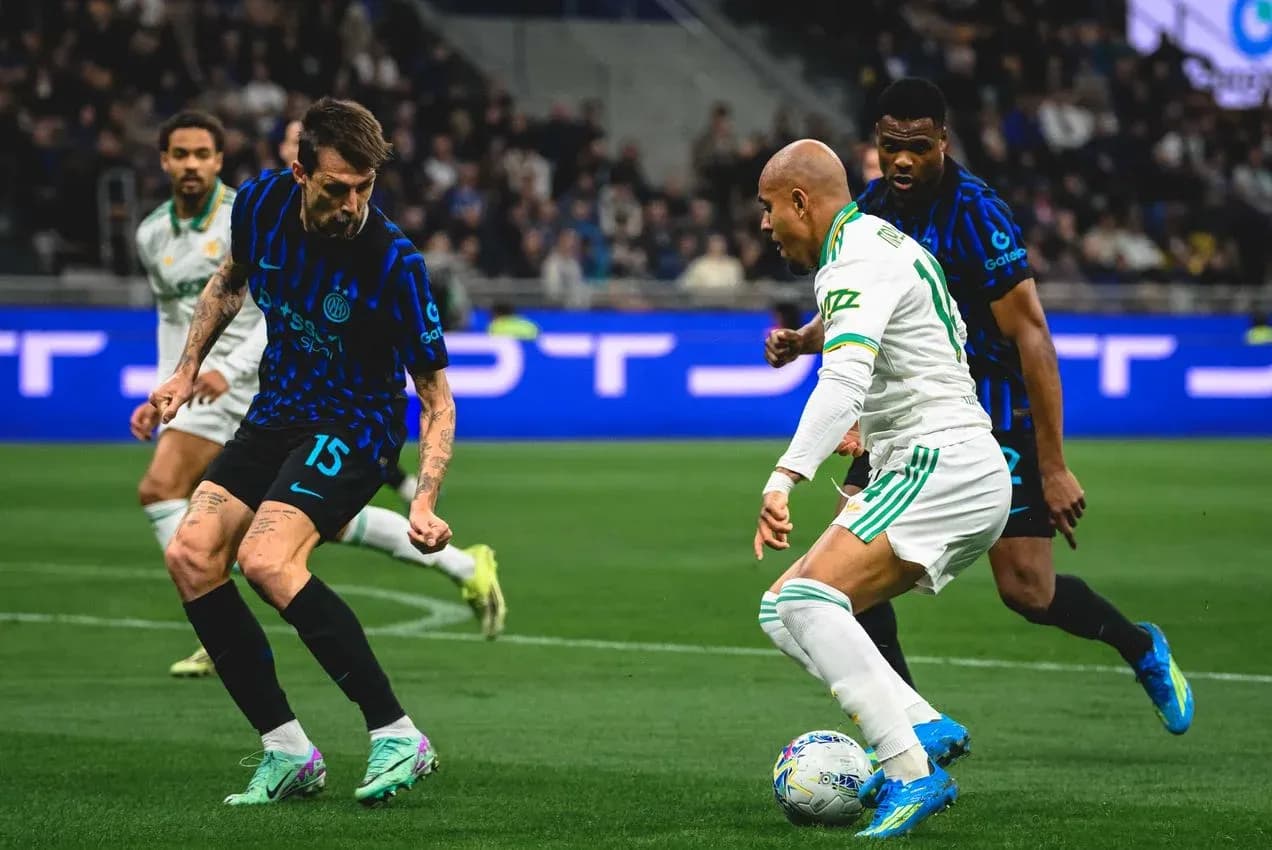
The lights at San Siro had barely cooled when the numbers began to tell the story. Inter’s 5–3 win over Udinese in Serie A’s Regular Season - 4 was not just another home victory; it was a statement from a side that now looks fully comfortable living in chaos and outscoring anyone who dares to trade punches.
Following this result, Inter sit 2nd with 12 points from 4 matches, perfect in terms of results and ruthless in their attacking output. Overall this campaign they have scored 13 and conceded 6, giving them a goal difference of +7. At home, the profile is even more extreme: 12 scored and 6 conceded in 3 games, with an average of 4.0 goals for and 2.0 against per match on their own turf. Udinese, meanwhile, leave Milano in 13th place on 4 points from 4 games, their overall balance now 8 goals for and 10 against, a goal difference of -2 that captures a team capable of hurting opponents but unable to keep the back door closed.
I. The Big Picture – Inter’s aggressive DNA vs Udinese’s open structure
Cristian Chivu stayed loyal to the 3-5-2 that has defined Inter’s early-season identity. J. Martinez behind a back three of M. Akanji, J. Stones and A. Bastoni offers technical build-up and front-foot defending rather than a low block. Ahead of them, the quintet of A. Diouf, N. Barella, P. Zielinski, H. Mkhitaryan and Carlos Augusto forms a midfield that is less about control and more about constant forward running and overloads. Up front, M. Thuram and F. Esposito are the twin spears of a side that averages 3.3 goals in total per match.
Udinese’s Kosta Runjaic answered with a 3-4-2-1 that is designed to be brave rather than cautious. M. Okoye was shielded by J. Abankwah, C. Kabasele and E. Ebosse, with M. Vojvoda and H. Kamara as wing-backs, J. Karlstrom and L. Miller in the engine room, and a fluid trio of U. Gomez, J. Ekkelenkamp and K. Davis ahead. On their travels this season, Udinese’s matches have been wild: they have scored 6 and conceded 7 in 2 away games, an average of 3.0 goals for and 3.5 against. San Siro was never likely to be a quiet night.
II. Tactical Voids – Absences and disciplinary shadows
Both coaches had to navigate notable absences. For Inter, the absence of H. Calhanoglu through muscle injury removed their deepest playmaker and primary tempo-setter. Without him, the creative burden shifted more heavily onto Zielinski’s vertical passing and Mkhitaryan’s between-the-lines craft. D. Spence’s injury further limited Chivu’s options for more aggressive wide rotations or a switch to a back four mid-game.
Udinese’s list was longer and more structurally damaging. J. Piotrowski, sidelined by heart problems, is not just a midfielder with 2 yellow cards and a red-card profile in the disciplinary charts; he is also a player who brings bite and balance, having contributed 1 goal and solid tackling numbers. O. Solet’s injury removed a key defensive presence, while the absence of N. Zaniolo stripped Runjaic of a high-ceiling attacking wildcard. A. Zanoli, J. Arizala and M. Palma also missing meant Udinese’s bench lacked both defensive depth and variety in wide areas.
Disciplinary trends framed the risk landscape. Inter’s yellow cards this season are spread, but 40.00% have arrived between minutes 46–60, hinting at an aggressive restart after half-time. Udinese’s bookings are more evenly distributed, with 22.22% in both the 16–30 and 31–45 minute windows, and further 11.11% chunks across most other ranges. That pattern suggests a side that can be drawn into repeated fouls across the full 90 rather than in isolated bursts. Neither team has seen a red card in league play from the collective stats, but individuals like Piotrowski and Lautaro Martínez carry reputations for walking disciplinary tightropes.
III. Key Matchups – Hunter vs Shield, Engine Room battles
The “Hunter vs Shield” narrative was written around Inter’s forwards against Udinese’s fragile away defence. Heading into this game, Inter at home were averaging 4.0 goals scored per match, while Udinese on their travels were conceding 3.5 per game. F. Esposito, with 2 goals and 1 assist overall, is emerging as more than just a poacher; 9 total shots with 5 on target and 29 duels contested (17 won) show a forward who both finishes and initiates. Alongside him, M. Thuram’s 2 goals, 1 assist and 86% passing accuracy make him a hybrid target man and facilitator. Against a back three that had already shipped 5 goals in a single away defeat (their biggest away loss being 5–3), the matchup tilted heavily Inter’s way.
Udinese’s attacking “hunters” came primarily in the form of J. Ekkelenkamp and H. Kamara. Both have 2 goals and 1 assist overall, with Ekkelenkamp adding 6 shots (4 on target) and 9 dribble attempts, and Kamara contributing 7 shots (5 on target) plus 12 tackles and 1 blocked shot. Their threat is twofold: they can break lines on the ball and then immediately counter-press if possession is lost. Against Inter’s back three, their movement between the lines tested Stones’ and Bastoni’s ability to step out without leaving Thuram and Esposito isolated from service.
In the “Engine Room”, the duel between Inter’s creators and Udinese’s stabilisers was decisive. A. Diouf, one of the league’s leading assist providers with 3 overall and a remarkable 13 key passes from 127 total, is the metronome and vertical passer Chivu relies on to connect phases. His 91% passing accuracy underpins Inter’s ability to sustain pressure. Around him, Barella’s energy and Mkhitaryan’s timing give Inter three different passing angles into the forwards.
Udinese’s response was anchored by J. Karlstrom and L. Miller, with support from Kamara. Karlstrom’s role as screen and distributor was vital in trying to slow the tide, while Kamara’s 12 tackles and 4 interceptions overall underline how much defensive load he carries from the wing-back line. Yet when your team has not kept a single clean sheet, and has conceded 10 goals in total across 4 matches, even industrious midfield work can be drowned by structural frailty.
IV. Statistical Prognosis – What this result says about both sides
Following this result, Inter’s profile is that of a title contender built on overwhelming firepower rather than defensive perfection. Overall they average 3.3 goals scored and 1.5 conceded per match; at home, those numbers jump to 4.0 scored and 2.0 conceded. They have yet to fail to score in any game, and they have not been awarded or missed a penalty, meaning their output is built entirely from open play and set-pieces. The 3-5-2 has been used in all 4 league matches, pointing to tactical continuity and clear roles.
Udinese’s numbers paint a more volatile picture. Overall they average 2.0 goals scored and 2.5 conceded per match, with away fixtures particularly wild at 3.0 for and 3.5 against. They too have scored in every game and have no penalties taken or missed, but the absence of a single clean sheet and the fact that their biggest away defeat is now 5–3 underline a side that lives on the edge. The 3-4-2-1 has been used in all 4 matches, suggesting conviction in the system even as the defensive record frays.
From an expected-goals-style lens, even without explicit xG data, the volume and consistency of Inter’s attacking production, combined with Udinese’s porous away defending, make a high-scoring Inter win entirely in line with the underlying trends. Inter’s forwards are efficient and well-supplied by Diouf and Zielinski, while Udinese’s best weapons, Ekkelenkamp and Kamara, are forced to operate in matches where their own back line cannot keep the scoreline manageable.
In narrative terms, San Siro witnessed exactly what the numbers predicted: Inter as a juggernaut that embraces risk and trusts its front line to outgun anyone, and Udinese as a courageous but exposed side whose attacking quality cannot fully compensate for systemic defensive leaks.
Related News

Fiorentina vs Napoli Prediction: Key Stats and Betting Tips
AS Roma vs Inter: Serie A Showdown on 19 September 2026

Inter’s Dominance in 5–3 Win Over Udinese

AS Roma vs Inter Prediction: Key Stats and Betting Tips
Lazio and AC Milan Battle to a 2–2 Draw: Early Serie A Insights

AC Milan vs Lecce Stats: Head-to-Head Record and Historical Context