
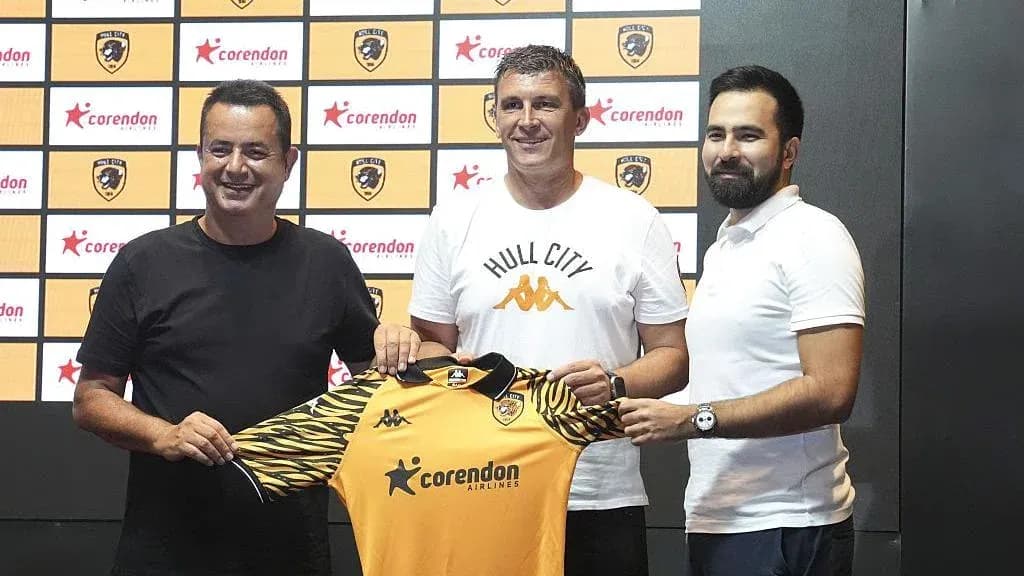
Hull City Faces Crisis After Sporting Director Jared Dublin's Sudden Exit
Hull City’s Premier League return has its first crisis, and the season has not even started.
Jared Dublin, the club’s highly regarded sporting director and a central figure in their rise, has gone – abruptly, and with clear tension over how much his work was really valued.
A shock exit at a pivotal moment
Inside the club, Dublin was seen as a key architect of the last few years: management support, squad building, recruitment strategy – his fingerprints were on all of it. For a side preparing to step back into the Premier League, continuity in that role usually feels non‑negotiable.
Instead, Hull now find themselves without the man who helped build the squad at the very point the challenge jumps a level.
Those close to the situation describe the departure as “completely out of the blue”. This was not a long, telegraphed separation or a planned handover. It was sudden.
Contract talks that turned sour
At the heart of it lies a breakdown in talks over Dublin’s personal contract.
This was not about player deals or transfer wrangling. It was about his own terms. With Hull now in the Premier League, Dublin expected his position – and workload – to be recognised accordingly. More responsibility, more pressure, a higher financial and strategic ceiling. He wanted a contract that matched that reality.
From one side of the table, the message is clear: the club believe they put a “very respectable” offer in front of him, one they feel reflected his importance and the club’s structure. Local reporter Baz Cooper of the Hull Daily Mail has been digging into that angle, and the word coming out of the club is that Dublin simply turned down a strong proposal.
From the other side, the view is very different. People connected with Dublin say he did not see the offer as fair or reflective of his contribution or market value. The gap between the two positions was not a minor quibble. They were “some way apart” on what his role was worth.
Even so, those same sources insist Dublin was prepared to keep talking. This, they stress, was not him storming out or walking away from negotiations.
‘Effectively been sacked’
The end, when it came, was swift.
On Monday morning, Dublin held a brief meeting with members of the club staff. It did not last long. By the time it was over, he was leaving the club.
The formal wording around the exit matters here. This is not being framed as a resignation from Dublin’s side. As one interpretation inside the game puts it, “if we are going to put it to brass tacks”, the language used means he has effectively been sacked.
That distinction will interest supporters, and it will certainly interest anyone watching how Hull are being run at ownership level. A request has been lodged to speak to the owner to hear the club’s version in full. For now, the picture is of a relationship that broke down not over transfer targets or football philosophy, but over what one of the club’s key figures felt he was worth.
A blow just as the stakes rise
Strip away the contractual detail and the timing still lands like a punch.
Hull are trying to get themselves ready for a return to the Premier League, where the margin for error in recruitment is brutally thin. The sporting director role is not just about signing players; it is about aligning the manager, the analytics department, the academy, the budget, the long‑term plan.
To lose that figure now, with plans for the window and the season already in motion, feels like a major disruption. The question hangs over the club: is this a storm they can ride out cleanly, or the first sign of turbulence in their top-flight campaign?
What comes next for Hull?
Attention now turns to the search for a successor – and what kind of profile Hull actually want in that position.
Former sporting director Darren Robinson, speaking to BBC Radio Humberside, has been discussing the qualities modern sporting directors need and the kind of attributes Hull should prioritise as they move to replace Dublin. His work in teaching future sporting directors underlines how specialised and demanding the job has become.
Hull must now decide: do they chase a like‑for‑like operator to maintain the current model, or use this rupture as a chance to reshape how the club is run from the top of the football department down?
Supporters will have their own view on Dublin’s exit. Some will worry about the timing. Others may argue that no role is irreplaceable. The only verdict that will really count, though, will be written across the coming months – in the quality of Hull’s recruitment, the stability behind the scenes, and the way this Premier League season unfolds without the man who helped build the squad for it.
Related News
Ilia Topuria Accuses Justin Gaethje After UFC Defeat
Tyson Fury vs Anthony Joshua Fight Date and Venue Confirmed
Switzerland Calls Up In-Form Sion Striker Winsley Boteli for Nations League
Bournemouth Secures Historic 2-1 Win Over Real Sociedad in Spain
Portugal Announces Squad for 2026 UEFA Nations League; Cristiano Ronaldo Expected to Play
Raphinha Channels Ronaldo Nazario as Barcelona's Leading Striker After Position Change