
Henrik Larsson: The King of Kings at Celtic
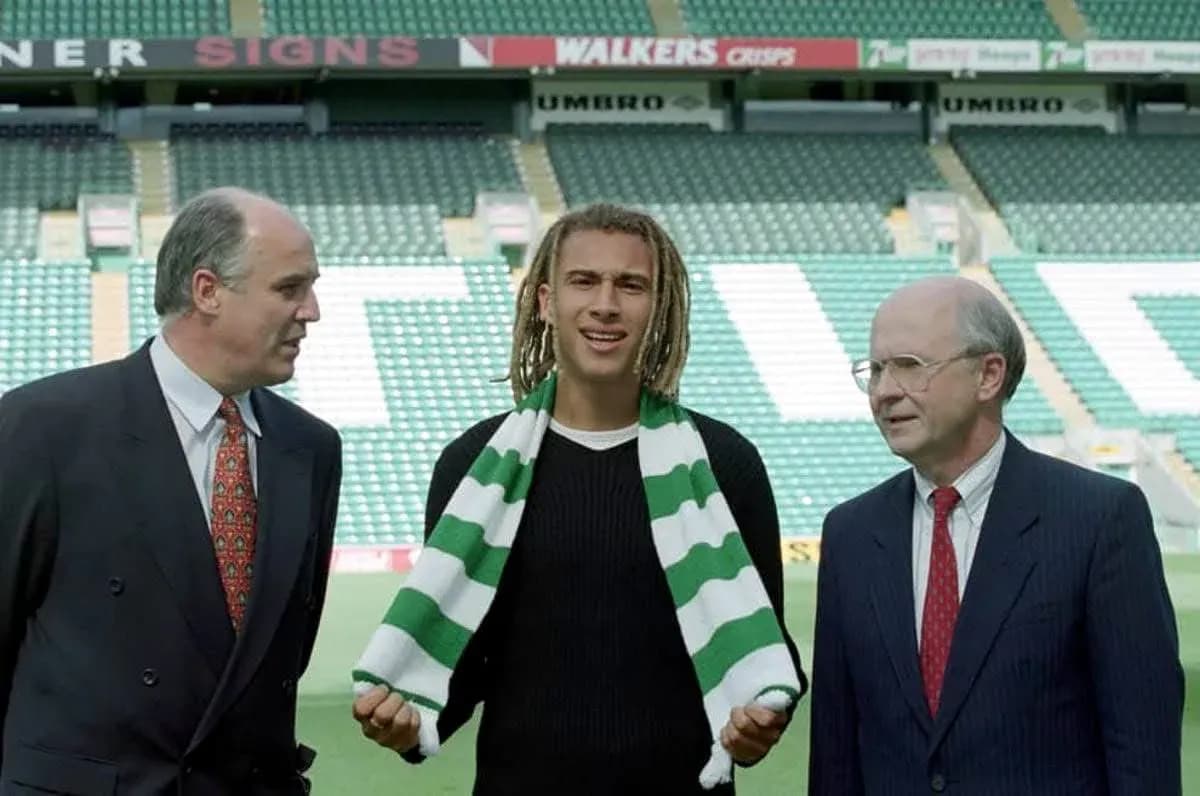
On a warm July day in 1997, a slight, dreadlocked forward in a Hoops top and denim jeans stepped onto the Celtic Park turf and into club folklore.
Henrik Larsson had arrived.
Signed from Feyenoord for just £650,000, the move was driven by Wim Jansen, the new Celtic manager who knew the Swede’s contract situation inside out after previously working with him in the Netherlands. It looked like a smart, economical deal. It became one of the greatest bargains in the club’s unbroken history.
From shaky start to instant necessity
It did not begin like a fairytale.
Thrown straight into the rough and tumble of Scottish football, Larsson was partly at fault for a costly mistake on his league debut, an opening-day defeat to Hibernian. Doubts flickered. Was this slim, unassuming forward really built for Glasgow?
The answer came quickly. Game by game, goal by goal, the dreadlocks, the movement, the ice-cold finishing turned uncertainty into adoration. Celtic supporters didn’t just warm to him. They clung to him as the new talisman they had been crying out for.
His first season brought immediate reward. A League Cup triumph. A first league title in a decade. Most importantly, it stopped Rangers reaching ten in a row. Larsson’s influence was already obvious; he was no longer simply a shrewd signing, he was central to a seismic shift in Scottish football’s balance of power.
Under Dr Jozef Venglos the following campaign, Larsson moved up another level. Thirty-eight goals. A complete centre-forward emerging in front of Celtic’s eyes: ruthless finisher, clever creator, relentless worker. He wasn’t just scoring; he was shaping games.
The leg break – and the comeback
Then came Lyon.
A horrific leg break in European competition threatened to halt everything. It was the kind of injury that can end careers or, at the very least, blunt them. For Celtic, it ripped the heart out of their attack and contributed to the rapid unraveling of John Barnes’ time in charge.
Larsson refused to let it define him. His response became part of his legend. He returned not diminished, but enhanced – stronger mentally, sharper in front of goal, more determined to drag Celtic to where he believed they belonged.
O’Neill, Sutton and a treble for the ages
When Martin O’Neill walked through the door, Larsson found the perfect stage and the perfect partner.
Alongside Chris Sutton, he formed a devastating front line. Defenders knew what was coming and still couldn’t stop it. In O’Neill’s first season, Celtic stormed to a domestic treble – the club’s first clean sweep in 32 years – and Larsson’s numbers were scarcely believable: 53 goals.
This was dominance with style. Diving headers, chipped finishes, volleys, penalties under pressure. Larsson delivered them all, week after week, as Celtic Park roared itself hoarse in appreciation.
Europe takes notice
Domestically, he was already a phenomenon. Europe soon understood.
Larsson’s goals powered Celtic’s run to the UEFA Cup Final, his performances against continental opposition silencing any suggestion that his brilliance was confined to Scotland. On the biggest stage of his Celtic career, in the final against Porto, he rose again.
Two world-class finishes in extra time underlined his class and his nerve. The night ended in defeat, but Larsson walked off as the outstanding player on the pitch, his reputation burnished rather than bruised.
The numbers – and the legacy
By the time he left Celtic in 2004, the statistics told their own story.
242 goals in 313 appearances. Third on the club’s all-time scoring list. A haul that places him among giants in an “unbroken history” that stretches back over a century.
But the numbers only hint at what he meant. Larsson was more than a scorer. He was a symbol – of resilience after Lyon, of excellence in an era when Celtic reasserted themselves at home and abroad, of a connection with supporters that went far beyond the usual bond between player and crowd.
Older generations will point, rightly, to Jimmy Johnstone and the Lisbon Lions. Others will argue for Kenny Dalglish, another King who later became Liverpool’s greatest. Those claims stand on firm ground.
Yet for many who have filled Celtic Park from the late 1990s onwards, the answer comes without hesitation. Henrik Larsson is the finest player they have seen in the Hoops. The King of Kings.
Twenty-nine years on from that modest unveiling in a Hoops shirt and jeans, the image still feels fresh. The impact certainly does. And the question lingers over every new signing who walks out at Celtic Park: will anyone ever touch the standard he set?
Related News
Ilia Topuria Accuses Justin Gaethje After UFC Defeat
Tyson Fury vs Anthony Joshua Fight Date and Venue Confirmed
Switzerland Calls Up In-Form Sion Striker Winsley Boteli for Nations League
Bournemouth Secures Historic 2-1 Win Over Real Sociedad in Spain
Portugal Announces Squad for 2026 UEFA Nations League; Cristiano Ronaldo Expected to Play
Raphinha Channels Ronaldo Nazario as Barcelona's Leading Striker After Position Change