
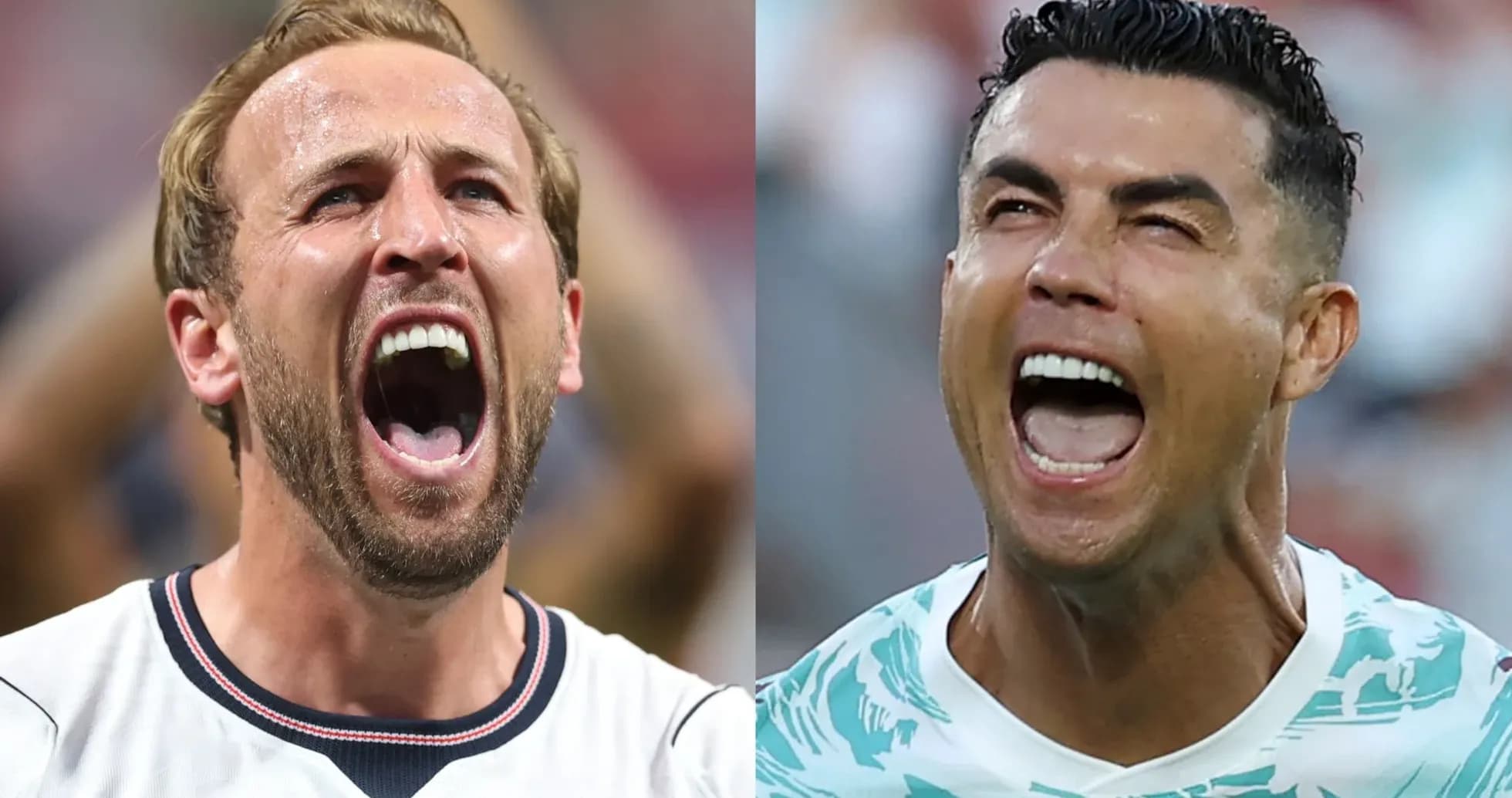
Harry Kane: The Challenge of Longevity in Football
Harry Kane has spent a decade rewriting England’s record books. The next chapter might be the hardest to script.
By the summer of 2028, the expectation is clear: the man who captained England to third place at the 2026 World Cup will still be at the heart of a home European Championship campaign. The stage will be his again, under the weight of a nation’s hopes and the glare of a final peak on familiar soil.
By then, he should have pushed his legend even further. Kane already stands alone as the Three Lions’ all-time leading scorer, with 85 goals. He is also closing in on a different kind of immortality, just four caps short of Peter Shilton’s long-standing record of 125 England appearances. Goals and games. Volume and longevity. His career has been built on both.
At club level, Thomas Tuchel continues to lean heavily on him at Bayern Munich. The brief is simple and relentless: lead the line, carry the threat, solve the problems in the No.9 position that nobody else quite can. There are few genuine alternatives. Kane, who has recently turned 33, still shoulders that responsibility with familiar authority, but even he cannot outrun time forever.
The modern benchmark for longevity at the very top is brutal. Cristiano Ronaldo played at a World Cup at 41, Lionel Messi at 39. They bent the rules of ageing, stretched careers into territory that once belonged only to goalkeepers and cult veterans. The question now hangs over Kane: can he follow, not in style, but in span? Can he still be England’s spearhead at the next World Cup, another four-year cycle away?
Chris Waddle is not convinced that kind of stretch is straightforward. Speaking to GOAL in association with BetBrain, the former England winger cut through the romance and went straight to the reality of a body under constant demand.
“Fitness is a great thing to have,” Waddle said. “Some players develop, get better as they get older. Some find it easier. Not easier, but easy.”
The nuance is important. Some players grow into their game as the years advance, relying less on sprint speed and more on positioning, timing, craft. Kane already lives in that space. He drops off the front line, links play, sees pictures others don’t. That, Waddle believes, is his great advantage.
“We'll see how his legs are in two years' time, at the Euros even. People will be questioning that,” he added. “The thing with Harry's advantage is he's a fit lad, we know that. He doesn't rely on pace. He's got a great football brain.”
Tournament football, though, exposes decline without mercy. One bad half, one yard lost, and the cameras linger a little longer. Waddle has seen it before.
“Sometimes you see players in tournaments and you think, ‘His legs are going there’,” he said. Ronaldo provided the most striking recent example in his eyes. “I'm looking at Ronaldo as an example. I watched Portugal play in the World Cup and his legs were gone in my eyes for that level of football.”
Messi, by contrast, still flickered. The Argentina captain drifted through games but could still ignite them in an instant, even as chaos swirled around him.
“Lionel Messi still had bits of brilliance,” Waddle said, “until the rest of his team-mates decided to try and kick everybody out of the country.”
The balance between pride and practicality sits at the heart of this debate. When does a superstar step down from the highest level without drifting into self-parody?
“So I think there's a time and a place where you've actually got to think, ‘Yeah, he can still play, and he can still play like Messi does in Miami, a good level for him’,” Waddle explained. “You know, Ronaldo in Saudi can still handle it.”
Those leagues offer a softer landing. Less intensity, less scrutiny, more room for experience to outweigh physical decline. The Bundesliga is different. Its pace is unforgiving, its transitions sharp and constant. Waddle believes even Kane will eventually feel that.
“And Harry, eventually he'll come to a time where you think the Bundesliga is too quick. Where do you go from there?”
That question bites hardest when the World Cup comes into focus again. The next edition asks a lot of a player who will be deep into his thirties and carrying the miles of club and country on his legs.
“The next World Cup, it's a big ask for him, I think, to play in that tournament,” Waddle said. “I think some of these players can think, ‘Yeah, I'm still playing football, but that level's out of me now, and I've enjoyed it’.”
The warning is clear. Stretch a career too far at the top and the legacy can fray at the edges.
“I think some of these players try and play too long and it doesn't look great on them,” Waddle added.
Kane, though, has always been a meticulous professional, obsessed with conditioning, diet, marginal gains. Waddle expects that same clarity to guide the final big decision of his England career.
“But I'm sure Harry will know when the time's right to say, ‘No, I can't play for England anymore’.”
For now, the clock keeps ticking, the goals keep coming, and a home Euros looms. The question is no longer whether Kane will make more history. It’s how long he can keep making it at the very highest level before he decides the stage belongs to someone else.
Related News
Carlos Alcaraz Urges Tennis Organizers to Stop Matches Finishing in the Early Morning
Carlos Alcaraz Frustrated by 3:30 a.m. US Open Finish: 'Too Much'
Jannik Sinner Set for ATP 500 Return in Beijing with Novak Djokovic Also Competing

Meet Iva Jovic: The Rising American Tennis Talent
Flavio Cobolli Shares Insights on Training with Jannik Sinner Ahead of His Tennis Return

Till vs Romero: Fight Details, Undercard, and Viewing Info for This Weekend