
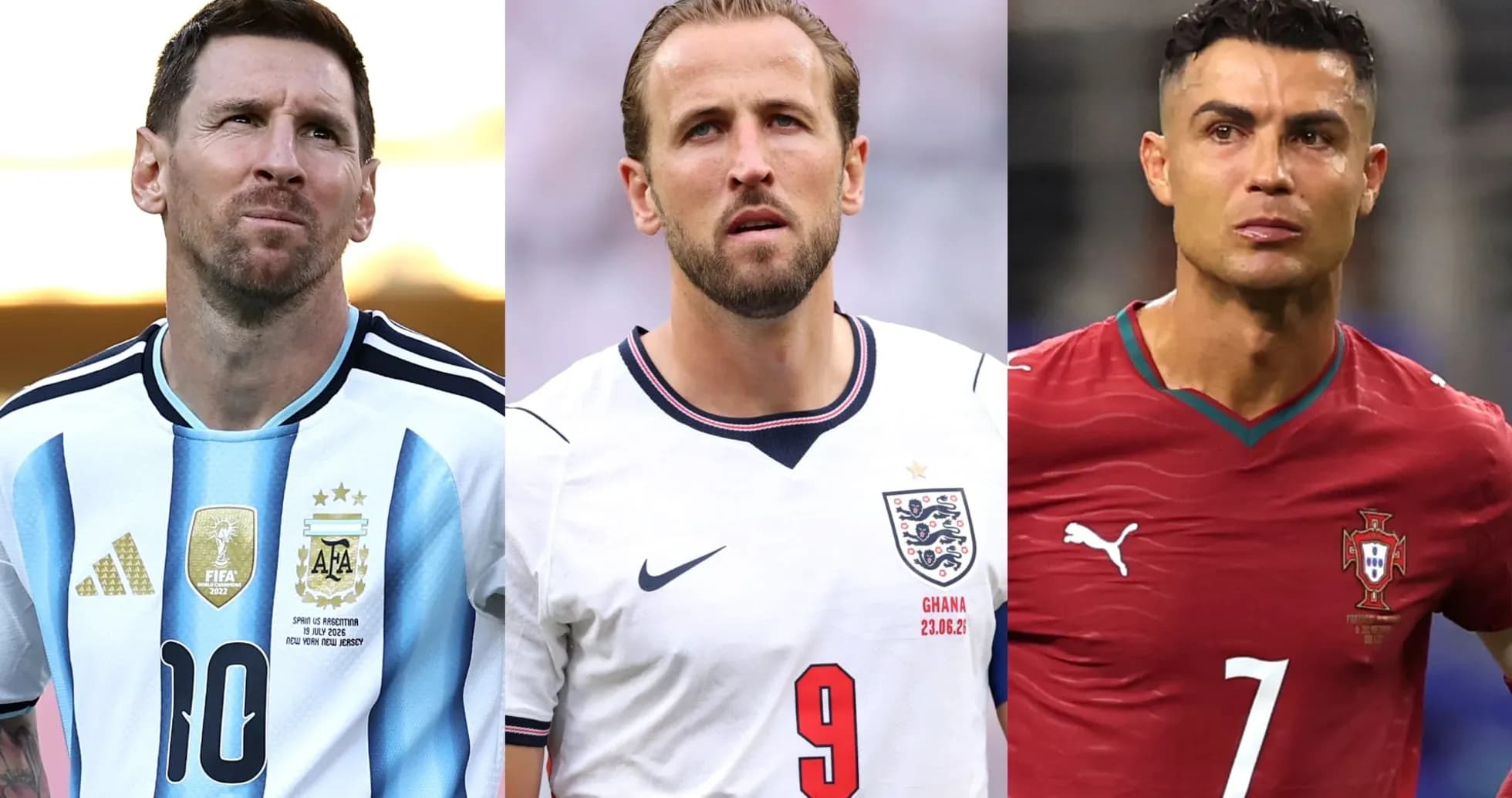
Harry Kane's Future: Chasing Glory or Knowing When to Walk Away
Harry Kane is still filling stadiums and scoreboards, but the questions are getting louder than the cheers.
Fresh from another major tournament in which he carried England’s hopes and the captain’s armband, Kane leaves the stage with six goals but no trophy, a semi-final exit to Argentina and a familiar sense of what might have been. The Three Lions finished third. The medals are bronze, the expectations were gold.
Individually, though, his numbers are beyond argument. England’s all-time leading scorer with 85 goals. Tottenham’s record marksman. A staggering 146 goals in 147 games for Bayern Munich. This is a striker who has rewritten record books in two countries and shows little appetite for stopping.
Bayern know exactly what they have. With just 12 months left on his current deal, the German champions are moving to lock him down at the Allianz Arena. Kane has just turned 33, yet he remains the focal point of their attack and the bookmakers’ favourite to lift the Ballon d’Or in 2026. For a so-called late bloomer, he is ageing like a world-class playmaker – seeing more, doing more, dictating more.
England, meanwhile, are staring at a different kind of problem. There is no obvious heir to the No.9 shirt, no ready-made successor to lead the line or wear the armband. The expectation within the setup is clear: Kane will stay on as captain through the home European Championship in 2028, the centrepiece of another cycle built around his goals and his authority.
Beyond that, the picture blurs.
Can he stretch his international career to another World Cup, as Ronaldo and Messi did before him? When that question was put to former Bayern midfielder Dietmar Hamann, speaking to GOAL via MrQ, the answer came back with the kind of blunt honesty that tends to follow ex-pros into the studio.
“He’s turned 33 now so he'll be 36 going on 37 in four years' time. It's a big ask,” Hamann said.
He didn’t sugar-coat the comparison with the game’s two modern giants.
“Obviously, we saw two of the all-time greats playing in the World Cup, one 39, one 41. One did well, the other one didn't. You know, I wouldn't put him in the same bracket as those two.”
The point wasn’t to diminish Kane’s status. It was to underline the physical and mental mileage already on the clock.
“Even though he would be a few years younger than these two guys playing in the World Cup, I think it's a big ask,” Hamann continued. “It's a big ask because he started playing pretty early. He went out on loan in the lower leagues, played an awful lot of games in the Premier League, didn't really have many injuries. The odd ankle injury, I think he's had.
“He hardly missed a game in the last couple of years here in Munich. To see him in the World Cup in four years' time, if you put me down to an answer now, I'd probably say no.”
That’s the tension around Kane now: his form says “keep going”, his career load screams “careful”.
Chris Waddle, another former England international who knows the weight of a nation’s expectations, shares the concern. Speaking to GOAL, he framed the debate around the most unforgiving opponent any footballer faces – time.
“Fitness is a great thing to have. Some players develop, get better as they get older. Some find it easier. Not easier, but easy,” Waddle said.
The Euros in two years’ time, on home soil, are shaping up as the first major checkpoint.
“We'll see how his legs are in two years' time, at the Euros even. People will be questioning that. The thing with Harry's advantage is he's a fit lad, we know that. He doesn't rely on pace. He's got a great football brain.”
That football brain has always been Kane’s secret weapon. He can drop deep, link play, dictate the tempo. He doesn’t need to win a sprint race to win a match. Yet even the clever ones can’t outrun the clock forever.
“Sometimes you see players in tournaments and you think, ‘His legs are going there’,” Waddle added. “I'm looking at Ronaldo as an example. I watched Portugal play in the World Cup and his legs were gone in my eyes for that level of football. Lionel Messi still had bits of brilliance until the rest of his team-mates decided to try and kick everybody out of the country.”
The message is clear: the elite stage is ruthless. It exposes decline in real time, and it does so brutally.
“So I think there's a time and a place where you've actually got to think, ‘Yeah, he can still play, and he can still play like Messi does in Miami, a good level for him’. You know, Ronaldo in Saudi can still handle it. And Harry, eventually he'll come to a time where you think the Bundesliga is too quick. Where do you go from there?”
For now, the answer is simple: he stays at Bayern, he leads England, he keeps scoring. The next World Cup, though, is a different beast. A different pace. A different demand on body and mind.
“The next World Cup, it's a big ask for him, I think, to play in that tournament,” Waddle said. “I think some of these players can think, ‘Yeah, I'm still playing football, but that level's out of me now, and I've enjoyed it’. I think some of these players try and play too long and it doesn't look great on them. But I'm sure Harry will know when the time's right to say, ‘No, I can't play for England anymore’.”
So Kane stands at a fascinating crossroads. Still prolific, still central, still trusted. Bayern are preparing a new contract. England are planning a home Euros around him. The Ballon d’Or talk is real.
But somewhere on the horizon, a decision is waiting: does he chase one last World Cup, or choose his moment to walk away from the international stage on his own terms, before the game makes that choice for him?
Related News
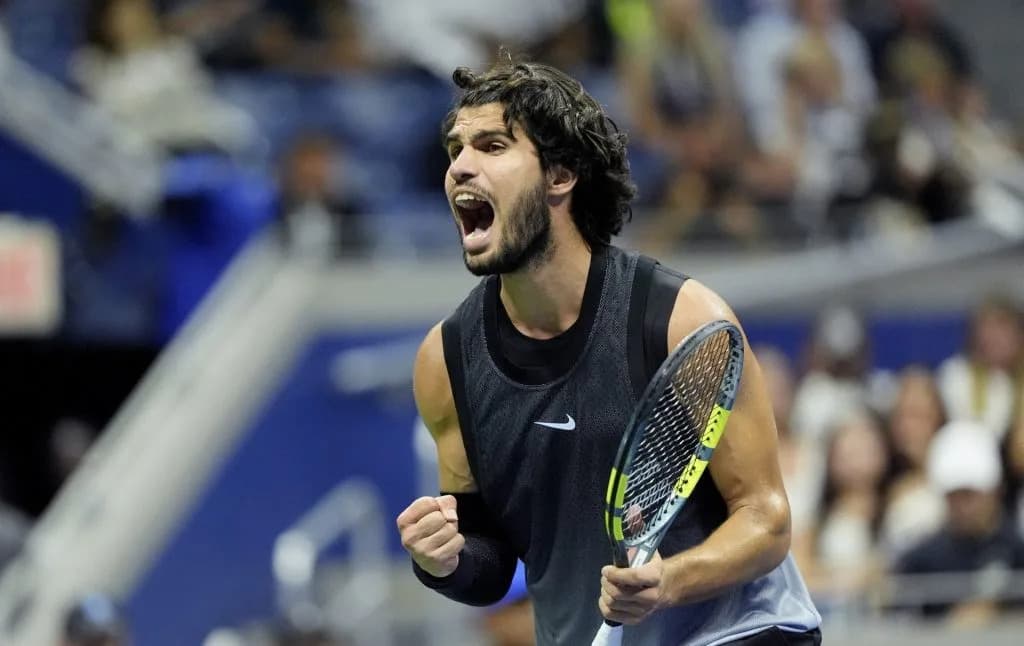
Carlos Alcaraz Urges Tennis Organizers to Stop Matches Finishing in the Early Morning
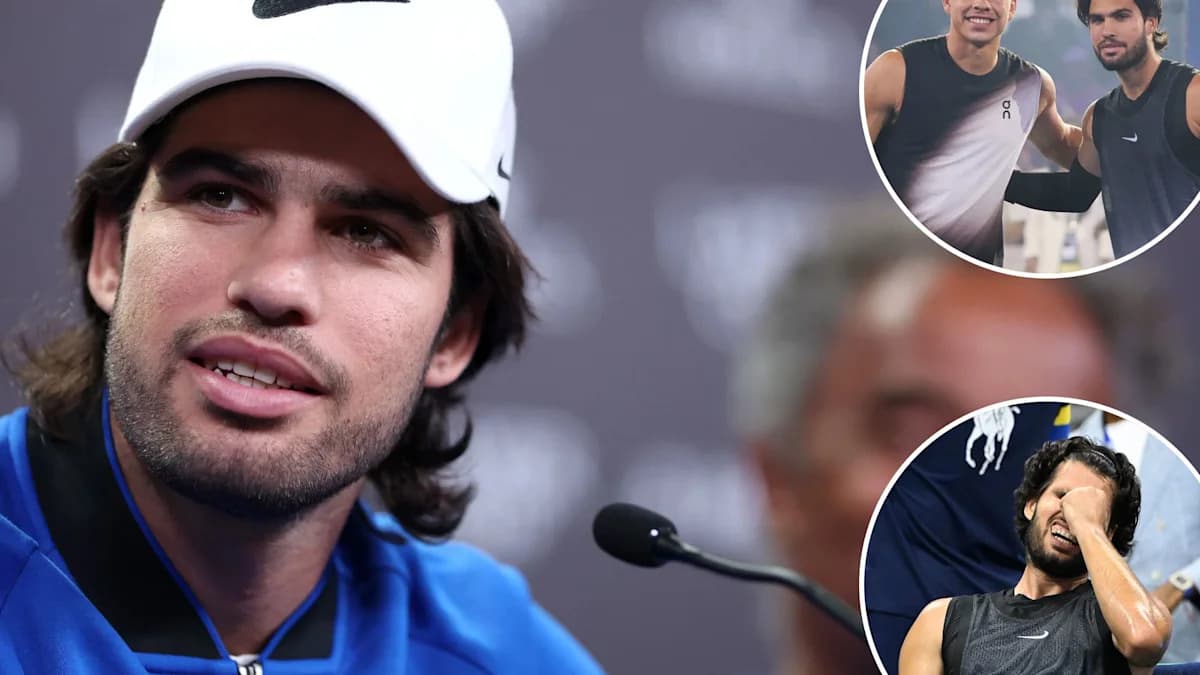
Carlos Alcaraz Frustrated by 3:30 a.m. US Open Finish: 'Too Much'
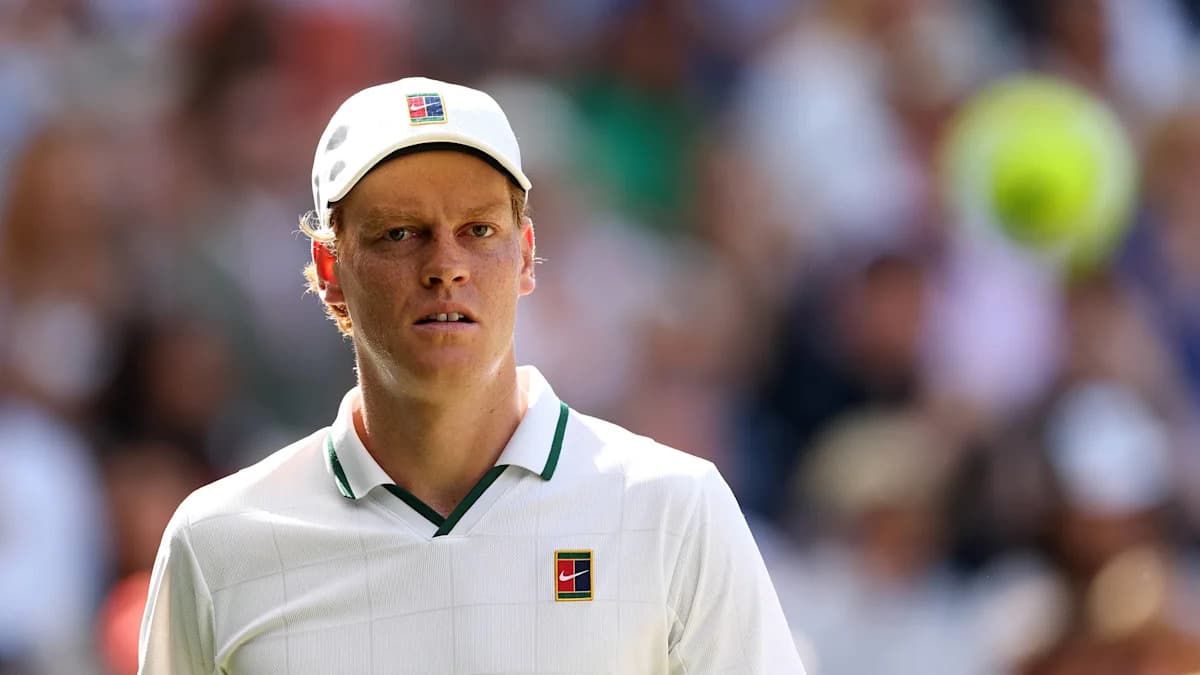
Jannik Sinner Set for ATP 500 Return in Beijing with Novak Djokovic Also Competing
Meet Iva Jovic: The Rising American Tennis Talent
Flavio Cobolli Shares Insights on Training with Jannik Sinner Ahead of His Tennis Return
Till vs Romero: Fight Details, Undercard, and Viewing Info for This Weekend