
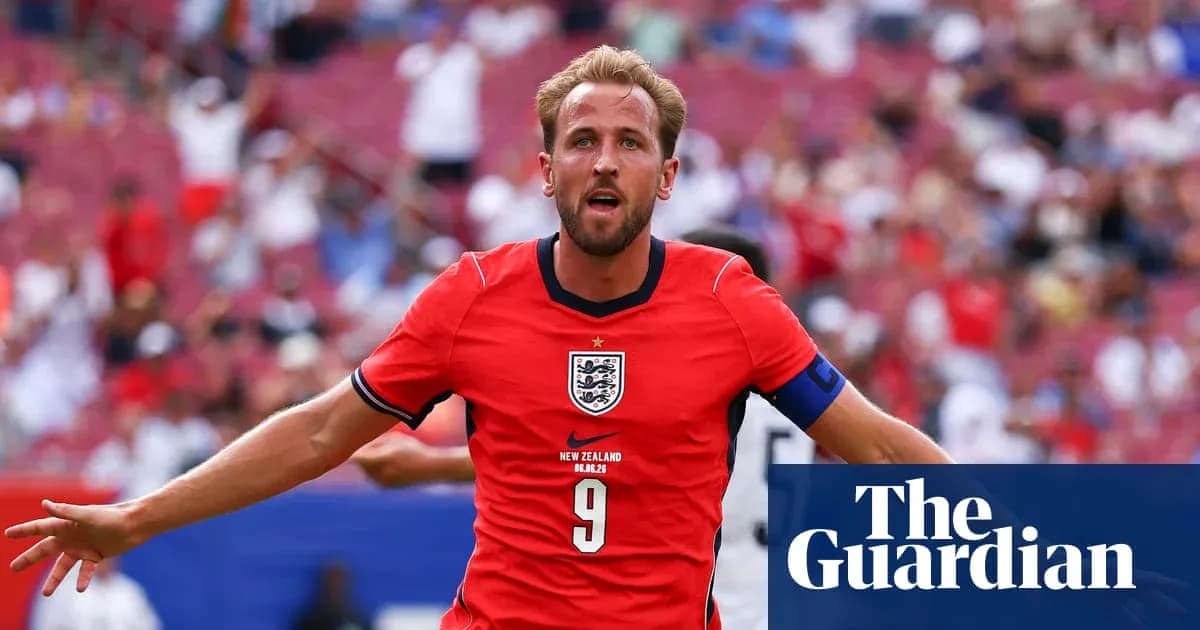
Harry Kane: Bayern Munich's Best Transfer Ever
Uli Hoeness has never been shy of a grand statement, but even by his standards the claim felt loaded. In the glow of a DFB-Pokal final decided by a Harry Kane hat-trick, the Bayern Munich president called the England captain “the best transfer the club has ever made”. It sounded like adrenaline talking.
A month later, with the fireworks long gone and the beer dried from the dressing-room floor, nobody at Bayern is rowing back. “He absolutely is the best we’ve had,” says one senior figure at the club. The hyperbole has hardened into consensus.
From doubted finisher to global frontman
Kane’s ascent to this point has not followed the usual superstar script. Euro 2024 painted him as a man running out of time, a world-class striker still without a single major trophy. Even his Golden Boot from Russia 2018 carried an asterisk for some outside England. Le Journal du Dimanche dismissed him as the “top goalscorer despite not having scored from the quarter-finals on”, a finisher who supposedly feasted early and disappeared when it mattered.
For years, the narrative clung to him: relentless worker, admirable professional, but perhaps destined to be the nearly man of his era.
Then came Munich.
When Time assembled the faces of this World Cup, the roll call was predictable enough: Lionel Messi, Cristiano Ronaldo, Neymar, Kylian Mbappé, Lamine Yamal, Jude Bellingham. Standing among them, finally, was Kane. Not as a curiosity. As a peer.
Bayern had paid more than €100m to prise him from Tottenham, a figure that dragged the club into territory it had always avoided. “When we bought him for more than €100m, that was new territory for us and a crazy risk,” Hoeness admitted. “But he’s paid back every single euro. Not just because he scores so many goals, but because he is a role model in the dressing room.”
The numbers say he has repaid the fee. The dressing room stories say he has repaid far more.
Bayern’s new standard-bearer
Hoeness delights in recounting the small details. Kane staying behind to talk to younger players. The arm around the academy kid who has just been told he’s not in the squad. The quiet word with a new signing who looks lost in the glare of Säbener Straße.
The language barrier? Barely a factor. Kane is still taking German lessons – written into his contract – but Bayern’s core is steeped in English, and Vincent Kompany conducts most of his business in it. The communication is clear enough where it matters most.
Hoeness, a World Cup winner in 1974 and no stranger to physical battles, reserves particular admiration for the punishment Kane absorbs in the Bundesliga. He sees how often defenders kick him, how rarely he complains. “I think you’d have to cut off his head or his arm to stop him playing,” he says. It sounds extreme. It also sounds like something Kane would quietly live up to.
Inside the dressing room, staff talk about his influence in the same breath as Manuel Neuer and Thomas Müller. That is rare air at Bayern. Neuer is the captain, Müller the club’s beating heart, born and raised in its colours. Kane arrived as the outsider with the giant fee and the English reputation. He has become a reference point.
Settling into Bavaria, not just Bayern
When the Kane family delayed their full move to Munich, old stereotypes resurfaced. The British star abroad, detached from the culture, counting the days until a return home. Ian Rush never actually said that living in Turin was “like living in a foreign country”, but the line has followed British players for decades.
Kane has quietly dismantled it. He and his wife, Kate, have settled into a rural home once owned by Lucas Hernández, tucked near the affluent suburb of Grünwald. Ask him about life off the pitch and he talks less about restaurants and more about his children – Ivy, Vivienne, Louis and Henry – throwing themselves into Bavarian habits. Skiing in winter, Alpine excursions, the kind of outdoor life that Munich sells so well.
Kane himself is barred from skiing, of course. His contract, his knees, and common sense all agree on that. But he joins family trips to Garmisch, enjoys the mountain air, and leans into the life Bayern hoped he would embrace.
The bond with the region runs deeper than a few Instagram posts. At a fan day in Kirchweidach, a village of 2,000 near the Austrian border, Kane took part in a traditional ceremony, seasoning soup as Bavarian wedding couples do to symbolise unity. He played skittles using litre beer steins instead of balls. He later called it “a bit crazy” with typical English understatement, but he threw himself into it. The locals noticed.
A striker reborn – and then some
Bayern knew they were signing one of the best No 9s in the world. They did not quite expect this version.
Since ending his trophy drought with the Bundesliga title in 2025 – the first of two league crowns and a DFB-Pokal he has now lifted – Kane has somehow found another level. He looks leaner. Quicker. Sharper in the box and, crucially, far more than just a finisher.
His goal against Atalanta in the Champions League stands as a personal highlight reel in miniature. A drag-back, a turn that wrong-footed two defenders, then a ruthless low strike. All in one fluid movement. It was the kind of goal that used to belong to Messi or Ronaldo alone.
The second goal in the DFB-Pokal final may say even more about his evolution. With the game still open, Kane picked up the ball outside the box and unleashed a vicious curling effort that crashed off the bar. Many strikers would watch and curse their luck. Kane followed his shot. As the ball dropped, he produced another drag-back and turn, carved out half a yard, and buried the rebound. It was persistence, technique and cold calculation in one sequence.
The numbers are staggering. With 61 goals for Bayern, he is the only player in Europe’s major leagues matching the outrageous scoring volume once reserved for Messi and Ronaldo, with only Erling Haaland remotely in his orbit. Ronaldo hit 66 in a season without a major tournament. Messi reached 73. After Saturday’s game against New Zealand in Tampa, Kane sits on 67.
Yet he is not chained to the penalty area. For Bayern he often drops into a No 6 zone when the team are out of possession, collecting the ball deep, dictating play. His passing range has become a weapon on its own. The assist for Luis Díaz in the Champions League semi-final first leg against Paris Saint-Germain – a perfectly weighted ball that split the defence – underlined that he now creates as much chaos with his vision as with his finishing.
Thomas Tuchel, who helped shape the tactical blueprint before departing, has left a template that seems certain to be mirrored at the World Cup. A centre-forward who scores like a poacher but thinks like a playmaker.
From Spurs nearly-man to Ballon d’Or contender
At Tottenham, Kane’s name never truly entered the Ballon d’Or debate. Too few trophies, too many near misses, too much of his brilliance hidden in games that did not decide seasons.
Bayern has changed that. Now he is a regular in the late stages of the Champions League, a serial winner in Germany, and a central figure for his country heading into the World Cup. He is firmly in the conversation. Whether he climbs to the podium will depend heavily on what happens this summer.
Look at the broader arc and it feels like a career building towards a single stretch of time. The slow burner approaching ignition. Kane has always been more tortoise than hare, inching forward while others sprinted early. The difference now is that the finish line is in sight, and he has the legs – and the platform – to sprint when it counts most.
The making of a phenomenon
None of this was inevitable. Spurs youth coaches remember a teenager who did not look like a future global icon. By elite standards, he carried too much weight, lacked pace and did not stand out technically. “You would never have thought that he would be what he is now,” one recalls.
The turning point came around 14. Kane shot up in height, his coordination caught up, and his striking of the ball suddenly separated him from the pack. More important than the growth spurt, though, was the mind. “Any message you relayed to him, he only needed telling once, whether that was gym work or finishing practice.” He listened, absorbed, and acted.
His early loans were hardly the launchpad of a star. Norwich was a bruising experience. His debut brought a glaring miss against West Ham that stuck in the memory for all the wrong reasons. His last game for the club ended with him substituted at half-time in an FA Cup defeat to non-league Luton. Between those low points, he was dropped to the under-21s and even denied penalty duties because he was not deemed reliable enough.
Leicester was not much kinder. During their 2013 Championship playoff semi-final against Watford, he and Jamie Vardy both started on the bench in each leg. Kane was not yet the man to trust with a season on the line.
Even at Spurs, the belief was not immediate. Mauricio Pochettino arrived in 2014 and, after an underwhelming pre-season, did not see a future world-beater. The body-fat tests reinforced that view. “We had our body fat test done and I was the highest in the team, something like 18%,” Kane later recalled. He went to see Pochettino, who did not sugar-coat it. The numbers were too high. The effort was not enough. The message was blunt.
Then came the twist. Pochettino added a line that stuck: “You can be the best striker in the world.”
At the time, it sounded like motivational exaggeration, a manager trying to light a fire under a struggling young forward. Just as Hoeness’s praise sounded like the emotional surge of a president basking in a trophy.
Years on, both assessments look less like hyperbole and more like early recognition. Kane has spent his career turning other people’s big words into his bare minimum. Now, with Bayern at his back and a World Cup in front of him, the question is no longer whether he belongs among football’s giants.
It is how far he intends to climb while he is up there.
Related News
Raphinha’s Hat-Trick Powers Barcelona to 7-2 Victory Over Racing Santander
Carabao Cup Fourth Round Draw: Liverpool Set to Clash with Chelsea, Arsenal to Face Fleetwood Town
Key Football Matches to Watch in Azerbaijan This Autumn
Raphinha's Hat-Trick Drives Barcelona to 7-2 Triumph Over Racing Santander
Hansi Flick Leads Barcelona to Record-Breaking Seven Wins in a Row
Gavi Reflects on Injury Return as Barcelona Dominate Racing Santander 7-2