
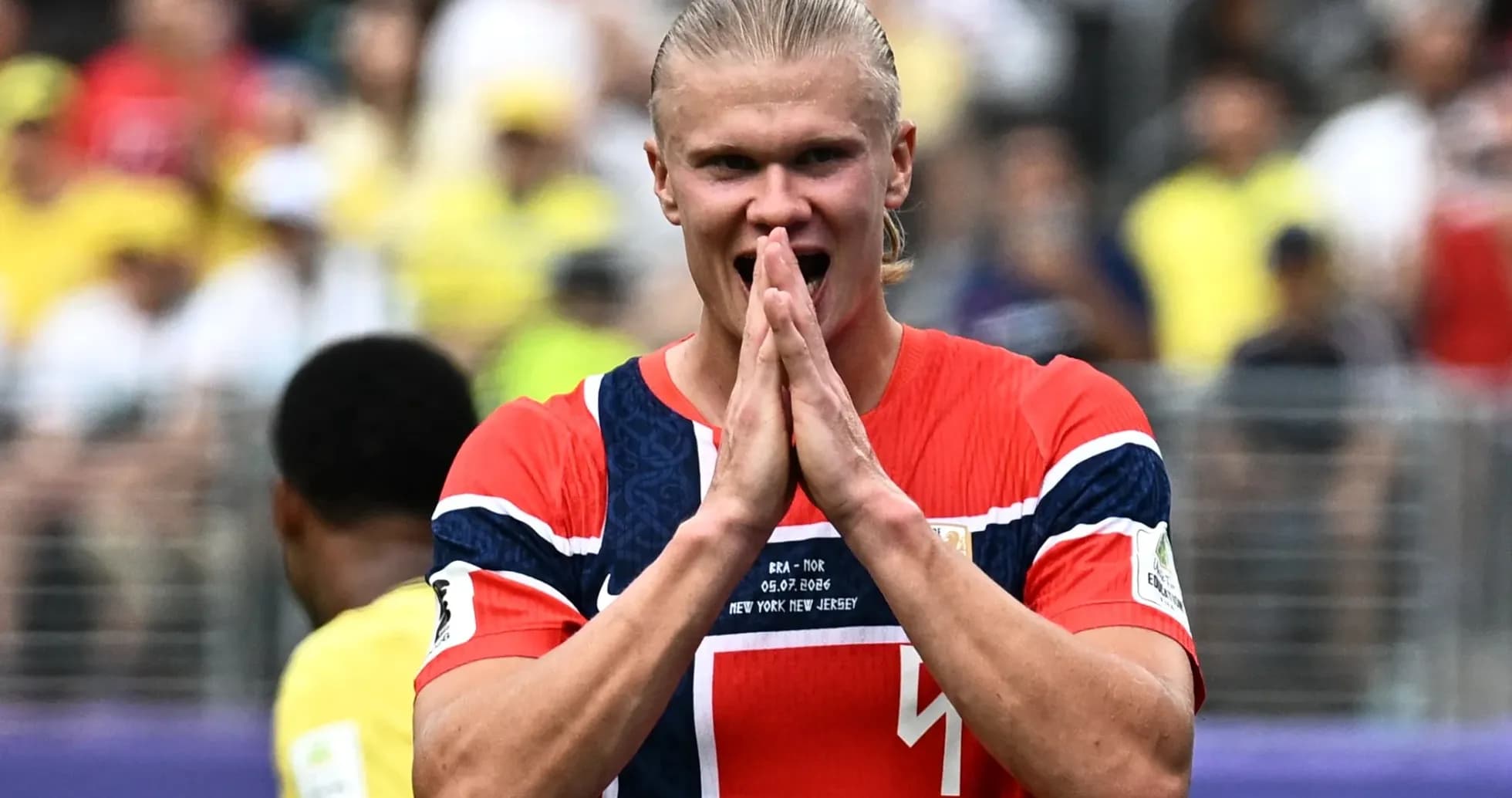
Haaland vs Kane: World Cup Quarterfinal Showdown in Miami
Miami will sweat. England and Norway will suffer.
On Saturday night, in the thick, sticky heat of Florida, a World Cup quarterfinal will pit a resurgent heavyweight against the tournament’s most compelling upstarts. One chasing history, the other living it.
England are hunting a fourth World Cup semifinal, trying to dodge what would be an eighth exit at the last-eight stage. Norway, back on this stage for the first time since 1998, have already ripped up their own record book: two knockout wins, Brazil dumped out, a nation that barely dared to dream now staring down another giant.
At the heart of it all, two strikers who treat goals like a habit.
Haaland vs Kane: Golden Boot, golden stakes
For the first time at this World Cup, two of the leading Golden Boot contenders share the same pitch.
Erling Haaland should have had this duel with Kylian Mbappé in the group stage, but Ståle Solbakken kept him wrapped in cotton wool against France with qualification already secured. The Norwegian still arrived at the quarterfinals like a wrecking ball: the winner against Ivory Coast, both goals in the 2-1 victory over Brazil, and seven strikes in four appearances.
He has now scored in 14 consecutive games for Norway, 27 goals in that run alone, and sits on 62 in 54 caps. Those are numbers that don’t just leap off the page; they slap you in the face.
At 25, he comes into Miami one goal behind Mbappé and Lionel Messi in the Golden Boot race, and one ahead of Harry Kane.
Kane’s campaign has been more of a slow burn, but no less decisive. Two goals against Croatia to open, one more in the win over Panama to secure top spot in the group, then both in the late turnaround against DR Congo in the Round of 32. Against Mexico, his penalty proved the difference in a wild 3-2 contest.
Both men are three-time Premier League Golden Boot winners. Both have terrorised defences in Germany. Yet they have barely crossed paths: just two meetings in 2022/23, Tottenham Hotspur against Manchester City, a win each, a goal each. Perfectly poised.
This time, the duel is bigger. The stage is hotter. And if one of them walks out of Miami with the match and the scoring charts in his grip, the argument over who is the game’s pre-eminent No 9 will tilt sharply in his favour.
Can Burn blunt the beast?
So how do you stop a striker who averages a goal every 73 minutes in international football?
Thomas Tuchel may have stumbled onto an answer in the most old-fashioned way possible: height, reach, and sheer bloody-minded defending. Dan Burn.
The 6’7” Newcastle centre-back was a surprise pick in Tuchel’s squad. He only made his England debut just before turning 33 in March 2025 and has started just four times, all against modest opposition in qualifying. On paper, not the man you’d circle for a showdown with Haaland.
On grass, against Mexico, he changed the game.
Thrown on for the final 15 minutes as England clung to a 3-2 lead with 10 men, Burn turned into a one-man clearance machine. Cross after cross, body on the line, head where it hurt. England sank deep, almost into their own six-yard box at times, and Burn patrolled it like a lighthouse.
He is nine years older than Haaland and nowhere near as mobile, but he is two inches taller and knows the Norwegian’s game from bruising Premier League battles. The numbers from those meetings are startling.
Since Haaland joined Manchester City in 2022, he has faced Burn eight times: six league games, two in the domestic cups. Across more than 10 hours on the pitch together, Haaland has scored once – and that came in their very first encounter in August 2022.
For a striker who racks up goals at a historic rate, that’s not a quirk. It’s a pattern.
Burn is not the only defender with a decent personal record against him. Ezri Konsa has conceded just one Haaland goal across 406 minutes over five matches, that strike also coming in their first clash back in September 2022. When you set those numbers against Haaland’s 112 goals in 132 Premier League games, three Golden Boots in four seasons, Tuchel has every reason to study them closely.
The flip side? Haaland has hammered seven goals in five matches against Marc Guéhi, before the Crystal Palace defender joined him at City, and he has never faced John Stones as an opponent.
Tuchel’s selection at centre-back will say everything about how much he trusts history to repeat itself.
Odegaard vs Rice: the brain of Norway against England’s bruised engine
If Haaland is the finisher, Martin Odegaard is the metronome.
Against Brazil, the Norway captain produced a midfield performance of total authority. He carried the ball forward 61 times, completed 101 of his 109 passes, and dictated a game in which Brazil – Brazil – finished with just 33.6 percent possession, their lowest ever share in a World Cup match.
Norway didn’t just survive without the ball. They took it, kept it, and bent the game to Odegaard’s rhythm.
England know that feeling well. Against Mexico, they saw even less of the ball than Brazil did against Norway, spending much of the final half-hour jammed into their own penalty area, a man down and under siege. It was their lowest possession share since records began.
If they want to reach a first World Cup semifinal since 2018, and only a third since 1966, that has to change. Which means someone has to disrupt Odegaard.
No one is better placed than Declan Rice. The two have shared the Arsenal midfield 117 times in the last three seasons, driving the club to a long-awaited Premier League title and a Champions League final. Rice knows Odegaard’s habits, his triggers, the spaces he loves to drift into.
But Rice is not at full tilt. Neural pain in his lower back and hamstring has dogged him for months. Odegaard will know that too.
Rice still churned through 3,094 Premier League minutes this season, with England partner Elliot Anderson playing even more. Odegaard’s load, by comparison, was lighter at 1,369 league minutes. In Miami’s heat, that freshness might be more than a footnote. It might be the hinge on which the midfield battle swings.
Miami’s furnace: who melts first?
This is not a neutral venue. It’s a test chamber.
Brits and Scandinavians are not exactly built for 33C heat and thick humidity, yet that is what awaits at 5pm local time in Miami, with thunderstorms lurking in the forecast and the air hanging heavy.
Norway have at least had a crash course. They opened in Boston against Iraq, then moved to New York/New Jersey to beat Senegal. They went back to Boston to face France, when Solbakken rotated heavily, then briefly escaped the elements indoors in Dallas against Ivory Coast. Brazil in New York/New Jersey dragged them straight back into the sauna.
England’s path has been kinder. Croatia under the roof in Dallas, then a rainy goalless draw with Ghana in Boston and a wet but manageable win over Panama in New York/New Jersey. DR Congo in air-conditioned Atlanta, then a cooler, storm-delayed night in Mexico City against Mexico.
The two hottest games of the group stage were both in Miami. Uruguay against Cape Verde and Saudi Arabia offered a preview: players gasping, tempo dropping, decisions fraying in the final half-hour.
On Saturday, the team that manages its energy, its substitutions, and its hydration better may not just gain an edge. It may survive while the other wilts.
Norway’s left vs England’s right: danger in the wide open spaces
If there is a fault line in this match, it might run down England’s right flank.
Reece James, the only recognised right-back in Tuchel’s squad, has missed the last three games after pulling his hamstring against Ghana. Tino Livramento’s calf injury on the eve of the tournament stripped away the safety net. Since then, Tuchel has been improvising.
Djed Spence, Ezri Konsa, John Stones, Jarell Quansah – all have taken turns on the right of the defence. At one stage against DR Congo, Rice even shuffled out there. None of that screams stability.
James is pushing to be fit for the quarterfinal, a badly needed boost given Quansah is suspended after his red card against Mexico. If James doesn’t make it, Konsa is the favourite to reprise the role he handled admirably in that desperate rearguard in the last round.
Whoever gets the nod will walk into a storm.
Antonio Nusa is the first problem. Quick, direct, and slippery, the left-sided winger loves to drive inside and shoot with his right foot. His curling strike into the top corner against Ivory Coast in the Round of 32 was one of the goals of the tournament, a reminder that Haaland is not Norway’s only threat.
Then comes the second act: Andreas Schjelderup.
The Benfica winger replaced Nusa at half-time against Brazil and transformed the game. At 22, he delivered his standout display of the tournament, repeatedly isolating his full-back, demanding the ball, and then delivering it with purpose.
His cross found Haaland for the opening goal. Later, he teed up the forward again, this time for a ruthless low finish from the edge of the box to kill the contest. Two assists, one seismic result.
If England’s right side creaks, Norway’s left will tear at it relentlessly.
The heat will drain legs. Haaland and Kane will chase records. Odegaard and Rice will fight for the ball and for control of the clock. Somewhere on that right flank, an England defender will be asked to play the game of his life.
By Wednesday night, one of these teams will be preparing for a World Cup semifinal.
Which of them will still have anything left in the tank?
Related News
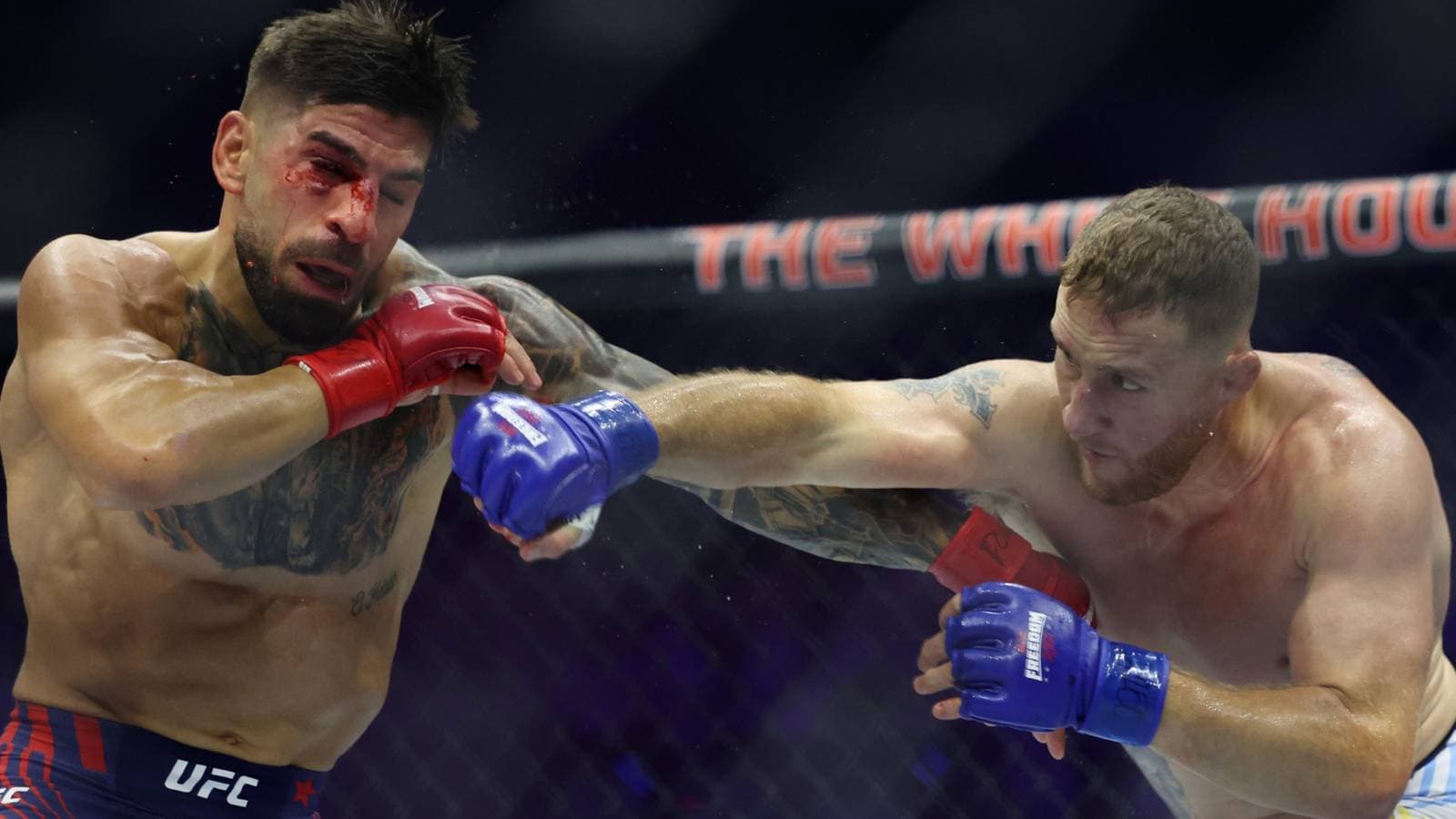
Ilia Topuria Accuses Justin Gaethje After UFC Defeat

Tyson Fury vs Anthony Joshua Fight Date and Venue Confirmed
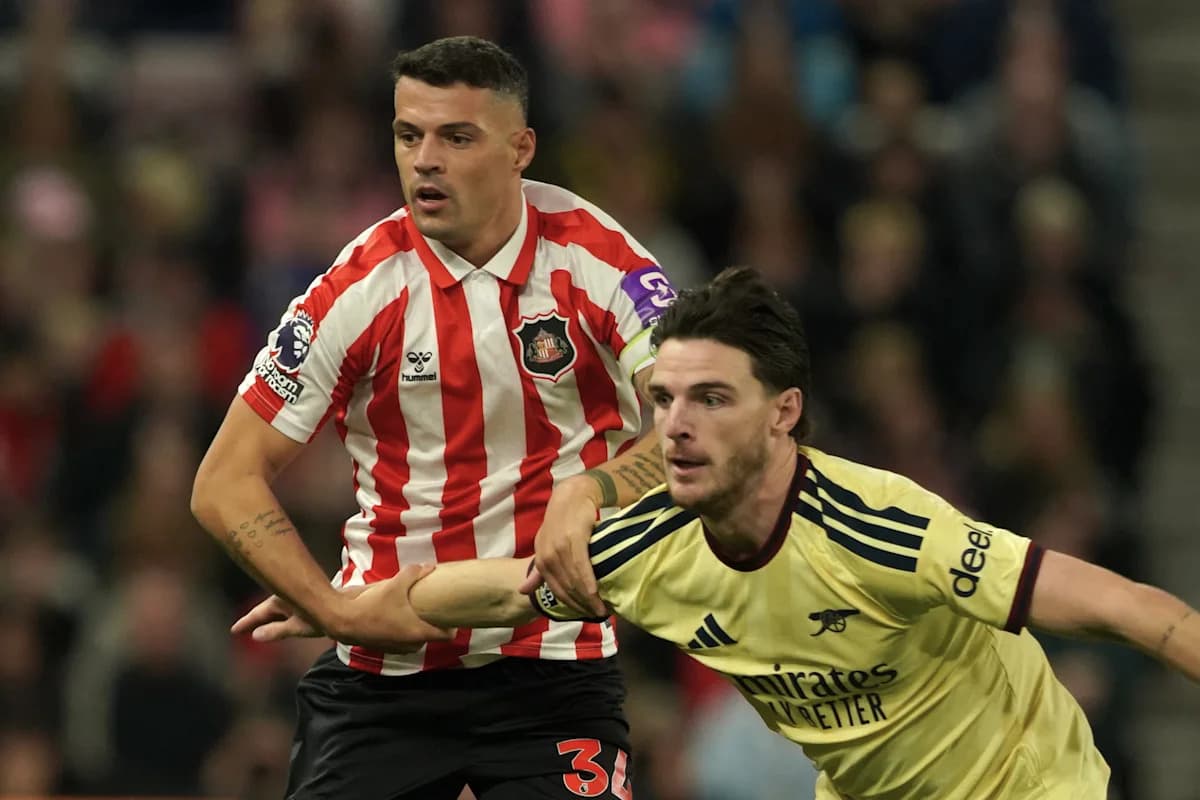
Switzerland Calls Up In-Form Sion Striker Winsley Boteli for Nations League
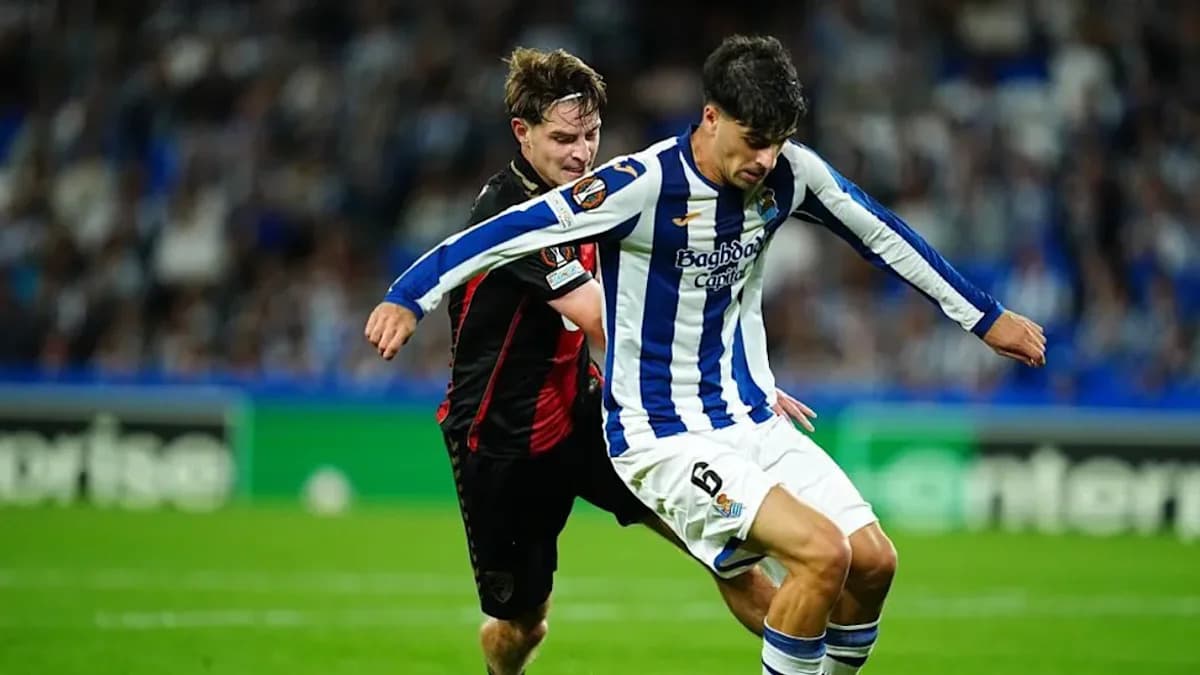
Bournemouth Secures Historic 2-1 Win Over Real Sociedad in Spain
Portugal Announces Squad for 2026 UEFA Nations League; Cristiano Ronaldo Expected to Play

Raphinha Channels Ronaldo Nazario as Barcelona's Leading Striker After Position Change