
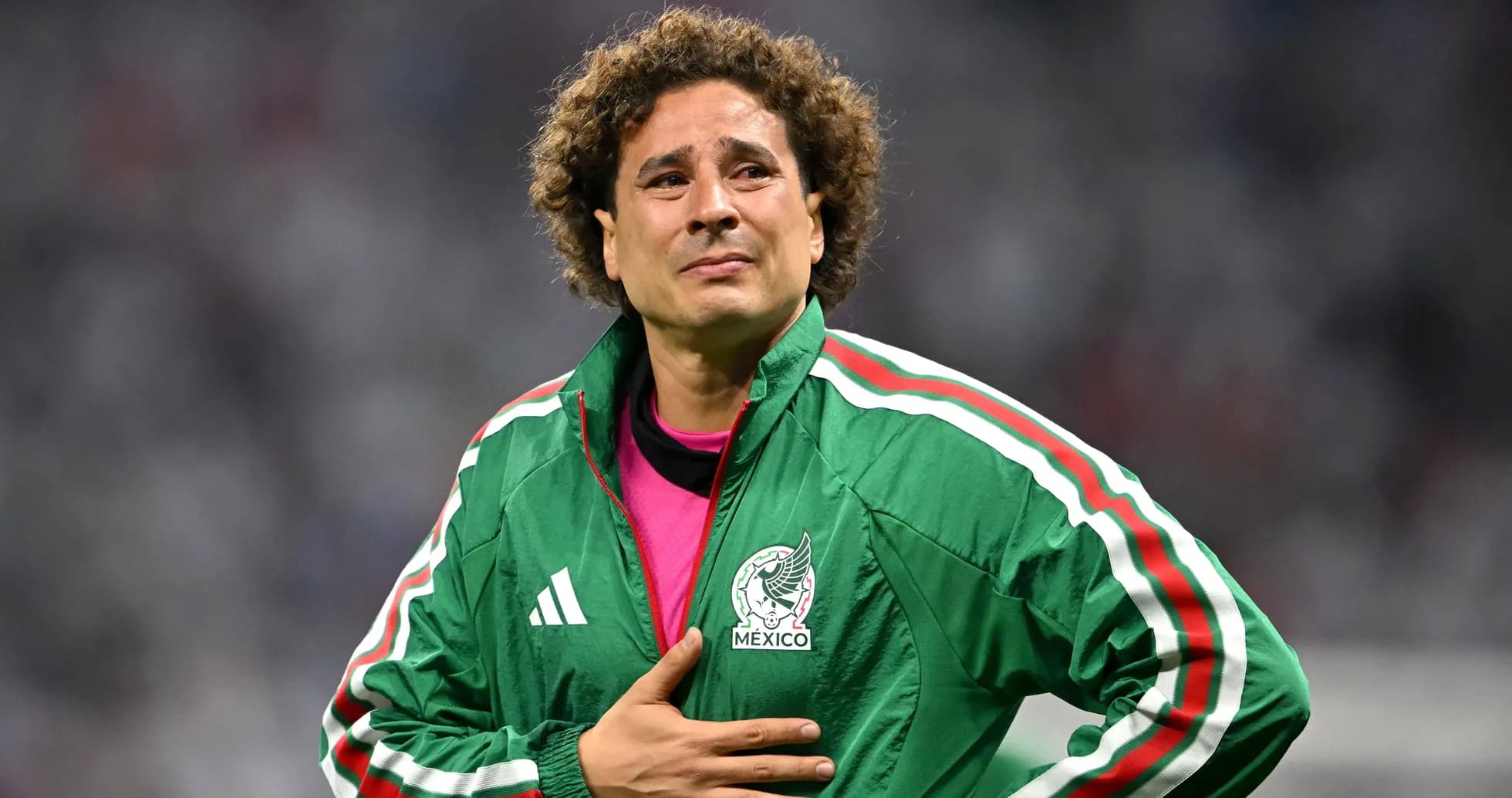
Guillermo Ochoa Retires: A Legendary Goalkeeper's Journey
Guillermo Ochoa has finally done what Mexico never quite believed he would. He has walked away.
On Tuesday, the goalkeeper who spent two decades living on the edge of the goal line announced his retirement from elite football, ending one of the most enduring careers the position has seen. He had long pointed to the 2026 World Cup as his last dance. Supporters clung to the idea of one more short-term deal, one more season, one more tournament.
There will be no encore.
Ochoa chose his own stage for the farewell: social media, his words heavy with closure. “I gave it my all; I left everything on the field for my clubs and the national team, and today I hang up my gloves,” he wrote. Then came the line that has defined his profession. “Being a goalkeeper means knowing you might wait 90 minutes for a single moment when everything depends on you. And when that moment arrives, you cannot hesitate.”
He rarely did.
A career measured in World Cups
The scale of his journey is best captured in one number: six. Ochoa went to six World Cups with Mexico, standing alongside only Ronaldo and Messi in that elite club. Early on he travelled as the apprentice, the promising youngster learning the rhythms of the biggest stage. In time he became the reference point, the man in green who turned up every four years and somehow grew larger under the weight of expectation.
From Brazil 2014 to Russia 2018 and Qatar 2022, the No. 1 shirt belonged to him. Those tournaments cemented his status: elastic saves, improbable reflexes, that familiar spread-eagle silhouette etched into the memory of fans around the world.
Longevity, in his case, was not just about years. It was about staying at the sharp end of the sport long enough to see generations of teammates come and go while he remained, a constant presence between the posts.
From Mexico City dreams to Europe’s arenas
Ochoa’s story began in the youth ranks of Club América in Mexico City, a local boy chasing a distant dream. He made his top-flight debut in February 2004 and wasted no time in announcing himself. The reflexes were immediate. So was the composure. Within a few seasons, he was not just América’s future but its present.
The 2005 Clausura title with the club provided his first major trophy, a landmark that hinted at what was to come. By 2011, he was ready to cross an invisible line for Mexican goalkeepers.
That summer he joined Ajaccio, becoming the first Mexico-born goalkeeper to play in Europe. It was a historic move, and it opened doors that had long seemed bolted shut. His European adventure became a tour of contrasting landscapes and demands: Ajaccio, then Malaga, Granada, Standard Liege, Salernitana, AVS Futebol, AEL Limassol. Different leagues, different pressures, the same figure in goal.
In Belgium he added another piece of silverware, lifting the Belgian Cup with Standard Liege. It was a tangible reward for a career often defined by individual brilliance more than team honours.
The pull of home never faded. Between 2019 and 2022 he returned to Club América for a high-profile three-year spell, reclaiming the No. 1 shirt and reinforcing his legend at the Estadio Azteca. The crowds knew the routine by then: the raised arms, the sharp angles, the saves that looked impossible until he made them.
One last World Cup, one last roar
By 2026, time had done what no striker could. Ochoa arrived at his sixth World Cup as the veteran, the voice in the dressing room rather than the undisputed starter. Raul Rangel took the primary role in goal. Ochoa waited.
The respect inside the Mexico camp never dimmed. Manager Javier Aguirre understood what the moment required. In Mexico’s final group-stage match against Czechia, with the result settled and the clock ticking down, he turned to his old goalkeeper.
Thirteen minutes. That was all.
Ochoa stepped onto the pitch at the Estadio Azteca, the stadium where his story had first taken flight. The noise told its own story. Fans rose, phones lit up, and a farewell began to take shape in real time. Every touch, every movement, every glance toward the stands felt loaded with memory.
When the final whistle sounded, he walked to his goal one last time. He kissed the posts, the same metal that had framed his finest nights. Then he dropped to his knees and was swallowed by the embrace of his teammates, a guard of honour in green.
The crowd eventually drifted away. The lights dimmed. Yet Ochoa stayed. He walked alone to the centre circle and stood there, taking in the empty bowl of the Azteca. No ball. No gloves. Just a man and the pitch that had defined his life.
Leaving with full hands
For all the emotion, his record stands as a hard, unarguable testament. A league title with Club América in the 2005 Clausura. A Belgian Cup with Standard Liege. A pioneering European journey that changed what Mexican goalkeepers believed was possible. Six World Cups, three of them as Mexico’s starting goalkeeper.
In his farewell message, he circled back to where it all began: a boy with a dream. “I never imagined how far a dream could take me. Today, I can only look back with pride and say: Thank you,” he wrote. “I take with me the affection of millions and the peace of mind that comes with knowing I gave everything for Mexico.”
He leaves with that affection. He leaves with that peace. And he leaves a question hanging over the next generation: who dares to follow a career that stretched from a teenage debut in 2004 to a sixth World Cup in 2026, and a final, solitary walk across the grass of the Estadio Azteca?
Related News
Ilia Topuria Accuses Justin Gaethje After UFC Defeat

Tyson Fury vs Anthony Joshua Fight Date and Venue Confirmed
Switzerland Calls Up In-Form Sion Striker Winsley Boteli for Nations League
Bournemouth Secures Historic 2-1 Win Over Real Sociedad in Spain
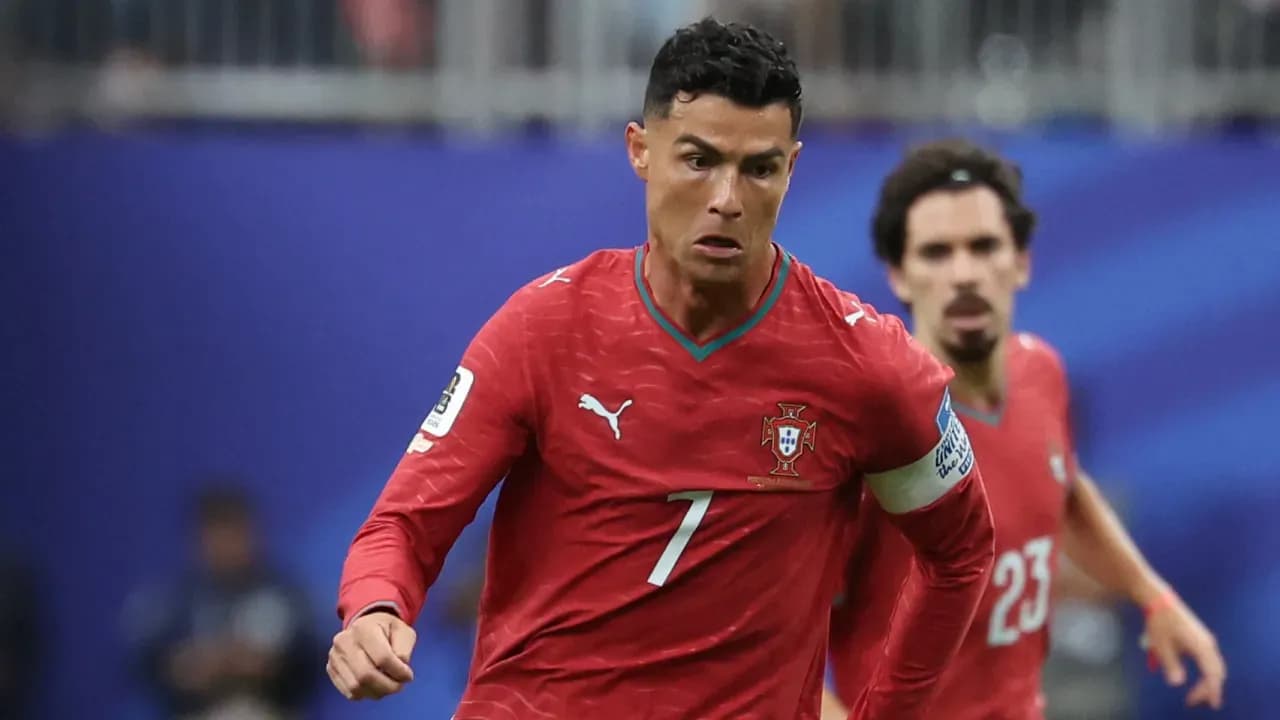
Portugal Announces Squad for 2026 UEFA Nations League; Cristiano Ronaldo Expected to Play

Raphinha Channels Ronaldo Nazario as Barcelona's Leading Striker After Position Change