
Guglielmo Vicario's Journey: From Struggles to Survival at Tottenham
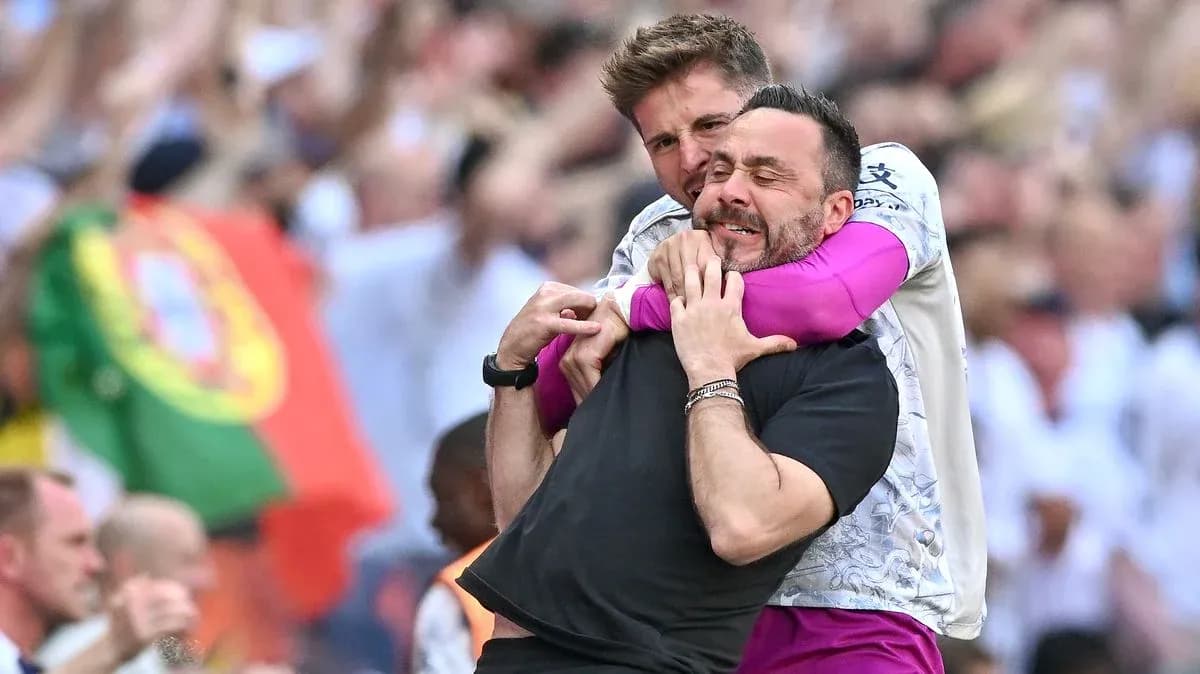
Guglielmo Vicario did not celebrate like a man who had merely watched his team stay up. He bolted across the pitch, grabbed Roberto De Zerbi by the head and almost wrestled his manager to the turf when Joao Palhinha’s goal against Everton sealed Tottenham’s Premier League safety.
For the Italian goalkeeper, fresh from hernia surgery and still short of full fitness, survival felt personal. So did the credit.
“He changed everything,” Vicario said. And he meant it.
From freefall to belief
A month ago, Tottenham looked broken. Confidence drained, hope flickering, the club had lost its grip on games and on itself. Vicario, 29, admits he endured his own battle.
“It has been a very long season. We suffered a lot as a team. Also individually I suffered a lot for many reasons, different reasons,” he reflected. “Sometimes there are situations that happen that are not in your control. You lose the focus, you lose hope, you lose a lot of stuff.”
Then De Zerbi walked through the door.
The Italian coach inherited a side staring over the edge. He left it with 11 points from the final six matches and a place secured in next season’s Premier League. The football improved, but that was not what struck Vicario first.
“He gave us a lot of confidence, good vibes, good feelings and we got the result,” he said. “This club deserves at least to stay in the Premier League. This is the minimum you can get at this football club.”
The tactical work mattered. The emotional reset mattered more.
Inside De Zerbi’s rescue job
Vicario has spent the run-in as an onlooker, unable to help on the pitch but determined to contribute in the dressing room and training ground. He saw up close how De Zerbi went about lifting a club off its knees.
“He had a lot of talks with the players. I spoke a lot with him,” Vicario explained. “I was not able to help him on the pitch but I tried to do it behind the scenes. It was important for everyone to get everyone around the environment very focused and to play for this badge.”
That was De Zerbi’s first command: reconnect the team with the shirt and the stands. Get everyone pulling in the same direction. Against Everton on the final day, the response from the crowd hit the players hard.
“The response from the crowd was unbelievable. We felt it,” Vicario said. “We went through this tough period and we got the result, that is the most important thing. From next season there will be a different Tottenham Hotspur for sure.”
The numbers backed up the mood. Across 95 tense minutes against Everton, Spurs allowed just one shot on target – a late effort that Antonin Kinsky clawed away in dramatic fashion. For a coach famed for his attacking patterns, De Zerbi’s defensive structure has been just as striking.
“He is probably known very well for the football he wants to play but also the defensive phase since he came in has been unbelievably good,” Vicario said. “Both on the ball and off the ball I think he did an unbelievable job.”
Kinsky’s redemption arc
No player embodied Tottenham’s turnaround under De Zerbi more than Vicario’s understudy.
Antonin Kinsky’s season looked shattered in Madrid. Hauled off after just 17 minutes in a nightmare Champions League outing against Atletico under interim boss Igor Tudor, the 23-year-old Czech goalkeeper carried the scars of that night into the spring.
Then Vicario went under the knife. Tottenham needed a keeper. Kinsky delivered.
He produced a string of outstanding performances against Wolves, Leeds and Everton, keeping Spurs alive with big saves and bigger personality. The transformation did not surprise Vicario.
“He has been incredible, impressive, he did unbelievably well. In every game it was not easy,” he said. “Now it’s easy to say but I was sure of his mental strength and ability.”
De Zerbi wanted to know too. On his first day, he went straight to the senior goalkeeper for an honest assessment of the younger man.
“When I spoke to Roberto the first day he signed he asked me how Toni was and I said, ‘I think he is fully recovered from what happened because in football it can happen,’ and he showed it,” Vicario revealed.
“That’s the biggest strength he can put on the pitch. I’m very proud of him, he made some really important saves to keep us in the league and he deserved his moment. Sometimes football is downs, I think he had the brilliance to show his ups. Especially in the last two, three games. He did unbelievably for us.”
From a Champions League humiliation to the save that effectively sealed survival, Kinsky’s season turned on resilience. De Zerbi gave him the platform. The Czech did the rest.
A manager who changed the mood
Vicario’s own future has been the subject of speculation, with links to a summer move back to Italy and Inter Milan. For now, his focus is on recovery and what comes next at Tottenham.
He describes himself as “not 100 per cent fit but in a better place” and “confident” that a break will leave him ready for the new campaign. What excites him most is the sense that De Zerbi’s work has only just begun.
“Yeah of course we are [excited],” he said of the dressing room. “Roberto has been massively important for us. He changed everything. He changed all the mood, all the vibes, all the football as well, because we needed also the football on the pitch because we were struggling to play good football.”
The change ran through the entire squad. Starters and substitutes, regulars and fringe players, all bought into the new demands.
“Also the boys, everyone who was playing or not playing followed him in a great way,” Vicario said. “That is of course the credit he deserves, and I can say without him this result would not have been possible. I want to thank him from the bottom of my heart because we were suffering a lot and he gave us a lot of joy in every aspect.”
Tottenham ended the season with relief, not celebration. Yet within that relief sits something more dangerous for their rivals: a club that has stared at the drop, felt the fear, and found a manager capable of dragging it back.
Survival was the minimum. De Zerbi’s next task is to prove that this great escape was not the peak, but the starting point.
Related News

Raphinha’s Hat-Trick Powers Barcelona to 7-2 Victory Over Racing Santander
Carabao Cup Fourth Round Draw: Liverpool Set to Clash with Chelsea, Arsenal to Face Fleetwood Town
Key Football Matches to Watch in Azerbaijan This Autumn
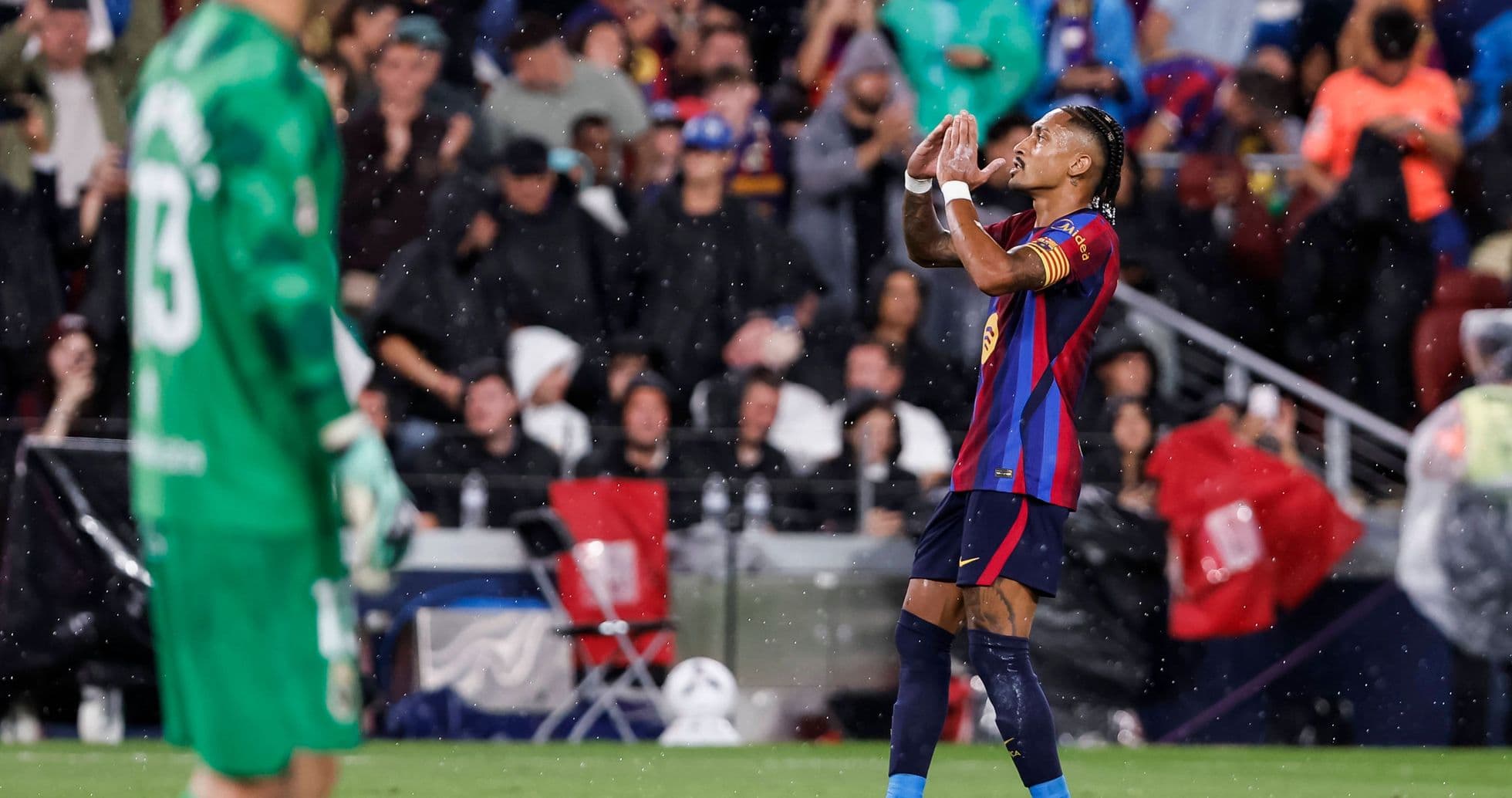
Raphinha's Hat-Trick Drives Barcelona to 7-2 Triumph Over Racing Santander
Hansi Flick Leads Barcelona to Record-Breaking Seven Wins in a Row

Gavi Reflects on Injury Return as Barcelona Dominate Racing Santander 7-2