
Group J: Messi’s Last March and Algeria’s Return
Anyone pencilling in Argentina as Group J winners without a second thought would do well to rewind to 2022. Saudi Arabia. Lusail. A first-half lead, a second-half collapse and one of the World Cup’s great shocks. That same Argentina side then laboured until after the break to score in both wins over Mexico and Poland. Processions can turn chaotic very quickly at this level.
This time, the champions walk into a group that feels straightforward on paper but awkward in reality. Algeria are back after a long absence, Austria arrive as one of Europe’s most organised risers, and Jordan are here for the first time, carrying the energy of a nation tasting the World Cup at last.
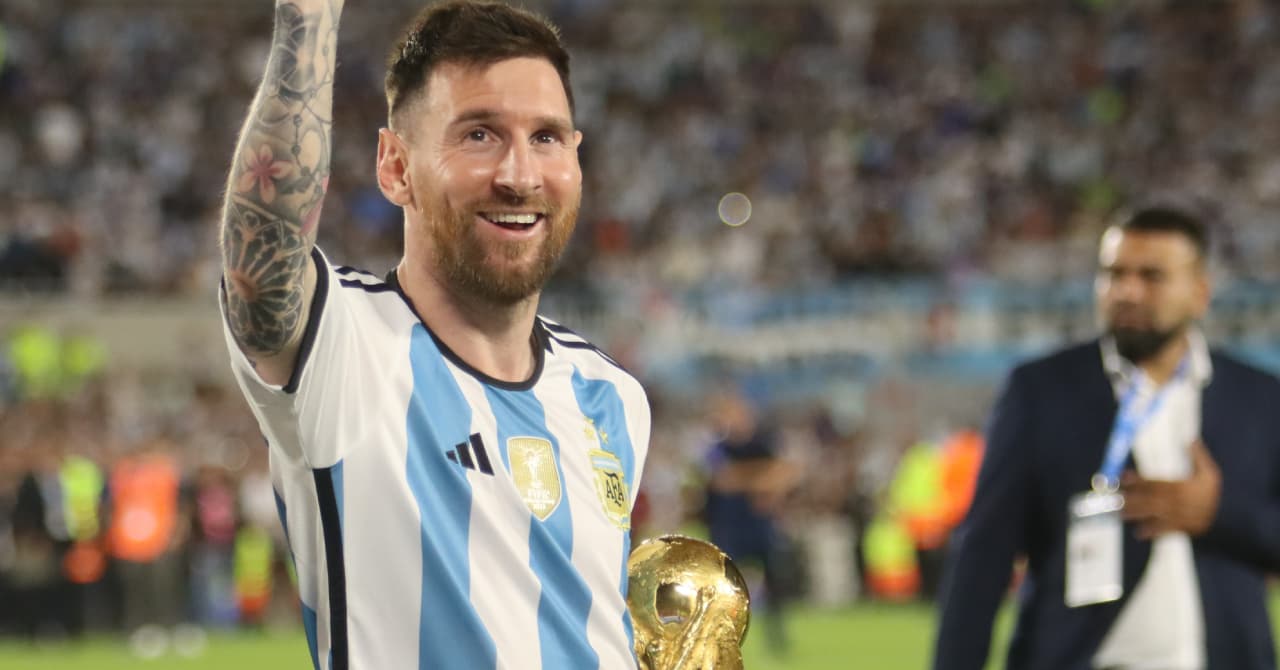
At the centre of it all, inevitably, stands Lionel Messi. Eight Ballons d’Or, the Argentina armband, and the sense that this is the last dance on the biggest stage as he turns 39 during the tournament. Group J might be billed as a formality. It rarely works out that neatly.
Algeria: Petkovic’s Pragmatists Return
Twelve years after taking Germany to extra time in a breathless last‑16 tie in 2014, Algeria are back, aiming to match – or better – that run. They have been away for two editions, but there is nothing tentative about their return.
Vladimir Petkovic, the man who steered Switzerland to the 2018/19 Nations League finals and the Euro 2020 quarter-finals, brings a clear identity. His Swiss side beat Turkiye and, memorably, France before bowing out on penalties to eventual winners Spain. Algeria hired a tournament specialist.
Qualification from CAF Group G was handled with authority. Mohamed Amoura led the way, scoring 10 times – seven more than anyone else in their section – including a hat-trick against Mozambique. The Wolfsburg forward opened the Bundesliga season with eight goals in 19 league matches before his form cooled with an 11-game drought. Even so, his movement and directness give Algeria a sharp edge in transition.
This is a squad with a noticeable Bundesliga flavour. Amoura is one of four players based in Germany, while the creative burden is shared by experienced European campaigners. Houssem Aouar, once capped by France and schooled at Lyon and Roma, offers guile between the lines. Amine Gouiri returns from injury with a timely reminder of his quality: two goals in a 7-0 friendly demolition of Guatemala in Genoa in March. Nabil Bentaleb, now at Lille after his Tottenham days, adds bite and control in midfield.
At the back, there is a familiar surname with a different story. Goalkeeper Luca Zidane, son of Zinedine, comes into his first World Cup having recovered from a broken jaw and chin suffered with Granada in April. Out wide, Anis Hadj Moussa arrives off a superb season for Feyenoord, where he contributed 14 goals and seven assists, an attacking return that demands attention.
Rayan Ait-Nouri’s club year was more complicated. The Manchester City wideman started the first three games of the campaign, then drifted to the fringes between an ankle injury and AFCON duty. Pep Guardiola did hand him a run of seven consecutive starts in February and March, a timely reminder of his quality on the ball and versatility down the flank.
Mahrez, Still the Beacon
At the heart of it all remains Riyad Mahrez. Now at Al-Ahli in the Saudi Pro League, the captain is chasing history: he needs eight more goals to become Algeria’s all-time leading scorer. The numbers already speak loudly – 38 goals, 43 assists, 113 caps – but the honours list is louder still.
AFCON champion in 2019, African Footballer of the Year in 2016, the improbable architect of Leicester City’s Premier League miracle and part of Manchester City’s treble-winning machine in 2023. He scored three times in two games as Algeria sailed through the 2025 AFCON group stage. Even at 35, he remains the reference point, the player opponents scheme for and teammates look to in tense moments.
Algeria’s Path
The group-stage finale against Austria looms large. With both sides strong favourites to beat Jordan, that game is likely to decide who joins – or perhaps even challenges – Argentina at the top. With eight third-placed teams also advancing, Algeria have a clear route. This is their fifth World Cup. They have only reached the knockouts once. The expectation is that they do it again.
Argentina: Champions with a Target on Their Backs
No one has retained the World Cup since Brazil in 1958 and 1962. Argentina arrive in North America intent on changing that, carrying the weight of history and the calm of a group that has already climbed the mountain together.
Lionel Scaloni has rewritten Argentina’s modern story. The Copa America in 2021. The World Cup in 2022. Another Copa America in 2024. He is the only coach in the country’s history to lift both trophies, and the man who ended a 36-year wait for that third star.
The spine from Qatar remains. Emiliano Martinez, the penalty-box showman and shootout specialist, keeps the gloves. Cristian Romero and Lisandro Martinez form a rugged, aggressive defensive pairing. In front of them, Rodrigo De Paul, Alexis Mac Allister and Enzo Fernandez shape one of the most balanced midfields in the tournament: industry, invention and tempo in equal measure.
Up front, the options are enviable. Julian Alvarez, capable of playing wide, centrally or as a second striker, gives Scaloni the tactical flexibility to tweak shapes without sacrificing quality. Lautaro Martinez leads the line, a relentless presence who can bully centre-backs or play off their shoulders.
There are changes too. Angel Di Maria, one of the defining figures of the 2022 triumph, has retired from international football, taking with him a decade of big-game interventions. Franco Mastantuono, the teenage Real Madrid midfielder who drew so much attention during qualification, did not make the final squad, a surprise omission that underlines the depth at Scaloni’s disposal.
The only genuine concern has hovered over Messi himself. A hamstring issue with Inter Miami in May prompted anxiety across Argentina. Scaloni’s public tone remained measured, describing the initial reports as “not that bad”, and the expectation is that Messi will be fit for the opener against Algeria in Kansas City.
Messi: One Last World Cup
Messi’s presence in North America is more than a footballing event; it is a cultural moment. At 38, he steps into a record sixth World Cup, with the understanding that there will not be a seventh. He topped CONMEBOL qualifying with eight goals and still, even now, stands as the single most important player in this squad.
This is not the electric teenager of 2006 or the tortured talisman of 2014. It is a veteran who has finally made peace with the shirt, surrounded by a team built to amplify his genius rather than lean on it desperately. Group J should be within Argentina’s control. The real scrutiny starts once the knockout bracket appears.
Austria: Rangnick’s Relentless Press
Austria’s 28-year wait for a World Cup ends with a squad that arrives not as tourists, but as a genuine threat. They are one of the dark horses of the tournament, and the reason has a name: Ralf Rangnick.
Since taking charge, Rangnick has dragged Austrian football into a new era. He has imposed an aggressive, front-foot pressing game that mirrors the philosophy he helped to embed across the Red Bull network. The results have followed.
At Euro 2024, Austria reached the last 16 and, more strikingly, finished ahead of France and the Netherlands in their group. World Cup qualification then arrived with a sense of momentum, and this squad may be the strongest they have assembled since that third-place finish in 1954.
The core is steeped in Bundesliga intensity. Fourteen of the 26 players ply their trade in Germany. RB Leipzig’s midfield trio – Christoph Baumgartner, Xaver Schlager and Nicolas Seiwald – are all products, in one way or another, of the Red Bull system Rangnick helped shape. They understand his demands instinctively.
Marcel Sabitzer brings 95 caps and the composure of a player hardened at the highest level with Borussia Dortmund. Konrad Laimer, starting regularly at Bayern Munich, drives the wide midfield zones with tireless running and sharp pressing triggers.
David Alaba, at 33, wears the armband, the leader who has seen almost everything at club level. At the other end of the age spectrum, Carney Chukwuemeka has chosen Austria over England, while Paul Wanner of PSV Eindhoven, also 20, travels as another potential breakout name.
Marko Arnautovic, 36, returns as vice-captain and Austria’s all-time leading scorer with 47 goals in 132 caps. This could be his last major tournament, and he knows it. The blend of youth and experience suits Rangnick’s approach: fearless, organised, relentless.
Baumgartner: Goals from Deep
If there is one player in this Austrian side that Group J opponents will circle in red, it is Christoph Baumgartner. The RB Leipzig midfielder arrives in the form of his life, with 13 goals and 10 assists in the Bundesliga this season. Those numbers place him among the most productive central midfielders in Germany.
He ghosts between the lines, times his runs perfectly and finishes with composure in crowded penalty areas. For a team built on pressing and quick transitions, his ability to arrive late and unmarked is a constant danger.
Austria’s Ambition
Austria will expect to beat Jordan in their opener. That match in Santa Clara gives them a platform. From there, they will look to harass Argentina and go toe-to-toe with Algeria. On paper, they are the most likely side to join the champions in the top two. On the pitch, they have the structure and belief to prove it.
Jordan: A First Step into the Light
For Jordan, every moment in Group J is historic. This is their first World Cup, the culmination of a long climb that has captured the imagination back home.
They earned it the hard way. In the AFC third round, Jordan finished second behind South Korea and ahead of Iraq, Oman, Palestine and Kuwait. No one handed them a ticket; they fought for it.
Coach Jamal Sellami, Moroccan by birth and background, brings tournament nous from his success in his domestic league and his work with Morocco’s local-national team, which he led to the 2018 African Nations Championship title. He has spoken openly about wanting to mirror Morocco’s extraordinary run in Qatar, when they reached the semi-finals as the first African and Arab nation to do so.
Thirteen of the 26-man squad play their club football in Jordan. That domestic core gives the team cohesion and familiarity, an advantage at a tournament where many sides need time to gel. The major setback is the absence of striker Yazan Al-Naimat, ruled out by an ACL injury suffered in December. His loss strips Jordan of a key attacking outlet.
Captain Ehsan Haddad anchors the defence from Al-Hussein, while Yazan Al-Arab, one of the few based outside the Middle East, brings experience from FC Seoul in South Korea. They will spend long stretches without the ball in this group, but organisation and resilience are non-negotiable.
Al-Tamari: The Game-Changer
All roads to a Jordanian upset run through Mousa Al-Tamari. The Rennes forward is widely regarded as the finest player Jordan has produced and became the first from his country to play in Ligue 1. At home, they call him the “Jordanian Messi”, a nickname that hints at the expectations resting on his shoulders.
He is quick, inventive and brave in one-on-one situations. If Jordan are to bloody a nose in Group J, it will almost certainly be through his moments of inspiration – a dribble, a strike from distance, a perfectly weighted pass on the break.
Jordan’s Shot
The schedule gives Jordan a sliver of opportunity. Austria in Santa Clara is their most realistic chance of taking something. A point there would be a statement. Anything from Algeria would be a landmark result.
And then comes Argentina at AT&T Stadium in Dallas, the final group game and the biggest night Jordanian football has ever known, regardless of what the table says by then. On one side, Messi chasing a farewell defence of the crown. On the other, a debutant nation daring to believe in a shock that would echo all the way back to Lusail.
Group J belongs to Argentina on reputation. The World Cup has a habit of ignoring reputation.
Related News
Raphinha’s Hat-Trick Powers Barcelona to 7-2 Victory Over Racing Santander
Carabao Cup Fourth Round Draw: Liverpool Set to Clash with Chelsea, Arsenal to Face Fleetwood Town
Key Football Matches to Watch in Azerbaijan This Autumn
Raphinha's Hat-Trick Drives Barcelona to 7-2 Triumph Over Racing Santander
Hansi Flick Leads Barcelona to Record-Breaking Seven Wins in a Row
Gavi Reflects on Injury Return as Barcelona Dominate Racing Santander 7-2