
Graham Potter's Resurgence with Sweden After World Cup Victory
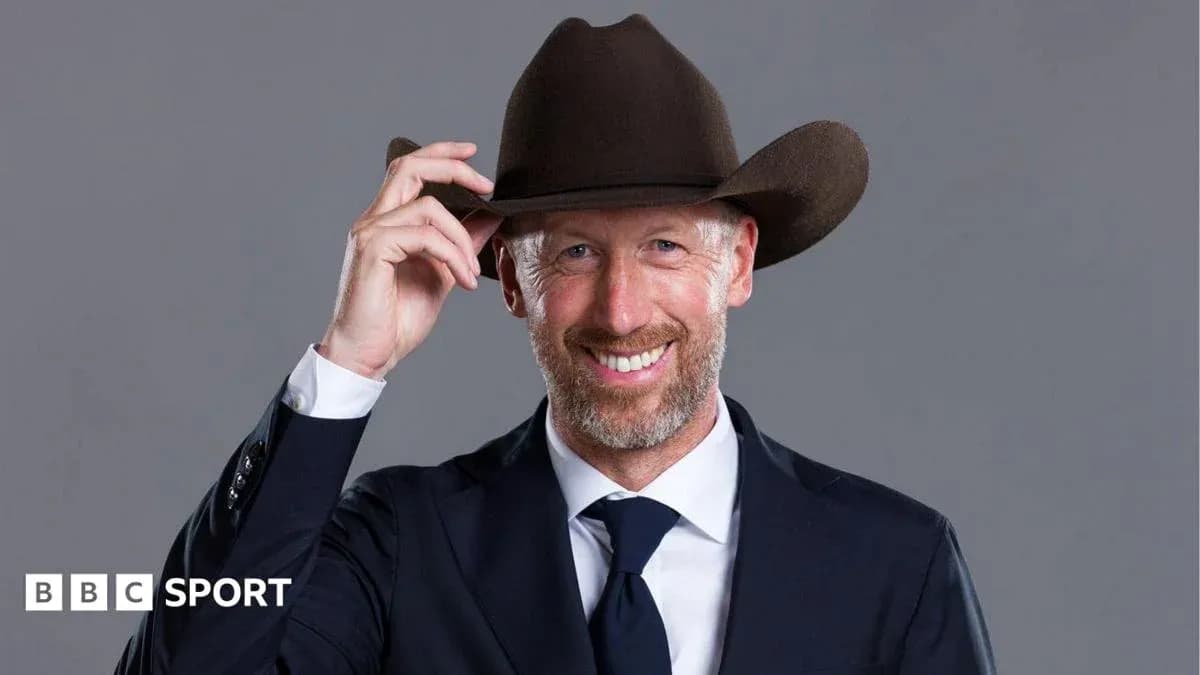
Graham Potter walked onto the Sweden training pitch in Texas last week wearing a Stetson. It started as a joke. A bit of World Cup dress-up. But for a coach many had already filed under “yesterday’s man”, it also felt like a challenge.
Cowboy hat, last-chance saloon. Easy punchline.
Then came Monterrey.
At Estadio Monterrey in Mexico, Sweden did not look like a side happy just to be back on the big stage. They looked like a team with a point to prove, and a coach intent on proving it. Tunisia were torn apart, 5-1, as Potter’s new project roared into life in Group F.
Final Score: Sweden 5 - 1 Tunisia
For a man sacked by Chelsea and then dismissed by West Ham within a combined 15 months, this was not the script many expected to read this summer.
“You never know, that's the truth,” Potter said afterwards. “You never know how things are going to go. We were optimistic because we felt confident in the work.
“But until the game is played you don't know for sure. That's the beauty of sport. We are delighted with how we performed tonight and it's a great start for us.”
A great start – and a sharp contrast. Sweden scored more goals in 90 minutes against Tunisia than they managed in their entire qualifying group. Five now, four then. That laborious campaign, largely under Jon Dahl Tomasson, had left their World Cup hopes in ruins.
Automatic qualification slipped away under the Dane. By the time Potter arrived in October, the damage was done. Sweden stumbled to the bottom of their group behind Switzerland, Kosovo and Slovenia, without a single win in six games. For a football nation used to punching above its weight, it felt like a collapse of identity.
The Nations League rankings threw them a lifeline. Ranked 34th, Sweden squeezed into the play-off path. That gave Potter a door back into the elite, and a chance to remind English football that the man who dazzled at Brighton had not simply evaporated under the glare at Stamford Bridge and the strain at West Ham.
He took it. Sweden beat Ukraine. Then Poland. A side that had forgotten how to win suddenly remembered. And now, after dismantling Tunisia, they stand with one foot edging towards the knockout rounds.
This was never meant to be Potter’s summer. He began the season at West Ham, tasked with dragging the club forward in the Premier League. He left in late September with six wins from 23 league games and the familiar accusation that the job was too big, the results too thin.
At Chelsea before that, the pressure warped him. The Solihull-born coach, once the thoughtful outsider, became prickly with the media. The charm of the Brighton years faded under the noise of expectation.
Sweden has given him something else. A reset. A return to where his managerial identity was forged.
In Ostersund, he built Ostersunds FK from the fourth tier to the Allsvenskan, won the domestic cup and led a tiny club into Europe. Those seven years embedded him in the country’s football culture in a way few foreign coaches ever experience.
“I feel very Swedish when I'm working,” he told BBC Sport before the tournament. “I even look a bit Swedish. Two of my children were born in Sweden. I had seven unforgettable years at Ostersunds, with memories that will stay with me for life.
“I came from the fourth tier of Swedish football, which is quite low, and worked my way up through the system to the Allsvenskan.
“You almost become Swedish in a coaching sense because of the experiences you have. I think it has definitely helped.
“Now I'm working for the Swedish FA as head coach of the national team, so I feel very Swedish.”
His Instagram feed backs that up: family trips into the forests and lakes, Nordic literature on the table, cultural events, the life of a man who has not just passed through a country but absorbed it. Yet the work behind the scenes has been anything but leisurely.
This team looks prepared. Organised. Sharp.
The return to full fitness of Alexander Isak has transformed Sweden’s attacking threat. The £125m Liverpool striker linked up superbly with Arsenal’s Viktor Gyokeres, and Tunisia simply could not cope. Both scored, both assisted the other. It looked expensive and it looked ruthless.
For a nation that missed the 2022 World Cup in Qatar, this is a front line built for a comeback. If Isak and Gyokeres stay fit and in sync, they can trouble any defence in this tournament.
The challenge for Potter now is to knit the rest of the squad together around that cutting edge. Experience is thin at this level. Only Victor Lindelof has previously played in a World Cup, with goalkeeper Kristoffer Nordfelt an unused substitute in 2018. The rest are newcomers to this particular stage.
They will need guidance, and they will get it. Potter has already shown he can build belief in unlikely places. The format of this World Cup helps too; after a 5-1 win, Sweden are already in a strong position to reach the last 32.
Nobody inside the camp will get carried away. Tunisia, ranked 56th in the world, are not the benchmark by which Sweden’s ceiling will be measured. That examination comes next.
On Saturday, they face Netherlands, one of the tournament favourites.
“We just focus on what we can do, we focus on our performances,” Potter said. “It doesn't matter what people think from the outside or opinions.
“That's the beauty of the World Cup everyone has predictions and forecasts but we have to focus on our job and how we play as a team.
“We will meet another top team at the weekend who are one of the favourites for the competition.”
History offers its own tease. Sweden’s two best World Cup campaigns ended with third-place finishes. In 1958, with another Englishman, George Raynor, in charge. In 1994, when the tournament was also staged in the USA.
Now comes another English coach, steeped in Swedish football, guiding a new generation with a cowboy hat tucked somewhere in his luggage.
Good omens? Results will decide that. But in Monterrey, Graham Potter stopped looking like a man at the last-chance saloon and started to look, once again, like a manager built for this stage.
Related News

Raphinha’s Hat-Trick Powers Barcelona to 7-2 Victory Over Racing Santander
Carabao Cup Fourth Round Draw: Liverpool Set to Clash with Chelsea, Arsenal to Face Fleetwood Town
Key Football Matches to Watch in Azerbaijan This Autumn
Raphinha's Hat-Trick Drives Barcelona to 7-2 Triumph Over Racing Santander
Hansi Flick Leads Barcelona to Record-Breaking Seven Wins in a Row
Gavi Reflects on Injury Return as Barcelona Dominate Racing Santander 7-2