
Gotham FC's Historic Night at Citi Field – A New Era for NWSL
Ten years ago, a women’s professional match at a baseball stadium was a punchline. A symbol of how small the National Women’s Soccer League still was. In 2016, players stepped onto a shrunken pitch carved into a minor-league ballpark and called it what it was: “shocking and embarrassing.”
On Wednesday night in Queens, the same concept felt like something else entirely. It felt like arrival.
A night that belonged to Gotham – and to the league
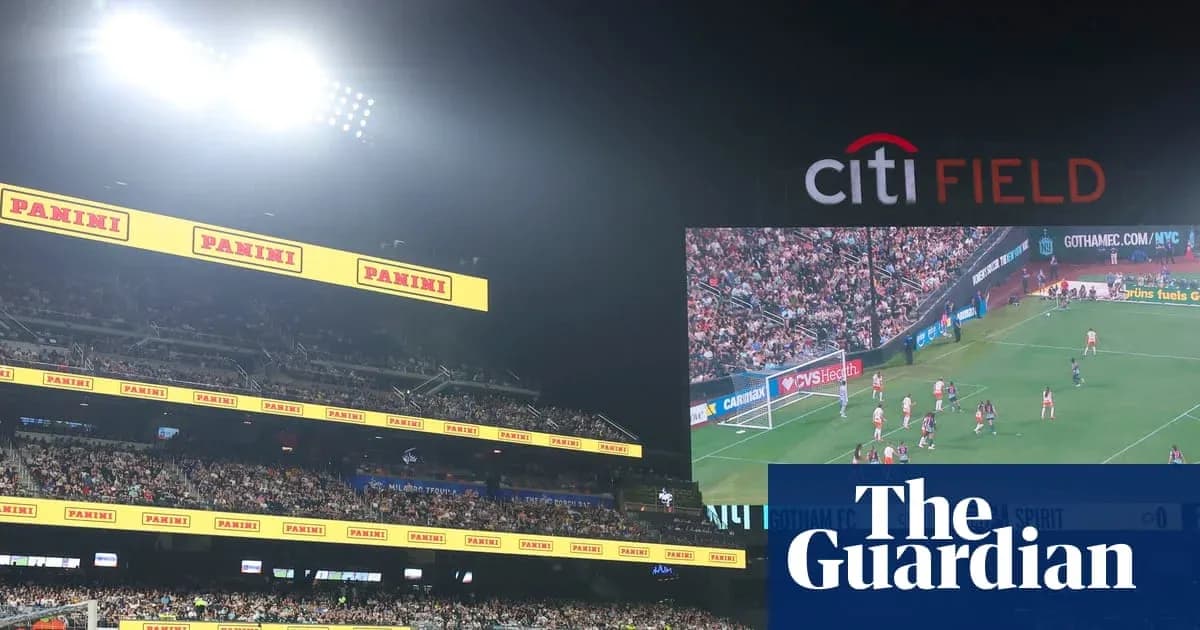
Gotham FC’s 1-0 win over the Washington Spirit at Citi Field was, on paper, a midseason fixture after a World Cup pause. In reality, it was a statement. The announced crowd of 42,175 was the second-largest in NWSL history and the biggest ever for a women’s sporting event in New York City.
This wasn’t a one-off stunt. Wrigley Field in Chicago and Oracle Park in San Francisco had already smashed attendance records in the past two seasons. Baseball cathedrals have become NWSL showrooms. The league that once squeezed itself into whatever space it could find now books iconic venues and fills them.
After a month-long break for the men’s World Cup, the NWSL came back on 3 July. If there was a single match to set the tone for the run-in, this was it. San Diego still sit top of the table, but Gotham’s victory pulled them level on points with both the Spirit and the Portland Thorns. Washington hold second on goal difference. These are not just rivals; they are the standard-bearers. Over the past three seasons, Gotham and the Spirit have shared two league titles (both Gotham), two runners-up finishes (both Spirit) and three more trophies in other competitions. Last year, they met in the final. Now they’re jostling again.
The stakes fit the setting.
Lavelle’s touch of class
On a hot, hazy night, one flash of quality decided it.
In the 37th minute, Rose Lavelle did what Rose Lavelle does. The Gotham playmaker, who scored the winner in last year’s championship game, bent a brilliant curler beyond the Spirit defense and into the net for the only goal. A tight match, tense and bitty at times, suddenly had its defining moment.
The noise told you whose house this was. Gotham colors dominated the stands, but Trinity Rodman’s No 2 shirt was everywhere too. The Spirit forward remains one of the league’s biggest draws, and she played like it—lively, relentless, always asking questions. She finished with five shots, none of them converted. On another night, she might have stolen the show. This time, the finishing touch deserted her.
The loudest roar, though, wasn’t for the goal.
It came in the 63rd minute, when Sam Kerr stepped onto an NWSL field again.
Kerr’s homecoming and Gotham’s new identity
Kerr’s entrance was a moment years in the making. The Australian striker, back in the league after six-and-a-half years at Chelsea, made her first appearance for Gotham and walked straight into a kind of homecoming. She once terrorized defenses for this club when it was still called Sky Blue, piling up goals in front of a few thousand hardy regulars while the organization battled off-field turmoil and bare-bones resources. She left as the NWSL’s all-time leading scorer, but the story then was about survival, not spectacle.
Now she returns to something unrecognizable.
Gotham are no longer the cautionary tale of 2018, when headlines focused on poor facilities, training grounds without running water and a club scraping by. They are a destination. In the past month alone they have added Kerr, Ireland captain Denise O’Sullivan and Norwegian midfielder Guro Reiten to an already loaded squad. Lavelle admitted she feels “spoiled” by the talent arriving around her.
The transformation stretches well beyond the pitch. Gotham will move into New York proper in 2028, relocating to the planned Etihad Park just down the road. The buildup to the Citi Field match felt like a major event, not a niche curiosity: subway ads, citywide promotions, and a $15 ticket initiative pushed by Mayor Zohran Mamdani. The club says 70% of ticket buyers were new fans.
“It was really special just to see how many people were there that that was their first Gotham game,” midfielder Jaedyn Shaw said. For a franchise that once struggled to draw 3,000, that’s not a data point. It’s a turning point.
Two clubs, one shared climb
Fitting, then, that Washington were the visitors.
The Spirit have taken their own hard road, rebuilding from the bottom and choosing ambition in a league structure that doesn’t always reward it. They, too, have invested heavily, chasing bigger crowds, better facilities, higher standards. On Wednesday, they walked into a night that felt like a showcase for what that mindset can produce.
“In many ways, this is like a full-circle moment,” NWSL commissioner Jessica Berman said at half-time. Her message was blunt: spend, and people will show up. Citi Field was her proof.
The past 12 months have backed her up. New attendance records, new TV viewership highs, expansion fees climbing into territory once reserved for men’s leagues. The NWSL is growing fast. It is also discovering that growth brings its own complications.
Heat, haze and hard questions
Citi Field looked cinematic at sunset, bathed in an orange-brown haze as the sun dropped behind the stands. It also smelled like smoke.
New York spent much of the day under an air quality alert as smoke from Canadian wildfires drifted south. Temperatures sat in the high 80s and 90s Fahrenheit, with the heat index pushing beyond 100. The league has postponed games for air quality in the past, but it has also taken heat—literally and figuratively—for pressing on with marquee fixtures in dangerous conditions.
The most serious flashpoint came last year, when Orlando Pride hosted Kansas City Current in extreme heat on national TV and more than a dozen fans ended up in hospital. That night still hangs over decisions like this one.
On Wednesday, the numbers fell just short of the league’s thresholds. The air quality index hovered above 150, a level the Environmental Protection Agency calls “unhealthy,” but below the 180–200 range that can trigger a delay and the 200+ mark that forces postponement. The NWSL chose to play, with two hydration breaks per half written into the plan.
Spirit coach Adrián González made no secret of his frustration with the constant pauses, saying the game’s rhythm evaporated, even as he accepted the need for them. Rodman echoed that tension.
“I think on both sides, we were just like, ‘Damn, another break, another break, another break,’” she said. “If we have to have a hydration break every 15 minutes, then we shouldn’t be playing the game, and that’s my opinion. … But at the end of the day, there’s 40,000 people, it’s a whole event. So it is really tough. I think it was a really hard situation for everybody to work around.”
That’s the edge the league now walks: the pull of big crowds and primetime TV against the duty to protect players and fans in a changing climate.
Even the broadcast had its own awkward moment. The only goal of the night landed while ESPN had the screen split for an interview, with the play-by-play voice and sideline reporter tripping over each other as they tried to call Lavelle’s strike. On a night meant to showcase the league’s polish, the timing undercut the spectacle.
And the field? Nobody was calling it a disgrace, but nobody was pretending it was perfect either. The surface at Citi Field drew shrugs and wry smiles. “That’s showbiz, baby,” Lavelle quipped. Ten years on from the tiny-field fiasco, the league has clearly moved on—but the compromises of playing in baseball parks haven’t vanished entirely.
From punchline to proof of concept
By any reasonable measure, Wednesday will be remembered as a triumph. The crowd at Citi Field more than doubled the total attendance across Gotham’s entire 2013 debut season—12 home matches rolled into one night. The players walked into a major-league stadium, looked up at the upper deck and saw their sport reflected back at them at scale.
“It’s pretty cool when you’re out there and you realize that this is your job,” veteran Spirit midfielder Andi Sullivan said, “and that this is what your dreams looked like, or maybe what they haven’t looked like along the way.”
That line cuts to the heart of where the NWSL stands. The league has traveled an astonishing distance in a decade, from makeshift fields and sparse crowds to record gates and transfer coups. It has also stepped into a world where every decision—about venues, conditions, broadcasts—carries bigger consequences and louder scrutiny.
Gotham and Washington will keep chasing trophies over the next few months. The league will keep chasing the next full house, the next TV deal, the next expansion fee. Nights like this show what’s possible.
The question now is how high the NWSL can climb without losing sight of the players and fans who dragged it out of those half-lined baseball outfields in the first place.
Related News
Ilia Topuria Accuses Justin Gaethje After UFC Defeat

Tyson Fury vs Anthony Joshua Fight Date and Venue Confirmed
Switzerland Calls Up In-Form Sion Striker Winsley Boteli for Nations League
Bournemouth Secures Historic 2-1 Win Over Real Sociedad in Spain

Portugal Announces Squad for 2026 UEFA Nations League; Cristiano Ronaldo Expected to Play

Raphinha Channels Ronaldo Nazario as Barcelona's Leading Striker After Position Change