
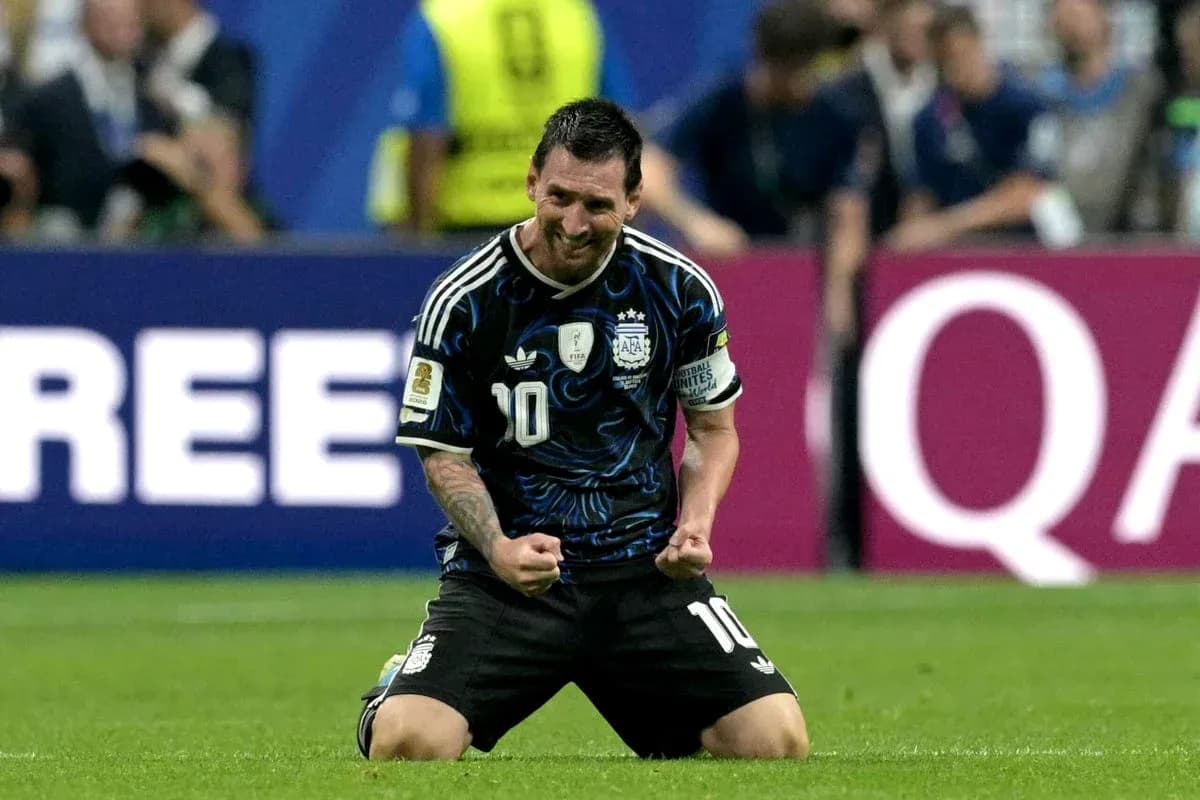
Golden Boot Race: Messi, Mbappe, and the Pursuit of Goals
“Sometimes in football, you have to score goals.”
Thierry Henry tossed that line out in 2008, half a shrug, half a sermon. Eighteen years on, with only four games left at the 2026 World Cup, it reads like the only law that really matters.
The trophy is the obsession. Always. But inside that chase runs another race, sharper, more ruthless: the sprint for the Golden Boot. And once again, it has turned into a duel between the sport’s biggest finishers and its hungriest climbers.
How the Golden Boot is decided
Since 1992, the rules have been simple enough. Goals first. If players finish level, the one with the most assists takes it. That was Thomas Muller’s route to the award in 2010, when he edged David Villa, Diego Forlan and Wesley Sneijder. All scored five. Only Muller set up three.
If goals and assists can’t separate them, the tiebreaker drops to efficiency: fewest minutes played. Every touch counts. Every wasted chance lingers.
No one has caught Just Fontaine’s absurd 13-goal haul from 1958, a record that has survived eras, systems and generations. But this expanded World Cup — 16 more teams, 40 extra matches compared with Qatar 2022 — has created a landscape where numbers can swell quickly and leads can vanish in a night.
Messi vs Mbappe: giants on eight
At the top, the story writes itself.
- Lionel Messi (Argentina) – 8 goals
(4 assists – 712 minutes) - Kylian Mbappe (France) – 8 goals
(3 assists – 666 minutes)
Messi’s tournament began with a false start. He thought he had opened Argentina’s World Cup account against Algeria, only for VAR to rule him offside. It felt like a warning. It turned into a warm-up.
Later in that first half, he stepped inside and whipped a 20-yard strike beyond Luca Zidane. No debate that time. No hesitation either when Zidane spilled Alexis Mac Allister’s low effort in the second half, gifting Messi a tap-in. Two goals on the board, the familiar silhouette wheeling away in celebration.
The hat-trick goal was pure Messi theatre: a curling shot from the edge of the box, shaped as if he were slipping a pass around the corner to a teammate behind the goal. Zidane never got near it.
He missed a penalty against Austria in game two, but his response was ruthless. A first-time finish from a Facundo Medina ball restored his rhythm and pushed him clear as the men’s World Cup all-time top scorer. He then added a fifth against the same opponents, reacting quickest after his initial effort had been blocked.
Rested from the start against Jordan, he still came on to bend in an 80th-minute free kick, another addition to a catalogue that barely needs more. Goal seven arrived in the round-of-32 win over Cape Verde. Goal eight came with maximum drama: a late equaliser against Egypt in the next round, the kind of intervention that has defined his international twilight.
Mbappe has matched him stride for stride.
France’s campaign opened with a 3-1 win over Senegal, Mbappe striking twice to set the tone. Against Iraq he again broke the deadlock, drilling in from distance, then reappeared after a long weather delay in Philadelphia to double the lead.
When the knockout rounds arrived, he didn’t blink. Two clinical finishes against Sweden in the round of 32, a penalty conversion against Paraguay, another strike against Morocco in the quarter-final. His movement stayed electric, his finishing cold.
Spain finally shut the door in the semi-final, a 2-0 defeat that ended France’s title hopes and confined Mbappe to Saturday’s third-place play-off. His Golden Boot chase lives on, but he no longer controls the stage on which it plays out.
On the current tiebreakers, Messi holds the edge: more assists, even if he has needed more minutes.
Haaland’s first World Cup, Bellingham’s surge
- Erling Haaland (Norway) – 7 goals*
(0 assists – 537 minutes)
The asterisk next to Haaland’s name tells its own story. Norway are out. His numbers are not moving.
For a debut World Cup, he left a mark. Two goals in his first match, a 4-1 win over Iraq: one classic Haaland finish from inside the six-yard box after sliding onto David Moller Wolfe’s low cross, the other born of sheer relentlessness as he charged down the goalkeeper and forced the ball over the line.
Against Senegal he swept in calmly for his third of the tournament, then volleyed in a second of the night to reach four. In the round of 32, he decided the tie against Ivory Coast with a late close-range winner in a 2-1 victory.
Norway’s shock win over Brazil in the last 16 carried his signature again. Two more goals, the second a surprise effort that stunned the favourites and briefly shifted the fault lines of the competition. Seven goals, no assists, 537 minutes. A Golden Boot bid frozen in place.
- Jude Bellingham (England) – 6 goals
(1 assist – 574 minutes)
If Haaland announced himself on the World Cup stage, Bellingham has roared through it.
From midfield, he scored in both of England’s opening group wins: a 4-2 victory over Croatia and a 2-0 win against Panama. His timing from deep, his composure in the box, turned him into England’s most dangerous runner.
The knockout rounds only amplified that. Two goals against Mexico in the last 32, two more against Norway in the quarter-final. Each finish carried a sense of inevitability, as if he had simply decided the game would bend his way.
He sits ahead of his captain Harry Kane by the slimmest of margins: fewer minutes played. In a race decided by fine print, every substitution matters.
- Harry Kane (England) – 6 goals
(1 assist – 627 minutes)
Kane’s World Cup began with familiar authority. Two goals in the 4-2 win over Croatia, then England’s second in the final group game against Panama after a flat 0-0 draw with Ghana.
He came alive again in the round of 32, scoring twice in the second half against DR Congo to drag England through. Another penalty against Mexico in the next round kept his tally ticking.
Six goals, one assist, 627 minutes. The numbers mirror Bellingham’s, but the clock works against him.
The chasing pack
- Ousmane Dembele (France) – 5 goals
(2 assists – 492 minutes)
Before France’s second game, Dembele had never scored in 19 major tournament appearances. Then something clicked.
He struck their third in a 3-0 win over Iraq, a release as much as a goal. Against Norway he exploded, hitting a first-half hat-trick that showcased the full range of his finishing: pace, precision, and a confidence that has so often flickered rather than burned on the biggest stages.
He added a fifth in the quarter-final against Morocco. For a player long defined by potential, this World Cup has felt like a statement.
- Mikel Oyarzabal (Spain) – 5 goals
(1 assist – 519 minutes*)
Spain’s sluggish opening draw with Cape Verde threatened to drag them into anxiety. Oyarzabal helped rip that away in the second match, scoring twice in a 4-0 win over Saudi Arabia.
He repeated the double act in the round-of-32 victory over Austria, a 3-0 win that carried Spain into the deeper waters of the tournament. His fifth, and most important, came from the penalty spot in the semi-final against France, coolly dispatched to open the scoring.
With Spain through and Oyarzabal on five, his name remains firmly in the Golden Boot conversation.
- Vinicius Junior (Brazil) – 4 goals*
(1 assist – 505 minutes)
Brazil’s campaign never fully settled, but Vinicius Jr’s contributions were clear.
He spared Brazilian nerves in the opener against Morocco, lashing in an equaliser after a shock African lead. Against Haiti, with Brazil already cruising thanks to two Matheus Cunha strikes, he added his second of the tournament in a more relaxed setting.
His third came against Scotland, capitalising on a mistake from Scott McKenna to slide the ball past Angus Gunn. His fourth was a simple back-post header from a teasing Bruno Guimaraes cross. For all the chaos around Brazil, his end product stayed sharp.
- Ismaila Sarr (Senegal) – 4 goals*
(1 assist – 419 minutes)
Sarr lit up Senegal’s second Group I match against Norway with two very different finishes. The first, an awkward but ingenious clipped effort while falling, somehow found its way in. The second, more orthodox, underlined his threat in a 3-2 defeat.
He added a third against Iraq in the final group game, then struck again versus Belgium in the round of 32. Four goals, one assist, and a reminder of just how dangerous he can be when given space to run.
- Julian Quinones (Mexico) – 4 goals*
(1 assist – 440 minutes)
Quinones wrote his name into this World Cup from the first whistle, scoring the opening goal of the entire tournament as Mexico beat South Africa 2-0.
He followed up in a 3-0 win over Czech Republic, then once more broke the deadlock in the last-32 tie against Ecuador. Even in defeat to England, he found the net again.
His numbers should surprise no one. He arrived in the United States as the top scorer in the Saudi Pro League, with 33 goals in 31 games. The World Cup stage merely confirmed what his club form had been shouting.
10. 11 players – 3 goals
A cluster of names sit on three goals, but with some already out and others short on minutes, the path to the top looks steep.
History, context, and what comes next
The Golden Boot, introduced officially as the “Golden Shoe” in 1982, has long been the individual thread running through football’s biggest tapestry. Before that, the top scorer at each World Cup was noted, if not formally crowned.
Mbappe’s eight goals in 2022 matched Ronaldo’s 2002 haul for the most in a single modern World Cup, his hat-trick in the final joining Geoff Hurst’s in 1966 in the record books, if not in the winner’s circle. Four years earlier, Kane’s six-goal run carried England to a semi-final before Croatia cut them down.
One quirk has endured: no Golden Boot winner has lifted the World Cup since Ronaldo in 2002. The man who scores the most often walks away with a different kind of medal.
Now, with Messi and Mbappe locked on eight, Bellingham and Kane charging from midfield and centre-forward, and Oyarzabal lurking with five, the equation is brutally simple.
There are only a handful of matches left. The margins are tiny. Henry’s line still hangs over it all.
Who will keep scoring when it matters most?
Related News
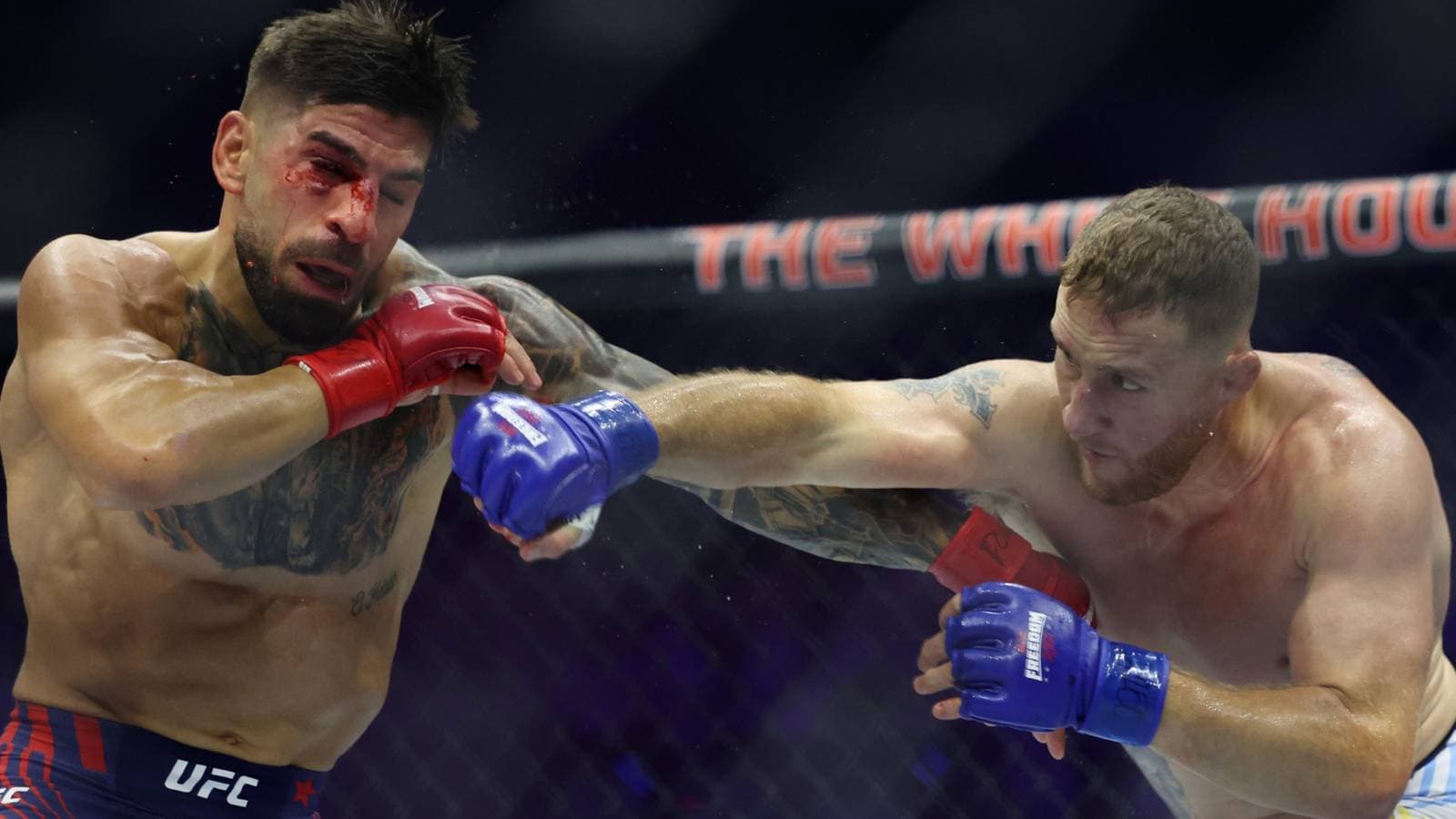
Ilia Topuria Accuses Justin Gaethje After UFC Defeat

Tyson Fury vs Anthony Joshua Fight Date and Venue Confirmed
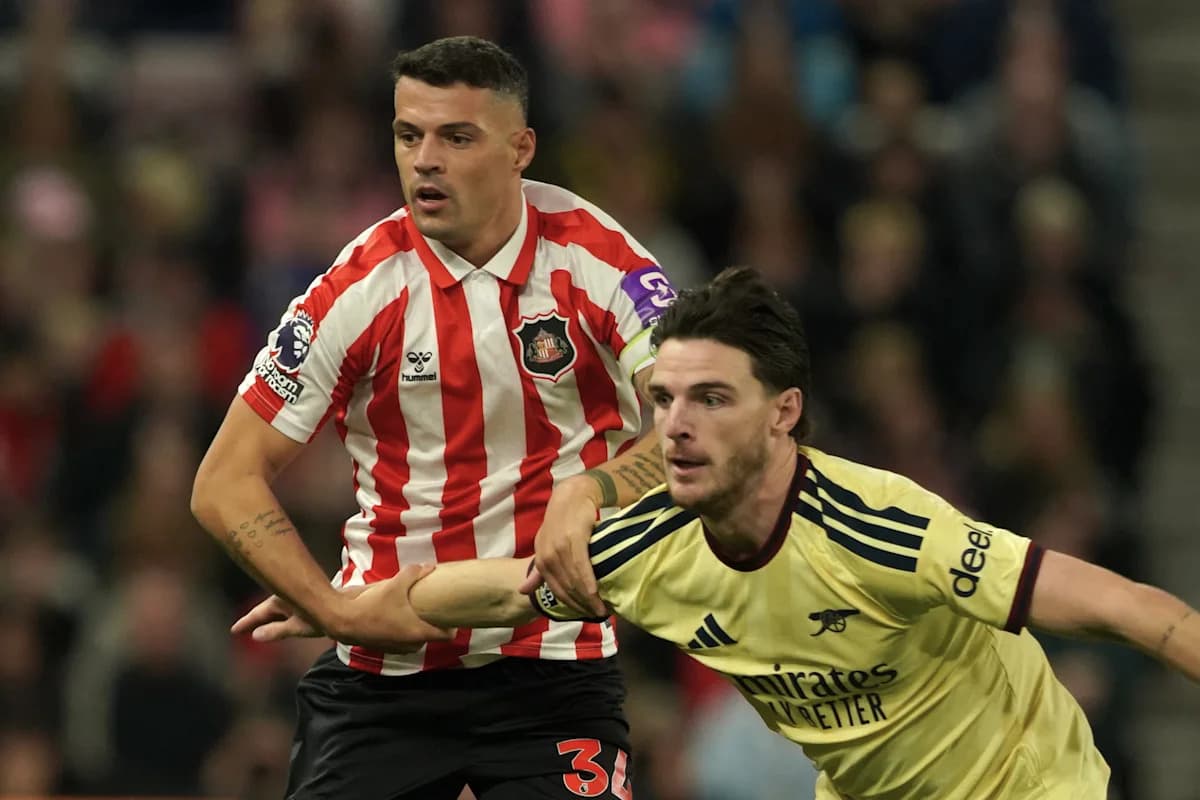
Switzerland Calls Up In-Form Sion Striker Winsley Boteli for Nations League
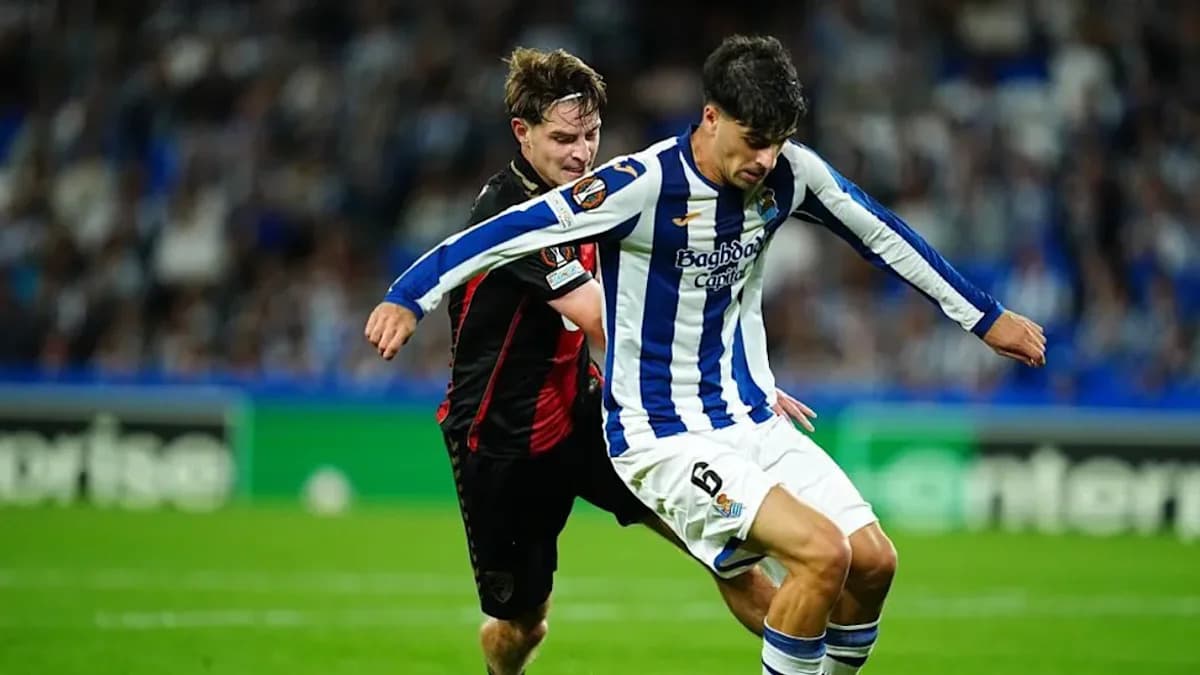
Bournemouth Secures Historic 2-1 Win Over Real Sociedad in Spain
Portugal Announces Squad for 2026 UEFA Nations League; Cristiano Ronaldo Expected to Play
Raphinha Channels Ronaldo Nazario as Barcelona's Leading Striker After Position Change