
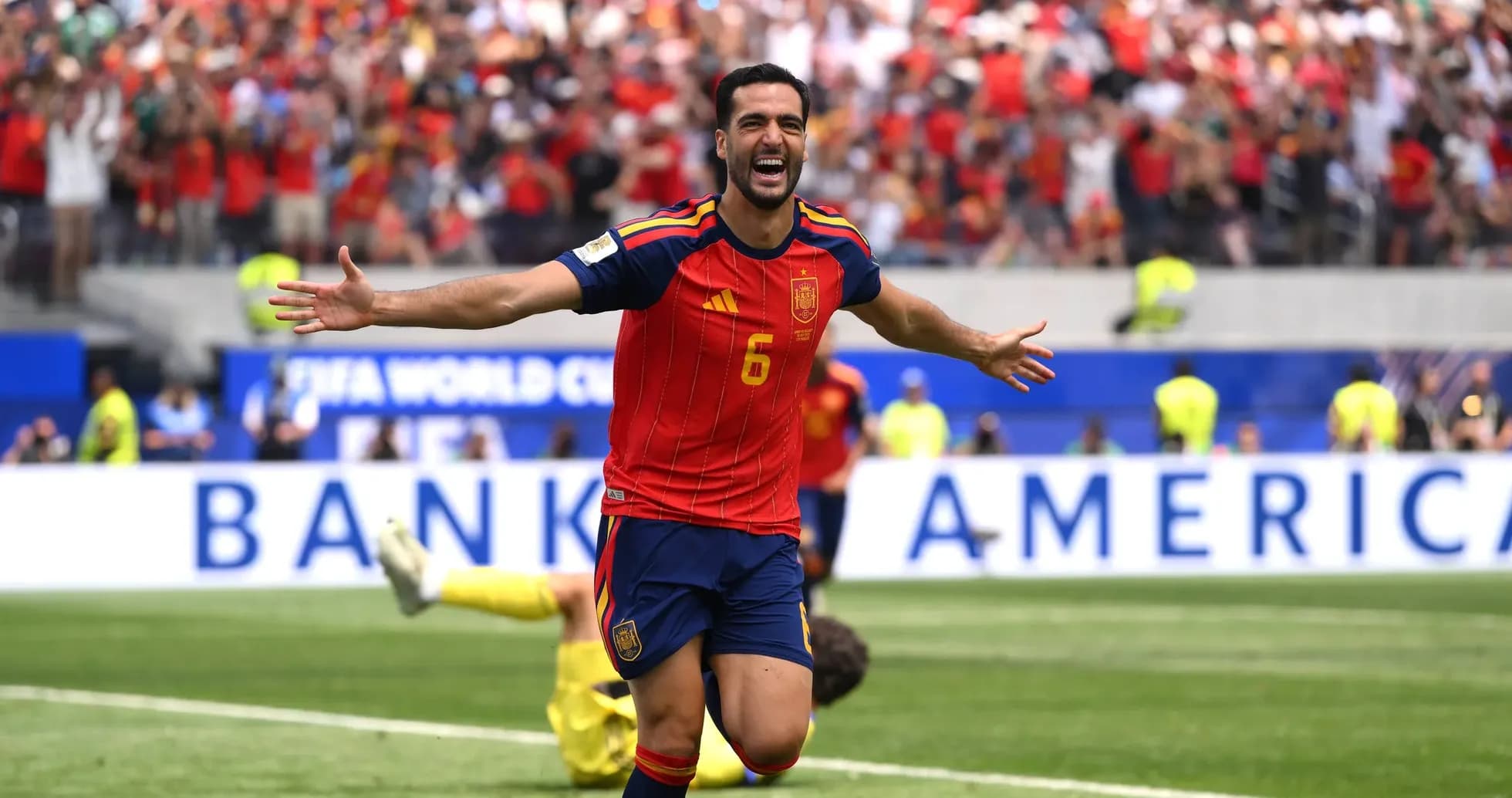
France vs Spain: 2026 World Cup Semi-finals Showdown
France and Spain meet on 14 July 2026 in a World Cup Semi-finals clash that effectively defines the trajectory of this generation for both nations: victory opens a path to the ultimate title shot, while defeat turns an otherwise flawless World Cup campaign into a near-miss, with no safety net of a third-place playoff in sight at this stage.
Head-to-Head Tactical Summary
The recent head-to-head record is stacked with high-stakes encounters, mostly on neutral ground and with Spain as the designated home side. On 5 June 2025 in Stuttgart in the UEFA Nations League Semi-finals, Spain beat France 5–4, having led 2–0 at half-time, in an open, transition-heavy game that exposed both defensive lines. Less than a year earlier, on 9 July 2024 in Munich at the Euro Championship Semi-finals, Spain again prevailed 2–1 over France, leading 2–1 at half-time and then managing the second half with more control. Going back to 10 October 2021 in Milano in the Nations League Final, France won 2–1 against Spain after a 0–0 first half, overturning Spain’s possession advantage with more direct attacking efficiency. On 28 March 2017 at Stade de France in a friendly, Spain beat France 2–0 after a 0–0 first half, underlining their comfort in controlled, ball-dominant setups even away from home. The earliest listed meeting, on 23 June 2012 at Donbass Arena in the Euro Championship Quarter-finals, saw Spain win 2–0 against France, having gone in 1–0 up at half-time, in a more methodical, territorial performance. Overall, Spain have taken four of the last five competitive and friendly meetings, with France’s single win coming in the 2021 Nations League Final.
Global Season Picture
- League Phase Performance: In the group stage, France were dominant in Group I, taking 9 points from 3 matches with 10 goals scored and 2 conceded, finishing top with a goal difference of +8. Spain topped Group H with 7 points from 3 matches, scoring 5 and conceding none, for a goal difference of +5. Both arrive in the Semi-finals with perfect records in terms of avoiding defeat, but France have been more explosive in attack, while Spain’s record shows a more controlled, defensive solidity.
- Season Metrics: Across all competitions in this World Cup cycle, France have played 6 matches, winning all 6, scoring 16 goals and conceding 2, with an average of 2.7 goals scored and 0.3 conceded per game. They have kept 4 clean sheets and failed to score in none, indicating a consistently high attacking output and strong defensive base. Their most used formation is a 4-2-3-1 over all 6 games, suggesting tactical continuity. Spain have also played 6 matches, winning 5 and drawing 1, with 11 goals scored and 1 conceded, averaging 1.8 scored and 0.2 conceded per match. They have 5 clean sheets and only one game without scoring, combining an elite defensive platform with a slightly more measured attack. Spain have alternated mainly between 4-2-3-1 (4 matches) and 4-3-3 (2 matches), giving them flexibility in how they control central spaces and press.
- Form Trajectory: In the group stage, both sides showed perfect form: France’s form string of “WWWWW” indicates five consecutive wins, and Spain’s identical “WWWWW” shows the same trend of relentless victories. When extended across the tournament, France’s run of 6 wins from 6 and Spain’s 5 wins and 1 draw point to two teams peaking at the right time, with no recent evidence of vulnerability in terms of results.
Tactical Efficiency
France’s tournament profile is that of a high-ceiling attacking side with strong defensive numbers: 16 goals in 6 games, an average of 2.7 per match, and only 2 conceded. Their preferred 4-2-3-1 structure underpins quick vertical progression and allows them to overload the half-spaces with the three attacking midfielders, while the double pivot screens transitions. The clean sheet count (4) and very low goals conceded per game highlight a back line that, despite occasional exposure in open games, has generally controlled the penalty area well.
Spain, with 11 goals scored and just 1 conceded in 6 matches, are slightly less explosive but more controlled: 1.8 goals scored per match combined with 0.2 conceded points to a side that manages rhythm, possession, and rest-defence at an elite level. Their ability to switch between 4-2-3-1 and 4-3-3 lets them either mirror France’s double pivot or create a three-man midfield to dominate central zones and second balls. The 5 clean sheets and only a single match without scoring underline a balance between risk management and offensive threat.
In practical terms, France’s attacking efficiency suggests they can generate and convert chances even when out of possession for long spells, as seen historically against Spain. Spain’s defensive numbers, however, indicate that they are better equipped than previous iterations to limit the kind of transition chaos that produced the 5–4 Nations League Semi-finals scoreline. The clash is therefore likely to be decided by which side can impose its preferred game state: France will want a more open, end-to-end encounter where their attacking depth and finishing can decide it, while Spain will aim to compress the game into controlled phases, using their structure to suffocate France’s transitions and rely on their own positional attacks.
The Verdict: Seasonal Impact
This Semi-finals is a hinge moment for both national teams’ 2026 cycle. For France, elimination here would turn an otherwise perfect World Cup (maximum points in the group stage, 6 wins from 6 overall, dominant goal difference) into a campaign remembered for falling one step short of another final, raising questions about game management and their ability to solve elite, possession-heavy opponents in the latter stages. Reaching the final, by contrast, would validate the aggressive, high-output attacking model and confirm this squad as one of the defining forces of the 2020s.
For Spain, a defeat after conceding only one goal in six matches prior to this tie would be framed as a missed opportunity for a generation that has finally married defensive control with attacking fluidity. It would keep their recent dominance over France as a footnote rather than a stepping stone to global supremacy. A win and progression to the final would reframe the entire 2026 campaign as the moment Spain translated continental and Nations League success into a renewed World Cup-era dominance, confirming that their structural, possession-based approach can neutralise even the most explosive attacks at the very top level.
In seasonal terms, this Semi-finals is less about incremental objectives like reaching a certain round and more about legacy: whoever advances keeps a live shot at defining the 2026 World Cup narrative and cementing this cycle as a golden chapter, while the loser, despite an excellent statistical campaign, will carry the tag of having fallen at the decisive tactical hurdle.
Related News

Thomas Tuchel Reflects on England's 10-Man World Cup Triumph and a Surprising Regret

Robert Moreno Takes Over as Interim South Korea Coach After World Cup Setback

Jude Bellingham Returns to Form with Real Madrid After World Cup Success

Chloe Kelly, Beth Mead & 13 Lionesses Who Must Shine in the Upcoming WSL Season for England’s 2027 World Cup Bid
Barcelona Cancels World Cup Tribute Amid Political Tensions
Messi Breaks Record for Most Penalties Taken and Missed in FIFA World Cup History