
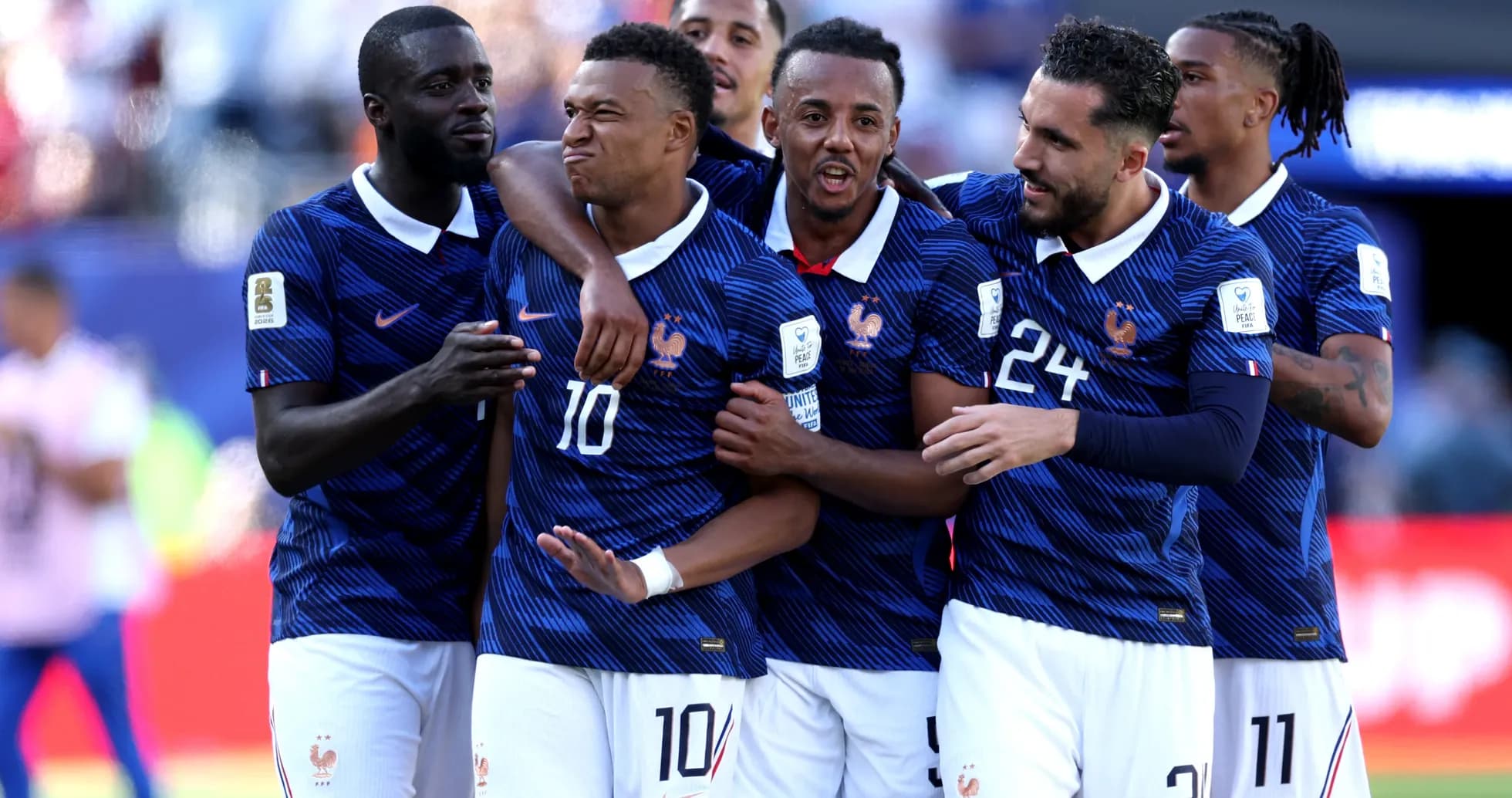
France vs Senegal: World Cup Opener Highlights and Tactical Analysis
MetLife Stadium under New Jersey’s evening lights staged a World Cup opener that felt more like a late‑tournament knockout rehearsal than a first step in Group I. France, nominally the “home” side, beat Senegal 3‑1, a scoreline that both reflected their attacking edge and slightly flattered their defensive comfort.
I. The Big Picture – France’s statement, Senegal’s warning
Following this result, France sit 2nd in Group I with 3 points, a goal difference of +2 (3 goals for, 1 against) from 1 match. Their overall record in this World Cup campaign is clean: 1 win, 0 draws, 0 defeats. At home in this tournament they have played 1, won 1, scoring 3.0 goals on average and conceding 1.0 at MetLife.
Senegal, listed 3rd in the group, emerge with 0 points and a goal difference of -2 (1 for, 3 against) after their first outing. On their travels they have played 1, lost 1, scoring 1.0 and conceding 3.0 away. The 3-1 defeat is also their biggest away loss so far.
Both managers trusted a mirrored 4-2-3-1, but the shared shape masked very different footballing identities. Didier Deschamps built a structure to unleash Kylian Mbappé, while Bouna Thiaw Pape sought to compress the middle third and spring Sadio Mané and Nicolas Jackson in transition.
II. Tactical Voids – Where the game was won and lost
France’s XI read like a blueprint in balance. Mike Maignan behind a back four of Jules Koundé, Dayot Upamecano, William Saliba and Theo Hernandez provided a secure base, with Aurélien Tchouameni and Adrien Rabiot as the double pivot. Ahead of them, Michael Olise, Ousmane Dembélé and Désiré Doué floated behind Mbappé.
The tactical void for France was not personnel but structure: a 4-2-3-1 that could, at times, leave Tchouameni exposed if both full-backs surged. Yet Senegal rarely managed to overload that zone consistently enough. Instead, France’s attacking four repeatedly found pockets between the lines, especially as the game opened up.
Senegal’s back four of Krépin Diatta, Kalidou Koulibaly, Moussa Niakhaté and Moussa Diouf had to live on a knife edge against Mbappé’s depth runs and the wide dribbling of Dembélé. In front of them, Idrissa Gueye and Pape Gueye formed a combative but at times isolated screen. The trio behind Jackson – Ismaïla Sarr, Lamine Camara and Mané – were tasked with stretching France on the break.
The key void for Senegal was the space either side of Gueye and Pape Gueye when France’s No.10 line drifted infield. As Mbappé pulled centre-backs deep or wide, Olise and Doué could step into the half-spaces, forcing Diatta and Diouf to defend narrower than they wanted. That, in turn, limited Senegal’s ability to spring their full-backs in transition.
Disciplinary data for this World Cup campaign is still clean on both sides: no recorded yellow or red cards by minute range for either team, and no suspensions or absences listed. That meant both coaches could lean fully on their first-choice structures, and the match unfolded as a pure tactical contest rather than a patched-up survival job.
III. Key Matchups – Hunter vs Shield, and the engine room war
Hunter vs Shield was always going to be Mbappé against Koulibaly and Niakhaté. Heading into this game, France’s overall scoring rate was 3.0 goals per match and Mbappé was already shaping the Golden Boot race. He now stands on 2 goals in 1 appearance, with 4 shots, all on target, and a rating of 8.2. His 16 passes at 93% accuracy underline that this was not just a sprinter’s performance; he linked, dropped, and then exploded beyond the line.
Koulibaly and Niakhaté tried to compress the space by holding a mid-block rather than dropping onto their six-yard line, but Mbappé’s ability to receive to feet and then spin made that approach perilous. Once he got isolated against Diatta or Diouf in wide channels, the back line had to tilt, and France’s second wave – Olise, Dembélé, Doué – attacked the vacated zones.
For Senegal, the emergent “hunter” was Ibrahim Mbaye off the bench. He has 1 goal from 1 shot on target in 15 minutes, with 8 passes at 87% accuracy and a perfect dribble record. His cameo hinted at a vertical threat that could become central to Senegal’s group-stage survival plan.
In the engine room, Tchouameni and Rabiot squared off against Idrissa Gueye and Pape Gueye. France’s double pivot had to manage the counter-press while feeding their attacking quartet. Senegal’s pair were tasked with both screening and initiating transitions. The presence of Lamine Camara as the central No.10 added a third body in that corridor, but France’s structure – with Doué tucking in and Dembélé occasionally narrowing – often created a 4v3 in midfield in France’s favour.
Further up, the creative duel belonged to Iliman Ndiaye and Bradley Barcola, two substitutes whose roles defined late-game narratives. Ndiaye, Senegal’s top assist provider so far with 1 assist in 17 minutes and 10 passes at 90% accuracy, operated as a clever connector between lines. Barcola, with 1 goal from 1 shot in 10 minutes and 7 passes at 85%, was Deschamps’ chaos injection from the bench, attacking tired legs and turning a solid win into a statement.
IV. Statistical Prognosis – What this result tells us about the road ahead
Following this result, the numbers sketch a clear but not yet definitive picture. Overall, France average 3.0 goals for and 1.0 against per match, with no clean sheets but also no failures to score. Their biggest win so far – this 3-1 at home – aligns with what the eye test suggested: a side whose attacking ceiling is high enough to mask occasional defensive looseness.
Senegal, by contrast, are running at 1.0 goal for and 3.0 against on their travels, with no clean sheets and no matches without scoring. That combination points to a team that can hurt opponents but is currently too porous to control game states, especially away.
We do not have explicit xG figures in the data, but the shot and scoring profiles of the key forwards imply a France whose chance quality is high when they reach the final third. Mbappé’s 4 shots, all on target, and Barcola’s ruthless efficiency suggest that when France do create, they tend to generate clear looks. Senegal’s lone goal from Mbaye, assisted by Ndiaye, hints at a more opportunistic, lower-volume attack that depends on sharp execution rather than sustained territorial dominance.
Projecting forward, France’s attacking firepower, layered behind a settled 4-2-3-1 and marshalled by Maignan, positions them as heavy favourites to progress from Group I and justify their “Round of 32” description in the standings. Their challenge will be tightening the back line enough to turn 3-1s into 2-0s as the margins shrink.
For Senegal, the tactical path is narrower but not closed. If Bouna Thiaw Pape can better insulate Koulibaly and Niakhaté – perhaps by staggering the double pivot or tweaking the full-backs’ height – the raw ingredients are there: Mané’s gravity, Jackson’s running, Sarr’s directness, and the impact of Ndiaye and Mbaye off the bench. The numbers say they must reduce that away average of 3.0 goals conceded; the story of MetLife suggests they have just enough attacking edge to make that defensive correction meaningful.
In East Rutherford, the opener felt like a verdict as much as a beginning: France as early hunters, Senegal as dangerous but vulnerable chasers. The group will now be shaped by whether those roles harden into fate or are rewritten in the matches to come.
Related News
Thomas Tuchel Reflects on England's 10-Man World Cup Triumph and a Surprising Regret
Robert Moreno Takes Over as Interim South Korea Coach After World Cup Setback
Jude Bellingham Returns to Form with Real Madrid After World Cup Success

Chloe Kelly, Beth Mead & 13 Lionesses Who Must Shine in the Upcoming WSL Season for England’s 2027 World Cup Bid
Barcelona Cancels World Cup Tribute Amid Political Tensions
Messi Breaks Record for Most Penalties Taken and Missed in FIFA World Cup History