
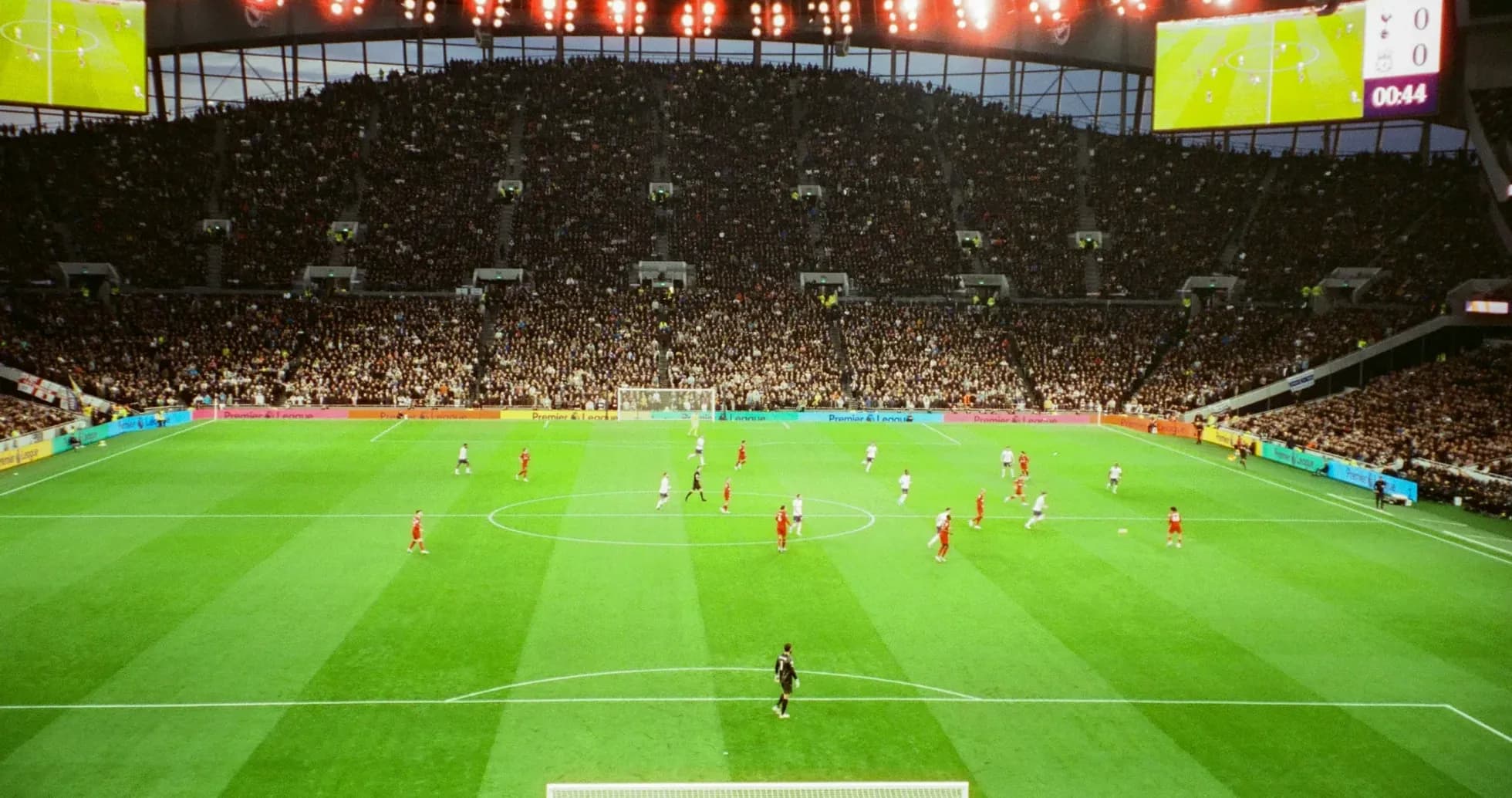
France Dominates Paraguay in Tense Round of 16 Clash
Paraguay approached this Round of 16 tie at Lincoln Financial Field in a pure survival posture, locking into a 5-4-1 that was designed to compress space in their own third and deny France any central access. France, in contrast, lined up in a 4-2-3-1 with a clear intention to dominate the ball and stretch Paraguay horizontally, trusting their technical superiority and rotations between the lines to eventually crack a low block. The final 0-1 scoreline, settled by a Kylian Mbappé penalty, reflects a game where France’s territorial and statistical control was overwhelming, but they needed patience and a VAR-backed key moment to turn that control into a decisive goal.
From the outset, Paraguay’s structure was extremely conservative. The back five of Juan Cáceres, Gustavo Velázquez, Gustavo Gómez, Omar Alderete and Junior Alonso stayed narrow, with the wing-backs reluctant to step out. In front of them, Miguel Almirón, Diego Gómez, Andrés Cubas and Matías Galarza formed a compact midfield four, often dropping so deep that the shape resembled a 5-5-0 out of possession. Julio Enciso was left as the lone forward, tasked more with screening passes into France’s double pivot than with leading transitions.
This approach produced a match where France had 76% possession and Paraguay just 24%. Paraguay’s passing volume—183 total passes with 99 accurate at 54%—underlines how rarely they were able to string sequences together. Most of their play consisted of clearances and first-line balls into Enciso that were quickly recovered by France’s centre-backs. The attacking output followed the same pattern: only 5 total shots, with just 1 on goal and 1 shot inside the box. Paraguay’s expected goals of 0.15 confirms that they almost never constructed a high-quality chance; their offensive threat was essentially limited to sporadic long-range efforts and set-pieces (2 corner kicks).
France’s 4-2-3-1, built on the double pivot of Manu Koné and Adrien Rabiot, controlled both tempo and territory. With 568 total passes and 510 accurate (90%), they circulated the ball patiently, using Jules Koundé and Lucas Digne high and wide to pin Paraguay’s wing-backs and create crossing angles. Ousmane Dembélé, Michael Olise and Bradley Barcola operated as a fluid line of three behind Mbappé, constantly rotating positions to drag Paraguay’s midfield out of shape. The shot profile—15 total shots, 5 on goal, 5 from inside the box and 10 from outside—speaks to both their dominance and Paraguay’s deep defensive line: France often had to resort to efforts from distance when central lanes were blocked.
Defensively, Paraguay’s low block was disciplined and relatively clean. They committed 13 fouls but received no cards, and their compactness forced France to work for every opening. The three centre-backs, especially Gustavo Gómez in the central role, were aggressive in attacking crosses and stepping out when Mbappé tried to drop into pockets. The wing-backs rarely ventured forward, prioritising numerical equality against France’s wide players and full-backs. This sacrifice of any real counter-attacking threat was the trade-off that kept the scoreline narrow despite the imbalance in play.
France’s defensive game was more about counter-pressing and rest defence than traditional deep defending. With Koné and Rabiot anchoring the midfield and William Saliba and Dayot Upamecano often stationed near the halfway line, they quickly smothered Paraguay’s attempts to break. France committed 11 fouls and picked up three yellow cards—Bradley Barcola and Manu Koné for “Foul” and Michael Olise for “Unsporting behaviour”—a reflection of their aggressive attempts to immediately recover possession after losing it.
The key tactical turning point came around the hour mark, when both coaches began to adjust. Gustavo Alfaro’s substitutions—José Canale (IN) came on for Omar Alderete (OUT) at 58', Gustavo Caballero (IN) came on for Julio Enciso (OUT) at 61', then Gabriel Ávalos (IN) came on for Miguel Almirón (OUT) and Mauricio (IN) came on for Gustavo Gómez (OUT) at 71'—were aimed at refreshing legs in the back line and adding a more traditional target presence up front. However, the underlying structure remained conservative; Paraguay did not meaningfully change their pressing height or risk extra numbers ahead of the ball.
Didier Deschamps, meanwhile, sought an extra injection of directness and dribbling. Désiré Doué (IN) came on for Bradley Barcola (OUT) at 61', and later Rayan Cherki (IN) came on for Ousmane Dembélé (OUT) at 84'. Doué’s introduction was pivotal: his activity in the half-spaces and willingness to attack defenders off the dribble contributed to the phase that led to the VAR-reviewed penalty. The “Penalty confirmed” decision in favour of France at 68' was the product of sustained pressure and repeated incursions into the box that finally forced a decisive defensive action from Paraguay.
Kylian Mbappé’s successful penalty at 70' was less about a single tactical pattern and more about the cumulative effect of France’s structure. By that point, Paraguay’s back five had been shifting laterally for an hour, with their midfield line dropping ever deeper. France’s wide overloads, constant recycling and the positional threat of Mbappé between the lines created the scenario in which one mistimed challenge inside the area became fatal. The goal did not radically change Paraguay’s approach; they tried to step a little higher, but their lack of possession habits and creative profiles meant they could not suddenly transform into a proactive side.
In goal, Orlando Gill (Paraguay) was an important part of keeping the score respectable. He made 4 saves, matching France’s 5 shots on target closely enough to underline his concentration, especially against efforts from distance and crosses that threatened to become shots at the back post. Mike Maignan (France), by contrast, was largely a spectator, required to make just 1 save across the 90 minutes. That single figure encapsulates how effectively France’s structure prevented Paraguay from reaching dangerous zones.
Statistically, France’s superiority was clear: higher possession, more shots, more corners (12 to 2), a vastly higher pass volume and accuracy, and a significantly stronger attacking output, with an xG of 1.36 compared to Paraguay’s 0.15. Yet the narrow 0-1 scoreline and the need for a VAR-confirmed penalty to decide the match also highlight Paraguay’s defensive resilience and organisational discipline in their 5-4-1. Tactically, this was a textbook example of a dominant possession side gradually wearing down a deep block, while the underdog accepted almost total attacking sacrifice in exchange for keeping the tie alive as long as possible.
Related News
Thomas Tuchel Reflects on England's 10-Man World Cup Triumph and a Surprising Regret
Robert Moreno Takes Over as Interim South Korea Coach After World Cup Setback
Jude Bellingham Returns to Form with Real Madrid After World Cup Success
Chloe Kelly, Beth Mead & 13 Lionesses Who Must Shine in the Upcoming WSL Season for England’s 2027 World Cup Bid
Barcelona Cancels World Cup Tribute Amid Political Tensions
Messi Breaks Record for Most Penalties Taken and Missed in FIFA World Cup History