
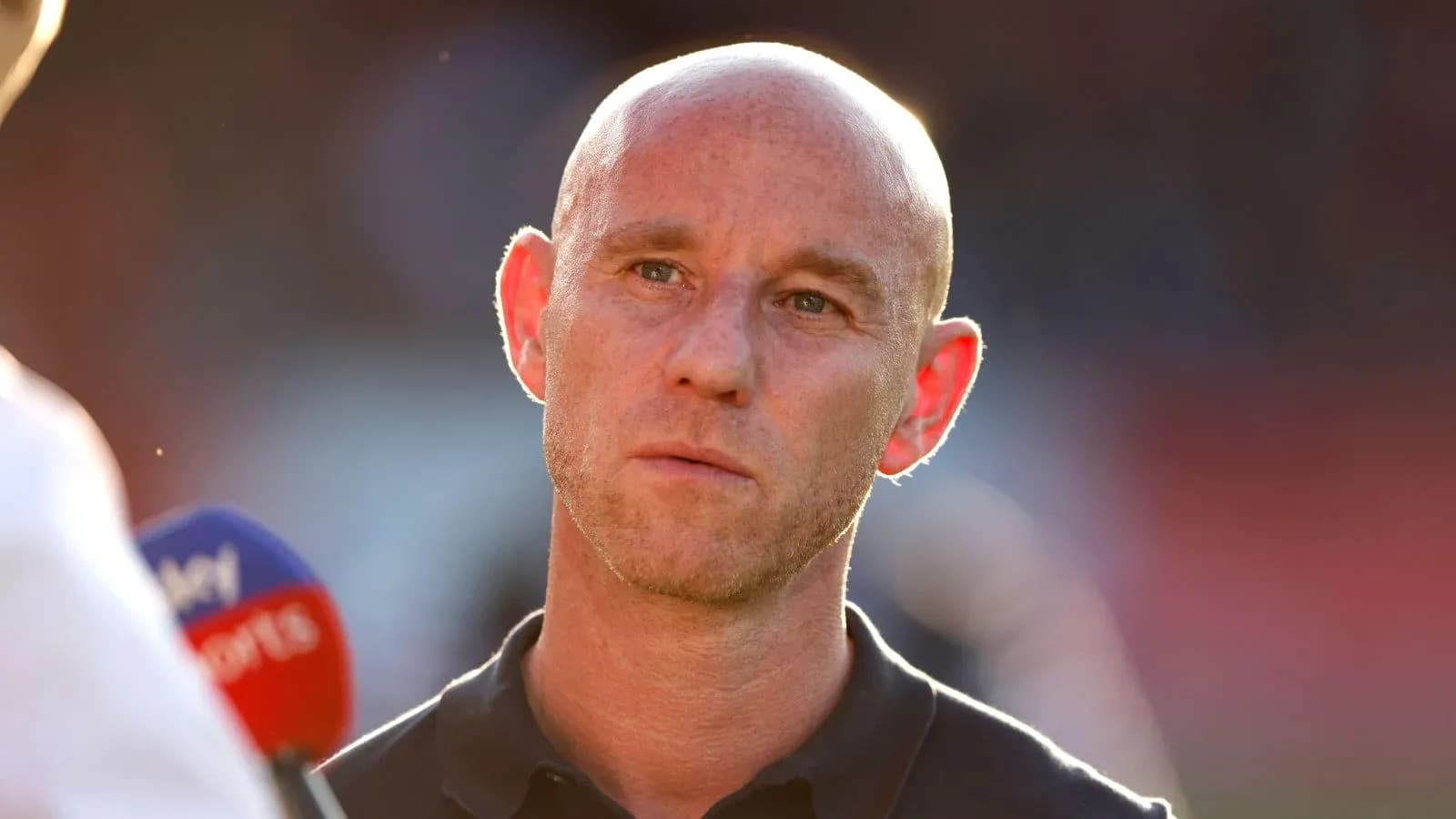
Football Journalism: The Evolution of 'Exclusive' Stories
The word “exclusive” used to mean something in football journalism. A new contract. A dressing-room row. A transfer that changes a season.
Today? It apparently covers a middle‑aged man grumbling about a trip to the local tip.
Nicky Butt, a podcast, and an ‘EXCLUSIVE’ that wasn’t
The Sun splashed on Friday with what it billed as a major scoop:
“Man Utd icon Nicky Butt BANNED from local tip after ‘raging’ row with staff”
Capital letters. Drama. The works. Second-biggest football story of the day, they claimed, tucked in just behind Vini Jr’s new Real Madrid deal.
The reality? They’d simply transcribed a story Nicky Butt had already told, in public, on a weekly podcast.
Butt, chatting on The Good, The Bad & The Football with Paul Scholes and Paddy McGuinness, described a row at what is believed to be Woodhouse Lane Recycling Centre in Altrincham. He said a member of staff accused him of trying to sneak items into the site because his car windows were blacked out.
“He said to me, ‘Your windows are blacked out because you’re sneaking stuff into it, into the tip’. And I went, ‘No, it’s standard, mate’,” Butt recalled.
He then decided to drive in anyway. Up the ramp. Bags out. Staff member in pursuit, walkie‑talkie in hand. By the time he’d dumped the rubbish and headed back down the hill, the attendant, Butt said, was “going mad” at him.
“Anyway, I’m banned from the tip,” he concluded.
A mildly amusing anecdote on a podcast. A bit of small‑talk from a former midfielder killing a few minutes on air. That’s it.
Yet The Sun stamped EXCLUSIVE across it and presented it as if they’d unearthed a secret from deep inside Manchester’s waste‑management underworld. No council comment. No confirmation that Butt is actually banned. No witness. Just a story everyone heard at the same time, now repackaged as revelation.
They did, however, “contact [Butt] for comment”. On words he’d already said. On his own show.
Tipgate, apparently, is underway.
Liverpool, Darwin Núñez and a reunion that isn’t
From recycling centres to recycled transfer tropes. The Mirror stepped up with a headline that leant heavily on implication:
“Darwin Nunez in line for unexpected Liverpool reunion after transfer twist”
Seasoned transfer‑window readers know this game. A “reunion” usually means a return to a former club, or at least a move back into the same league, with the promise of facing old team‑mates. Something with a clear footballing hook.
This wasn’t that.
The story, stripped of the headline’s gymnastics, is simple: Trabzonspor are targeting Darwin Núñez. Mohamed Salah is already there. If Núñez joins, he would link up with his former Liverpool team‑mate in Turkey.
That’s not a “Liverpool reunion”. It’s a Salah reunion. Two ex‑Liverpool players potentially sharing a dressing room in the Turkish Super Lig. No Anfield. No Merseyside. No Premier League return. Just a familiar face in a new city, dressed up as something it isn’t.
The headline knows exactly what it’s doing. It dangles Liverpool to pull in clicks, then delivers a far smaller story: an ambitious Turkish club hoping to bring two former colleagues back together.
Arsenal lose a friendly. The sky falls in
While those headlines stretch language, The Sun has spent the last 48 hours stretching reality over Arsenal’s pre‑season.
Mikel Arteta’s side lost a friendly to Real Betis. One game. In July. A run‑out designed to build fitness, test combinations, and shake off rust.
The reaction? A rolling crisis.
After initially floating the idea that the defeat might somehow echo into the 2026/27 Premier League title race, The Sun doubled down with:
“Five things we learned from Arsenal’s woeful loss to Real Betis with Kepa displaced as No2 and Tzolis’ lethal asset”
Five things. From a pre‑season friendly. As if a warm‑up match, played at half‑tempo with rolling substitutions, can sustain that kind of forensic post‑mortem.
The language is heavy: “woeful loss”, “lethal asset”, status shifts. The implication is that this is meaningful, that the foundations are shaking.
Buried inside, though, sits a line that almost undercuts the whole production:
“A pre-season defeat is never the end of the world…”
That should have been the starting point. Instead, it reads like an afterthought, a token nod to perspective in an article built entirely on the absence of it.
One pre‑season defeat has now generated a cluster of “sky is falling” pieces, each trying to wring fresh drama from the same 90 minutes. The football was a tune‑up. The coverage has turned it into an omen.
Polls, outrage and a World Cup that isn’t moving
Over at the Daily Express, the focus is not on what has happened, but on what a small, self‑selecting group of readers can be nudged into saying.
The latest effort: a homepage poll asking,
“Should the World Cup be stripped from Spain, Portugal and Morocco after migrant crisis?”
The pattern is familiar. Ask a loaded question. Let a fraction of the readership click a button. Then, a few days later, present the result as if it carries weight beyond that corner of the internet.
Recent examples include the paper treating poll responses as if they were insider updates on Manchester United. Idle votes dressed up as club briefings.
This one is on a bigger stage. The 2030 World Cup, awarded to Spain, Portugal and Morocco, framed through a single, provocative question. The likely next step is obvious: a headline along the lines of:
“FIFA told Spain, Portugal and Morocco must be stripped of 2030 World Cup”
“Told” by whom? Not FIFA delegates. Not governments. Not federations. Just readers clicking in a poll box.
The structure is clear: create the outrage, then report on the outrage you created as if it arrived from somewhere else.
Where the noise leaves the game
None of this is new. Transfer windows have always attracted speculation, and tabloids have always chased drama. But the examples stack up: a tip‑run anecdote becomes an EXCLUSIVE; a potential move to Turkey becomes a “Liverpool reunion”; a July defeat becomes an existential crisis; a website poll turns into a supposed mandate for FIFA.
The sport itself hasn’t changed. Players still train, managers still experiment in pre‑season, clubs still haggle over deals. What’s shifting is the space around it, where the volume keeps rising and the definition of “news” keeps stretching.
At some point, the question becomes unavoidable: when the next genuine story breaks, how easily will it cut through a landscape where everything, from a trip to the dump to a click‑poll, arrives wrapped in the same urgent packaging?
Related News
Carlos Alcaraz Urges Tennis Organizers to Stop Matches Finishing in the Early Morning
Carlos Alcaraz Frustrated by 3:30 a.m. US Open Finish: 'Too Much'
Jannik Sinner Set for ATP 500 Return in Beijing with Novak Djokovic Also Competing

Meet Iva Jovic: The Rising American Tennis Talent
Flavio Cobolli Shares Insights on Training with Jannik Sinner Ahead of His Tennis Return

Till vs Romero: Fight Details, Undercard, and Viewing Info for This Weekend