
FIFA Eases Water Bottle Ban at 2026 World Cup
FIFA has rowed back on its hard-line stance over water bottles at the 2026 World Cup, allowing fans to bring a single disposable bottle into stadiums in the United States and Canada after a wave of criticism over safety and cost.
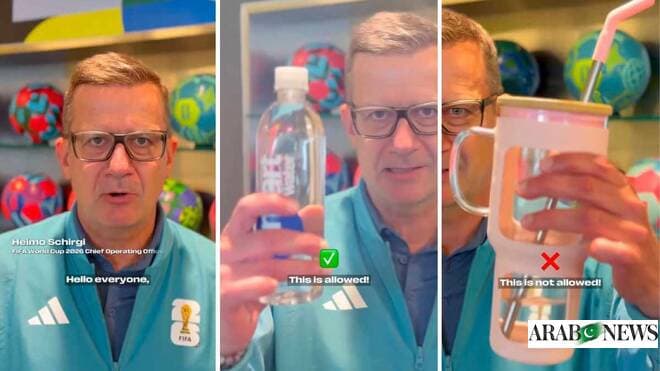
In a video posted on FIFA’s X account, World Cup chief operating officer Heimo Schirgi confirmed that supporters will be allowed to carry “one, soft, plastic 20 ounces (590ml), factory sealed disposable water bottle” into any match in the USA and Canada.
The governing body framed the move as a “clarification” rather than a U-turn, but the timing tells its own story. The announcement lands just two days after FIFA updated its stadium code of conduct to ban all refillable bottles, a change that would have left fans reliant on stadium vendors for water in what is expected to be a brutally hot tournament.
That earlier decision triggered an immediate backlash from supporters’ groups and health experts, who warned that blocking personal water in open-air venues, then charging stadium prices for drinks, risked turning a basic necessity into a luxury.
FIFA has leaned heavily on security arguments to defend its position.
In a statement to AFP, the organization said outside bottles are already prohibited at several of the host venues “for safety considerations,” and that it is simply applying those rules consistently across its World Cup stadiums “to prevent risk and injury to players and attendees.”
Those concerns, Schirgi stressed on Friday, “remain valid.” Hard-sided, reusable bottles will still be banned. In the video, he held up examples of which containers will make it through security and which will not, underlining that only soft, disposable plastic bottles will be allowed.
The debate goes far beyond convenience. It goes to the heart of how this World Cup will be experienced in a climate that is changing in real time.
Meteorologists have already raised red flags. A report from the World Weather Attribution research group last month estimated that 26 of the 104 matches are likely to be played in conditions where the Wet Bulb Global Temperature (WBGT) exceeds 26 degrees.
WBGT is not just another number on a weather app. It is a composite measure of heat stress that folds in temperature, humidity, wind and sunlight to show how hard conditions hit the human body. Once WBGT climbs, the risk of heat-related illness rises sharply, especially in packed stands with limited shade.
The warning is not theoretical. At last year’s FIFA Club World Cup in the United States, fans complained of searing temperatures and, again, found themselves barred from bringing their own water into venues. That experience has clearly shaped the reaction to FIFA’s initial 2026 policy.
Under mounting scrutiny, FIFA has pointed to a suite of mitigation measures around stadiums. The organization says “misting stations, fans, hydration stations and cooling tents” will be available in what it calls “the stadium footprint,” offering supporters some relief before and after they pass through the turnstiles.
Inside, though, bottled water will still come at a price. FIFA insists those prices will “remain consistent with other events held at each stadium,” effectively handing responsibility to local venue operators and event norms rather than imposing a World Cup-wide cap.
So fans heading to the World Cup can now at least bring one sealed disposable bottle with them. It is a concession, not a full retreat. The hard-sided reusable bottles many supporters favor for environmental and cost reasons will stay outside the gates, even as temperatures and tempers threaten to rise.
Related News

Raphinha’s Hat-Trick Powers Barcelona to 7-2 Victory Over Racing Santander
Carabao Cup Fourth Round Draw: Liverpool Set to Clash with Chelsea, Arsenal to Face Fleetwood Town
Key Football Matches to Watch in Azerbaijan This Autumn
Raphinha's Hat-Trick Drives Barcelona to 7-2 Triumph Over Racing Santander
Hansi Flick Leads Barcelona to Record-Breaking Seven Wins in a Row
Gavi Reflects on Injury Return as Barcelona Dominate Racing Santander 7-2