
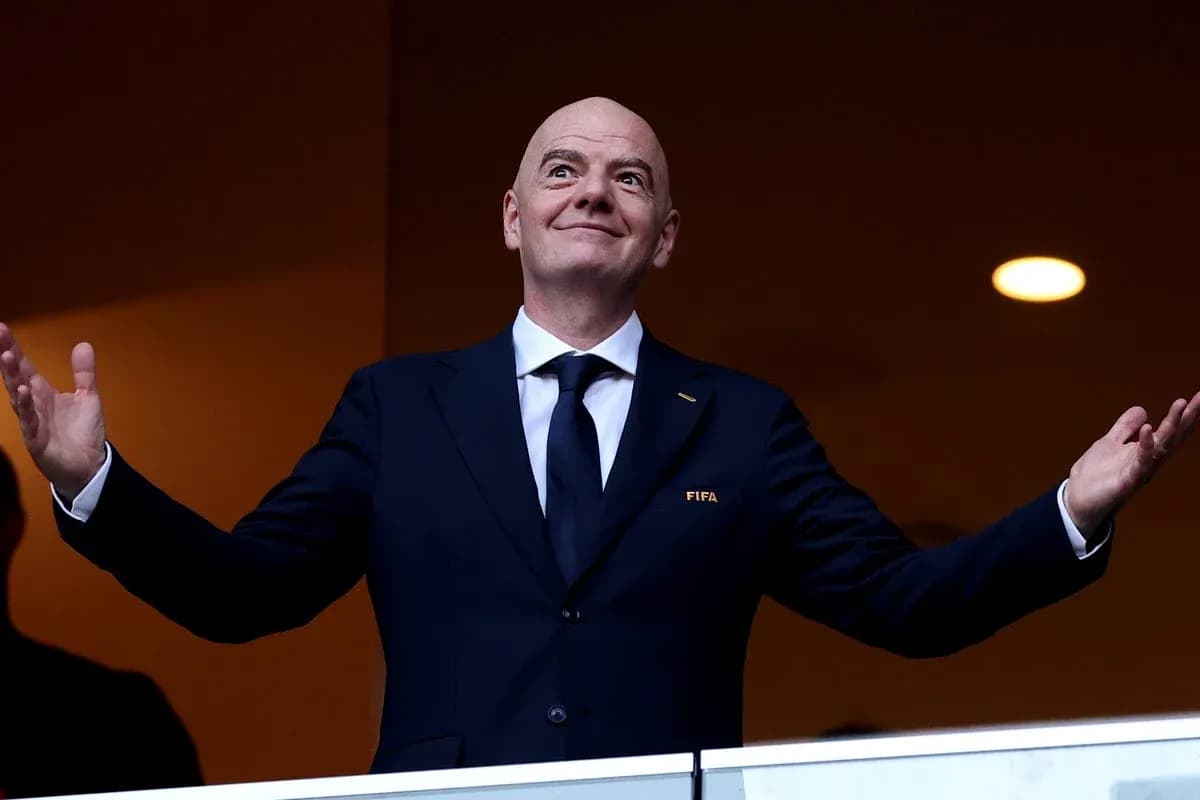
Fifa's Confidence Crisis: A Leadership Challenge
Fifa says confidence is being restored. How do we know? Because Fifa says so.
In a week when world football’s governing body has been accused of trying to flog off its own showpiece tournament, it emerged from a “constructive and positive meeting held in Rabat, Morocco” declaring that the storm has passed and trust is on the way back. The message was clear: the problem is not Fifa. The problem is the people attacking Fifa.
Strip away the spin and the picture looks very different.
A crisis of one man’s making
A global sport has been dragged to the brink of crisis by one man: Gianni Infantino. Either he dreamed up a radical restructuring of the World Cup and somehow forgot to tell almost everyone who matters – Fifa’s chief operating officer Kevin Lamour, its chief of global football development Arsène Wenger, the confederations, clubs, national associations, players, fans – or he tried to stage a power grab against the game itself.
The plan, dressed up as the “Fifa Forward Enterprise proposal”, was so secretive that even within Zurich many were left guessing. National associations discovered that those prepared to vote for it would receive more funding from Fifa than those who resisted. For some, that looked uncomfortably close to an incentive scheme that football has seen before under another name. The word “bribery” never appears in Infantino’s communications, but the suspicion lingers.
Now the proposal has been pulled. Officially, it is “off the table”. Unofficially, it has left the table in splinters.
Orwellian comfort
Infantino and secretary general Mattias Grafström emerged from Rabat with a joint letter and a straight face. “Fifa’s top management is fully confident that the outcomes of today’s meeting will help restore confidence in the organisation,” they wrote, in 19 words that captured the surreal nature of the moment.
Mistakes, they said, had been acknowledged. There was even something approaching contrition: “It was agreed that it was not the intention for the Fifa council and Fifa member associations to feel excluded from the process.” Not the intention. In which case, why were they excluded?
This was a scheme so tightly held that, as critics have joked, it seemed to be on a need-to-know basis for the Kushner family alone. A project of that magnitude, affecting the World Cup and the global game’s financial future, was pushed forward without the knowledge or consent of most of the sport’s stakeholders. Then, when the backlash came, the apology was not for the substance of the idea, but for how people “felt”.
The review that has been promised will, of course, be run by Fifa. The Infantino wing of Fifa. It will investigate itself and, in all likelihood, clear itself.
The new victimhood
The tone from Zurich has hardened. The touchiness that has long been visible in Infantino’s social media output now seems to have seeped into the institution.
“It was agreed that Fifa will no longer tolerate any attacks on its integrity, good governance and due process and will take all necessary measures to protect and safeguard its name and reputation,” the letter declared.
The language could have been lifted from a political rally. The world’s most powerful football body, which has spent years mired in controversy and scandal, now casts itself as the victim of unfair persecution. Donald Trump has made a career out of that posture. Fifa appears to be borrowing the script.
The problem is that the reputation Fifa claims to be defending has already been dragged through the mud under Infantino’s watch.
Suspensions for Cristiano Ronaldo and Folarin Balogun were overturned in ways that raised eyebrows across the game. Rules were bent to usher Lionel Messi’s Inter Miami into the Club World Cup. Somali referee Omar Artan was blocked from entering the United States, and Fifa allowed it to stand. The organisation courted Trump, then created a peace prize only to hand it to a man who went on to start an illegal war.
Each decision chipped away at the idea that Fifa stands above politics, above money, above national interests. Each one said something very different.
A byword for greed
In the United States, where the World Cup is heading, ordinary fans did not need a governance seminar to understand what was happening. They saw ticket prices and blamed Fifa by name. They saw hospitality packages and corporate access and understood who the tournament was really for.
Fifa has become shorthand for excess. For deals struck in back rooms. For a governing body that claims to represent the global game while cutting the global game out of the room. The attempt to commercialise and effectively sell off control of the World Cup only confirmed what many already believed: that the institution no longer sees itself as guardian of a shared treasure, but as owner of an asset.
The irony is stark. Fifa insists it is the victim of unfair attacks on its “integrity, good governance and due process” at the very moment those values are being questioned more fiercely than at any point since the Sepp Blatter era.
What real change would look like
If Fifa genuinely wants to restore its reputation, the route is not complicated. It is, however, deeply uncomfortable for those currently in charge.
It would mean transparency instead of secrecy. Consultation instead of diktat. It would mean that world-shaping proposals are not smuggled through with financial sweeteners attached, but debated openly with the people who actually play, coach, watch and administer the sport.
Above all, it would mean new leadership. Not another letter from Infantino’s inner circle, insisting that confidence has been restored because they say it has. Not another promise of an internal review that never quite reaches the heart of the problem.
Football does not need another statement from “Infantino world”. It needs someone willing to pull Fifa back from the mirror and remind it who the game belongs to.
Related News
Carlos Alcaraz Urges Tennis Organizers to Stop Matches Finishing in the Early Morning
Carlos Alcaraz Frustrated by 3:30 a.m. US Open Finish: 'Too Much'
Jannik Sinner Set for ATP 500 Return in Beijing with Novak Djokovic Also Competing
Meet Iva Jovic: The Rising American Tennis Talent
Flavio Cobolli Shares Insights on Training with Jannik Sinner Ahead of His Tennis Return
Till vs Romero: Fight Details, Undercard, and Viewing Info for This Weekend