
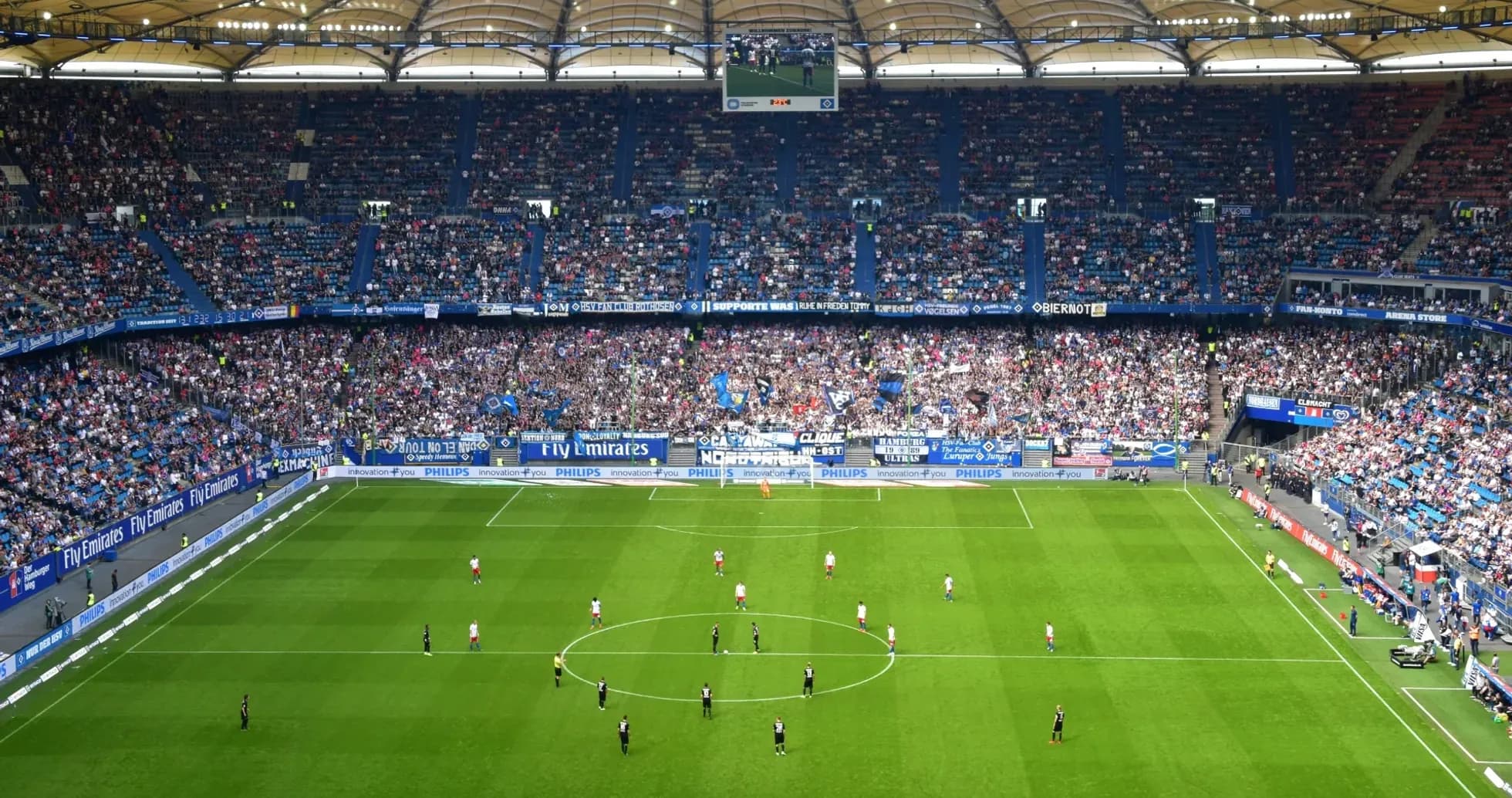
Ferencvarosi TC Dominates Vojvodina 3-0 with Tactical Superiority
Ferencvarosi TC’s 3-0 win over Vojvodina at Groupama Aréna was built on structural control, superior occupation of advanced zones and ruthless exploitation of the early red card, rather than on a barrage of shots or a frantic tempo (shot and possession data are not available). In a 1st Qualifying Round tie where game state shifted dramatically on 9 minutes, Balazs Borbely’s 4-3-3 adapted intelligently to the numerical advantage, while Miroslav Tanjga’s 4-3-3 was forced into damage limitation long before the interval.
Tactical Overview
Tactically, the contest hinged on the expulsion of Kornél Szűcs (Vojvodina) at 9' for “Foul”. Up to that point, Vojvodina’s nominal 4-3-3 had the potential to mirror Ferencvaros positionally, with Lucas Barros and L. Nikolic as full-backs and a central trio of L. Randjelovic, I. Djakovac and N. Petrovic capable of pressing Ferencvaros’s midfield. The red card instantly broke that symmetry. With a centre-back removed, Vojvodina had to compress horizontally, narrowing their back line and asking their midfield to drop deeper and closer to the remaining central defenders. That gave Ferencvaros the freedom to dominate width and half-spaces.
Formation and Structure
Borbely’s starting 4-3-3 was ball-dominant in design: D. Dibusz in goal, a back four with M. Gomez and T. Raemaekers as central figures, flanked by Cadu and A. Osvath, a midfield three of G. Kanichowsky, N. Keita and M. Corbu, and a front line of K. Zachariassen, L. Joseph and Dele. Functionally, it behaved more like a 2-3-5 in sustained possession after the red card. Cadu, listed as a midfielder but stationed wide in the second line, became a key conduit on the right, stepping high to join Zachariassen and Joseph between the lines, while Osvath provided balance on the opposite flank.
Goals Overview
The first goal on 27' encapsulated the structural advantage. With Vojvodina a man down and defending deeper, Ferencvaros were able to fix the visitors’ back line with three forwards and a late-arriving midfielder. K. Zachariassen, operating from the right inside channel, found space to receive and turn, then fed L. Joseph, who finished for 1-0. The assist underlined Zachariassen’s dual role as both wide forward and auxiliary playmaker, exploiting the stretched distances between Vojvodina’s defenders and midfielders.
By 34', the same asymmetry in the right half-space produced the second goal. Cadu, again advanced on the right, delivered the final pass for Zachariassen to score and make it 2-0. This pattern—full-back/wing-midfielder high and wide, inside forward attacking the half-space—was a deliberate targeting of Vojvodina’s weakened central structure after Szűcs’s dismissal. With only one natural centre-back left to protect the middle, Vojvodina’s full-backs had to stay narrower, leaving Cadu repeatedly free to receive and create.
Midfield Control
At 2-0 and with a man advantage, Ferencvaros shifted from urgent verticality to controlled circulation. Naby Keïta’s presence at the base of midfield was crucial in this phase. He acted as a pivot in front of Gomez and Raemaekers, recycling possession and preventing transitions. Even though his late yellow card at 88' for “Foul” reflected an aggressive edge in counter-pressing, his broader role was to ensure Vojvodina never escaped their block in numbers.
Substitutions and Tactical Adjustments
Tanjga’s response on 60'—D. Zukic (OUT) for M. Vidosavljevic (IN) and A. Vukanovic (OUT) for D. Kokanovic (IN)—suggested an attempt to freshen legs in midfield and up front, but the pattern of the game had already been set. Vojvodina’s 4-3-3 without the ball became more of a 4-4-1, with one forward isolated and the midfield line forced to shuttle laterally under long spells of Ferencvaros circulation.
Borbely’s changes were notably proactive and tactically coherent. On 61', Dele (OUT) for E. Acolatse (IN) and G. Kanichowsky (OUT) for Z. Gruber (IN) refreshed the attacking line without altering the structure. The third goal at 71'—Z. Gruber scoring from another Cadu assist for 3-0—demonstrated how seamlessly the substitutes slotted into the existing pattern: Cadu again high on the right, Gruber attacking the central lane. That Cadu was both creator for Zachariassen and Gruber while also receiving a yellow card at 69' for “Foul” shows how often he was involved in both phases on that flank.
Later substitutions further underlined Ferencvaros’s control of game state. At 74', Zachariassen (OUT) for K. Lisztes (IN) and Joseph (OUT) for E. Sevikyan (IN) allowed Borbely to manage minutes for key attackers with the tie effectively secured. On 82', Osvath (OUT) for O. Nagy (IN) was a defensive refresh, ensuring the back line maintained intensity. Each change preserved the 4-3-3 shell while keeping the pressing and width intact.
Vojvodina's Response
For Vojvodina, the 76' double change—L. Randjelovic (OUT) for S. Mitrovic (IN) and P. Sukacev (OUT) for M. Kolarevic (IN)—looked more like damage limitation and energy management than a genuine tactical reconfiguration. The late substitution of I. Djakovac (OUT) for L. Peranovic (IN) at 84' came after Djakovac’s own yellow card at 82' for “Foul”, hinting at a desire to avoid further disciplinary risk in an already compromised midfield.
Discipline and Control
Discipline was a clear differentiator in the tie. Vojvodina finished with one red card and one yellow (Szűcs’s red at 9' for “Foul”, and Djakovac’s yellow at 82' for “Foul”), while Ferencvaros collected two yellows—Cadu at 69' and Keïta at 88', both for “Foul”. The early dismissal forced Vojvodina to abandon any high-pressing intentions and retreat into a low-to-mid block, which Ferencvaros methodically dismantled through width and half-space occupation.
Goalkeeper and defensive statistics such as saves, xG or goals prevented are not available, but the clean sheet at 3-0, combined with the absence of any late defensive reshaping, indicates that Ferencvaros’s back four and midfield shield were rarely destabilized despite playing a high line for long stretches. With D. Dibusz protected by the stable pairing of Gomez and Raemaekers and anchored by Keïta’s screening, Ferencvaros controlled territory as much as they controlled the scoreline.
Overall, Ferencvarosi TC’s tactical superiority was less about raw numbers and more about exploiting the numerical advantage with structural intelligence. The 4-3-3 morphed into a dominant positional framework, with Cadu’s right-side influence, Zachariassen’s and Joseph’s movement, and Borbely’s well-timed substitutions ensuring that once the game tilted on Szűcs’s red card, it never tilted back.
Related News

Celje vs Red Bull Salzburg Predicted Lineups and Team News

Anderlecht vs Red Bull Salzburg Predicted Lineups and Team News
NEC Nijmegen vs Benfica Predicted Lineups: Team News for UEFA Europa League
Plzen vs Benfica Predicted Lineups: Team News Ahead of UEFA Europa League
Benfica vs Lech Poznan Predicted Lineups and Team News

Benfica vs OFI: Predicted Lineups and Team News for UEFA Europa League