
Ferencvarosi TC vs Twente: Tactical Insights from a 2-2 Draw
Ferencvarosi TC and Twente produced a tactically volatile 2-2 draw at Groupama Aréna in the UEFA Europa League 2nd Qualifying Round, a match defined less by statistical control and more by structural shifts, game-state pressure and discipline. Ferencvarosi led 1-0 at half-time and extended to 2-0 despite going down to ten men before the interval, only for Twente’s bench-driven response to flip the momentum and salvage a late draw. With most quantitative metrics unavailable, the contest is best read through shape changes, substitutions, and the psychological weight of the red card that reshaped the evening.
Scoring Phases
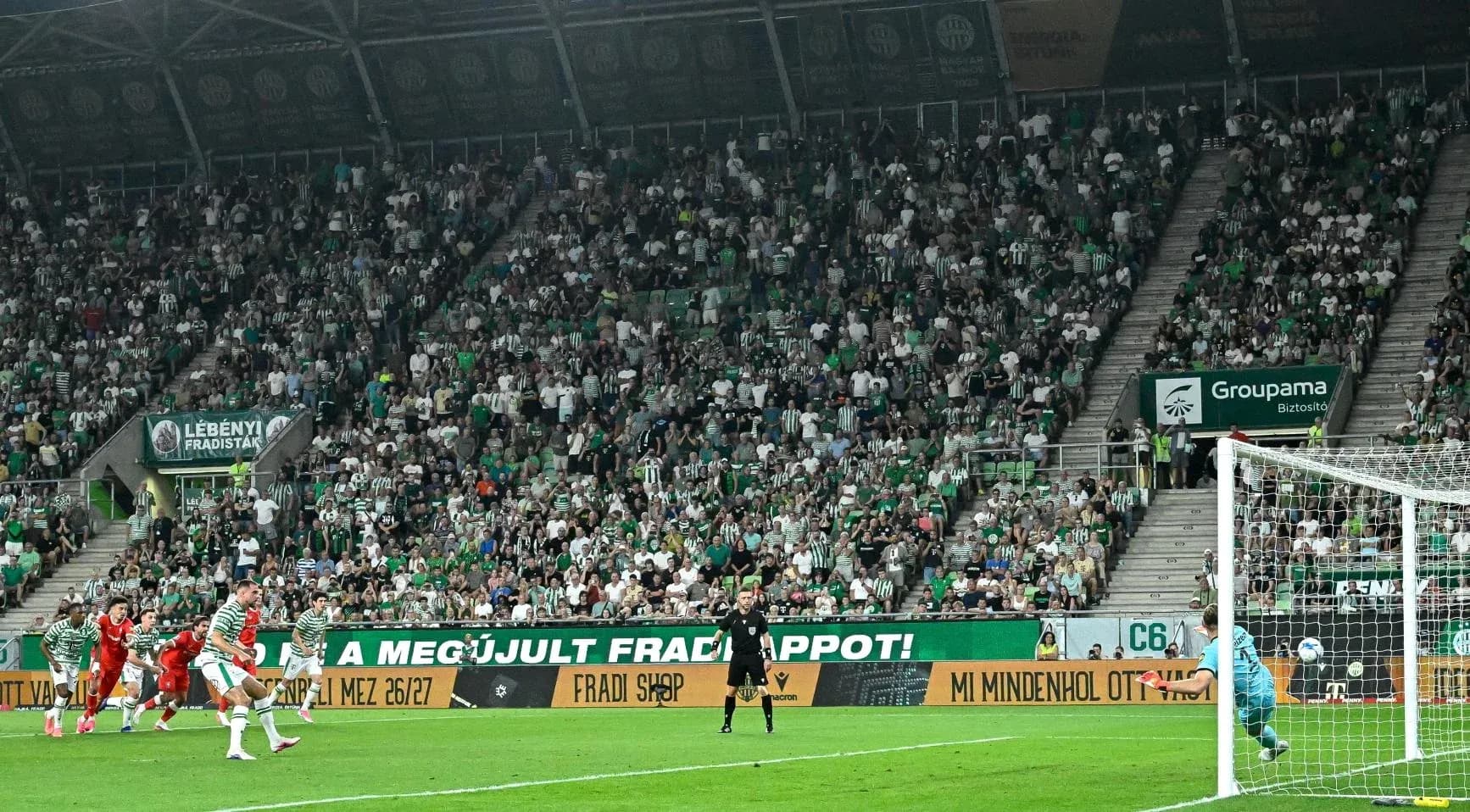
The scoring unfolded in clear tactical phases. At 22', T. Raemaekers (Ferencvarosi TC) converted a penalty — no assist — to make it 1-0, giving the hosts an early platform. The game’s key inflection came at 36', when P. Rommens (Ferencvarosi TC) was shown a straight red card — “Serious foul” — forcing Balazs Borbely’s side into a reactive, compact posture for more than 50 minutes. Remarkably, at 50', L. Joseph (Ferencvarosi TC) struck a normal goal — no assist — to push the running score to 2-0, a moment that should have sealed control but instead triggered Twente’s urgency.
From there, John van den Brom’s changes and Twente’s numerical advantage told. At 82', W. Weghorst (Twente) scored a normal goal — no assist — to cut the deficit to 2-1, and at 86' L. Vennegoor of Hesselink (Twente) added another normal goal — no assist — to level it at 2-2, the final scoreline.
Discipline
Discipline was a constant undertone. Ferencvarosi TC finished with 1 yellow and 1 red; Twente accrued 3 yellows and no reds. The card log, in chronological order, was:
- 36' P. Rommens (Ferencvarosi TC) — Serious foul
- 56' Cadu (Ferencvarosi TC) — Unsportsmanlike conduct
- 56' T. van den Belt (Twente) — Unsportsmanlike conduct
- 61' S. Lemkin (Twente) — Unsportsmanlike conduct
- 88' Y. Taha (Twente) — Foul
Total cards: Ferencvarosi TC: 2, Twente: 3, Total: 5.
Tactical Analysis
Both teams started in a 4-3-3, but the match quickly became an exercise in adaptation. Ferencvarosi TC’s initial structure had D. Dibusz in goal, a back line built around M. Gomez and T. Raemaekers, with Cadu and A. Osvath providing width and hybrid roles. The midfield triangle of P. Rommens, G. Kanichowsky and M. Corbu was designed for balance: Rommens as a deeper organiser, Kanichowsky and Corbu shuttling to connect with the advanced line of K. Zachariassen, L. Joseph and C. O'Dowda.
The early penalty at 22' suggested Ferencvarosi were able to push their full-backs high and create pressure in Twente’s box. Raemaekers, notionally a defender, taking and scoring the penalty underlined his importance both as a set-piece figure and as a calm presence in high-leverage moments.
The red card at 36' to Rommens, however, forced a complete reconfiguration. Down to ten, Ferencvarosi had to compress their lines, likely dropping one of the advanced midfielders closer to the back four and sacrificing some pressing height. The fact they still managed to score at 50' through Joseph indicates a deliberate emphasis on quick counters and direct running from the front three, exploiting the space behind Twente’s advancing lines as the visitors pushed to use their numerical superiority.
Substitutions from Borbely were clearly reactive and energy-driven. At 73', Dele (IN) came on for C. O'Dowda (OUT), adding fresh legs in the wide or forward channels to chase long balls and relieve pressure. At 78', N. Zohore (IN) came on for L. Joseph (OUT), likely to add more physical presence and defensive work from the front with the side under siege. At 88', J. Levi (IN) came on for Cadu (OUT), a late attempt to stabilise the right flank and protect the draw that ultimately slipped away.
Twente’s 4-3-3, with L. Unnerstall in goal, a back four of B. van Rooij, S. Lemkin, R. Nijstad and A. Adelgaard, and a midfield of R. Zerrouki, K. Hlynsson and T. van den Belt, was initially more patient. The front line of D. Rots, W. Weghorst and S. Orjasaeter gave them width and a classic penalty-box focal point in Weghorst. Once Ferencvarosi went down to ten, van den Brom shifted aggressively through substitutions to tilt the field.
At 46', S. Lammers (IN) came on for K. Hlynsson (OUT), and D. Weidmann (IN) came on for A. Adelgaard (OUT). This double change hinted at more attacking intent and a rebalancing of the midfield and full-back roles, possibly to push an extra body between the lines and commit more players forward. At 63', Y. Taha (IN) came on for T. van den Belt (OUT), adding verticality and dribbling threat from midfield. The twin substitutions at 72' — M. Pjaca (IN) for D. Rots (OUT) and L. Vennegoor of Hesselink (IN) for S. Orjasaeter (OUT) — transformed the forward line, surrounding Weghorst with more penalty-box runners and creative support.
This wave of attacking changes directly preceded Twente’s comeback. Weghorst’s goal at 82' was the logical product of sustained territorial pressure and aerial targeting, while Vennegoor of Hesselink’s 86' equaliser validated van den Brom’s decision to stack the box with finishers rather than maintain balance. The late yellow card for Y. Taha at 88' — “Foul” — reflected Twente’s continued aggression and willingness to take risks in transition to prevent Ferencvarosi from stealing back momentum.
Statistically, many core metrics such as possession, shots, xG, passes and goalkeeper saves are not available, so the verdict must lean on game-state and discipline. Ferencvarosi TC, at home and in front 2-0 even after a first-half red card, will view this as two points dropped, a product of the physical and mental toll of defending a lead with ten men. Twente, with 3 yellow cards and no reds, walked the disciplinary tightrope but ultimately leveraged their numerical advantage and deep bench to full effect.
In season-context terms, this match underscores contrasting profiles: Ferencvarosi’s resilience and counter-attacking threat even when undermanned, and Twente’s capacity to change games from the bench and sustain late pressure. The 2-2 result leaves the tie finely balanced, but tactically it offers a clear lesson: in knockout qualifiers, red cards and substitution timing can outweigh any underlying statistical edge that might otherwise exist.
Related News

Celje vs Red Bull Salzburg Predicted Lineups and Team News

Anderlecht vs Red Bull Salzburg Predicted Lineups and Team News
NEC Nijmegen vs Benfica Predicted Lineups: Team News for UEFA Europa League
Plzen vs Benfica Predicted Lineups: Team News Ahead of UEFA Europa League

Benfica vs Lech Poznan Predicted Lineups and Team News

Benfica vs OFI: Predicted Lineups and Team News for UEFA Europa League