
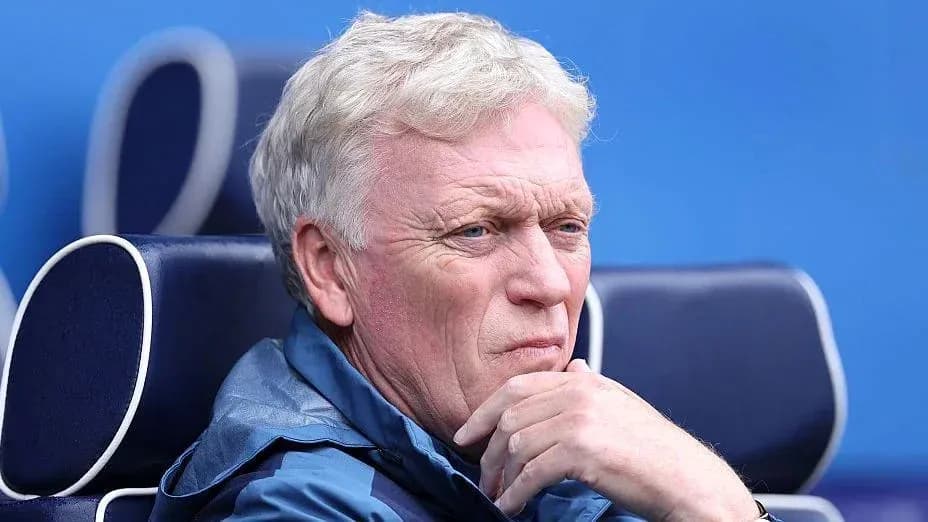
Everton's Season Review: Promise to Peril
Everton’s season of promise did not so much fade as fall off a cliff.
By late March, the mood around the Hill Dickinson Stadium felt transformed. Jack Grealish, a loan gamble, had lit up the place. Kiernan Dewsbury-Hall kept deciding tight games. Thierno Barry and Beto, who had looked out of their depth early on, suddenly remembered they were centre-forwards.
A 3-0 dismantling of Chelsea on 21 March pushed Everton up to eighth, three points off the Champions League places with seven to play. Europe felt not just possible, but probable. Supporters were daring to look up again.
Then everything broke.
From that Chelsea win onwards, Everton did not win another league game. Not one. It became the longest winless run since David Moyes walked back through the door for his second spell in 2025, and the collapse was as stark as it was swift.
The turning point came in west London. A 2-2 draw at Brentford on 11 April, a game Everton should have killed, instead opened the trapdoor. From that moment to the end of the campaign, their form ranked among the worst in the division, bottom-three bad. Only Burnley and Wolves joined them in failing to win a single match over that stretch. One club went down, one survived by inches. Everton, inexplicably, had been chasing the top four just weeks earlier.
A familiar finish that feels nothing alike
By the time Sunderland arrived for Everton’s final home game of 2025-26, there was still a sliver of hope. European football remained mathematically alive. The stadium was edgy but expectant.
In his programme notes, CEO Angus Kinnear chose an odd phrase, calling himself “happily dissatisfied” with the season. Within 90 minutes, the mood had curdled. Promoted Sunderland ripped through Everton 3-1 and would go on to finish seventh, booking European football for the first time in 53 years. The visitors walked into a new era. Everton walked off to a familiar inquest.
The league table, at first glance, is brutal in its symmetry. Thirteenth in 2024-25. Thirteenth again in 2025-26. Same place, one more point, £97m spent – a club-record net outlay in a single summer – and a very different taste in the mouth.
Context matters. When Moyes returned 18 months ago, Everton were one point above the relegation zone, battered by financial breaches, points deductions and the constant threat of the drop. He dragged them to safety and then some, finishing 23 points clear of the bottom three in that first season back.
So what is 13th now? Failure, or foundation?
Former midfielder Leon Osman leans firmly towards the latter. “When David Moyes first came in, we flew out the blocks and had a great start,” he said. “That continued for well over a year before the first sort of low period, which was the end of last season. I still feel that we made progress last season, which is what we wanted, along with stability.”
The league table says mid-table. The journey to get there tells a more complicated story.
Moyes, money and the new home that isn’t yet home
Moyes, now 63, has been open about the scale of the task. Everton rank only 15th among current Premier League clubs for net spend over the past five years. The money has not flowed as freely as it once did under Farhad Moshiri, and when it did, it was often wasted. Eight players signed for at least £20m in that era eventually walked away for nothing.
The contrast with the division’s smarter operators is stark. Bournemouth spent the least of any Premier League club last summer and still made a profit of £81m, then finished sixth. Brighton banked £41m and came eighth. Both clubs have turned recruitment into an art form. Everton are still sketching.
Even the move to the state-of-the-art Hill Dickinson Stadium has not yet delivered the bounce the club craved. Everton’s 1.2 points per game at their new home last season was the lowest of any side starting life in a new Premier League ground in the competition’s history. Away from home, they looked like a top-seven team. At home, they looked lost.
Osman points to timing and turbulence. Bournemouth and Brighton, he argues, are simply “further along in their development” than an Everton side still adjusting to new surroundings after years of chaos. The injury to Grealish in January, he believes, changed everything.
The numbers back him up. With Grealish in the team, Everton’s win rate sat at 45%, averaging 1.6 points per game. Without him, that dropped to a 22% win rate and a single point per game. One player should not define a club, but Grealish came close.
“David Moyes is an intense manager and by the end of the season, a small squad couldn't quite last,” Osman said. “Changes take time. No one is thinking about relegation which shows you what Moyes has done. He's got 12 months remaining and I'd expect him to see that out.”
Grealish, Ndiaye and the transfer tightrope
The Friedkin Group’s first full summer in charge brought nine signings and a clear tilt towards youth, but the returns so far are mixed.
Grealish and Dewsbury-Hall worked. Beyond that, it is a patchwork. Tyler Dibling, a £35m winger from Southampton, started only six league games. Highly rated left-back Adam Aznou is still waiting for his Premier League debut after arriving from Bayern Munich. Barry, 23, won more aerial duels than anyone in his first top-flight season but finished as an erratic presence in front of goal. Midfielder Merlin Rohl barely featured until May, then impressed across four starts as the season fizzled out.
This summer’s narrative again circles around Grealish. BBC Radio Merseyside’s Giulia Bould reports the playmaker is set to re-sign on loan towards the end of the window as he continues to recover from a stress fracture in his foot. The catch is his wage packet, expected to remain around £200,000 per week – a huge commitment for a club still trying to repair its finances.
Osman is clear on the balance required. “I'd welcome Grealish back but only at a price that suits Everton,” he said.
The other name on everyone’s lips is Iliman Ndiaye. The forward has been linked with a move to Saudi Arabia, where transfer fees and salaries can warp any club’s best-laid plans.
“Ndiaye, I'd hate to lose him,” Osman admitted. “There may come a point that the price is right and Everton can reinvest in two or three players but I think they should do everything they can to keep him.”
Everton cannot afford to get this wrong. The squad is small, one of the leanest in the league. Moyes used just 22 players in the Premier League last season – fewer than any other manager – and made 128 substitutions, at least six fewer than anyone else. Elite quality walking out of the door without smart reinvestment would be a familiar and damaging mistake.
Youth on the books, trust still to be earned
On paper, Everton are building a young core. The average age of signings since Moyes returned is under 24, with three players 20 or younger. This summer, 24-year-old central midfielder Hayden Hackney arrived from Middlesbrough for £16.5m, and 20-year-old winger Tyrique George joined permanently from Chelsea for £18m after a loan spell last season.
There is also interest in more experienced help. Celtic’s Alistair Johnston has been linked as the answer to the long-standing problem at right-back, while 32-year-old Arsenal midfielder Christian Norgaard is reportedly close to signing, a move that would inject much-needed know-how into a dressing room that has just lost Seamus Coleman and Idrissa Gueye – more than 600 Premier League appearances gone in one summer.
Yet for all the talk of youth, Everton ranked only 17th in the league for minutes played by under-21s last season. Players aged 21 or younger featured for just 1,088 minutes. The club is buying potential; Moyes is hesitant to rely on it.
The injury to James Garner, set to miss the start of the season after groin surgery, only sharpens the dilemma. With senior options thinning, the manager may have no choice but to lean on the very youngsters he has been slow to trust.
“They need to show they're capable and deserve to play,” Osman said. “I'm hoping that a year in, understanding the demands that are required, players like Dibling and George will make that progression and then suddenly our squad looks more trustworthy.”
That is the paradox at the heart of Everton’s next step. A manager in the final year of his contract. A squad that looks thin yet expensively assembled. A club no longer glancing over its shoulder at relegation, but not yet sure how to look forward with conviction.
The chaos has gone. The fear has eased. Now Everton must decide whether this version of stability is a platform – or a ceiling.
Related News
Raphinha’s Hat-Trick Powers Barcelona to 7-2 Victory Over Racing Santander
Carabao Cup Fourth Round Draw: Liverpool Set to Clash with Chelsea, Arsenal to Face Fleetwood Town
Key Football Matches to Watch in Azerbaijan This Autumn
Raphinha's Hat-Trick Drives Barcelona to 7-2 Triumph Over Racing Santander
Hansi Flick Leads Barcelona to Record-Breaking Seven Wins in a Row
Gavi Reflects on Injury Return as Barcelona Dominate Racing Santander 7-2