
England's World Cup Journey: From Prologue to Knockout Drama
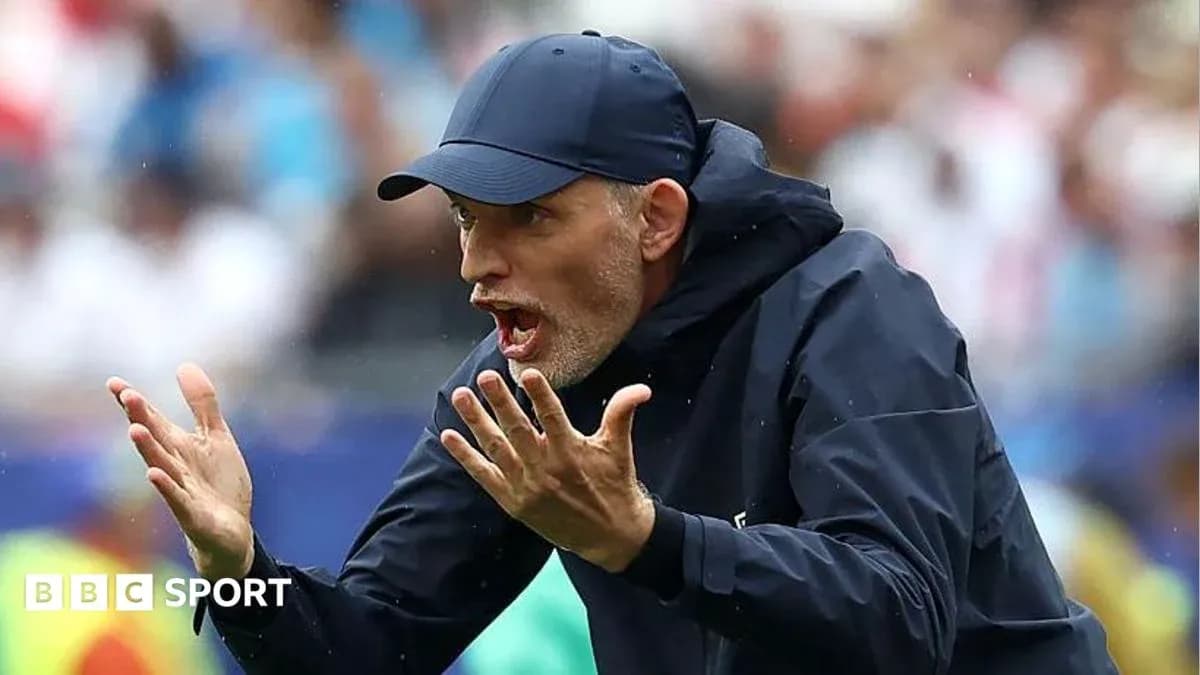
Thomas Tuchel talks about this World Cup as a book. Miami was the prologue, the group stage Chapter Two. Now comes what he calls “the third chapter” – the knockout rounds – where one bad page rips the whole thing apart.
On Wednesday in Atlanta, against DR Congo, the story either gathers momentum or ends abruptly.
From controlled progress to sudden jeopardy
So far, England have done what was required. Top of Group L, qualified with a game to spare, flashes of authority in wins over Croatia and Panama, a flat line of a draw against Ghana. “Job done” fits – but only for the opening act.
The tone changes now. This is the stretch of tournament football where a misjudged tackle, a mistimed run, a moment of panic at the back can send a favourite home. And this, for all Tuchel’s work, is where England still look most fragile.
Wayne Rooney put it bluntly on BBC Sport: the one area of the pitch where you crave continuity – goalkeeper and back four – is where England have anything but.
Jordan Pickford is the constant. In front of him, the picture keeps shifting.
Tuchel opened the tournament with John Stones and Ezri Konsa in the 4-2 win over Croatia. Then he dropped Stones, paired Konsa with Marc Guehi, and watched the back line creak under Panama’s counter-attacks. The chopping and changing is not entirely by choice. It is partly the bill coming due on long-standing concerns.
A defence built on versatility – and risk
England’s defensive vulnerability was flagged long before a ball was kicked. Tino Livramento’s absence was a blow in itself. Reece James’ injury record made him a walking question mark.
Livramento never made it to the World Cup. James did, but only briefly. His hamstring gave way against Croatia. Tuchel said he was surprised; few others were. When Jarell Quansah, James’ deputy at right-back, limped off against Panama, the warning lights moved from amber to red.
Both James and Quansah will miss the DR Congo tie. “They are getting closer and closer,” Tuchel said. “Jarell is a bit ahead of Reece, but the race is close.” Encouraging, but not helpful for Wednesday.
So Djed Spence stands as the last specialist right-back. The alternative is to drag Konsa across and reopen the door for Stones in central defence, a move that would bring its own calculation. Stones, 32, started only five Premier League games for Manchester City last season before leaving. James managed just 20 for Chelsea. These are not the minutes of players you want to lean on deep into a World Cup.
Tuchel’s preference for defenders who can play across the line, full-backs who can flip flanks and centre-backs who can shuffle wide, has given him flexibility on paper. On grass, it threatens to leave him without a pure one-on-one defender when it matters most.
If England do get to Miami and meet Brazil, if Vinicius Jr is running at that right side, this is not a job for a makeshift solution. Tuchel will be desperate for James to be more than just “close” by then.
Rice, Kane, Bellingham – and a missing shield
The most sobering lesson from the Panama game did not come from the scoreline. It came from the space they found whenever they broke.
Tuchel had already made one shrewd call, resting Declan Rice after qualification was secured, mindful of a yellow card and the Arsenal midfielder’s own hamstring issue, topped up by a kick to the calf against Ghana. Without him, England conceded 13 shots to underdogs who repeatedly sliced through midfield and exposed the back four.
Tuchel’s decision to field Jude Bellingham and Morgan Rogers as an attacking pair in midfield carried a clear upside. England looked more fluid, more inventive. But it left Elliot Anderson firefighting alone in the centre, stretched and outnumbered through no fault of his own. A better side than Panama would have cashed in.
It underlined what many inside the camp already knew: Rice now sits alongside Harry Kane and Bellingham in the tiny group of players England simply cannot do without.
He is not just a destroyer in front of a shaky defence. He sets the rhythm, offers a passing lane, starts attacks, and delivers from set pieces. He is the insurance policy and the launchpad in one. Remove him, and the whole structure looks flimsy.
If England are to take this all the way, Rice has to be on the pitch and close to full capacity. There is no Plan B that looks remotely as convincing.
Saka, selection calls and a ruthless bracket
Tuchel has more big calls to make before DR Congo. Bukayo Saka, nursing an Achilles problem, made his first World Cup start against Panama and lasted 63 minutes. His sharpness, creativity and work-rate are invaluable, but so is his long-term availability. Risk him now and you might lose him later; hold him back and you blunt one of your best weapons.
These are the margins Tuchel keeps talking about. “We know these are the moments where we have to find ways to win,” he said in Atlanta. “We need to dig in and to play at the highest level.”
He does not shy away from the weight of expectation either. “We are the favourites. We play against our own expectations. We expect to go further than the round of 32, so why should the public not expect that?”
From this point, every line-up is a judgment call that can define a tournament. Every substitution, every tweak, every gamble will be magnified. Tuchel, like his players, has no room left for mistakes.
A World Cup turning on shocks
If anyone inside England’s camp needed a reminder of how quickly things can unravel, the round of 32 has supplied it in brutal fashion.
Germany, with all their pedigree, fell to Paraguay on penalties. Julian Nagelsmann now faces intense scrutiny, his position clouded by the ever-present clamour for Jurgen Klopp. The Netherlands, loaded with Premier League talent, crashed out to Morocco and Ronald Koeman was gone within 24 hours.
The message is clear: the cost of failure at this World Cup is instant and unforgiving.
Tuchel sees the pattern and draws his own conclusion. “There is no percentage of over-confidence in our approach,” he said. “The games in the round of 32 speak a very clear language. It is very narrow margins.
“It actually makes me more calm than nervous.”
He looked across the bracket and saw ties that would not have looked out of place later in the tournament. “Netherlands and Morocco could have been a quarter-final or semi-final, and Japan and Brazil could have been a quarter-final,” he said. “It just shows these are games of narrow margins. It can help us not to over-expect. Teams are well prepared. It is difficult for any team to break another down.”
Brazil themselves needed a stoppage-time winner from Gabriel Martinelli to squeeze past Japan under Carlo Ancelotti. No giant is strolling through this field.
England now step into that same tight corridor, their flaws known, their strengths obvious, their path hazardous.
Tuchel has framed it as a story in three chapters. The third begins in Atlanta, under a closed roof and controlled temperature in a $1.6bn arena that feels more like a spaceship than a stadium.
What cannot be controlled is what happens when the whistle blows. With an unsettled defence, an irreplaceable Rice, a half-fit Saka and the spectre of upsets all around them, England must write their own plot – or be swallowed whole by a World Cup that is devouring favourites.
Related News

Raphinha’s Hat-Trick Powers Barcelona to 7-2 Victory Over Racing Santander
Carabao Cup Fourth Round Draw: Liverpool Set to Clash with Chelsea, Arsenal to Face Fleetwood Town
Key Football Matches to Watch in Azerbaijan This Autumn
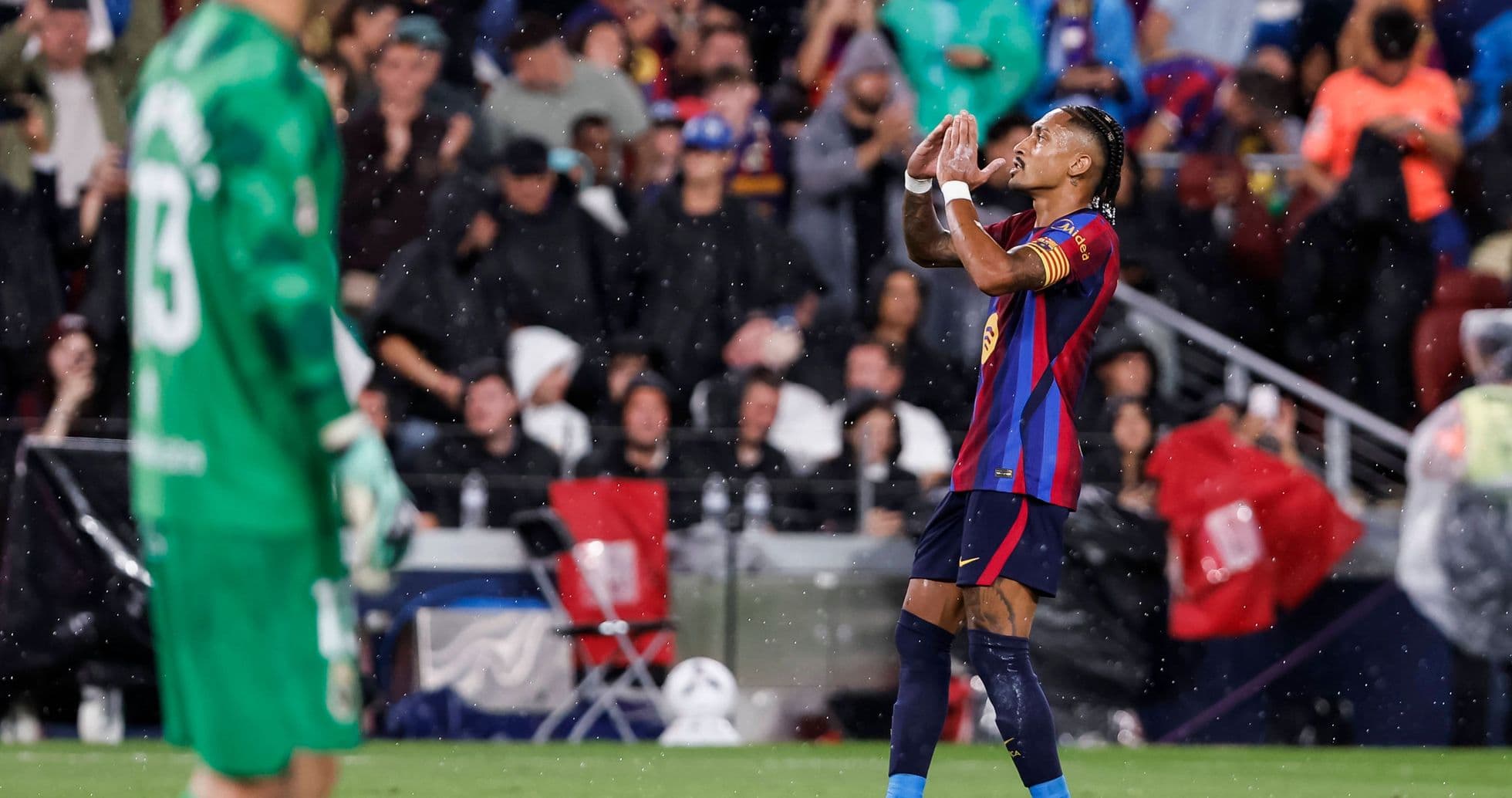
Raphinha's Hat-Trick Drives Barcelona to 7-2 Triumph Over Racing Santander
Hansi Flick Leads Barcelona to Record-Breaking Seven Wins in a Row

Gavi Reflects on Injury Return as Barcelona Dominate Racing Santander 7-2