
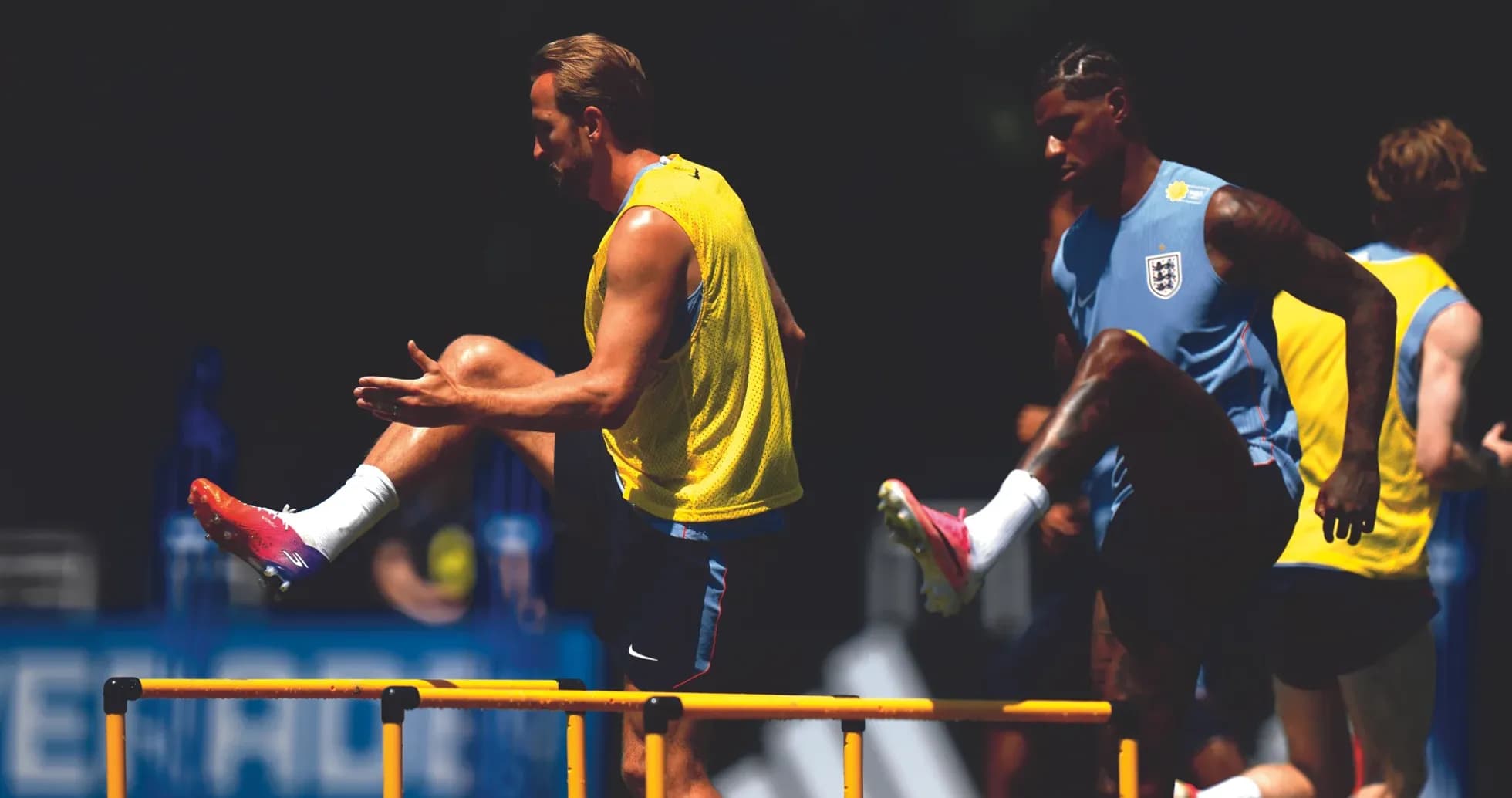
England's World Cup Challenge: Forward Thrills and Defensive Doubts
England’s forwards have arrived at this World Cup with a roar. Their defenders have arrived with a question mark.
Thomas Tuchel’s side opened with a wild 4-2 win over Croatia in Arlington, a scoreline that flatters the attack and exposes the nerves at the back. Twice England led, twice they were dragged back in a first half that crackled with energy but also anxiety, before their quality finally broke an ageing Croatian team.
It was thrilling. It was also a warning.
Goals flowing, doubts growing
On paper, this should not be a team worrying about its own defending. England sailed through qualifying, eight games, no goals conceded. A spotless record, the kind that usually breeds calm.
Yet the moment the tournament began, the old doubts resurfaced. The back line looked raw, short on rhythm and short on scars from big tournaments. In Texas, Croatia’s lack of pace spared them. France, Spain and Argentina will not be so forgiving.
Tuchel watched his side concede twice in 45 minutes, and those who have patrolled England’s defence in the past did not like what they saw.
Gary Neville, now on pundit duty with Sky Sports, did not sugar-coat it. That first half, he suggested, will have rattled the coaching staff and forced a rethink.
"I think that it will make Thomas Tuchel adjust for maybe games two and three, and make him think slightly differently about how he sort of maybe plays that defence, and how he looks at protecting them," Neville said.
The head coach has already made big calls. He left three seasoned tournament campaigners at home: Trent Alexander-Arnold, Luke Shaw and Harry Maguire. All three know the pressure of a World Cup. All three watched this one kick off from their living rooms.
Then came another blow. Before England had even kicked a ball, Tino Livramento was ruled out injured, replaced by Trevoh Chalobah, who arrived with just a single cap to his name.
A back line learning on the job
Strip away the reputations and you see the scale of the gamble. The nine defenders in England’s 26-man squad share 191 caps between them. John Stones owns 90 of those. The rest are still learning the trade at this level.
Against Croatia, three of the back four were making their World Cup debuts: Reece James, Ezri Konsa and 21-year-old Nico O’Reilly. Talented, yes. Battle-hardened, not yet.
Tuchel leans heavily on Stones. He values the Manchester City defender’s calm, his ability to steady those around him, even though Stones started just five Premier League games last season before leaving City. Experience counts in tournament football, and the German clearly trusts his.
Not everyone agrees with that calculation.
Former England striker Chris Sutton has pushed a different argument, urging Tuchel to lean into youth and athleticism by pairing Konsa with Marc Guehi in central defence and leaving Stones out.
"I think Konsa and Guehi have better attributes in terms of one-against-one situations than John Stones and there will be times in games when they will be isolated one-against-one against players of the highest class," Sutton told the BBC.
That is the debate that now hangs over England’s second group game: stability and know-how with Stones, or mobility and aggression with Konsa and Guehi together. Tuchel has favoured Konsa so far; the next decision is who stands alongside him when the stakes rise.
Attack unfazed by the noise
Inside the camp, the mood is far less twitchy. The forwards, unsurprisingly, are not losing sleep over defensive chatter.
Ollie Watkins brushed off the criticism when he spoke at England’s base in Kansas City on Sunday, backing the quality of those behind him.
"I think people are always going to try and criticise and find certain areas they can pick on but I think defensively we've got world-class players at the end of the day who have won major trophies and played at the highest level possible," he said.
To Watkins, the shaky start against Croatia was more about nerves than structural flaws.
"I think maybe we started the game a little bit nervously the other day but you've seen once the nerves are out of the lads' system, I think in the second half we absolutely blew Croatia away."
That second-half surge was exactly that: ruthless, confident, almost cavalier. England’s attackers swarmed all over a tiring defence, the movement too sharp, the combinations too quick. When this side clicks going forward, it looks like a team that can trouble anyone in the world.
The question is whether the back line can hold long enough for the front line to decide games.
Ghana next, and the stakes rise
Next stop is Boston and a meeting with Ghana. The equation is simple enough: beat the African side and, if Panama fail to beat Croatia, England will top Group L and move into the last 32 as group winners.
On the surface, it is an inviting scenario. Underneath, it is another examination of Tuchel’s defensive puzzle.
Does he double down on his original plan, trusting Stones to guide an inexperienced unit through the early turbulence? Or does he tilt towards Sutton’s view and unleash Konsa and Guehi as a more athletic pairing, gambling that their speed and one-on-one strength will stand up when the tournament’s heavyweights arrive?
The attack has already passed its first test. The defence is still sitting the exam.
Boston will tell Tuchel who he can really trust when the World Cup starts to bite.
Related News
Raphinha’s Hat-Trick Powers Barcelona to 7-2 Victory Over Racing Santander
Carabao Cup Fourth Round Draw: Liverpool Set to Clash with Chelsea, Arsenal to Face Fleetwood Town
Key Football Matches to Watch in Azerbaijan This Autumn
Raphinha's Hat-Trick Drives Barcelona to 7-2 Triumph Over Racing Santander
Hansi Flick Leads Barcelona to Record-Breaking Seven Wins in a Row
Gavi Reflects on Injury Return as Barcelona Dominate Racing Santander 7-2