
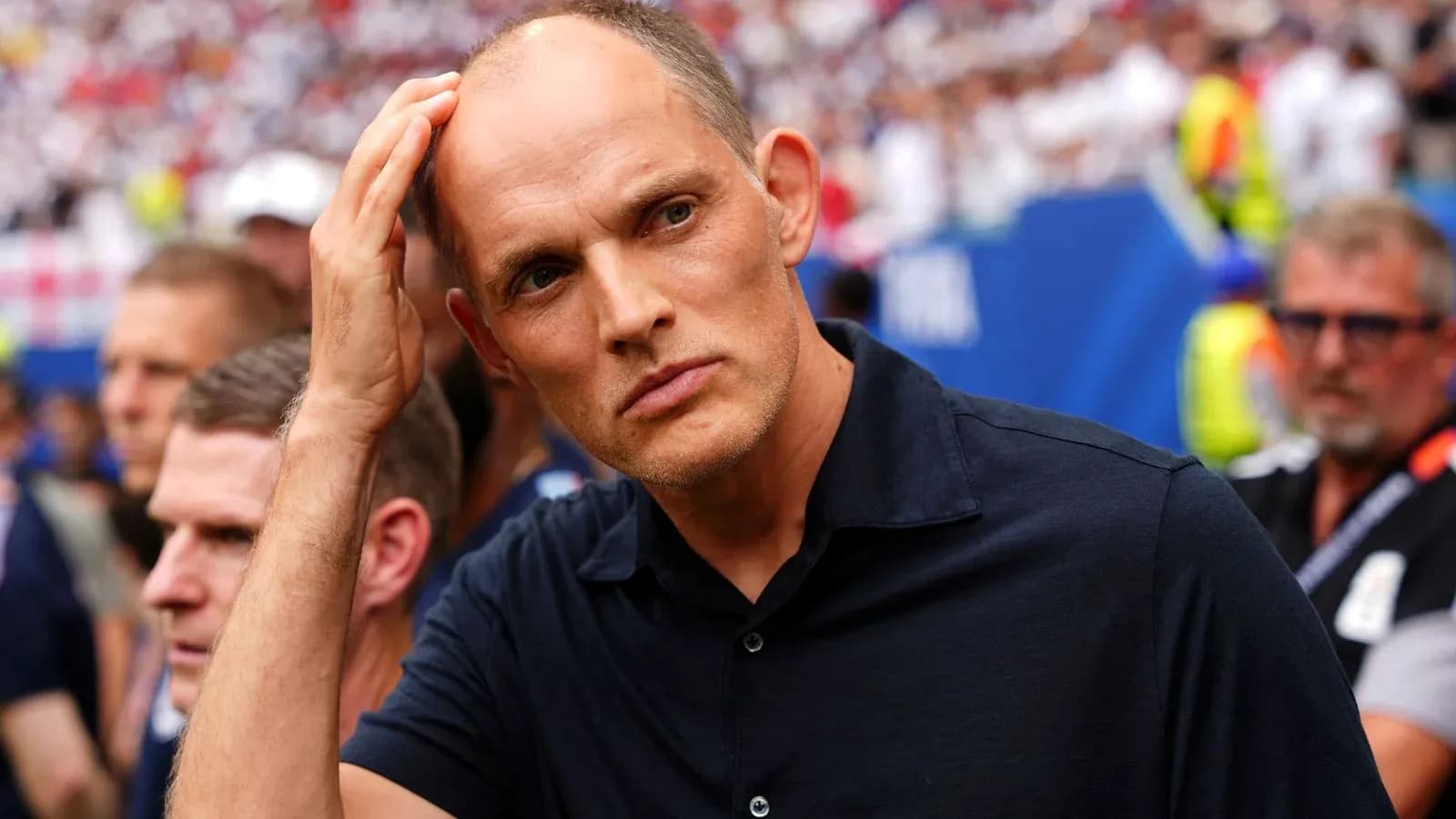
England's World Cup Exit: Tactical Decisions Under Fire
England’s World Cup exit to Argentina will be remembered for the chaos of the final half-hour – and, inside the camp, for the substitutions that turned a statement performance into a retreat.
Several England players, including more than one senior figure, were left puzzled by Thomas Tuchel’s late-game decisions, with some believing the changes damaged, rather than protected, their chances of reaching the final.
From front foot to five at the back
For 55 minutes, England looked like a side that had finally worked out a way to hurt elite opposition. The plan was clear: target Argentina’s full-backs, stretch the game with pace on the flanks, and let the wide players run at a back line that does not enjoy being dragged into space.
It worked. Morgan Rogers on the right, Anthony Gordon on the left – the very blueprint England had built their tournament on. Rogers drove at his man, picked his pass, and Gordon finished to give England the lead.
That should have been the platform. Instead, it became the turning point.
With Argentina growing into the game and England naturally dropping a few yards deeper, Tuchel made his first big call. Seventeen minutes after Gordon’s opener, he took off the goalscorer and sent on Ezri Konsa, shifting to a back five with more than half an hour still to survive.
Inside the dressing room, that decision jarred. Players felt the team had surrendered its main threat. The side that had been stretching Argentina suddenly had one fewer runner, one fewer outlet, and a system built to absorb rather than to punch back.
Six defenders, no out-ball
The pressure mounted. Lionel Messi drifted, dictated, and Argentina’s attacks began to arrive in waves.
Ten minutes after the first change, Tuchel went further. Declan Rice, who had battled through illness and fitness problems all tournament, was withdrawn for Nico O’Reilly. On paper, fresh legs. In reality, the shape on the pitch told its own story: England now had six defenders on the field, four of them natural centre-backs.
Harry Kane dropped deeper and deeper, almost as an auxiliary midfielder, trying to stem the tide and help defend the box. But with him no longer occupying centre-backs high up the pitch, Argentina’s back line could squeeze the game and recycle possession with impunity.
Inside the squad, those uneasy with the approach saw the same problem over and over again: no out-ball. No one to hold it up, no one to spin down the channels, no one to carry the ball into wide areas and force Argentina to turn.
The very area England had identified as Argentina’s weakness – their full-backs – went largely untested once Gordon departed. The pacy wingers who had defined England’s attacking identity at this tournament stayed seated. Noni Madueke, Bukayo Saka, Eberechi Eze: all unused as the game slipped away. Marcus Rashford did arrive, but not until the 96th minute, with England already 2-1 down after late strikes from Enzo Fernandez and Lautaro Martinez flipped the semi-final on its head.
Between Gordon’s goal and Martinez’s stoppage-time winner, England had just 12 per cent of the ball. A semi-final, with a lead, turned into a siege.
Tuchel stands firm on tactics – and on “DNA”
Tuchel emerged after the defeat with a clear view. He had not yet rewatched the game, but he did not blame the shape change or the defensive substitutions. In his eyes, the issue ran deeper than one night in a World Cup semi-final.
He pointed to what he sees as a systemic problem in English football: an inability to keep the ball under intense pressure, in contrast to Spanish, Argentinian and Brazilian players who, he argued, are more comfortable retaining possession in the tightest of spaces.
The switch to a back five, he insisted, was a deliberate attempt to cut out the stream of crosses into England’s box and to choke off space for Argentina’s forwards. With Nico Gonzalez introduced on the left and Messi shifting to the right in a bold 4-2-4, Tuchel wanted extra bodies in the area to meet the barrage.
Some of his players do not share that interpretation. They felt the changes invited pressure, pinned the team in, and made it harder for England to breathe, let alone build attacks. To them, the problem was not English “DNA” but the decision to strip away the very weapons that had put Argentina on the back foot.
How they will react in the longer term to Tuchel’s public comments about English football’s supposed technical limitations is not yet clear. Inside the camp, though, there is no suggestion of a split.
No rift – and no doubt about Tuchel’s future
Despite the tactical misgivings, Tuchel remains a popular and authoritative figure with his players. There is no talk of a dressing-room revolt, no signs of open animosity. Disagreement over tactics is one thing; a fractured squad is quite another, and England are not there.
The Football Association has also moved quickly to reinforce its backing. Tuchel retains the full support of his bosses and has already stated he is “100 per cent” committed to leading England into Euro 2028, when they will enjoy home advantage as co-hosts alongside Scotland, Wales and the Republic of Ireland.
The semi-final in Argentina will linger, though. A night when England led, had a plan that worked, and then chose to bunker in. A night when the bench stayed stacked with wingers while the team defended deeper and deeper with six defenders on the pitch.
Euro 2028 will come, the stadiums will be full, and the expectations will be enormous. The question is simple: when the pressure rises again on home soil, will England protect what they have – or trust their talent to keep the ball and go for the throat?
Related News

Ilia Topuria Accuses Justin Gaethje After UFC Defeat

Tyson Fury vs Anthony Joshua Fight Date and Venue Confirmed
Switzerland Calls Up In-Form Sion Striker Winsley Boteli for Nations League
Bournemouth Secures Historic 2-1 Win Over Real Sociedad in Spain

Portugal Announces Squad for 2026 UEFA Nations League; Cristiano Ronaldo Expected to Play

Raphinha Channels Ronaldo Nazario as Barcelona's Leading Striker After Position Change